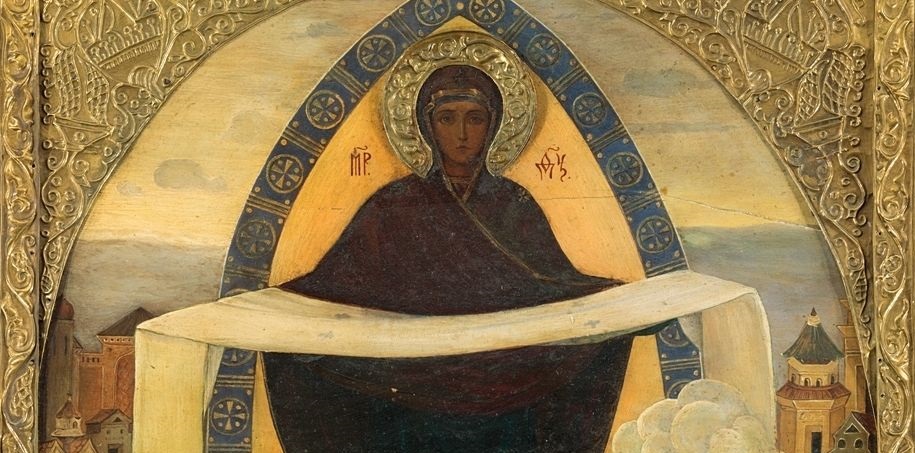
Kontakion 1: O Chosen by the Pre-Eternal God, Queen of Heaven and Earth, higher than all creation, who hast in days past entered praying into the Church of the Blachernae we, offering Thee with thanksgiving due veneration, flee with faith and compunction under Thy shining vestment for we lie in darkness. And as Thou who hast invincible power dost set us free from every affliction that we may cry to Thee: Rejoice, our Joy, protect us from every ill by Thy precious veil.
Ikos 1: Archangels and angels with John the Forerunner, John the Divine and the choir of all the saints, were present with Thee, their Queen, in the Church of the Blachernae and hearing Thy moving supplication for all the world, they cried out with wonder as follows:
Rejoice, O pre-eternal good will of God the Father Who has no beginning of days.
Rejoice, timeless and most pure one who contained God the Son.
Rejoice, Thou chosen dwelling-place of God the all-Holy Spirit.
Rejoice, Thou never ceasing wonder of the angelic hosts on high.
Rejoice, Thou all-threatening terror of the dark forces of hell.
Rejoice, Thou whom the many-eyed cherubim meet in the air.
Rejoice, Thou to whom the six-winged seraphim ascribe praises.
Rejoice, Thou whose most precious veil we born on earth thankfully venerate.
Rejoice, our Joy, protect us from every ill by Thy precious Veil.
Kontakion 2: Saint Andrew with Epiphanios having seen Thee inside the Church praying to God in the air all Christians, acknowledged Thee to be the Mother of Christ our God Who ascended into heaven and falling to the ground they joyfully venerated Thine all-precious veil, crying: Alleluia!
Ikos 2: Thou O Theotokos Virgin art knowledge unknowable in defense of Orthodox people. Therefore our enemies know not how strong is the prayer of the Mother of God: while we well aware of Thine all-mighty protection cry to Thee with tender feeling:
Rejoice, Most merciful Comforter of all the afflicted and heavy laden.
Rejoice, never sleeping Guide of all those who have strayed and gone blind.
Rejoice, Thou who by Thy supplication dost swiftly appease the wrath of God rightly poured out on us.
Rejoice, Thou who by an all-powerful behest dost tame out evil passions.
Rejoice, strong waker of sleeping consciences.
Rejoice, easy overcomer of sinful practices.
Rejoice, Thou for whose sake hell groans and the spirits of evil tremble.
Rejoice, Thou for whose sake the gates of paradise are opened to all.
Rejoice, our Joy, protect us from every ill by Thy precious Veil.
Kontakion 3: Power from on high overshadows those who run for refuge with faith and reverence to Thy precious protection: for to Thee alone, O all holy and all pure only Mother of God is it given that every petition of Thine be fulfilled. Therefore the faithful of all ages glorify Thee and Thy Son, crying: Alleluia!
Ikos 3: O Lady, having a never-failing wealth of mercy, Thou dost stretch the hand of help to all the ends of the earth: and dost give healing to the sick, relief to the suffering, sight to the blind, and to all everything that is expedient for them as they cry aloud in thanksgiving:
Rejoice, indestructible fortress and bulwark of Orthodox rulers.
Rejoice, principle adornment of holy churches and altars.
Rejoice, truest guard of holy monasteries.
Rejoice, vigilant Helper of stouthearted civil authorities.
Rejoice, unconquerable Leader of Christian captains and armies.
Rejoice, holy mirror of justice for judges who take no bribes.
Rejoice, perfect knowledge for teachers and those who bring up children.
Rejoice, Blessing of pious homes and families.
Rejoice, our Joy, protect us from every ill by Thy precious Veil.
Kontakion 4: O Lady, Thou dost help us held fast by a storm of many afflictions: for Thou dost stand before the altar of the Lord, lifting Thine hands and praying that the Lord of glory look down on our unworthy prayer and hearken to the petitions of those who call upon Thy holy Name crying to Thy Son: Alleluia!
Ikos 4: The Lord God heard Joshua, son of Nun, praying and He commanded the sun to stand still until he defeated the enemy. The Lord Jesus now hears Thy supplication, O chosen dwelling of the Holy Spirit. Therefore we sinners, putting our trust in Thy protection, make bold to say to Thee, Mother of God:
Rejoice, Thou who are lit by the Sun of the mind and who dost enlighten us with the light that never sets.
Rejoice, Thou who hast illumined the whole earth by the brightness of Thy most pure soul.
Rejoice, Thou who hast made glad the whole heavens by the purity of Thy body.
Rejoice, Protector and Provider of the holy monasteries of Christ.
Rejoice, Thou who art the strength and understanding of the pastors of the Church.
Rejoice, Guide of God-fearing monks and nuns.
Rejoice, untroubled rest of the pious aged.
Rejoice, secret gladness of pure virgins and widows.
Rejoice, our Joy, protect us from every ill by Thy precious Veil.
Kontakion 5: When Moses who saw God lifted his arms while the battle with Amalek raged, Israel overcame and when he let his hands fall, Amalek was victorious and strengthened by those who hold up his arms, Israel defeated the enemy; and Thou, O Mother of God, having raised Thine hands in supplication, even though no man hold them up, dost always conquer the enemies of Christ and art an invincible shield for us who cry: Alleluia!
Ikos 5: The assemblies of saints when they had seen Thee in the air inside the church of the Blachernae stretching Thy hands in prayer to Thy Son and God, sang Thee a song in Thanksgiving with the archangels and angels: while we, our hands fortified by Thee made stronger than the arms of Moses, cry aloud with compunction:
Rejoice, Thou whose love and mercy towards us alone hold out Thine hands for us.
Rejoice, Thou before Whom our enemies, visible and invisible, cannot stand.
Rejoice, Thou who drivest away the dark hordes of our passions and lusts.
Rejoice, Thou who holdest in Thine hand without being consumed, the divine fire of Christ, and who with it dost set us in our coldness aflame.
Rejoice, Thou who crownest with a fair crown of chastity those who fight against the flesh.
Rejoice, Thou perpetual Converser with those who strive in fasting and silent prayer.
Rejoice, Thou speedy Comforter of those who fall from despair and sadness.
Rejoice, Thou who dost by grace provide us with humility and patience.
Rejoice, our Joy, protect us from every ill by Thy precious Veil.
Kontakion 6: Saint Roman the Melodist, appeared as an unfailing proclaimer of Thy grace and mercy when he had received from Thee in a dream a paper roll to swallow: for thereby made wise, he began to sing with skill in Thine honor and to write praises for the saints, calling out with faith: Alleluia!
Ikos 6: O Virgin, Maid of God, who hast shone forth the Dawn from the true Sun of righteousness, enlightening all with the wisdom of Thy God and Son and who leadest all to knowledge of the truth those who cry to Thee:
Rejoice, Thou who hast given birth to Christ in the flesh, the power of God and wisdom of God.
Rejoice, Thou who hast confounded the foolish wisdom of this world and who hast guided those blinded by it on the way of truth.
Rejoice, Preserver of our holy faith and teacher of Orthodox dogma.
Rejoice, Uprooter of impious heresies and corrupting divisions.
Rejoice, Thou who well knowest secret and unforeseen difficulties and dost tell those whom it is proper about them.
Rejoice, thou who puttest to shame false seers and vain divining.
Rejoice, Thou who in the hour of perplexity dost put a good thought in our hearts.
Rejoice, Thou who dost turn us from perilous purposes and senseless desires.
Rejoice, our Joy, protect us from every ill by Thy precious Veil.
Kontakion 7: The all-seeing, long suffering Lord, wishing to manifest the unsearchable deep of His mercies and love for mankind, chose Thee alone to be His Mother, and made Thee into an invincible defense for His people: that even though one of them appear worthy of condemnation by the righteous judgment of God, yet all the more shall he be preserved for repentance by Thy mighty protection, crying: Alleluia!
Ikos 7: O Lord, Thou hast shown in Thine all-pure Mother, how wonderful are Thy works when Her most marvelous veil was revealed in Her hand shining brighter than the rays of the sun and with it She protected the people in the Church of Blachernae: for hearing of such a sign of Her defense, held by fear and joy, all say:
Rejoice, thou veil not made by hand of man that is spread over the whole world like a cloud.
Rejoice, Thou who dost hold in Thine hands the banner of Thy Son, the Pre-Eternal High-Priest.
Rejoice, Thou who hast thereby made manifest a new mercy and new grace in the Orthodox Church.
Rejoice, pillar of cloud who protectest all of us in the world from temptations and scandals.
Rejoice, pillar of fire amidst the darkness, showing us all the path of salvation.
Rejoice, visible strength of manifest strivers for godliness.
Rejoice, secret Giver of understanding to the secret servants of God in this world.
Rejoice, Thou who also leavest not without Thy grace and protection me who am stripped of all good works.
Rejoice, our Joy, protect us from every ill by Thy precious Veil.
Kontakion 8: Angels sang Thy praises when Thou didst appear in wondrous wise from heaven in the Church of the Blachernae and apostles gave Thee glory. The choir of holy bishops and monks and the band of holy women extolled Thee, the Forerunner with John the Theologian venerated Thee, and the people present in the Church cried aloud with joy: Alleluia!
Ikos 8: The Lord Who reignest over all things above and below, when He had seen Thee, His Mother, standing in the Church and praying with tender feeling to Him, said: Ask, O my Mother, because I shall never turn from Thee but will fulfil all Thy petitions and teach all to sing to Thee in thanksgiving:
Rejoice, Ark of the law in which is kept the sanctification of all mankind.
Rejoice, all-holy Jar in which the bread of eternal life is preserved for those who hunger for righteousness.
Rejoice, all-golden Vessel in which the flesh and blood of the divine Lamb are prepared for us.
Rejoice, Thou who dost receive in Thine all-powerful arms those foresaken by the physicians.
Rejoice, Thou who dost raise from their bed of sickness those crippled in body, but not in spirit and faith.
Rejoice, Thou who givest a new and better understanding to those who are perishing from infirmity of mind.
Rejoice, Thou who dost wisely trip us up on the stubborn path of sin and passion.
Rejoice, Thou who dost turn to mercy the cruelty of our unrepentant hearts.
Rejoice, our Joy, protect us from every ill by Thy precious Veil.
Kontakion 9: The whole assembly of angels offers Thee praises, Thou true Mother of God and Defender of all who run to Thee, knowing how with Thine unfailing protection Thou dost rejoice the righteous, protect and deliver the poor, and pray for all the faithful crying: Alleluia!
Ikos 9: The wordy orators, become as dumb fish, are at a loss as to how to praise as is due, the great feast of Thine all-precious protection: for all the things said by them about Thee suffice not to number Thy mercies alone. And we, seeing Thy good works without number, cry with gladness:
Rejoice, Thou who dost guard us from the deadly plague in which all perish.
Rejoice, Thou who dost preserve cities and villages from sudden earthquakes.
Rejoice, Thou who dost lead us out with Thy strong arm from flood and drowning.
Rejoice, Thou who by the dew of Thy prayers dost deliver us from the kindling of fire.
Rejoice, Thou who dost provide against hunger of soul and body by the Bread of Life.
Rejoice, Thou who dost lead away from our heads the blows of lightening and thunder.
Rejoice, Thou who dost save us from the attacks of strangers and secret murderers.
Rejoice, Thou who dost guard us with peace and love against family quarrels and enmities of those of our own blood.
Rejoice, our Joy, protect us from every ill by Thy precious Veil.
Kontakion 10: Wishing to save mankind from the error of the enemy, the Lord Who lovest mankind gave us on earth Thee His Mother to be our help, protection and defense, for Thee to be the Comforter of those that sorrow, the Joy of the afflicted, the Defender of the injured, and to raise all from the depth of sin, singing: Alleluia!
Ikos 10: “O King of Heaven”, spoke the all-pure Queen in prayer as She stood with the angels, “do Thou accept every man praying to Thee and calling upon my name for help, that he go not away from my face empty and unheard.” Hearing this most good supplication, the assemblies of the saints cried in thanksgiving:
Rejoice, Thou who crownest with blessed fruits the husbandman pure in hand and heart.
Rejoice, Succour and righteous Rewarder for all those who honestly trade.
Rejoice, Reprover before all nations of those who keep not their oaths and whose gains are unjust.
Rejoice, unexpected Helper of those in distress in travels by land and water.
Rejoice, Thou who makest childless couples glad with the fruits of faith and spirit.
Rejoice, unseen Tutor of motherless orphans.
Rejoice, strong Defender of those in captivity and exile.
Rejoice, ever-watchful Guardian of those sitting in bonds and prison.
Rejoice, our Joy, protect us from every ill by Thy precious Veil.
Kontakion 11: Hearing a most moving song and attending to Thy prayer for us, we beg Thee, O Virgin Theotokos, look not away from the voices of Thy servants for we run to Thee in assaults and affliction and in our distress we pour out our tears before Thee, crying: Alleluia!
Ikos 11: Seeing Thee in the air inside the Blachernae Church burning in prayer as a candle aflame with light, I gave voice together with a multitude of people there present: “how can this be that the Mother of my Lord has come to me?” And Saint Andrew with Epiphanios prayed warmly to Thee, crying:
Rejoice, abundant Giver of all spiritual and bodily gifts.
Rejoice, true Advocate of sinners who have started to repent.
Rejoice, perpetual Champion of those fighting with enemy passions and intents.
Rejoice, invisible Tamer of cruel and bestial masters.
Rejoice, secret Rest and Consolation of humble and suffering servants.
Rejoice, most longed-for Fulfiller of blessed marriages.
Rejoice, swift and painless relief of mothers in childbirth.
Rejoice, our only Help in the hour of death.
Rejoice, our Joy, protect us from every ill by Thy precious Veil.
Kontakion 12: Ask Thy Son to give us divine grace; stretch towards us a helping hand; ward off from us every enemy and adversary and give our lives peace that we perish not grievously, without repentance, but accept us, O our Protector, in the eternal mansions, that, rejoicing we may cry to Thee: Alleluia!
Ikos 12: Singing the praises of Thy mighty protection, we praise Thee for Thou art to us all our firm Advocate and we venerate Thee who dost pray for us: for we believe and we trust that Thou wilt beg of Thy Son and God eternal and temporal good things for all who cry thus to Thee with love:
Rejoice, strong Defense of the whole inhabited earth.
Rejoice, sanctification of all the earthly and heavenly elements.
Rejoice, Thou Blessing of all the seasons of the year.
Rejoice, Thou Conqueror of all assaults and temptations that come from the world, the flesh and the devil.
Rejoice, unhoped for Reconciliation of those who are at daggers drawn.
Rejoice, Amendment without their knowledge of unrepentant sinners.
Rejoice, Thou who dost not turn away those despised and forsaken by all.
Rejoice, Thou who dost pluck from the pit of destruction those that indeed despair.
Rejoice, our Joy, protect us from every ill by Thy precious Veil.
Kontakion 13 (3x): O all-praised Mother, Most pure Lady, Virgin, Theotokos, to Thee do I lift up the eyes of my soul and body, to Thee do I stretch forth my hands grown feeble and I cry from the depth of my heart: look down on the faith and humility of my soul; shelter me with Thy almighty protection, that I be saved from all assault and distress, and in the hour of my death, be by me, O Thou all-blessed, and deliver me from the torment prepared for me because of my sins, that venerating Thee, I may ever cry: Alleluia! Alleluia! Alleluia!
Ikos 1 Repeated: Archangels and angels with John the Forerunner, John the Theologian and the choir of all the saints, were present with Thee, their Queen, in the Church of the Blachernae and hearing Thy moving supplication for all the world, they cried out with wonder as follows:
Rejoice, O pre-eternal good will of God the Father Who has no beginning of days.
Rejoice, timeless and most pure one who contained God the Son.
Rejoice, Thou chosen dwelling-place of God the all-Holy Spirit.
Rejoice, Thou never ceasing wonder of the angelic hosts on high.
Rejoice, Thou all-threatening terror of the dark forces of hell.
Rejoice, Thou whom the many-eyed cherubim meet in the air.
Rejoice, Thou to whom the six-winged seraphim ascribe praises.
Rejoice, Thou whose most precious veil we born on earth thankfully venerate.
Rejoice, our Joy, protect us from every ill by Thy precious Veil.
Kontakion 1 Repeated: O Chosen by the Pre-Eternal God, Queen of Heaven and Earth, higher than all creation, who hast in days past entered praying into the Church of the Blachernae we, offering Thee with thanksgiving due veneration, flee with faith and compunction under Thy shining vestment for we lie in darkness. And as Thou who hast invincible power dost set us free from every affliction that we may cry to Thee: Rejoice, our Joy, protect us from every ill by Thy precious veil.
First Prayer: O all-holy Virgin, Mother of the Lord of the hosts on high, Thou Queen of heaven and earth and almighty Defender of our country, accept from us Thine unworthy servants this song of praise and thanksgiving and bring our prayer up to the throne of Thy God and Son, that He be merciful towards our unrighteousness, and extend His grace to those who honor Thy name and venerate with faith and love Thy wonder-working ikon. For we are not worthy to be forgiven by Him hadst Thou, O Lady, not made Him merciful towards us, for all things from Him are possible to Thee. Therefore we run to Thee as Thou art our swift and undoubted Protector. Hear us who pray to Thee: overshadow us with Thine almighty veil and ask from Thy God and Son zeal and vigilance for our shepherds, wisdom and strength for the souls of those who govern our cities, righteousness and impartiality for our judges, understanding and humility for our leaders, love and concord for the married, obedience for our children, patience for those who have been offended, the fear of God for those that offend, stoutheartedness for the afflicted, restraint for those that rejoice, and for all of us the spirit of understanding and godliness, the spirit of mercy and meekness, the spirit of chastity and truth. Yea, O all-holy Lady, be merciful towards Thy feeble people: gather together the dispersed, guide on the right way those that have gone astray, uphold old age, make the young pure, bring up the children and look down upon all of us with the care of Thy merciful protection. Raise us from the depth of sin and enlighten the eyes of our hearts to see salvation. Be merciful to us both here and yonder, during our wandering in the land of this earth and at the Last Judgement of Thy Son: and make our fathers and brothers who have departed this life live the eternal life with the angels and all the saints. For Thou, O Lady, art the glory of those in heaven and the trust of those on earth. After God, Thou art the hope and Defender of all who flee to Thee with faith. We then pray to Thee and to Thee as our almighty Helper, do we commend ourselves and one another, now and for ever and unto the ages of ages. Amen.
Second Prayer: O my most blessed Queen, my all-holy hope, Receiver of orphans and Defender of the strangers, Helper of those in poverty, Protector of the sick, behold my distress, behold my affliction. On all sides am I held by temptation, and there is none to defend me. Help me then as I am weak, feed me as I am a pilgrim, guide me as I have strayed, heal and save me as I lie without hope. For I have no other help, nor advocate nor comforter, save Thee, O Mother of all the afflicted and heavy laden. Look down then on me, a sinner lying in sickness, and protect me with Thine all-holy Veil, that I be delivered from all the ills surrounding me and may ever praise Thy Name that all men sing. Amen.
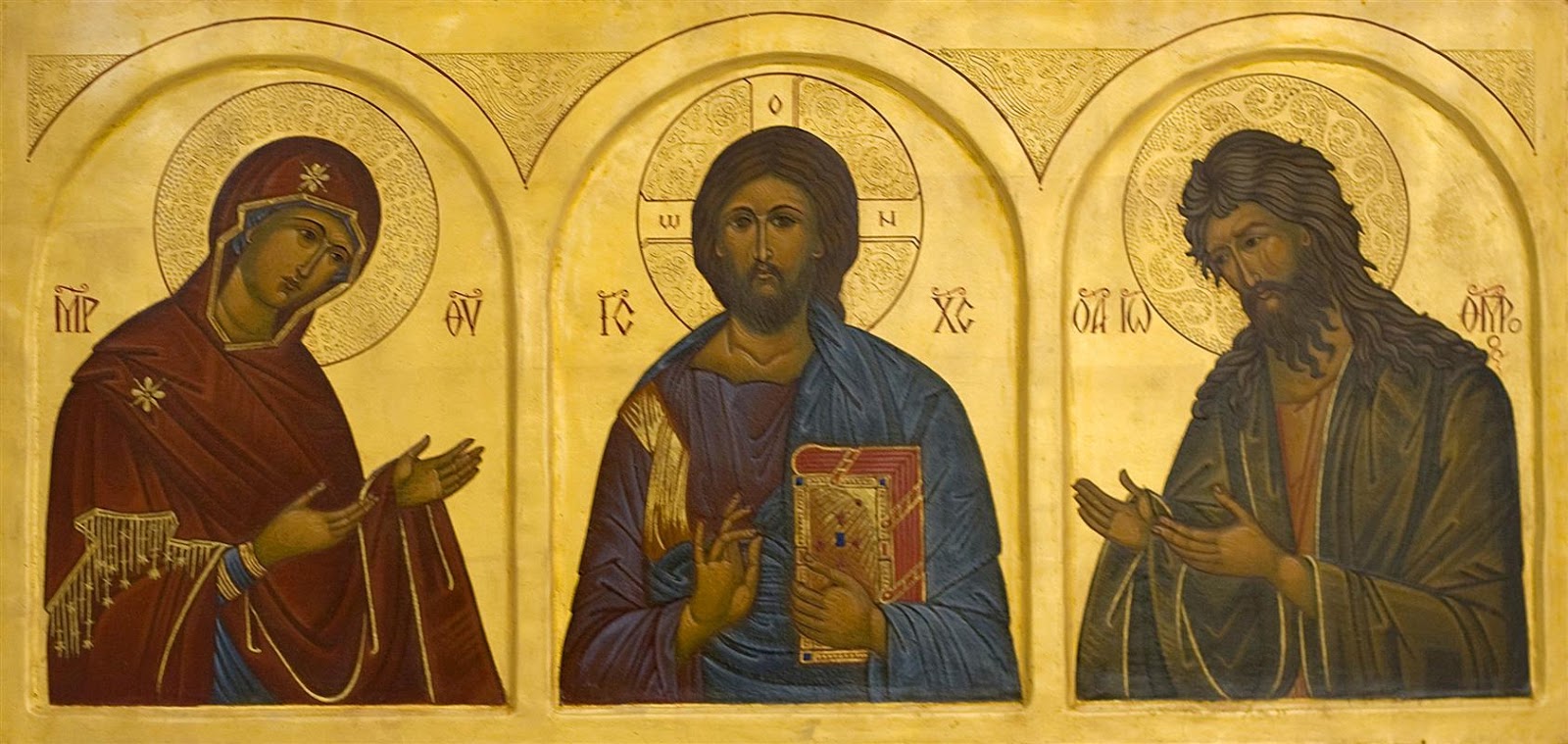
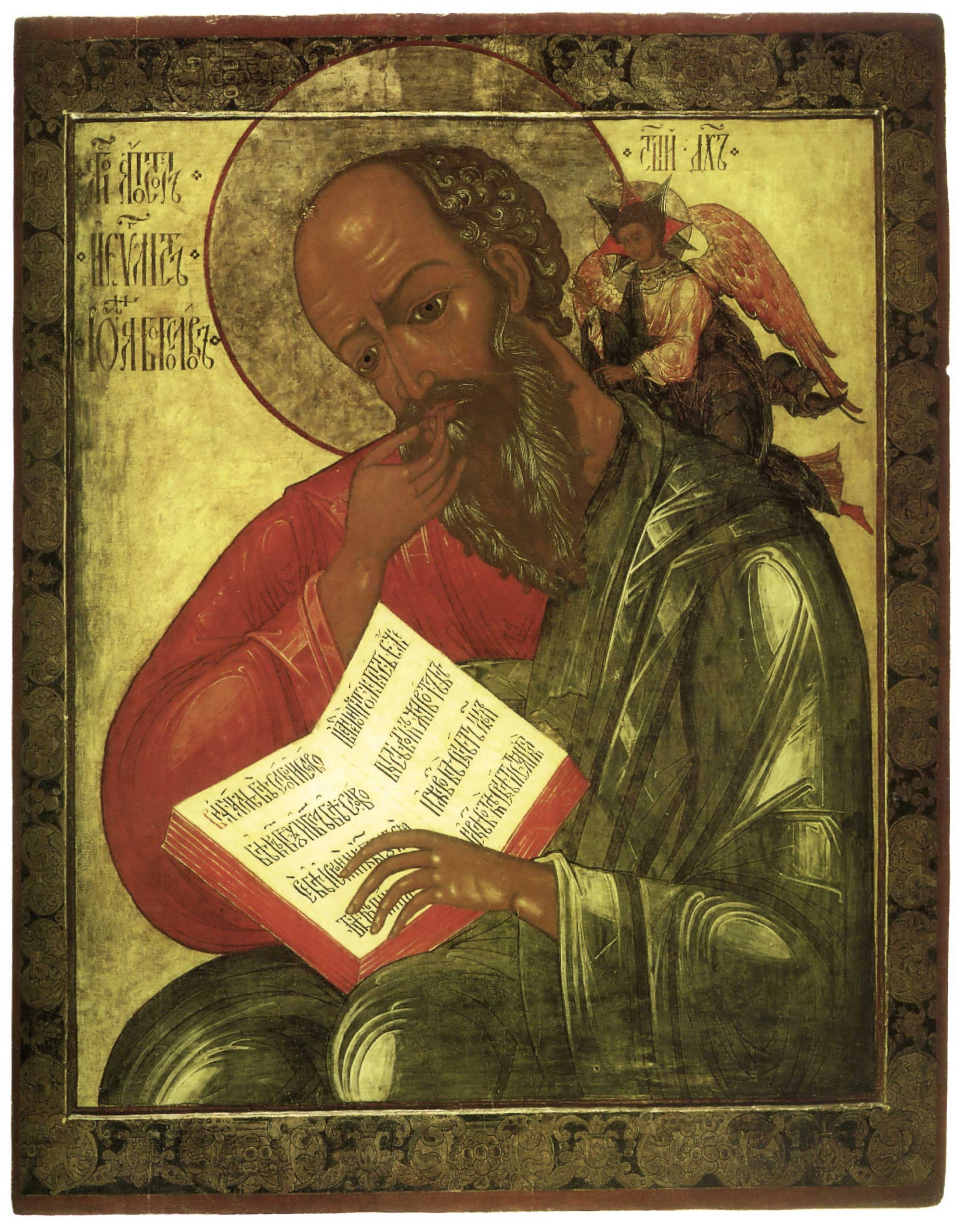
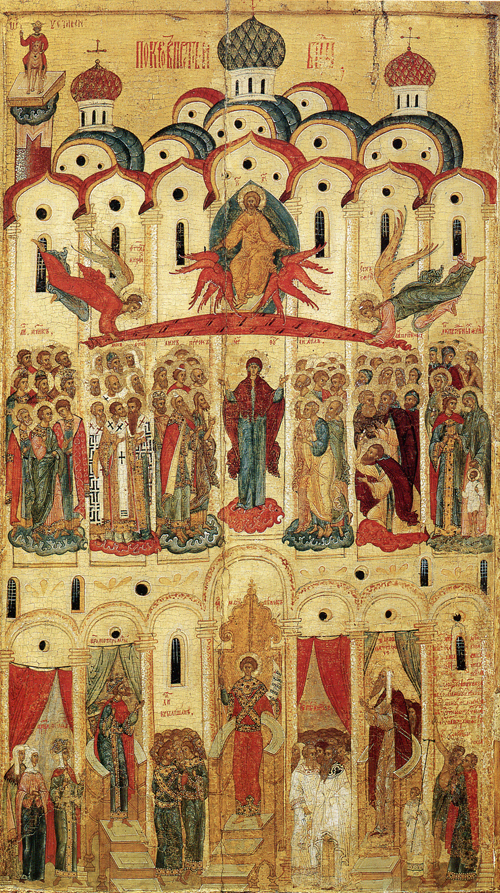 As we look at the icon, we see the Mother of God at the centre of the heavenly Church, flanked by St John the Forerunner and St John the Theologian, surrounded by the throngs of the heavenly powers and saints, interceding for us with the Mother of God, as Queen of Heaven.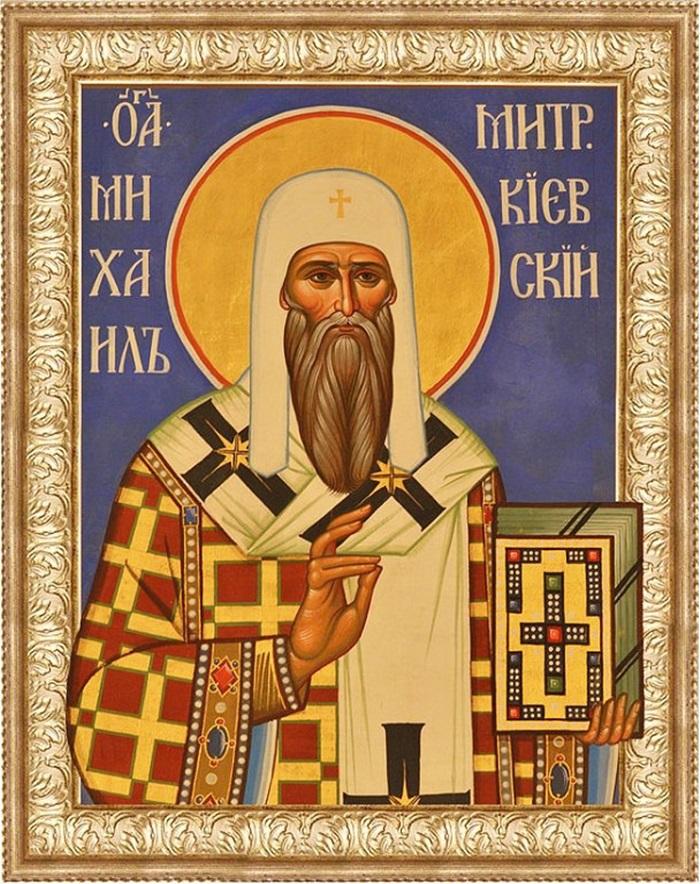

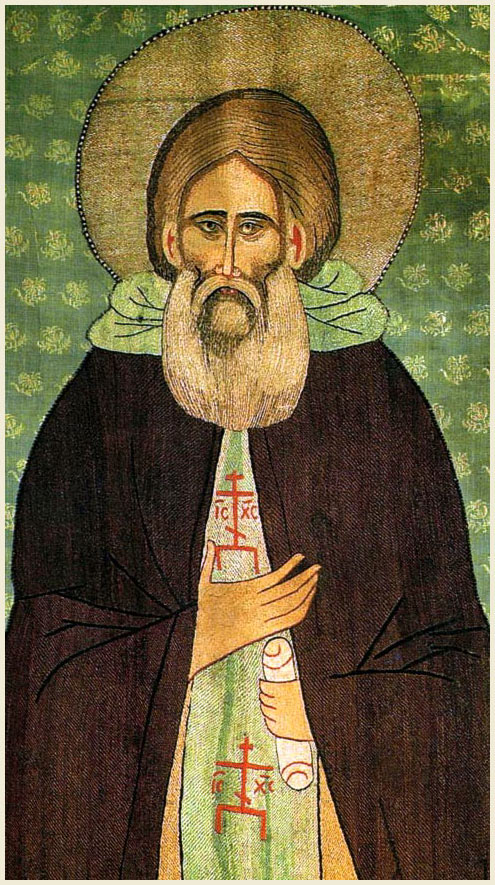 Egypt had St Athony the Great and the God-bearing fathers of the Thebaid; Palestine had St Savas; Athos had St Athanasius the Athonite; Kievan Rus had Saints Anthony and Feodosy; and as the father of Muscovite monasticism St Sergei embodies the ascetic life of the forested desert to which he and his brother monastics fled to escape the world and climb to heaven, becoming earthly-angels and heavenly men.