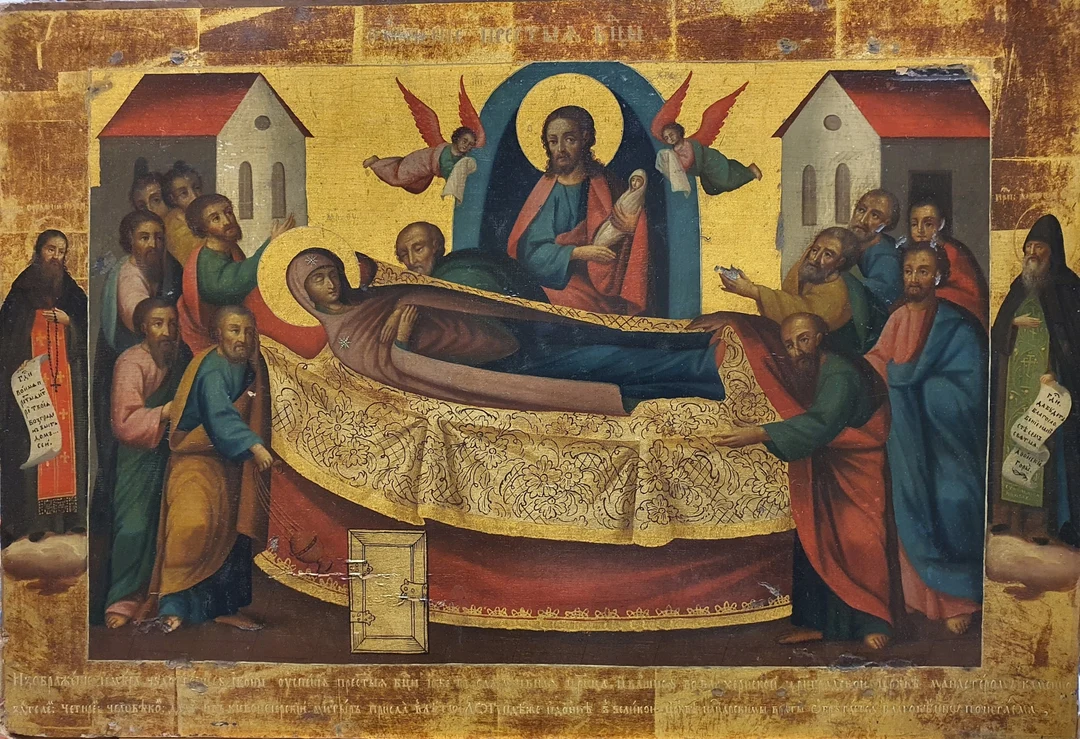
On the Dormition of the Mother of God

In the Name of the Father, and of the Son, and of the Holy Spirit.

Dear brothers and sisters – How blessed we are, that in His infinite mercy, love and compassion, our Lord, and God, and Saviour, should grant us not only the wonderful and radiant feast of His own Life-Giving Resurrection, but also this triumphant and joyful feast of the Dormition: the falling asleep, resurrection and heavenly Assumption of His All-Pure Mother.

This glorious, second Pascha shows that the mystery of His third-day rising, and glorious Ascension into heaven was not simply for Him by right, as the Victor over Death and Giver of Life, but also the intended gift and calling of all of the children of Adam and Eve, whose flesh He assumed in the salvific mystery of the Incarnation. 

For those baptised into the mystery of His death and Resurrection, the heavenward translation of the Mother of God, is the very meaning of His Incarnation, and the Dormition is the foretaste of what the Saviour mercifully wills and desires for each and everyone of us. 

Speaking of the theosis to which we are called as heirs of the Kingdom, St Athanasius famously declared that, “God became man, so that man may become God”, through adoption and grace (not of course, according to nature). The Dormition is the preeminent passage of humanity – in the exulted person of the Theotokos – into the heavenly life; into the theoria –  the vision of Divine Glory; and into the inheritance, which the Lord has prepared for us.

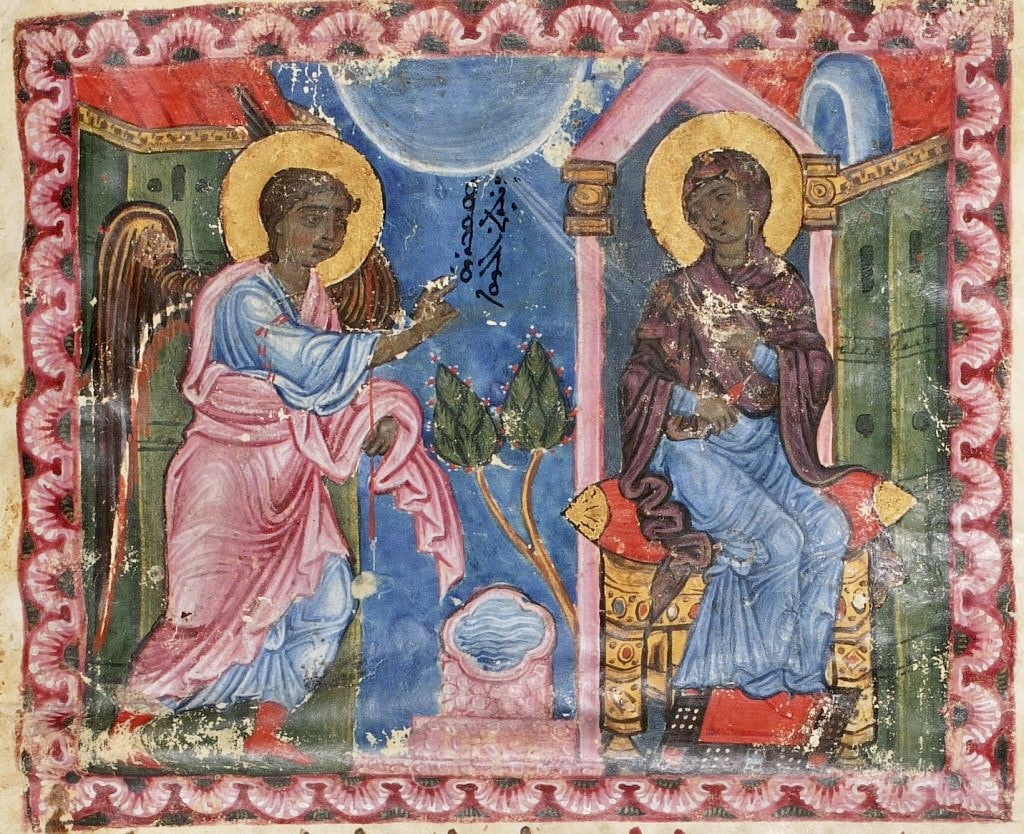
At the salutation of the Archangel, by the Divine planting of the seed of the Incarnation within the womb of the Most Holy Mother of God, the Only-Begotten Son and Pre-Eternal Word assumed human flesh to open the Kingdom of Heaven to all believers, and to call the children of both the Old Israel of the Abrahamic Covenant and the New Israel of the Church to the glory of the Kingdom of Heaven.

But, we may anticipate this salvific moment, and say that the Lord was already affecting His saving Incarnation even before the message of the Archangel was heard, and before the Mother of God rendered humble acceptance to God’s Economy of Salvation.

Was the Lord not already calling us to the same glory of the resurrection and ascension of the Mother of God, when at three years of age she climbed – without any human aid – up the steps of the Temple into the Holy of Holies? 

Was not this physical ascent a sign and prophecy that in the fullness of time, the Theotokos would climb not only into the earthly dwelling place and abode of the Lord Most-High, but also the supra-heavenly sanctuary, of which the haikal of the Temple was but a image and type. 

The earthly infancy of the infant Virgin Mary, instructed by the angels and enclosed within the Temple, was not only a preparation for her calling to be the Theotokos and Mother of our Salvation, but also to stand beside the heavenly throne, far higher than the Mercy-Seat above the Ark of the Covenant, and far more exalted than the cherubim and seraphim.

Had David the King and Prophet not already prophesied, “The Queen didst stand at Thy right hand, arrayed in vesture of gold, adorned in varied colours.” (Psalm 44)

It is through her glorious translation from the sleep of death to heavenly life that the Mother of God was glorified and honoured at her Son’s right hand, like Bathsheba, enthroned at the right hand of King Solomon, as advocate and intercessor of all who would seek the favour of her Son.

But what is this golden robe, adorned with varied colours?

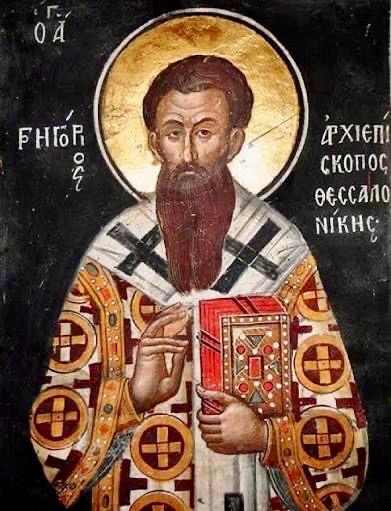
St Gregory Palamas teaches us that, 

“By “vesture wrought with gold” understand her divinely radiant body arrayed with divers colours of every virtue.” ”

It was through her God-centred and sacrificial life of prayer, spiritual labour, and virtue that the Theotokos wove for herself such a glorious and resplendent robe of grace, in which to stand at the right hand side of her Son and Lord. 

By this salvific example, she calls us to emulate her journey, seeing her life of grace and virtue as the sure and certain way to approach the Gates of the Kingdom of Heaven. 

But, today, on this solemn and joyous feast, this must even be the very way in which we approach the celebration of her falling asleep and translation to the heavenly life – coming not only with flowers, bearing candles and incense, but above all approaching her bier with the precious virtues which will weave for us a radiant spiritual robe – adorned with humility, patience, obedience, love, mercy, compassion, and ever jewel of spiritual virtue and grace.

On this wondrous and joyful feast, these are the offerings which will truly please the Mother of God and bring great joy, as our heavenly protectress and intercessor. 

When her tomb in Gethsemane was opened for the Holy Apostle Thomas to bid farewell to her sacred body, he discovered that even though she drank from the common cup of death, the tomb and corruption could neither hold nor contain the body of the All-Immaculate Mother of the Giver of Life.

Thus, having been translated to heavenly life – she has no need for precious perfumes, but rather desires that we draw near to her Dormition with the spiritual perfume of divine grace, anointed and fragrant with spiritual virtues.

Recognising her salvific and guiding example, with the great Palamas, we acknowledge,

“thou art a vessel containing every grace, the fulness of all things good and beautiful, the tablet and living icon of every good and all uprightness…”

…and seeking to reflect this icon of life-in-Christ, we must hasten to her Dormition with prayer, repentance, and desiring above all to live and die in holiness, dedicated to the Lord, fulfilling His will in all things, “wholly
consecrated to God, divinely pleasing unto all…” (Ode 5 of the matins canon). 

Let us not dare to draw near to the Dormition and prostrate ourselves before the plashchanitsa with malice, envy, anger, envy, judgement, hardness, or any spiritual poison in our hearts; not daring to kiss the image of the repose of the Mother of God with judgement, complaining, gossip or words of ill-will upon our lips; not thinking that we can acceptably bring her both the sweet perfume of flowers and the stench of sinfulness at the same time.

Rather, let us approach the Dormition with repentance and the desire to follow in the footsteps of the Theotokos, filled with rejoicing, fortified with hope, and seeking to live lives reflecting her singular devotion, humility and obedience.

“Let us all bow down before her, praying: O Mistress, forget not thy kinship with those who celebrate thy most holy Dormition with faith!”  (Vespers Litia)

Amen.


The Call of Mount Tabor

In the Name of the Father, and of the Son, and of the Holy Spirit.
Dear brothers and sisters, greetings for this most radiant feast of the Lord’s Transfiguration, which we must celebrate with all solemnity, seeking to spiritually enter into and comprehend the profound meaning and calling of the Lord’s metamorphosis upon the slopes of Mount Tabor.

We must never underestimate the significance of this feast, on which Tabor became the Mountain of Vision, as the chosen disciples glimpsed the glory and Divinity of the Saviour – hidden beneath His humanity – and we momentarily not only encounter and behold the Saviour as God, but also glimpse the glory of the age to come: the heavenly glory to which we are called as heirs according to His promise.

On this feast Mount Tabor calls us to the radiant vision and a glorious meeting: the meeting of man and God; the meeting of apostles and prophets; the meeting of time and eternity; the meeting of the living and the dead, as the Lord of Life called Elias from the heights of Heaven and Moses from the depths of Sheol; and – in the Transfigured Saviour Himself – the meeting of Divinity and Humanity in the Logos (Word) Made Flesh.

The Mountain of Vision calls each of us to look to greetings for this most radiant and the heights, in an uphill pilgrimage of Faith – to spiritual ascent in the footsteps of the Saviour and His chosen disciples.

“Come”, Tabor says, “Put aside all earthly cares; leave behind the level and easy paths and streets of worldly living. Gird yourselves with prayer and fasting, set your feet upon my slopes, and climb, with the world and its ways behind you.”

“Rise above worldliness,” she calls, “Having glimpsed upon my slopes not only the Saviour’s Divine radiance, but also the glory to which He calls you: the glory with which the face of Moses the God-seer shone after he spoke with the Lord upon the heights of Sinai; the glory into which the prophet Elias rode in the fiery chariot of his ascension; the glory briefly glimpsed by Peter, James and John until they fell down, unable to bear it.”

“Having glimpsed that glory, forget the short lived comforts of the world”, she bides us, “Setting your hopes and aspirations even beyond the glory briefly glimpsed upon my slopes. Look beyond my heights, though they were bathed with heavenly and uncreated light, to seek, rather, the changeless glory of eternity and the Kingdom of Heaven.”

“Climb”, she says, “Even though the labour may tire you, and by your upward steps, ascend to higher things; climbing from temporality and the short lived sorrows and even joys of quickly passing life, into the heights, beyond which lies the eternity glimpsed by the disciples.”

“Forget comfort and possession, treasure or reward, and all that weighs you down,” she counsels us, “To climb my slopes freely, unencumbered, and without burden.”

“And, if you stumble and fall”, she encourages us, “Struggle to your feet, bathe and bind your cuts and wounds, and continue the upward journey, even if battered and bruised, seeking the glory of the Lord.”

And, by doing these things, with the world and its traps and shackles behind us, freed from the captivity of earthly obsessions, the perishing and deceptive hold of power, wealth, fame, popularity, worldly success, and liberated from the short-lived and illusory comforts of purely fleshly and material existence, the eyes of our hearts will begin to open.

Rather than simply beholding life with the material and sensory eyes of earthly existence, we will begin to behold spiritual realities and truths, recognising that not only are we called to be spiritual beings even in our earthly lives, but that the pure in heart, labouring in prayer and repentance, struggling to acquire grace and holiness, will begin to see the true realities of the spiritual realms and spiritual life.

Even during our earthly lives, we must heed the example of the holy apostles and the saints who have made the spiritual journey beyond the limits of this visible, purely material and physical world, so that we may contemplate the things of eternity and the heavenly mysteries that are revealed to the pure in heart.

The radiant glory of the Lord’s Divinity in the uncreated light of Tabor, was not a sudden phenomenon of blinding light, but rather the eternal and abiding glory of the Pre-Eternal Word Made Flesh revealed to earthly men, and it was the opening of the spiritual eyes of the Lord’s companions that momentarily allowed them a glimpse of his Divine glory.

In his homily on the Transfiguration, Saint Gregory Palamas, the great instructor of spiritual truths reminds us that,

“…the initiates of the Mystery, (the disciples) of the Lord at this time passed beyond mere flesh into spirit through a transformation of their senses, effectualized within them by the Spirit, and in such a way that they beheld what, and to what extent, the Divine Spirit had wrought blessedness in them to behold the Ineffable Light.”

Unless we labour to pass beyond flesh and blood, and beyond the earthly and material, reaching out to the Lord and ascending to Him in prayer, struggling to purify body and soul, heart and mind – how can we attempt to follow even in the shadows of Peter, James and John?

We must fast and pray, purifying body and soul, heart and mind, consecrating and raising them to the Lord, heeding St Gregory’s counsel that,

“…what brought forth this blessed sight was prayer, and that the radiance occurred and was manifest by uniting the mind with God, and that it is granted to all who, with constant exercise in efforts of virtue and prayer, strive with their mind towards God.“

Like Peter, the impetuous, we should be stirred to say to the Lord, “It is good for us to be here…”, but we cannot even hope to contemplate the glory of the Lord and the life of Grace unless we have heeded the call to “Lay aside all earthly cares” and left those very cares and concerns behind us and below us in the valleys of the world.

In contemplating the glory of the Lord on Tabor, and seeking the Kingdom of God, it is NOT enough to believe and hope. Rather, we must listen and act, in prayer and asceticism, walking and struggling as children of the resurrection, always following Christ the True Light.

Let us heed St Gregory as he calls us to the illumined path of holiness and faith.

“Let us… strive to be illumined by this Light ourselves and encourage in ourselves love and striving towards the Unfading Glory and Beauty, purifying our spiritual eyes of worldly thoughts and refraining from perishable and quickly passing delights and beauty which darken the garb of the soul and lead to the fire of Gehenna and everlasting darkness. Let us be freed from these by the illumination and knowledge of the incorporeal and ever-existing Light of our Saviour transfigured on Tabor, in His Glory, and of His Father from all eternity, and His Life-Creating Spirit, Whom are One Radiance, One Godhead, and Glory, and Kingdom, and Power, now and ever and unto ages of ages. Amen.”

The Annunciation and the Divine Peace

In the Name of the Father, and of the Son, and of the Holy Spirit. 
On such a beautiful day, under blue Welsh skies, bathed in sunlight and surrounded by the new green leaves of spring, by blossom and birdsong, it is so easy to forget that in some parts of the world, our brothers and sisters are celebrating this feast of the Annunciation not to the sound of nesting birds and neighbours mowing their lawns, but rather to the sounds of sirens, gunfire and explosions. Yet, wherever there are Orthodox parishes and people, the feast will be celebrated, bringing light and hope to the suffering faithful as they celebrate the conception of the Saviour as the hope of the nations, Who brings light in the darkness, and to Whom we pray for “the peace from above.”

In the Imperial City, the Emperor and Equal to the Apostles, Saint Constantine built the temple of ‘Agia Irini, the Church of the Holy Peace, dedicated not to the Holy Martyr, but to the Divine Peace, for which we pray in every Liturgy.

This feast of the Annunciation inaugurates that Divine Peace, in the reconciliation between fallen humanity and God, and not only between heaven and earth, but even between the heavenly heights and the depths of Hades holding the righteous dead of the Old Covenant, who were held captive there. 

In his verse homily on ‘The Descent of the Angel’, the great Syrian Father, Jacob of Sarugh celebrates the Annunciation as the peace treaty made between God and humanity, and between heaven and earth.

In the conversation between God’s ambassador, the Taxiarch Gabriel and the Theotokos as the representative of the entire human race, Mar Jacob sees the restoration of “the peace from above”, that will become Incarnate in the Person of the Saviour, the God-Man, the Theanthropos, who will be the living sign of this reconciliation and the peace treaty that will be signed with His Blood, sealed by His last breath, with the words “It is done!” The earthquake and eclipse of Great Friday, and the tearing of the Veil of the Temple will be the heralds of this peace like no other, even as He descends into Hades and shatters its gates, and the chains and shackles of death, bringing light to those in darkness and raising his ancestors-according-to-the-flesh in his own resurrection.

This peace treaty begins today, as the Theotokos, after listening to the message of the Archangel, gives her consent to the plan and will of God, as she humbly says, “Behold, the handmaid of the Lord; be it unto me according to thy word.”

Hidden from the eyes of the world, the Prince of Peace came to dwell within her Ever-Virgin womb, and though the Cross, the Invincible Trophy and Weapon of Peace (Kontakion of the Cross) was far off, the new Life hidden within womb of the Mother of God was already the Bridegroom going to His voluntary Passion, as we describe Him in the services of this Holy and Great Week, and the meaning of this Passion, of the Cross, the nails, the spear and death was to establish “the peace from above, and the union of all”, for which we pray in the Litany of Peace.

This “peace from above” is not the cessation of earthly conflict, be it war in Europe, Palestine, the Middle East, or any corner of the world. It is realised in the end of the enmity caused by the rebellion of man against God, the conquest and vanquishing of hell and death, the reconciliation of creation with the Creator, of man with God, and of children with their Heavenly Father.

Though man may fight against man, regime against regime, nation against nation, the reality of this Divine Peace cannot be changed, and when the Risen Saviour appeared to the Apostles, His first words (the deeper meaning perhaps not apparent or obvious) were, “Peace, be with you!”

Even now, as we pray for earthly peace, and for those (including the relatives of our own parishioners) who suffer the losses, pains and vicissitudes of war, let us celebrate the Divine peace-treaty made this day, and contemplate the words of the divinely inspired, Jacob of Sarugh.

The Descent of the Angel

The Watcher had descended while Mary was standing in prayer;

he gave her the greeting which was sent to her from the Most High:

‘Peace to you Mary, blessed one, our Lord is with you;

Blessed are you and blessed is the fruit of your virginity.’

Then when she heard it, she was prudently reflecting

On what might be the cause of this unusual greeting.

The Watcher said: ‘Do not be afraid, O full of mercy,

The Lord has chosen you that in your virginity you might be his Mother.

‘Behold from this time you will solemnly conceive;

you will give birth to the great One whose Kingdom is without end.’

Mary said: ‘How then will what you say happen

Since man has never been known to me, how will I bring forth?’

‘You have announced a Son to me but I am not conscious of marital union;

I have heard of nativity but I see no marriage.’

That moment was full of wonder when Mary was standing,

Conversing in argument with Gabriel.

One humble daughter of poor folk and one angel

Met each other and spoke of a wonderful tale.

A pure virgin and fiery Watcher spoke with wonder:

a discourse which reconciled dwellers of earth and heaven.

One women and the prince of all the hosts

Had made an agreement for the reconciliation of the whole world.

The two had sat between heavenly beings and earthly ones;

they spoke, attended to and made peace for those who were wroth.

Maiden and Watcher met each other and conversed in argument on the matter

Until they abolished the conflict between the Lord and Adam.

That great strife which occurred amidst the trees

came up for discussion, and it all came to an end; there was peace.

An earthly being and heavenly one spoke with love;

the struggle between the two sides ceased, and they were at peace.

+

Surrounded by the violence, the madness, and the conflict of the world, may the Divine Peace make its home within our hearts and minds, as we abandon ourselves into the embrace of God’s love, Love which become a Person and was Incarnate in the womb of the Virgin-Mother on this Great Feast, as “the crown of our salvation, and the manifestation of the mystery that was before the ages.”

This mystery is the pre-eternal wonder of God’s ineffable, immeasurable, and sacrificial love: the love that came like the father of the prodigal son, to search for us when we were lost and estranged in spiritual exile, and took on human flesh when a young mother in Nazareth surrendered herself to God’s will, and said “yes” to becoming His instrument of reconciliation and the peace between heaven and earth.

Let us try to forget disagreements, arguments, conflicts, the negative memories of the past, and struggle to love and forgive, however hard that may be, so that we may aspire to “the peace from above”, however difficult our struggle may be.

We must pray continually, seeking to continually forgive, continually asking for forgiveness, confessing our weakness and insufficiency, and creating (by humility) a place within our hearts for that peace to make its sacred home.

Unless we at least try to do this, this feast and all it represents will have no meaning, resonance or spiritual significance in our lives.

Amen.

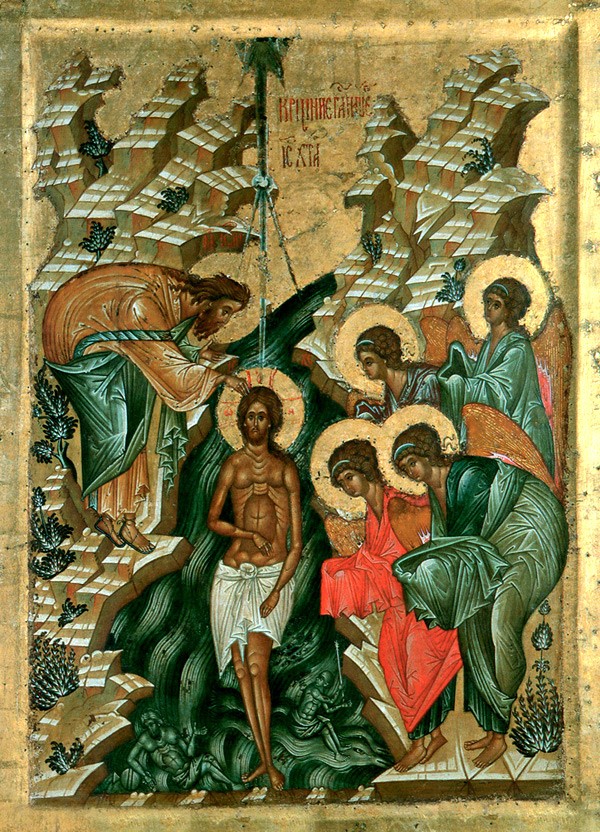
A Homily On The Lord’s Descent Into the Jordan

In the Name of the Father, and of the Son and of the Holy Spirit.
Dear brothers and sisters, greetings as we celebrate the Baptism of Our Lord, and God, and Saviour, Jesus Christ!

The celebration of the Lord’s Baptism, is central not only to our Christian year, but to the very fabric of our Orthodox spirituality, and our understanding and experience of God’s immanence through His sanctification of creation and the gift of His grace.

Whilst the focus of the Christian west on the Lord’s Cross and passion constantly overlooks His baptism, we Orthodox Christians joyfully and enthusiastically celebrate the Theophany in the Jordan as a crucial act in the Saviour’s redemptive work, and which the Church Fathers saw as central to the economy of salvation.

Whilst the Lord’s Cross and passion is the altar of His sacrifice, His descent into the Jordan and baptism by John, is the mystery by which humanity is reclothed in the robe of glory, which Adam wore of old, but lost through his rebelliousness and disobedience.

Theophany is Christ’s baptismal calling to us, through which both individual Christians and their corporate totality, the Church, are betrothed to Christ the Bridegroom, Who mercifully deigned to come to find that which was lost.

St Jacob of Sarug uses Adam’s name and person to represent the whole human race, and in his surviving homily on the Lord’s baptism, He poetically places words into the Saviour’s mouth, as He speaks to John of His baptism being crucial to His descent, incarnation and redemptive mission.

“Our Lord said, “I am not lacking, but in one thing: the recovery of Adam who was lost by me is sought by me.

Allow me to descend to seek Adam, the fair image, and when I shall find him, the whole of my desire will be fulfilled…

In this recovery my desire will come to perfection,

because Adam is needed by me to enter into his inheritance.

Therefore, allow me to descend to cleanse the image that has become faded…”

We are struck with the fact that the Creator’s immovable and unfading love for humanity is such that it impels Him to search and to save.

Having created Adam and Eve as not only the apex of creation, but as the primary recipients of His absolute and all-perfect love, that love demands that humanity is cleansed, and that the divine image and likeness is restored in God’s lost sons and daughters.

How daring to suggest that even though He lacks nothing, the divine will of salvation is manifested in the Saviour’s voluntary “need” to seek the lost, to restore the inheritance of eternal life to his fallen children.

Christ’s descent into the Jordan is an integral part of this restoration of Adam (humanity), and a foreshadowing of His descent into Hades.

This is reflected in the hymns of the feast, in which water is the symbol of spiritual chaos and a place of unrestrained forces, and darkness that mirrors Hades.

In ode four, the second canon of matins speaks of this, and significantly celebrates Christ’s descent into Jordan as not only for the deliverance of humanity, but for the redemption of ALL creation.

“That He might bring His own back to the life-giving pastures of paradise, the Word of God falleth upon the lairs of the dragons, and destroying their manifold snares, he assaileth him who hath bruised all mankind, and, imprisoning him, delivereth creation.”

As He is immersed in the Jordan, in a reversal of the normal spiritual operation of baptism, Christ Himself sanctifies the waters, as they are cleansed by Him, and He establishes the Baptismal Mystery as the rebirth and regeneration of those who follow Him, in the establishment of spiritual order and harmony and the subjugation of chaos and lawlessness.

Just as Christ came down from heaven at the Annunciation, to enter the womb of the Mother of God, so by His descent, the waters of Jordan, become a womb in which humanity is born anew through baptism in the Name of the Trinity, Which is gloriously made manifest as the Only-Begotten Son ascends from the waters, the confirmatory voice of the Father is heard from heaven, and the Holy Spirit descends in the likeness of a dove.

In the verbal iconography of his metrical homily, St Jacob portrays Christ speaking of fallen humanity:

“I am making them enter into the moist womb, so that it will conceive them / and give them the new birth without birth pangs.”

Through the consecration of the Jordan through the Lord’s descent into its waters, the font becomes the spiritual womb in which new life in Him is conceived, as we the faithful are reborn as a new-creation through our joining to Him: in our descent into His death and our ascent in the power of His Resurrection.

Even before the great commission, in which the Lord charged the Apostles to preach to all nations, baptising them in the Name of the Father, and of the Son, and of the Holy Spirit, our baptism was established and sanctified by His own baptism for our sake, and for our salvation.

As St John Chrysostom reminds us, a significant difference between the baptism of John and that established by the Lord in His consecrating entry into the waters, is that the Jordan calls us not only to a baptism of repentance, but to baptism of new life in Christ.

As the third ode of the canon tells us,

“The Master draweth to Himself the divinely fashioned nature of man, which had been overcome by the tyranny of greed; and He restoreth mortal men, granting them a new birth, and accomplishing thereby a mighty work; for He is come to cleanse our nature.”

Our very human nature should be changed by the Mystery of Baptism, and our post-baptismal self should be that of a person radically changed by our mystical descent into Christ’s death, and our ascent in the power of His resurrection, which later sealed the inner meaning of this Holy Mystery, as He went to His voluntary passion.

We should each have put off the old man, to be reclothed in glory, having “put on Christ”, and this glorious Theophany should call us to reflect upon whether this is truly the spiritual reality of our lives, particularly for those who were baptised in infancy and are unable to remember life before their baptism.

As those betrothed to Christ through baptism, and as children of His resurrection, do we really seek to live as a new creation, with lives spiritually and morally set apart from the fallenness, brokenness and dysfunctionalism of the world?

If we find ourselves lacking, then enlivened, fortified and raised up by this glorious Theophany, we must rouse ourselves to action, repentance and newness of life – blessed and set aright as we share in God’s sanctifying grace, partaking of the Holy Water blessed upon this feast, mindful that at its sanctification, we have prayed…

“That these waters may be sanctified by the power, effectual operation and descent of the Holy Spirit…

That there may descend upon thse waters the cleansing operation of the super-substantional Trinity…

That He will endue them with the grace of redemption, the blessing of Jordan, the might, operation, and descent of the Holy Spirit…

That the Lord God will send down the blessing of Jordan and sanctify these waters…

That this water may be unto the bestowing of sanctification; unto the remission of sins; unto the healing of soul and body: and unto every expedient service…

That this water may be a fountain welling forth unto life eternal…

For those who shall draw of it and take of it unto the sanctification of their homes…

That it may be for the purification of the souls and bodies of all those who, with faith, shall draw and partake of it…

That He will graciously enable us to perfect sanctification by participation in these waters, through the invisible manifestation of the Holy Spirit, let us pray to the Lord.”

Take heed to the last petition!

We are not idle bystanders, but are called to be participators in this feast; to not be onlookers, but to spiritually stand on the banks of the Jordan as we enter into the cosmic spiritual renewal to which the Church calls us each and every year.

Let us be in awe, that the Creator of the land, the rivers and seas, the sun, moon and stars, of the angelic hosts and the race of men should humble Himself beneath the hands of the Forerunner for the healing, restoration and raising up of each of us.

Let us be in awe, that the worship of the Trinity should be made manifest in the glorious Theophany of the Father, the Son and the Holy Spirit together.

Let us fall down in humility, penitence and the fear of God, filled with awe that in this feast we have truly seen that “God is the Lord,and hath revealed Himself to us!” calling us to rush to the renewal of Jordan in our temples and parishes and partake of His Grace!

With the fear of God and Faith draw near!

Amen!

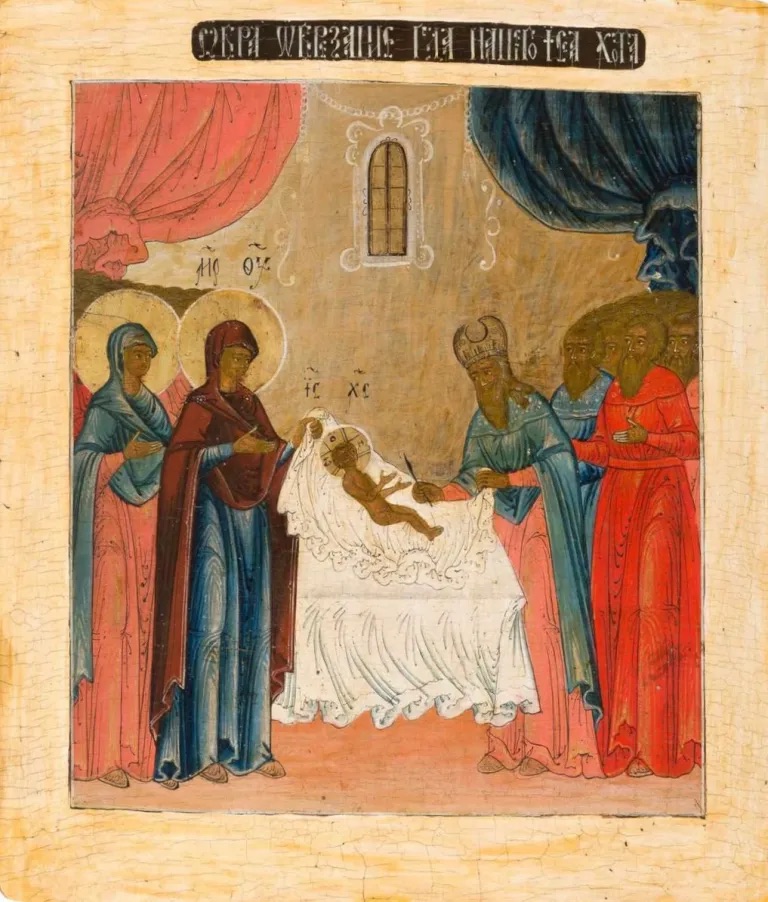
On the Feast of the Circumcision of Christ

Troparion, Tone I: O Jesus, Who in the highest dost sit with Thine unoriginate Father and the divine Spirit upon a fiery throne, thou wast well-pleased to be born on earth of Thy Mother, a Maiden who knew not man; wherefore, thou wast circumcised as a babe eight days of age. Glory to Thine all-good counsel! Glory to Thy dispensation! Glory to Thy condescension, O Thou Who alone lovest mankind!

In the Name of the Father, and of the Son, and of the Holy Spirit.

As we celebrate the eighth-day circumcision of the Infant Saviour, we see His merciful willingness to suffer for us, even as a new born child whose innocent blood is shed in His self-emptying and self-denying humility.

Thus, we behold not only the reality that the Only-Begotten Word has been made man, clothing Himself in human flesh, born in Bethlehem and laid in the manger, but we see that within the first days of His earthly life, He willed to be subjected to pain and the shedding of blood – a fore-shadowing of His Cross and Passion, even though His earthly birth was so few days ago.

He suffered even in His infancy precisely because He chose to become incarnate – showing that His flesh and blood, and human nature are not an illusion and mere semblance of humanity, but that as the New Adam, He is truly clothed in Adam’s flesh, by which – as Lamb of God – He will redeem us by that same precious blood, restoring His image in the first-parents and the subsequent generations of those who follow Him.

Moreover, as the seed of Abraham, whom He not only created, but called from Ur and promised that he would become the father of a multitude, He conforms Himself to the circumcision that He Himself, as Yahweh the Lord, demanded of Abraham and his descendants.

The God-man, subjects Himself to the Law which He, Himself has given!

The Saviour Who will be obedient to the death of the Cross, is obedient to the Covenant He Himself established with the great patriarch, of whom He would later say, “Before Abraham was, I am.”

What paradoxes we see.

He Who created Adam and Eve, lies as a helpless Child to be circumcised with the shedding of blood and the pain of fleshly suffering.

He Who visited Abraham at the Oak of Mamre and promised him a son, not only becomes his child in the flesh, but subjects Himself to the sign of His human descent from the father of the covenant.

He Who spoke to Moses from the Burning Bush, and gave him the Law upon Sinai is now speechless as a babe – the Eternal Logos without words in the silence of submission to the Law.

He Whom Ezekiel saw borne upon the heavenly chariot-throne, seated upon the four-faced cherubim, and the wheels-within-wheels, full of eyes, is now circumscribed within the body of an eight day old child, borne in the arms of Joseph, a vulnerable baby before the knife of circumcision.

Just as the Incarnation itself is a scandal to the impious and infidels of the world, so this circumcision is also a scandal to the world, but its shocking reality is a demonstrative sign of God’s condescending and limitless love, and a challenge to modern day Docetism – that heresy which denies the Incarnation, reducing the Lord to a spiritual being with the mere appearance of a human being, nothing more than spectral avatar, whose flesh is nothing more than a symbol.

No! This feast shouts loudly that Christ’s humanity is real, as He bleeds human blood, just as He would on Golgotha.

It also challenges the sickly, saccharine, Victorian “Away in a manger”sentimentalisation of the Incarnation and Nativity, by contrasting it the with the vocation of the Word made flesh, Who came to be a sacrificial Lamb and sheep for the slaughter, and with the spiritual violence of Golgotha, the conquering of hell and the victory of the Cross.

The real baby who bleeds on the eighth day, will grow up to be the Redeemer of mankind Who bleeds upon the Cross, shattering the gates of Hades and opening the gates of heaven not only to the children of Abraham, but to all of the sons and daughters of Adam and Eve, as heirs of paradise and children of the promise.

With the circumcision of the Infant Saviour, and the shedding of His blood, the journey of redemption and the Way of the Cross begins.

O Jesus, how precious is Thy blood!

Amen.