As we celebrate St David’s day according to the Orthodox calendar, I greet you all with the feast, wishing you every joy, praying for God to bless you in fulfilling the saint’s words: ‘Be joyful, keep the faith, and do the little things…’
It is in doing the seemingly little things that we remain steadfast in our faith and are then able to do the big things.
Real Christianity is not an impressionistic picture painted in approximate, broad and wide brush strokes, but one in which our faith is realised in the small details of living the Gospel in our daily lives, in our families and communities.
This doesn’t mean that there is necessarily something warm and cosey about these little things, as they often challenge us precisely because they are not vague, but exact, close-up and discernible – in action and in omission!
Common parlance likes to say that ‘the devil is in the details’. Maybe, but so too is FAITH, and St David knew that.
Gwnewch y pethau bychain!
This Friday will see the arrival of the wonderworking Kursk-Root icon in Cardiff, and it will be greeted at St John’s Church in Canton for a moleben with the akathist at 19:00.
We ask the faithful to be ready and waiting and not to be late. Treat the reception as the meeting of the Mother of God, who blesses us with the visit of her icon, through which the faithful have been consoled and healed since it was discovered amongst the oaks of Kursk in 1259. The moleben should commence at 19:00, so please try be in church by 18:45.
Church set-up will be from 18:00, and Father Luke will be there, which may allow time for some confessions before the greeting of the icon.
After the moleben and veneration, the icon will proceed to Cheltenham for a service on Saturday, and then to Telford.
Given the travels of the clergy, the only opportunity for confession with me will be during the day on Thursday on the way to London, so I need to receive confession requests NOW.
I also ask that confessions are precise and succinct, as Deacon Mark and I have to go to London on Thursday, to allow an early departure from London on Friday. This is also true of Sunday confessions now that we are celebrating the Liturgy of St Basil and cannot stall service times. This is the only opportunity in the week for those travelling from England, and we need to be able to fit in as many confessions as possible.
Contrary to what was said in church, I need confession requests for by TOMORROW night: otetzmark@hotmail.com
As announced in church on Sunday, the Great Canon of St Andrew is being chanted in Llanelli on the first four evenings of this week in the Chapel of St David and St Nicholas at 19:00.
Additionally, through the good offices of Father Dean and Georgina, we will chant Great Compline with the Great Canon in the church of St Mary Butetown on Wednesday and Thursday, at 19:00.
On Friday, we will continue our catechesis sessions for learners and ‘refreshers’, preceded by a moleben to St Theodore and the blessing of Kolyva. As on past Fridays, this will be in the parish room at St Mary’s at 19:00.
Saturday, being the second of the month, sees us head to Cheltenham to celebrate the Divine Liturgy, with confessions from 09:15 and the Hours at 10:00, followed by Liturgy as soon as confessions have finished. Location: United Reformed Church, Deep Street, Cheltenham. GL52 3AW.
Will all requiring confessions email me by Thursday please, with Thursday and Friday giving opportunity for confession, and Saturday, if needed? Any Cardiff parishioners heading to Cheltenham may confess there, after Liturgy, in preparation for Sunday.
With Sunday being the Feast of the Triumph of Orthodoxy, may I ask you all to bring an icon, so that we may make a procession / krestny khod around the church, at the end of Liturgy (weather permitting) to celebrate the restoration of the holy icons in 843.
Services will be in St John’s at the usual time, with confessions from 10:15, and the Hours and Liturgy at 11:00. As we will be celebrating the longer Liturgy of St Basil, it is important that we seek to avoid delay. We understand that those coming distances are unable to confess during the week, which makes it imperative that local parishioners confess before Sunday morning.
During Great Lent, priority will be given to those travelling from outside Wales; those travelling from West Wales; and those who have no possibility of weekday or Saturday confessions.
Please communicate with the clergy, so that we are able to make arrangements so that nobody is excluded.
The last notice is the reminder that the Wonderworking Kursk-Root Icon will be making a brief but very welcome visit to Cardiff on Friday 18th March, with a moleben being celebrated in St John’s at 19:00. We will hold a moleben in Cheltenham the following morning, before the Cardiff clergy take the icon to Telford. The visit may be short, but what a joy it will be to honour the Mother of God by receiving her grace-filled icon.
Now, for the head-masterish Lenten bit:
All should be following the Lenten Fast, whether communing or not, and not following a regimen of their own making. If there are personal obstacles to fasting, they need to be discussed with the priest or spiritual father.
If the fast has been broken this MUST be confessed. There is no self-absolution.
Before communing, the Sunday Fast is to be TOTAL, unless blessed to be otherwise for whatever reason. Despite the late hour of Liturgy and communion, this includes drinking. Again, if there is a problem, talk to the clergy, who are sympathetic and realistic. Again, self-given dispensations are to be avoided, and the usual one is simply defeatism, human weakness, and a self-justified ‘need’.
The Divine Liturgy, is not a ‘drive-by’ event, and unless living at a distance, those communing should be part of the week-by-week life of the Church. If you are local and have not been attending for some time, it is necessary to become part of the worshipping community again before a blessing to receive the Holy Mysteries will be given. This is not intended for our parishioners travelling from England, some of whom cannot make the journey too often, but for those on the doorstep.
According to our fasting traditions, we do not simply turn to sea-food as a Lenten larder. Octopus stew, lobster, crab and tiger prawns are hardly ascetical – whatever may be thought in Mediterranean climes about creatures lacking back-bones This may be normal elsewhere in the Orthodox world, but apart from Lazarus Saturday when ikra/caviar is permitted, and fish on the feast of the Annunciation and Palm Sunday – our Lenten diet should be VEGAN. For those with good reason, economia is applied, but this is given by the Church, not by self-determination and self-dispensation.
Olive oil and wine are permitted on weekends as a consolation with which we celebrate the Sabbath and the Lord’s Day.
Rather than having forty days of dietary substitution (potentially expensive), adults should all be eating as simply and as little as little as possible, unless this is not appropriate due to personal circumstances.
Instead of spending lots of money on substitute foods in the health-food shop or ‘free-from’ aisle of the supermarket, eat cabbage, kasha and potatoes and give the money to support homeless and destitute refugees.
But remember… it is far more important to pray more than eat less! Without this being a season of spiritual struggle and prayer, dietary fasting will have no meaning.
Wishing you all a good struggle during the season.
Here we are on the eve of the Great Fast, at the end of a week which would have normally had a festive character, but this year, few of us have even given a thought to Maslenitsa.
The life of the past week has been blurred by the tears of our communities, and the urgency of prayer has banished other concerns, as our supplications for the suffering Ukrainian people have been focussed by the personal lives and plights of the family members and friends of our parishioners: in Kiev, in Kharkov, in Mariupol, in Odessa and throughout Ukraine.
Doubts may enter our heads in the face of violence, tragedy and suffering, as we question the effectiveness or usefulness of our individual prayers in the geo-political turmoil of the present.
The spider’s web of doubt is the snare to catch us and stop us praying; to stop us struggling; to stop us turning Godwards; at a time when we should struggle through our human weakness by praying as we have never prayed before.
Each of us should pray as if we were the only soul in the world interceding for the Ukrainian people; and each of us should pray as if the whole weight of the Ukrainian land was on our shoulders.
When we pray with such zeal, and urgency, when our prayers are joined with those who pray in Ukraine and throughout the world, then a truly unimaginable force joins earth to heaven, and the power of this prayer is also manifested in how it can change each of us.
The human capacity to love is immense, but so too is the human capacity to hate, and in circumstances like those of today, it is so easy for hate to blind our spiritual eyes, and to deafen our ears to Christ’s command to love.
Hate dehumanises, and consequentially causes us to dehumanise, so that we no longer see the image and likeness of God in others, and it is in this dehumanised blindness and deafness that human beings simply become ‘collateral damage’.
The passions may boil and rise, so that we are subtly but effectively penetrated by the same dark, sinful forces manifest in the violent actions of others. We simply hide our violence and murderous feelings within our thoughts and in a darkening and hardening heart, in which the Light of Christ is smothered by hate, vengeance and intolerance.
As we see great suffering, as strong feelings and reactions are stirred within us, in praying for all caught up in the present tragedy, we must surrender ourselves to God, to allow Him to take us on what may seem an impossible journey to forgiveness, mercy and compassion, as the present events and our fallen instincts pull us in contrary directions.
We must heed the holy fathers in the strict custody of the mind and thoughts, knowing and understanding how easy it is to be drawn away from the path of prayer by what may seem justified and necessary thought, fact finding and analysis – when the greatest, most-powerful and most-loving thing we can do is to abandon ourselves to the Lord in prayer.
If we are honest, we are sometimes reluctant to pray, knowing that prayer will challenge our emotional and psycho-spiritual status quo, and may take us somewhere we do not wish to go or be, when we simply want our decided opinions and adopted position confirmed and approved, even if they are at odds with the radical and challenging demands of the Gospel.
As we see violence and aggression, we face the Gospel-challenge to recognise and affirm that every human being is created in the image and likeness of God, and that our shared humanity is the robe of God Incarnate.
Prayer is vital for this realisation, and we must pray recognising that prayer is the place and time in which we must surrender to God in the struggle not to hate; in the struggle to refrain from anger and violent thoughts; in the struggle to understand how it is possible to forgive inhumanity and tyranny, when we see indescribable suffering and cruelty.
We must pray, believing in the power of prayer and believing that faith may move mountains, but also pray so that Christ may work in us, making the seemingly impossible possible, and for the power of the Holy Spirit to enter and abide in us as the Comforter, the Giver of Life and Treasury of Blessings – to cleanse us of every impurity and grant us the spiritual gifts to counter anger, hate, intolerance, and violent and murderous thoughts.
Even as the war rages in Ukraine, the age-old cosmic battle between good and evil potentially rages within each of us, as the devil seeks to steal our souls through anger, hate, the inner lust for vengeance, and the clamorous scream for retribution in a rebellion against Christ and the counter-intuitive upside-downess of the Gospel of love.
So, as we begin the Fast, through prayer, we must seek the strength and capacity to love those who hate; to be merciful to the merciless; to forgive the unforgiving; to be gentle to the cruel; to face cruelty with compassion; to fight hate with tolerance; to face evil with good; to make our hearts overflow with God’s superabundant mercy.
Yet again, I think of the much-repeated and often-quoted words of Abba Isaac the Syrian:
“What is a merciful heart? It is a heart which is burning with a loving charity for the whole of creation, for men, for the birds, for the beasts, for the demons – for all creatures. He who has such a heart cannot see or call to mind a creature without his eyes being filled with tears by reason of the immense compassion which seizes his heart; a heart which is so softened and can no longer bear to hear or learn from others of any suffering, even the smallest pain, being inflicted upon any creature. This is why such a man never ceases to pray also for the animals, for the enemies of truth, and for those who do him evil, that they may be preserved and purified. He will pray even for the lizards and reptiles, moved by the infinite pity which reigns in the hearts of those who are becoming united with God.”
These beautiful words are closely mirrored by Dostoevsky, on the lips of Father Zosima in The Brothers Karamazov:
“Love a man even in his sin, for that is the semblance of Divine Love and is the highest love on earth. Love all God’s creation, the whole of it and every grain of sand in it. Love every leaf, every ray of God’s light. Love the animals, love the plants, love everything. If you love everything, you will perceive the divine mystery in things. Once you have perceived it, you will begin to comprehend it better every day, and you will come at last to love the world with an all-embracing love.”
These words challenge us to the podvig of struggling to love by allowing Christ to love in us and through us, no matter how impossible it may seem for us to love and forgive.
On this Sunday of Forgiveness, many will be shaking their heads asking how they can possibly forgive; how to love, how to even consider loving enemies, and how God can expect us to do so.
The answer is for us to abandon ourselves to God as we immerse ourselves in prayer, so that by His working in us, the seemingly impossible may become not only possible, but a reality, and that like St Isaac we may feel love and compassion for the whole creation, even the offender and transgressor, who has been ensnared by the enemy of mankind.
Bereft of love, we must surrender ourselves to God, bowing down in fervent prayer and asking God to kindle love within our cold hearts, so that they may not only be warmed, but become enflamed with His love, that we may seek God in all things and all places, and see God in all things and all places, no matter how ugly, how broken, how dysfunctional or dangerous.
We must surrender ourselves to God and seek to begin the journey to love and forgiveness, holding our hands out to Christ when we are sinking into the depths that threaten to swallow us, so that He may lead us hand-in-hand over the waves to safety.
Brothers and sisters, let us be united in prayer during the Great Fast, as we have been united in the past sorrowful week, weaving our prayers together as an offering to the Lord, and in these prayers, let us beg Him to help us to forgive and love – becoming mirrors of the great, selfless outpouring of His mercy on mankind, heeding the unequivocal challenge of the Gospel:
“For if ye forgive men their trespasses, your heavenly Father will also forgive you: But if ye forgive not men their trespasses, neither will your Father forgive your trespasses.”
… words that are not easy, but the key to the Kingdom of Heaven.
If we believe that Christ is risen from the dead; if we believe that he changed water into wine; if we believe that He healed the blind and deaf, the possessed, the halt and lame; if we believe that He walked upon the waves; if we believe that He raised the dead… we must believe that He can lead each of us to forgiveness and love, against all the odds and every obstacle, and that as the Creator He is able to make us anew and renew a right spirit within us.
As we enter the Great Fast, let prayer be the path to this renewal and the radiant reflection of Christ, in each and every one of us.
Dame Edith Sitwell reciting her beautiful religious poem “Still Falls the Rain (the Raids, 1940, Night and Dawn)”.
Still falls the Rain – Dark as the world of man, black as our loss – Blind as the nineteen hundred and forty nails Upon the Cross.
Still falls the Rain With a sound like the pulse of the heart that is changed to the hammer-beat In the Potter’s Field, and the sound of the impious feet
On the Tomb: Still falls the Rain
In the Field of Blood where the small hopes breed and the human brain Nurtures its greed, that worm with the brow of Cain.
Still falls the Rain At the feet of the Starved Man hung upon the Cross. Christ that each day, each night, nails there, have mercy on us – On Dives and on Lazarus: Under the Rain the sore and the gold are as one.
Still falls the Rain – Still falls the Blood from the Starved Man’s wounded Side: He bears in His Heart all wounds, – those of the light that died, The last faint spark In the self-murdered heart, the wounds of the sad uncomprehending dark, The wounds of the baited bear – The blind and weeping bear whom the keepers beat On his helpless flesh… the tears of the hunted hare.
Still falls the Rain – Then – O Ile leape up to my God: who pulles me doune – See, see where Christ’s blood streames in the firmament: It flows from the Brow we nailed upon the tree
Deep to the dying, to the thirsting heart That holds the fires of the world, – dark-smirched with pain As Caesar’s laurel crown.
Then sounds the voice of One who like the heart of man Was once a child who among beasts has lain – “Still do I love, still shed my innocent light, my Blood, for thee.”
“Ivanushko, Ivanushko, eat our bread and salt, and not Christian blood.”
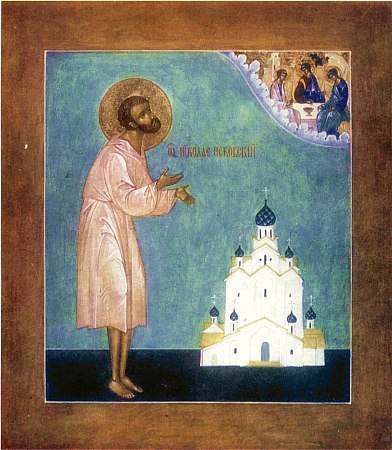
In February 1570, after a devastating campaign against Novgorod, Tsar Ivan the Terrible moved against Pskov, suspecting the inhabitants of treason. As the Pskov Chronicler relates, “the Tsar came … with great fierceness, like a roaring lion, to tear apart innocent people and to shed much blood.”
On the first Saturday of Great Lent, the whole city prayed to be delivered from the Tsar’s wrath. Hearing the peal of the bell for Matins in Pskov, the Tsar’s heart was softened when he read the inscription on the fifteenth century wonderworking Liubyatov Tenderness Icon of the Mother of God (March 19) in the Monastery of Saint Nicholas (the Tsar’s army was at Lubyatov). “Be tender of heart,” he said to his soldiers. “Blunt your swords upon the stones, and let there be an end to killing.”
All the inhabitants of Pskov came out upon the streets, and each family knelt at the gate of their house, bearing bread and salt to the meet the Tsar. On one of the streets Blessed Nicholas ran toward the Tsar astride a stick as though riding a horse, and cried out: “Ivanushko, Ivanushko, eat our bread and salt, and not Christian blood.”
The Tsar gave orders to capture the holy fool, but he disappeared.
Though he had forbidden his men to kill, Ivan still intended to sack the city. The Tsar attended a Molieben at the Trinity cathedral, and he venerated the relics of holy Prince Vsevolod-Gabriel (February 11), and expressed his wish to receive the blessing of the holy fool Nicholas. The saint instructed the Tsar “by many terrible sayings,” to stop the killing and not to plunder the holy churches of God. But Ivan did not heed him and gave orders to remove the bell from the Trinity cathedral. Then, as the saint prophesied, the Tsar’s finest horse fell dead.
The blessed one invited the Tsar to visit his cell under the bell tower. When the Tsar arrived at the cell of the saint, he said, “Hush, come in and have a drink of water from us, there is no reason you should shun it.” Then the holy fool offered the Tsar a piece of raw meat.
“I am a Christian and do not eat meat during Lent”, said Ivan to him. “But you drink human blood,” the saint replied.
Frightened by the fulfillment of the saint’s prophecy and denounced for his wicked deeds, Ivan the Terrible ordered a stop to the looting and fled from the city. The Oprichniki, witnessing this, wrote: “The mighty tyrant … departed beaten and shamed, driven off as though by an enemy. Thus did a worthless beggar terrify and drive off the Tsar with his multitude of a thousand soldiers.”
Blessed Nicholas died on February 28, 1576 and was buried in the Trinity cathedral of the city he had saved. Such honors were granted only to the Pskov princes, and later on, to bishops.
The local veneration of the saint began five years after his death. In the year 1581, during a siege of Pskov by the soldiers of the Polish king Stephen Bathory, the Mother of God appeared to the blacksmith Dorotheus together with a number of Pskov saints praying for the city. Among these was Blessed Nicholas (the account about the Pskov-Protection Icon of the Mother of God is found under October 1).
At the Trinity cathedral they still venerate the relics of Blessed Nicholas of Pskov, who was “a holy fool in the flesh, and by assuming this holy folly he became a citizen of the heavenly Jerusalem” (Troparion). He also “transformed the Tsar’s wild thoughts into mercy” (Kontakion).
Blessed Nicholas of Pskov, pray to God for us, for we eagerly flee unto thee, as a fervent helper, and intercessor for our souls!
Kontakion, Tone 8: Thou wast revealed as a wonderworker, O Nicholas, / when thou didst turn the Tsar’s power from wrath to mercy, / and so a fervent intercessor hath appeared in our land. / Now we entreat thee, O Saint: “Remain with us once more and protect us from the wiles of the Enemy; / for thou art the glory and affirmation of the city of Pskov and of all those who love Christ.”
At the end of this ‘cheese week’, in which we use up dairy food and eggs, Sunday will not only have the celebration of the Divine Liturgy, but also the Forgiveness Vespers, which will mark the beginning of the Great Fast.
So, in the week ahead, use up all of the proscribed foods, ready to start the Great Fast seriously. Avoid being one of those sloppy repeat-offenders who find themselves using up dairy food during the first days of Lent, saying that it would be a sin to bin the food – having repeated this this year after year.
Looking ahead, think about the distractions that should be limited or even put aside during the Lenten Season: television and radio, secular music, social media, gaming, unnecessary phone calls and emails. Fasting from these is as much a part of the Great Fast as the dietary fast.
Our focus should be on things spiritual and heavenly: prayer, spiritual reading, acts of mercy, serving others. Prepare for a season of not simply inner repentance, but of active virtue and mercy.
In Forgiveness Vespers, which will follow the Divine Liturgy, we will liturgically enter the Great Fast after the evening entrance, with the vestments changing to Lenten purple at ‘Vouchsafe, O Lord…’ and the Lenten melodies of ‘Gospodi Pomiluy’ marking the beginning of Lent.
The variables of Forgiveness Vespers may be found here:
The service ends with the rite of mutual forgiveness, and we should strive to ensure that we are at peace with everyone, trying to put right any disagreement, and seeking reconciliation.
Though we will have celebrated the Forgiveness vespers, we will have our last pre-Lenten refreshments until Pascha. Please remember, meat is no longer permitted, when preparing food for our bring-and-share lunch.
Our catechism/study-group will meet once more in the parish room at St Mary Butetown, in North Church Street at 19:00, and I will hear confessions from 18:00 – for those who have made prior arrangement.
As usual, I ask all needing confessions this week to email me, and again ask that this is by Wednesday night to allow planning for Friday and Saturday, given that there may be more confessions than usual: otetzmark@hotmail.com
This week should be one of preparation, as we think about what we will be eating during the Great Fast, what spiritual books we will be reading, what extra prayers we will undertake.
The weight of the present situation in Ukraine bears upon us, and perhaps makes clear to us what extra prayers we should be saying, for the people of both Ukraine and Russia, for the peace and reconciliation which each of us seeks at the beginning of the penitential season.
Looking forward to the first week of the Fast, the Canon of Repentance of St Andrew of Crete, will be chanted from Monday to Thursday evening at 19:00 in the Chapel of St David and St Nicholas in Llanelli.
In the meantime, I encourage you all to undertake extra prayers for the people of Ukraine, and for peace and an end to bloodshed. I know that some of you are already praying the Akathist to the Mother of God, the Softener of Evil Hearts, and encourage others to join this. The English and Slavonic links are below.
Ode 1, Irmos: I will open my mouth, and with the Spirit will it be filled; and I shall utter discourse unto the Queen and Mother, and shall be seen keeping splendid festival; and, rejoicing, I shall hymn her wonders.
Most Holy Mother of God, save us.
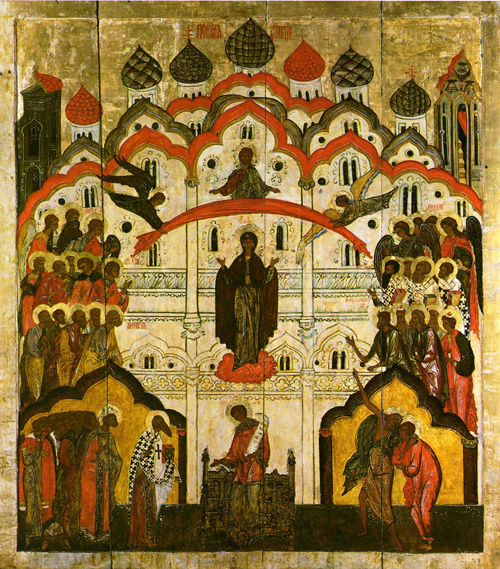
Having entered the church in great glory today as the Mother of God, with the ranks of the holy angels and the assemblies of the prophets and apostles, thou prayest for all Christians and deliverest them from perils and grief, covering them with thy mercy.
Most Holy Mother of God, save us.
Moses called thee the tabernacle and the rod of Aaron, for thou didst put forth Christ, the Tree of life; and as thou hast boldness before Him, O Queen, pray thou for us who honour thee, that He deliver us from all evil, that we may glorify the feast of thy protection.
Glory be to the Father, and to the Son, and to the Holy Spirit.
Assembling choirs, David doth dance, not as he did before the ark of old, but even more now, hastening into thy presence in the church with the ranks of the saints. And bowing down before thee, we say: Pray thou for us, the people who honour thee, that, glorifying thy protection, we may celebrate it with honour.
Both now and ever, and unto the ages of ages. Amen.
The ranks of the angels hymn thee, O Theotokos, and the patriarchs and holy hierarchs glorify thee, hastening into thy presence in the church. And the holy Andrew then beheld thee with them, praying to God for us sinners, that He have mercy upon the people who glorify the feast of thy protection.
Ode 3, Irmos: O Theotokos, thou living and abundant fountain, in thy divine glory spiritually establish those who hymn thee, forming themselves into a choir, and vouchsafe unto them crowns of glory.
Most Holy Mother of God, save us.
Like an unploughed field thou didst manifestly produce the divine Grain. Rejoice, O animate table holding the Bread of life! Rejoice, O Mistress, thou inexhaustible wellspring of the Water of life!
Most Holy Mother of God, save us.
O Mistress, we, thy people, standing before thee with faith in thy church, await thy mercy. Visit our lowliness, and with thy holy protection defend the Orthodox people from all evil.
Most Holy Mother of God, save us.
O far-famed Virgin who was honourably prefigured by the prophets, with the angels they now do thee homage. Pray thou to God with them, that, rejoicing, we may all splendidly celebrate thy holy protection today.
Glory be to the Father, and to the Son, and to the Holy Spirit.
Gideon prefigured thee as a fleece, for Christ God descended upon thee like dew. Pray thou to Him, O Theotokos, that He grant victory to our Orthodox hierarchs over all heresies, that, casting them down like the Midianites, they may glorify thy holy feast.
Both now and ever, and unto the ages of ages. Amen.
O Theotokos, with thy radiant omophorion thou lightest the church and the people more than the rays of the sun, and by thy visitation drivest away the darkness of our sins, praying for us to thy Son and God.
Lord, have mercy. Lord, have mercy. Lord, have mercy.
Sedalion, Tone 5: O pure Ever-virgin, fervent and invincible intercessor, excellent and unashamed hope, bulwark, protection and refuge of those who have recourse to thee: with the angels beseech thy Son and God, that He grant compunction, salvation and great mercy to the world.
Glory be to the Father, and to the Son, and to the Holy Spirit; both now and ever, and unto the ages of ages. Amen.
Ode 4, Irmos: Seated in glory upon the throne of the Godhead, Jesus most divine is come upon a light cloud, and with His incorrupt arm hath saved those who cry: Glory to Thy power, O Christ!
Most Holy Mother of God, save us.
O most hymned Virgin, we cry out to thee in voices of hymnody: Rejoice, thou butter mountain, curdled by the Spirit! Rejoice, O lampstand, O jar bearing the Manna which sweeteneth the senses of all the pious!
Most Holy Mother of God, save us.
O Theotokos, God hath sanctified thee wholly, more than the ark of Aaron, and hath commanded the saints and angels to do thee homage. With them pray for the city and people who glorify thine honoured feast.
Most Holy Mother of God, save us.
O Theotokos, come now in glory unto thy church, with the councils of all the saints, as once the holy Andrew beheld thee in the air, radiantly praying for Christians; and grant us thy mercy.
Glory be to the Father, and to the Son, and to the Holy Spirit.
Strengthen our Orthodox hierarchs against all heresy and schism, as God did David against Goliath, O Mistress, that in gladness we may cry to thee: Rejoice, O holy protection and helper of our city!
Both now and ever, and unto the ages of ages. Amen.
With faith do we fall down before thee, O Lady, and, rendering homage with thanksgiving, we cry out to thee: Rejoice, O Virgin full of the grace of God, our protection and wall of defence, the helper of those in misfortune! Save us who have recourse to thee, for in thee do we place our trust!
Ode 5, Irmos: All things are filled with awe by thy divine glory; for thou, O Virgin who knewest not wedlock, didst hold in thy womb Him Who is God over all, and thou gavest birth to the timeless Son, granting peace to all who hymn thee.
Most Holy Mother of God, save us.
Of old, Solomon described thee as the marriage-couch and bed of the King of heaven, and spake of thee as surrounded by the seraphim, O Theotokos. Wherefore, we now beseech thee, O most holy Mother of God: Protect us from all misfortunes!
Most Holy Mother of God, save us.
To thee do the foremost among the angels and the honoured prophets and apostles render service with honour as the Mother of God, beholding thee making supplication for the world; and the Lord, hearkening to thine entreaties, doth save thy city and people who place their trust in thee.
Glory be to the Father, and to the Son, and to the Holy Spirit.
Isaiah, great among the prophets, prophesied thee, saying that without knowing wedlock thou wouldst give birth to God; for thou, O pure Mary, wast more holy than all, in that thou didst bear God in thy womb and in thine arms. To Him pray thou for us, with thy protection covering those who faithfully glorify thee.
Both now and ever, and unto the ages of ages. Amen.
Spreading spiritual wings, the councils of the saints came mystically to do thee homage, O Theotokos, beholding thee on the light cloud of glory, praying to Christ the Saviour, that He grant victory to our Orthodox hierarchs, to prevail over all heresy and schism.
Ode 6, Irmos: Celebrating this divine and most honoured festival of the Mother of God, come, ye divinely wise, let us clap our hands and glorify God Who was born of her!
Most Holy Mother of God, save us.
Divinely wise priests, standing in thy church with the pious people, await thy mercy, O Theotokos. Transform our grief into joy, in that thou gavest birth to the Joy Who hath done away with the sins of all men.
Most Holy Mother of God, save us.
To thee doth all the earth offer gifts as to the Queen and Mother of God. Kings and princes bow down in homage, and all the people are glad, protected from all evil by thy supplications, O Theotokos.
Glory be to the Father, and to the Son, and to the Holy Spirit.
Daniel described thee beforehand as a great mountain; for from thee was Christ born without seed. He hath destroyed all the falsehood of the demons, and hath filled all the earth with His Faith. To Him do thou pray for us who glorify the feast of thy protection, O Theotokos.
Both now and ever, and unto the ages of ages. Amen.
O all-pure one, we utter unto thee the cry of the angel: Rejoice, O throne of God, whereon Ezekiel beheld the Lord in the guise of a man, borne up by the cherubim! With them pray thou for us, O Theotokos, that He save our souls.
Lord, have mercy. Lord, have mercy. Lord, have mercy.
Glory be to the Father, and to the Son, and to the Holy Spirit; both now and ever, and unto the ages of ages. Amen.
Kontakion, Tone 3: Today the Virgin standeth forth in the church, and with the choirs of the saints she invisibly prayeth to God for us. Angels and hierarchs offer homage, and the apostles and prophets join chorus; for, for our sake the Theotokos entreateth the pre-eternal God.
Ikos: Come, O ye people, let us delight in her all-glorious miracles; for through her hath Adam been delivered from corruption. She is the ark fashioned, not by Noah, but by God. Of old, Moses was unable to see God in the fiery bush; but now the whole earth doth acknowledge the Son of God Who was born of her and to Whom she prayeth for us. Wherefore, we glorify her as the Mother of God; for, for our sake the Theotokos entreateth the pre-eternal God.
Ode 7, Irmos: The divinely wise would not worship a created thing instead of the Creator, but, manfully trampling the threat of the fire underfoot, they rejoiced, chanting: O all-hymned Lord God of our fathers, blessed art Thou!
Most Holy Mother of God, save us.
O Virgin, thou wast not described by the many prophets and wast also unknown to the angels of heaven who minister to God; but now we all know thee to be the Theotokos, and require thy help and aid, O blessed one.
Most Holy Mother of God, save us.
O Virgin Theotokos, thou mountain curdled by the Spirit which Habbakuk saw pouring forth the sweetness of healing upon the faithful, heal us who cry out to thy Son: Blessed is the God of our fathers!
Glory be to the Father, and to the Son, and to the Holy Spirit.
He Who bowed down the heavens made His abode within thee, O Virgin, and now regardeth thy supplication, fulfilling thy petitions, O pure Queen and Theotokos. To Him do thou now earnestly pray, for we place our hope in thee, O blessed one.
Both now and ever, and unto the ages of ages. Amen.
O Christ God, our Creator and Saviour, accept the entreaty of Thy Mother, which she offereth to Thee for us sinners, that, rejoicing, we may chant to Thee: O all-hymned God of our fathers, blessed art Thou!
Ode 8, Irmos: The birth giving of the Theotokos saved the pious children in the furnace – then in figure, but now in deed, – and it moveth the whole world to chant to Thee: Hymn the Lord, O ye works, and exalt Him supremely for all ages!
Most Holy Mother of God, save us.
With the ranks of the angels, the honourable and glorious prophets, the preeminent apostles, the hieromartyrs and holy hierarchs, O Mistress, pray thou to God for us sinners who glorify the feast of thy protection in this land.
Most Holy Mother of God, save us.
Cast down pride and arrogance, scatter the councils of unjust princes, and destroy those who instigate wars, O Mother of God, most honoured Queen! And exalt the horn of our Orthodox hierarchs, that we may glorify thy feast, O all-pure Virgin Theotokos, crying: Hymn the Lord, ye works, and exalt Him supremely for all ages!
Glory be to the Father, and to the Son, and to the Holy Spirit.
Offering thee hymnody with our mouths, we bow down before thee spiritually with our souls; for our hearts burn within us. O all-pure Mother of God, have mercy upon us who pray to thee, who hymn the Lord and exalt Him supremely for all ages.
Both now and ever, and unto the ages of ages. Amen.
I have been weighed down by many sins, and am at a loss how to write in praise of thy protection, O Theotokos; but as thou art the Mother of God, adorn thy feast with miracles, that, rejoicing, we may all hymn the Lord and exalt Him supremely for all ages.
Ode 9, Irmos: Let every earthborn man leap up, enlightened by the Spirit; and let the nature of the incorporeal intelligences hold festival, honouring the sacred feast of the Mother of God, and let it cry aloud: Rejoice, O most blessed Theotokos, thou pure Ever-virgin!
Most Holy Mother of God, save us.
O exalted King Who sittest with the Father and art hymned by the seraphim: look down upon the supplication of Thy Mother, which she offereth to Thee for us sinners, and wash away our sins. Save this city and multiply the people. Grant health of body and victory over all adversaries to the Orthodox through the prayers of her who gave Thee birth.
Most Holy Mother of God, save us.
O divinely chosen Virgin, we cry out to thee with the voice of the angel: Rejoice, thou who hast led Adam back into paradise! Rejoice, thou who drivest the demons away with thy name! Rejoice, O hope of Christians! Rejoice, sanctification of souls! Rejoice, preserver of our city!
Glory be to the Father, and to the Son, and to the Holy Spirit.
Remember us in thy supplications, O Virgin Lady and Theotokos, that we not perish because of the multitude of our sins. Protect us from all evil and grievous perils, for in thee do we place our trust, and, honouring the feast of thy protection, we magnify thee.
Both now and ever, and unto the ages of ages. Amen.
As Mother of God, thou hast received from God the gift to heal the infirmities of all Christians, to deliver them from misfortunes, to forgive their sins and save them from captivity and all want. Disdain us not, O Lady, for thou knowest that we are in need of health for our bodies and salvation for our souls.
Troparion, Tone 4: Overshadowed by thy coming, O Mother of God, / we, the right faithful people, celebrate today with splendour, / and gazing upon thy most precious image, we cry aloud with compunction: / Cover us with thy precious omophorion, / and deliver us from all evil, / entreating thy Son, Christ our God, // that He save our souls.
First Prayer: O all-holy Virgin, Mother of the Lord of the hosts on high, Thou Queen of heaven and earth, and almighty, accept from us Thine unworthy servants this song of praise and thanksgiving and bring our prayer up to the throne of Thy God and Son, that He be merciful towards our unrighteousness, and extend His grace to those who honour Thy name with faith. For we are not worthy to be forgiven by Him hadst Thou, O Lady, not made Him merciful towards us, for all things from Him are possible to Thee. Therefore, we run to Thee as Thou art our swift and undoubted Protector. Hear us who pray to Thee: overshadow us with Thine almighty veil and ask from Thy God and Son zeal and vigilance for our shepherds, wisdom and strength for the souls of those who govern our cities, righteousness and impartiality for our judges, understanding and humility for our leaders, love and concord for the married, obedience for our children, patience for those who have been offended, the fear of God for those that offend, stoutheartedness for the afflicted, restraint for those that rejoice, and for all of us the spirit of understanding and godliness, the spirit of mercy and meekness, the spirit of chastity and truth. Yea, O all-holy Lady, be merciful towards Thy feeble people: gather the dispersed, guide on the right way those that have gone astray, uphold old age, make the young pure, bring up the children and look down upon all of us with the care of Thy merciful protection. Raise us from the depth of sin and enlighten the eyes of our hearts to see salvation. Be merciful to us both here and yonder, during our wandering in the land of this earth and at the Last Judgement of Thy Son: and make our fathers and brothers who have departed this life live the eternal life with the angels and all the saints. For Thou, O Lady, art the glory of those in heaven and the trust of those on earth. After God, Thou art the hope and Defender of all who flee to Thee with faith. We then pray to Thee and to Thee as our almighty Helper, do we commend ourselves and one another, now and for ever and unto the ages of ages. Amen.
Second Prayer: O my most blessed Queen, my all-holy hope, Receiver of orphans and Defender of the strangers, Helper of those in poverty, Protector of the sick, behold my distress, behold my affliction. On all sides am I held by temptation, and there is none to defend me. Help me then as I am weak, feed me as I am a pilgrim, guide me as I have strayed, heal and save me as I lie without hope. For I have no other help, nor advocate nor comforter, save Thee, O Mother of all the afflicted and heavy laden. Look down then on me, a sinner lying in sickness, and protect me with Thine all-holy Veil, that I be delivered from all the ills surrounding me and may ever praise Thy Name that all men sing. Amen.
Despite the pain and sorrow that each present day brings, we rejoice that as a parish we can come together in unity and prayer, supporting our parishioners whose family and friends are directly involved in the current war in Ukraine.
We have been praying, and will continue to pray the canon in honour of the Protecting Veil of the Mother of God, commending the whole world to the care of Our Lady, who is ‘more spacious than the heavens’, knowing that beneath her omophorion there is a safe-place and refuge for all – and in our ROCOR parish, that is Ukrainians, Russians, Moldovans, Romanians, Belarusians, and British members of the faithful.
Just as the knights and warriors of previous centuries, took off their swords when entering the house of God, so we leave our geo-politics and our passports at the door of the church, as we unite to pray for the suffering, the wounded and dying, the terrified, the injured and maimed, the hungry, the homeless and destitute.
In Church we should only have one I.D. through the water of baptism and the chrismal ‘seal of the gift of the Holy Spirit’: we are simply Christians, who bear one another’s burdens, and so fulfil the law of Christ.
We pray for all leaders; for all who make the ‘big’ decisions of the world; for the Lord and His Most Holy Mother to bring the light of reason and understanding to the powerful and equally to the powerless; as our prayer is offered with an urgency and a fervour that we may have never felt before, and with compassion, forgiveness, humility, and love.
“For prayer our teacher is the Lord Himself, but we must seek to humble our souls. He who prays aright has the peace of God in his soul. The man of prayer should feel tenderly towards every living thing. The man of prayer loves all men and has compassion for all, for the grace of the Holy Spirit has taught him love.”
As we pray for the suffering Ukrainian land and its people, we turn to the intercession of the Mother of God, and many ofthe faithful are praying akathist to the Theotokos in honour of her icon, ‘The Softener of Evil Hearts’.
Kontakion I: We cry out with heartfelt compunction to the chosen Virgin Mary, far nobler than all the daughters of the earth, Mother of the Son of God, Who gave salvation to the world: Look at our life which is filled with every sorrow and remember the sorrow and pain which thou didst suffer as one born on earth with us, and do with us according to thy merciful heart, that we may cry unto thee: Rejoice, much-sorrowing Mother of God, turn our sorrows into joy and soften the hearts of evil men!
Oikos I: An angel announced the birth of the Saviour of the world to the shepherds in Bethlehem and with the multitude of the heavenly hosts praised God, singing: “Glory to God in the highest and on earth peace, good will among men!” But thou, O Mother of God, having nowhere to lay thy head, since there was no room in the inn, gave birth to thy first-born Son in a cave and, wrapping Him in swaddling clothes, laid Him in a manger. Knowing the pain in thy heart, we cry out to thee:
Rejoice, for thou wast warmed by the breath of thine own beloved Son! Rejoice, for thou didst wrap the eternal Child in swaddling clothes! Rejoice, for thou didst nourish with thy milk the One who sustaineth the universe! Rejoice, for thou didst turn a cave into a heaven! Rejoice, for thou didst make thy throne upon the Cherubim! Rejoice, for thou didst remain a virgin both in giving birth and after birth! Rejoice, much-sorrowing Mother of God, turn our sorrows into joy and soften the hearts of evil men!
Kontakion II: Seeing the eternal Child swaddled and lying in a manger, the shepherds of Bethlehem came to worship Him and to relate that which the Angels told them about the Child. But Mary kept all these things in her heart. And after eight days had passed Jesus was circumcised, according to the law of Israel, as a man. Hymning thy humility and patience, O Theotokos, we sing to the Good God Eternal: Alleluia!
Oikos II: Having their understanding based on God and keeping the Law of the Lord, on the fortieth day when the days of purification were complete, His parents took Jesus to Jerusalem so that they could present Him before the Lord and offer sacrifice for Him according to the decree in the Law of the Lord. But we sing out to thee, O Theotokos, thus:
Rejoice, for thou didst take the Creator of the universe to the Temple in Jerusalem to fulfil the Law! Rejoice, for thou didst there meet the Elder Simeon with joy! Rejoice, thou only Pure and blessed one among women! Rejoice, for with humility Thou didst carry thy cross adorned with sorrows! Rejoice, for thou didst never disobey the will of God! Rejoice, for thou didst reveal thyself as a model of patience and humility! Rejoice, much-sorrowing Mother of God, turn our sorrows into joy and soften the hearts of evil men!
Kontakion III: Thou wast strengthened with power from on high, O Mother of God, when thou didst hear the words of the Elder Simeon, when he said to thee: “Behold, this Child is destined to be the rise and fall of many in Israel. This is a sign which will be spoken against, and a sword will pierce thy very soul so that the thoughts of many may be revealed.” And great sorrow entered the heart of the Theotokos, and with grief she cried out to God: Alleluia!
Oikos III: Hastening to destroy the Child, Herod ordered the killing of all children in Bethlehem and its environs, from two years of age and under according to the time that he determined from the Magi. And behold, according to the command of God, the Elder Joseph was informed by an angel in a dream to flee with the Holy Family to Egypt and to remain there until the death of Herod. Therefore, with compunction, we cry out to thee, O Theotokos:
Rejoice for thou didst bear the entire turmoil of exile! Rejoice for all the idols fell in the land of Egypt not being able to endure the power of thy Son! Rejoice for thou didst remain for seven years among the dishonourable pagans! Rejoice, for thou didst arrive in Nazareth with the first-born Youth and with thy betrothed! Rejoice, for thou didst live with the Elder Joseph the carpenter in poverty! Rejoice, for thou didst spend all thy time in hard labours! Rejoice, much-sorrowing Mother of God, turn our sorrows into joy and soften our hearts and those of evil men!
Kontakion IV: A storm of sorrows whirled about the most pure Mother when they returned from Jerusalem, not finding the young man Jesus in the caravan. For this reason, they returned to look for Him, and after three days they found Him in the Temple, sitting among the teachers listening to them and asking them questions. And His Mother asked Him, “Child, why hast Thou done this to us? Behold, Thy father and I suffered greatly looking for Thee.” And Jesus answered them,” Why were ye looking for Me? Do ye not know about those things which My Father has entrusted unto Me?” And Thou, O Most Pure One, kept all these sayings in Thy heart, crying out to God: Alleluia!
Oikos IV: The Mother of God heard that Jesus traveled through all of Galilee, teaching in their synagogues, preaching the Gospel of the Kingdom and healing all kinds of illness and infirmity among the people. And His reputation spread through all of Syria and they brought Him every kind of illness and the suffering and those tormented by demons and the paralyzed and He healed them. But thou, O Mother of God, knowing the prophecy, sorrowed in thy heart, knowing that very soon the time would come when Thy Son would present Himself as a sacrifice for the sins of the world. For this reason, we bless thee, much-sorrowing Mother of God, crying out:
Rejoice, for thou didst give thy Son to the service of the Jewish people! Rejoice, for thou didst sorrow in thy heart, but didst submit to the will of God! Rejoice, for thou didst save the world from the deluge of sin! Rejoice for thou didst crush the head of the ancient serpent! Rejoice, for thou didst offer thyself as a living sacrifice to God! Rejoice, O blessed one, the Lord is with Thee! Rejoice, much-sorrowing Mother of God, turn our sorrows into joy and soften the hearts of evil men!
Kontakion V: Preaching the Kingdom of God on earth, Jesus exposed the arrogance of the Pharisees who imagined themselves to be righteous. So when they heard His parables they understood it was about themselves that He was speaking and they sought to arrest Him, but they feared the people who considered Him to be a prophet. Seeing all of this, the Mother of God sorrowed for her beloved Son and feared that they would kill Him, in affliction crying out: Alleluia!
Oikos V: Some of the Jews, seeing the resurrection of Lazarus, went to the Pharisees and told them what Jesus had done. And Caiaphas, who was the high priest that year, said, “It will be better for us that one man die for the people, so that the whole nation would not perish.” From that day on they took counsel about how they would kill Him. But we cry out to thee, O Most Pure One:
Rejoice, thou who gavest birth to the Saviour of the world! Rejoice, source of our salvation! Rejoice, for thou wast chosen from birth to be the Mother of our Saviour! Rejoice, Mother of God, destined for suffering! Rejoice, O blessed one, who dost preside as Queen of Heaven! Rejoice, O blessed one, thou who always prays for us! Rejoice, much-sorrowing Mother of God, turn our sorrows into joy and soften the hearts of evil men!
Kontakion VI: Once a preacher of the Word of God, and now a traitor, Judas Iscariot, one of the twelve apostles, went to the high priest to betray his Teacher. They listened to him, were exceedingly pleased and promised to give him thirty pieces of silver. But thou, O Mother of God, didst sorrow for thy beloved Son, and didst cry out in grief to God: Alleluia!
Oikos VI: Taking part in the Last Supper with the disciples at which the Teacher washed their feet, thereby revealing an example of humility, Christ said to them, “One of you will betray Me.” But we, suffering with the Mother of God, cry out to Her:
Rejoice, Mother of God, languishing with the torture of thy heart! Rejoice, Thou who didst suffer all in this most sorrowful vale! Rejoice, Thou who didst find comfort in prayer! Rejoice, joy of all who sorrow! Rejoice, Thou who dost save us from the mire of sin! Rejoice, vessel filled with the grace of the Holy Spirit! Rejoice, much- sorrowing Mother of God, turn our sorrows into joy and soften the hearts of evil men!
Kontakion VII: Desiring to show His love for the human race, the Lord Jesus Christ at the Mystical Supper, blessed and broke bread, and gave it to His disciples and apostles, saying: “Take, eat, this is My Body.” And taking the chalice and giving praise gave it to them saying: “All of you drink of this, this is My Blood of the New Covenant which is shed for many for the remission of sins.” Thanking the compassionate God for His ineffable mercy to us, we sing to Him: Alleluia!
Oikos VII: The Lord revealed a new sign of His mercy to His disciples when He promised to send them the Comforter, the Spirit of Truth, Who would descend from the Father and would witness concerning Him. But to thee, O Mother of God, sanctified again on the day of Pentecost by the Holy Spirit, we cry:
Rejoice, mansion of the Holy Spirit! Rejoice, brilliantly-illuminated bridal chamber! Rejoice, spacious dwelling place of God the Word! Rejoice, thou who didst open for us the gates of paradise by Thy giving of birth! Rejoice, thou who didst reveal the sign of divine mercy Himself to us! Rejoice, much-sorrowing Mother of God, turn our sorrows into joy and soften the hearts of evil men!
Kontakion VIII: It is at once very strange and sorrowful for us to hear how Judas Iscariot betrayed his Teacher and Lord with a kiss. Then the crowd and the commander and the servants of the Jews arrested Jesus, and bound Him, and led Him first to the chief priest Ananias, and then to the high priest Caiaphas. But thou, O Mother of God, expecting the death sentence for thy beloved Son, cried out to God: Alleluia!
Oikos VIII: All of the Jews led Jesus from Caiaphas to the Praetorium to Pilate, saying that He was a criminal. But Pilate, after questioning Him, told them that he could not find any fault at all in Him. But we cry out to thee with compunction, O Mother of God, who saw the slander of Thy Son:
Rejoice, thou whose heart was broken by woe! Rejoice, for thou didst shed tears for thy Son! Rejoice, thou who didst see thy beloved Child given over to trial! Rejoice, for thou didst suffer everything without complaint like a true handmaiden of the Lord! Rejoice, despite thy weeping and lamentation! Rejoice, O Queen of Heaven and earth, who dost accept the prayers of thy servants! Rejoice, much-sorrowing Mother of God, turn our sorrows into joy and soften the hearts of evil men!
Kontakion IX: All generations bless thee, who art more honourable than the Cherubim and beyond compare more glorious than the Seraphim, our Lady and the Mother of our Redeemer, for thy birth-giving has brought joy to the whole world. But thou didst suffer the final great sorrow when thou saw thy beloved Son insulted, whipped, and sentenced to death. For this reason we present our heartfelt hymn to thee, O Most Pure One, singing to God Almighty: Alleluia!
Oikos IX: Loquacious orators are not able to describe all of the suffering which Thou endured, our Saviour, such as when the soldiers placed a crown woven out of thorns on Thy head and dressed Thee in a purple robe, saying, “Hail, King of the Jews!” and slapped Thee across the face. But we, Mother of God, recognizing thy suffering, cry out to thee:
Rejoice, thou who didst behold thy Son slain for our sake! Rejoice, seeing Him dressed in purple and wearing a crown of thorns! Rejoice, seeing Him tortured, whom thou didst nourish with thy milk! Rejoice, thou who didst suffer His Passion together with Him! Rejoice, thou who didst watch all His disciples forsake Him! Rejoice, thou who didst see Him condemned by the judgement of the unrighteous! Rejoice, much-sorrowing Mother of God, turn our sorrows into joy and soften the hearts of evil men!
Kontakion X: Wanting to save Jesus, Pilate said to the Jews, “We have a custom to release a prisoner on the feast of Passover. Do you want me to give you the King of the Jews?” All of them shouted, saying, “Not Him, but Barabbas!” We praise the great mercy of the Heavenly Father, Who so loved the world, that He gave His only-begotten Son to death on the Cross in order to redeem us from eternal death, as we cry out to Him: Alleluia!
Oikos X: Be a wall and a fortification unto us, O Lady, who are overburdened by sorrows and suffering. For thou thyself didst suffer hearing the Jews shouting, “Crucify, crucify Him!” Now hear us crying out unto thee: Rejoice, Mother of mercy, who wipest away every tear from those who suffer cruelly!
Rejoice, thou who grantest us tears of heartfelt compunction! Rejoice, thou who savest lost sinners! Rejoice, Protection of Christians that cannot be put to shame! Rejoice, thou who savest us from our passions! Rejoice, thou who grantest comfort to broken hearts! Rejoice, much-sorrowing Mother of God, turn our sorrows into joy and soften the hearts of evil men!
Kontakion XI: We offer a hymn of heartfelt sorrow to the Saviour of the world for His voluntary Passion and carrying His Cross to Golgotha to be crucified. Standing at Jesus’ Cross are His Mother, Mary Cleopas, and Mary Magdalene. But Jesus, seeing His Mother and His disciple whom He loved standing there, said to His disciple, “Behold thy mother!” And from that time the disciple took her into his family. But thou, O Mother of God, seeing Thy Son and Lord on the Cross was devastated, and cried out to God on high: Alleluia!
Oikos XI: “O my Son and Pre-eternal God, Fashioner of all creation! O Lord, how canst Thou endure the suffering on the Cross?” the pure Virgin cried, saying: “By Thy awesome birth, O my Son, I have been exalted above all mothers, but woe is me! Now when I see Thee, my womb burns within me.” But we shed tears remembering thee, and cry out to thee:
Rejoice, thou who was deprived of joy and merriment! Rejoice, thou who didst see the voluntary passion of thy Son on the Cross! Rejoice, thou who didst see thy beloved Son sore wounded! Rejoice, ewe lamb, seeing thy Son as a lamb being led to slaughter! Rejoice, thou who didst see the Deliverer of the wounds of soul and body covered with wounds! Rejoice, thou who didst see thy Son rise from the dead! Rejoice, much-sorrowing Mother of God, turn our sorrows into joy and soften the hearts of evil men!
Kontakion XII: O All-merciful Saviour, grant us mercy, breathing out Thy Spirit on the Cross and tearing up the handwriting of our sins. “Behold, my good Light, my God, is extinguished on the Cross!” the Virgin in great anguish exclaimed. “O Joseph, hasten to Pilate, approach him and ask him to take thy Teacher down from the Cross.” “Seeing Thy wounded Body, naked and without glory, on the Cross, O my Child, a sword has pierced my soul according to the prophecy of the Elder Simeon,” said the Mother of God, singing: Alleluia!
Oikos XII: Hymning Thy mercifulness, O Lover of mankind, we bow down to Thy generous mercy, O Master. The Most Pure one said, “Wishing to save Thy creature, thou hast given Thyself over to death.” But by Thy resurrection, O Saviour, have mercy on all of us, while we address Thy most pure Mother:
Rejoice, thou who didst see the most good Lord dead and without breath! Rejoice, thou who didst kiss the body of thy beloved Son! Rejoice, thou who didst see thy Light as a naked and wounded corpse! Rejoice, thou who didst place the Light of the world in the tomb! Rejoice, thou who didst wrap His body in a new shroud! Rejoice, thou who beheld His Resurrection from the dead! Rejoice, much-sorrowing Mother of God, turn our sorrows into joy and soften the hearts of evil men!
Kontakion XIII: O All-hymned Mother, crushed by thy sorrow at the Cross of thy Son and God, accept our tears and expressions of sorrow and save from every sorrow, affliction, and eternal death, all those who hope in thine ineffable kind-heartedness and cry out to God: Alleluia! (Thrice)
Oikos I: An angel announced the birth of the Saviour of the world to the shepherds in Bethlehem and with the multitude of the heavenly hosts praised God, singing: “Glory to God in the highest and on earth peace, good will among men!” But thou, O Mother of God, having nowhere to lay thy head, since there was no room in the inn, gave birth to thy first-born Son in a cave and, wrapping Him in swaddling clothes, laid Him in a manger. Knowing the pain in thy heart, we cry out to thee:
Rejoice, for thou wast warmed by the breath of thy own beloved Son! Rejoice, for thou didst wrap the eternal Child in swaddling clothes! Rejoice, for thou didst nourish with thy milk the One who sustaineth the universe! Rejoice, for thou didst turn a cave into a heaven! Rejoice, for thou didst make thy throne upon the Cherubim! Rejoice, for thou didst remain a virgin both in giving birth and after birth! Rejoice, much-sorrowing Mother of God, turn our sorrows into joy and soften the hearts of evil men!
Kontakion I: We cry out with heartfelt compunction to the chosen Virgin Mary, far nobler than all the daughters of the earth, Mother of the Son of God, Who gave salvation to the world: Look at our life which is filled with every sorrow and remember the sorrow and pain which thou didst suffer as one born on earth with us, and do with us according to thy merciful heart, that we may cry unto thee: Rejoice, much-sorrowing Mother of God, turn our sorrows into joy and soften the hearts of evil men!
Apolytikion in Tone 5: Soften our evil hearts, O Theotokos, * and quench the attacks of those who hate us * and loose all straitness of our soul. * For looking on thy holy icon * we are filled with compunction by thy suffering and loving-kindness for us * and we kiss thy wounds; * we are filled with horror for the darts with which we wound thee. * Let us not, O Mother of Compassion, * according to the cruelty of our hearts, perish from the cruelty of heart of those near us, ** For thou art in truth the Softener of Evil Hearts.
Prayer to the Most Holy Mother of God, “The Softener of Evil Hearts”: O much sorrowing Mother of God, more highly exalted than all other maidens, according to thy purity and the multitude of thy suffering endured by thee on earth: Hearken to our sighs and soften the hearts of evil men, and protect us under the shelter of thy mercy. For we know no other refuge and ardent intercessor apart from thee, but as thou hast great boldness before the One who was born of thee, help and save us by thy prayers, that without offence we may attain the Heavenly Kingdom where, with all the saints, we will sing the thrice-holy hymn to One God Almighty in the Trinity, always now and ever and unto ages of ages. Amen.

 Ode 1, Irmos: I will open my mouth, and with the Spirit will it be filled; and I shall utter discourse unto the Queen and Mother, and shall be seen keeping splendid festival; and, rejoicing, I shall hymn her wonders.