Christ is Risen! Христос воскресе! Hristos a înviat! Χριστός ἀνέστη!
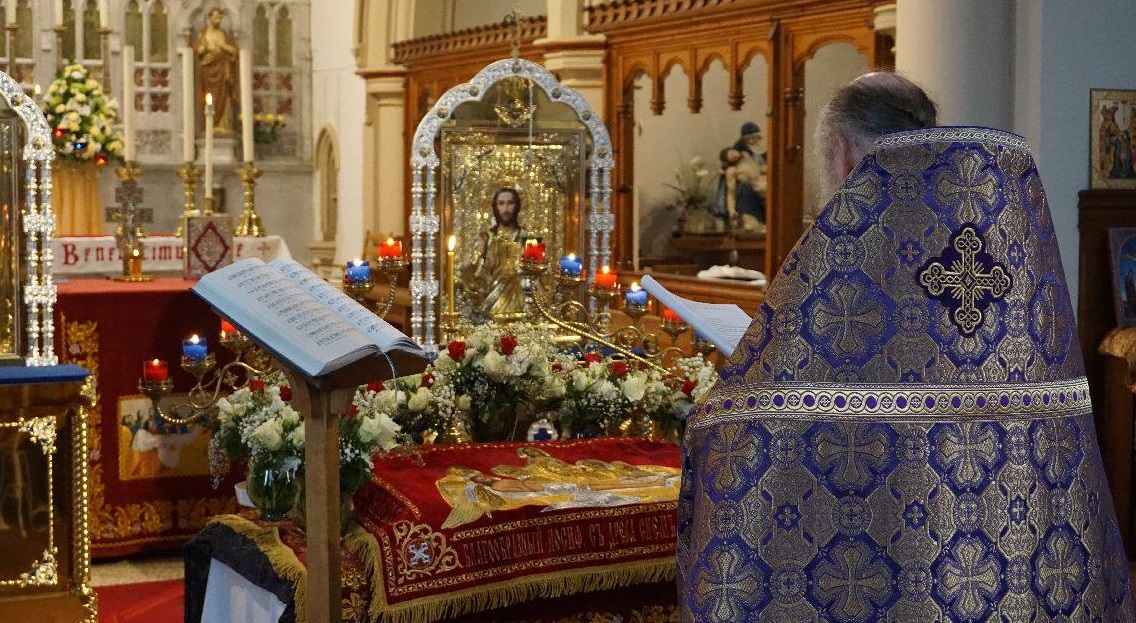
I have been very fortunate to make a pilgrimage to Walsingham for a few days, celebrating the altar-feast of the Orthodox chapel of the Life-Giving Spring.
The Mother of God appeared to Richeldis (Rychold), Lady of the Manor of Walsingham in the 11th century, commanding her to build a replica of the original Holy House of Nazareth, later dismantled and rebuilt in Loreto, in Italy, after the Islamic conquest of the Holy Land.
The great shrine and priory, which developed around the chapel of the Holy House was endowed through royal patronage and was renowned throughout Europe, but despite its sanctity and fame it fell victim to the ravages of the reformation and the destruction of the holy places by King Henry VIII and his henchmen.
The 19th century saw the restoration of Roman Catholic pilgrimage to Walsingham, based in the Slipper Chapel, and the 20th century saw the restoration of Anglican religious life around a newly built Holy House and shrine complex.
The founder of the restored Anglican shrine, Father Alfred Hope Paten, was encouraged to engage with the Russian Orthodox Church in Exile by Father Henry Joy Fynes-Clinton, vicar of St Magnus the Martyr, London Bridge, who had travelled in Russia before the revolution, visiting holy places and holding theological discussions with some of the leading churchmen of the time. Despite his advanced Papalist Anglo-Catholicism, he was a great admirer of Orthodoxy and a friend and supporter of the exiled faithful, including the first hierarch of the Church in Exile, Metropolitan Antoniy of Kiev and Galych.
The Orthodox presence in the shrine has been developed over the years by a series of remarkable Orthodox figures, including Archimandrite Nicholas Gibbes (former tutor to the Tsarevich Alexei), Archbishop Nestor of Kamchatka, Archbishop Sava of Grodno, St Nikolai Velimirovich, Archbishop Nikodem, and the pioneer of iconography of British saints, Archimandrite David.
Our diocese and its clergy have been involved in spiritual life here since the earliest years of the Anglican shrine, when emigré Russians made pilgrimages to this corner of Norfolk to honour the Mother of God.
The intended free-standing Russian Orthodox chapel was never built, but the little chapel in use since 1941 and consecrated by Archbishop Sava on the Sunday of Pentecost in 1944, remains a place of Orthodox prayer and worship, occupying a landing on above the south aisle of the Anglican shrine church.
Now that Father Philip Steer is unable to serve in the chapel of the Life-Giving Spring, the Orthodox presence is maintained by Mother Melangell, who has a house-skete in the village. There is a Russian-tradition parish of the Patriarchate of Constantinople a short distance away, based in the Church of the Transfiguration in Great Walsingham, and the former monastic-brotherhood church of St Seraphim survives, though sadly bereft of services for most of the year.
We are greatly blessed that Orthodox prayer is offered in Walsingham EVERY day, even if the Liturgy is not celebrated in the shrine very often.
It is a joy to celebrate and pray in the shrine, especially in the evenings, when the church is quiet. The Holy House, dedicated to the Annunciation and built to replace that destroyed by the reformers of the 16th century is a special place to pray the akathist hymn to the Mother of God.
There were many intentions for which to pray during the short pilgrimage, and the culmination of this prayer was our Liturgy for the feast of the Mother of God, the Life-Giving Spring, a short distance from her holy well within the shrine-church.
It was a privilege to be with our local friends, including parishioners from Walsingham, Cambridge and Norwich, to meet local supporters of the Martha and Mary Convent in Moscow, and to share a Paschal lunch in the orangery after the Liturgy – welcoming two Ukrainian pilgrims who visited that day, not knowing that there would be an Orthodox presence.
We very much look forward to returning in the summer and autumn, knowing that the Mother of God continues to pour out her grace on this shrine and the many pilgrims who honour her in England’s Nazareth.
THE PASCHAL PANIKHIDA FOR USE AT THE GRAVE-SIDE, OR IN THE HOME OR MONASTIC CELL.
As we resume memorials for the departed, we commemorate them in this Thomas Week with the Paschal Order of the Panikhida, praying for our departed in the joy of the Resurrection, resounding with the Paschal greeting: Christ is Risen.
The order here is for use by the laity, whether that is at home or at the grave-side.
Through the prayers of our holy fathers, Lord Jesus Christ, our God, have mercy upon us. Amen.
Christ is risen from the dead, trampling down death by death, and upon those in the tombs bestowing life (Thrice).
Let God arise and let His enemies be scattered, and let them that hate Him flee from before His face.
Christ is risen from the dead, trampling down death by death, and upon those in the tombs bestowing life.
As smoke vanisheth, so let them vanish, as wax melteth before the fire.
Christ is risen from the dead, trampling down death by death, and upon those in the tombs bestowing life.
So let sinners perish at the presence of God, and let the righteous be glad.
Christ is risen from the dead, trampling down death by death, and upon those in the tombs bestowing life.
This is the day which the Lord hath made; let us rejoice and be glad therein.
Christ is risen from the dead, trampling down death by death, and upon those in the tombs bestowing life.
Glory to the Father, and to the Son, and to the Holy Spirit.
Christ is risen from the dead, trampling down death by death, and upon those in the tombs bestowing life.
Now and ever, and unto the ages of ages. Amen.
Christ is risen from the dead, trampling down death by death, and upon those in the tombs bestowing life.
Lord, have mercy. (Twelve times)
Prayer: Remember, O Lord our God, Thy servants, N., who have reposed in the Faith and hope of life eternal, and in that Thou art good and the Lover of mankind, Who remittest sins and blottest out iniquities, do Thou loose, remit and pardon all their sins, voluntary and involuntary. Deliver them from eternal torment and the fire of Gehenna, and grant unto them the communion and delight of Thine eternal good things prepared for them that love Thee. For though they have sinned, yet have they not forsaken Thee, and they undoubtedly believed in the Father and the Son and the Holy Spirit; and even until their last breath did they confess Thee in Orthodox fashion: God glorified in Trinity, Unity in Trinity and Trinity in Unity. Wherefore, be Thou merciful unto them and reckon their faith in Thee, rather than their deeds, and in that Thou art compassionate, grant them rest with Thy saints; for there is no man that liveth and doth not sin. But Thou alone art wholly without sin, and Thy truth is forever; and Thou alone art the God of mercies, and compassion, and love for mankind, and unto Thee do we ascribe glory, to the Father, and to the Son and to the Holy Spirit, now and ever, and unto ages of ages. Amen.
Paschal Canon – Ode 1, Eirmos: It is the Day of Resurrection! Let us be radiant, O ye people! Pascha! The Lord’s Pascha! For Christ our God hath brought us from death to life, and from earth unto heaven, as we sing triumphal hymn!
Christ is risen from the dead.
Let us purify our senses and we shall behold Christ, radiant with inaccessible light of the Resurrection, and shall hear Him saying clearly, “Rejoice!” As we sing the triumphal hymn!
Christ is risen from the dead.
Let the heavens rejoice in a worthy manner, the earth be glad, and the whole world, visible and the invisible, keep the Feast. For Christ our eternal joy hath arisen!
Katavasia: It is the Day of Resurrection!…
Ode 3, Eirmos: Come, let us drink a new drink, not miraculously drawn from a barren rock, but the fountain of Incorruption springing from the tomb of Christ in Whom we are established.
Christ is risen from the dead.
Now all things are filled with light: heaven and earth, and the nethermost regions. So let all creation celebrate the Resurrection of Christ, whereby it is established.
Christ is risen from the dead.
Yesterday, O Christ, I was buried with Thee, and today I arise with thy arising. Yesterday I was crucified with Thee. Glorify me, O Saviour, with Thee in Thy Kingdom.
Katavasia: Come, let us drink…
Christ is risen from the dead, trampling down death by death, and upon those in the tombs bestowing life (Thrice).
Lord, have mercy. Lord, have mercy. Lord, have mercy.
Prayer: Remember, O Lord our God, Thy servants, N., who have reposed in the Faith and hope of life eternal, and in that Thou art good and the Lover of mankind, Who remittest sins and blottest out iniquities, do Thou loose, remit and pardon all their sins, voluntary and involuntary. Deliver them from eternal torment and the fire of Gehenna, and grant unto them the communion and delight of Thine eternal good things prepared for them that love Thee. For though they have sinned, yet have they not forsaken Thee, and they undoubtedly believed in the Father and the Son and the Holy Spirit; and even until their last breath did they confess Thee in Orthodox fashion: God glorified in Trinity, Unity in Trinity and Trinity in Unity. Wherefore, be Thou merciful unto them and reckon their faith in Thee, rather than their deeds, and in that Thou art compassionate, grant them rest with Thy saints; for there is no man that liveth and doth not sin. But Thou alone art wholly without sin, and Thy truth is forever; and Thou alone art the God of mercies, and compassion, and love for mankind, and unto Thee do we ascribe glory, to the Father, and to the Son and to the Holy Spirit, now and ever, and unto ages of ages. Amen.
Hypakoe, tone 4: When at dawn, the women with Mary came and found the stone rolled away from the sepulchre, they heard from the angel: Why seek ye among the dead (as if He were a mortal man) Him Who lives in everlasting light? Behold the grave-clothes. Run and tell the world that the Lord is risen, and has slain death. For He is the Son of God Who saves mankind.
Ode 4, Eirmos: May the divinely speaking Abbacum now stand watch with us, and show forth a shining Angel saying resoundingly: Today salvation hath come to the world; for Christ is risen as Almighty.
Christ is risen from the dead.
Christ revealed Himself as of the male sex when He opened the Virgin’s womb, and as a mortal is He called the Lamb. Thus, without blemish also, is our Pascha, for He tasted no corruption, and, since He is truly God, He was proclaimed perfect.
Christ is risen from the dead.
Christ, our blessed Crown, like a yearling Lamb, of His own good will sacrificed Himself for all, a Pascha of purification, and as the glorious Sun of Righteousness, He has shone upon us again from the grave.
Christ is risen from the dead.
David, the forefather of our divine Lord, leapt and danced before the symbolic Ark of the Covenant. Let us also, the holy people of God, beholding the fulfilment of the symbols, be divinely glad; for Christ hath risen as Almighty.
Katavasia: May divinely speaking Habakkuk …
Ode 5, Eirmos: Let us arise in the deep dawn and, instead of myrrh, offer a hymn to the Lord, and we shall behold Christ, the Sun of Righteousness, Who causest life to dawn for all.
Christ is risen from the dead.
When they who were held by the chains of hell beheld Thy boundless compassion, O Christ, they hastened to the light with joyful feet, exalting the eternal Pascha.
Christ is risen from the dead.
Bearing lights, let us meet Christ, Who cometh forth from the tomb like a bridegroom. And with the ranks of joyfully celebrating Angels, let us celebrate the redeeming Pascha of God.
Katavasia: Let us arise…
Ode 6, Eirmos: Thou didst descend into the nethermost regions of earth, O Christ, and didst shatter the eternal bars which held the prisoners captive; and like Jonah from the sea-monster, after three days Thou didst rise from the grave
Christ is risen from the dead.
Having kept the seals intact, Thou didst rise from the grave, O Christ, Who didst not violate the Virgin’s womb by Thy birth, and Thou hast opened to us the gates of Paradise.
Christ is risen from the dead.
O my Saviour, while as God Thou didst voluntarily offer Thyself to the Father as an unslain and living sacrifice, Thou didst raise up with Thyself the whole race of Adam, when Thou didst rise from the grave.
Katavasia: Thou didst descend…
Christ is risen from the dead, trampling down death by death, and upon those in the tombs bestowing life (Thrice).
Lord, have mercy. Lord, have mercy. Lord, have mercy.
Prayer: Remember, O Lord our God, Thy servants, N., who have reposed in the Faith and hope of life eternal, and in that Thou art good and the Lover of mankind, Who remittest sins and blottest out iniquities, do Thou loose, remit and pardon all their sins, voluntary and involuntary. Deliver them from eternal torment and the fire of Gehenna, and grant unto them the communion and delight of Thine eternal good things prepared for them that love Thee. For though they have sinned, yet have they not forsaken Thee, and they undoubtedly believed in the Father and the Son and the Holy Spirit; and even until their last breath did they confess Thee in Orthodox fashion: God glorified in Trinity, Unity in Trinity and Trinity in Unity. Wherefore, be Thou merciful unto them and reckon their faith in Thee, rather than their deeds, and in that Thou art compassionate, grant them rest with Thy saints; for there is no man that liveth and doth not sin. But Thou alone art wholly without sin, and Thy truth is forever; and Thou alone art the God of mercies, and compassion, and love for mankind, and unto Thee do we ascribe glory, to the Father, and to the Son and to the Holy Spirit, now and ever, and unto ages of ages. Amen.
Kontakion for the departed, tone 8: With the Saints give rest, O Christ, to the souls of Thy servants, where there is neither pain, nor sorrow, nor sighing, but life everlasting.
Kontakion of the resurrection, tone 8: Though Thou did descend into the grave, O Immortal One, yet didst Thou destroy the power of hell, and did rise again as a conqueror, O Christ our Lord, saying to the myrrh-bearing women, rejoice! And giving peace to Thine Apostles, and offering Resurrection to the fallen.
Eikos: The myrrh-bearing maidens anticipated the dawn and sought, as those who seek the day, their Sun, Who was before the sun and Who had once sat in the grave. And they cried to each other: Friends, come, let us anoint with spices His life-giving and buried body – the Flesh Who raised up fallen Adam, and Who now lies in the tomb. Let us go, let us hasten, and like the Magi, let us worship; and let us bring myrrh as a gift to Him, Who is wrapped, not now in swaddling clothes, but in a shroud. And let us weep and cry: Arise, O Lord, Who dost offer Resurrection to the fallen.
Having beheld the Resurrection of Christ, let us worship the Holy Lord Jesus, the only sinless One. We worship Thy Cross, O Christ, and Thy Holy Resurrection we praise and glorify; for Thou art our God, and we know no other than Thee; we call upon Thy name. O come all ye faithful, let us worship Christ’s holy Resurrection. For behold, through the Cross joy hath come to all the world. Ever blessing the Lord, let us praise His Resurrection. For by enduring the Cross for us He destroyed death by death.
Jesus, having risen from the grave as He foretold, hath given us eternal life and great mercy.
Ode 7, Eirmos: He Who delivered the children from the furnace, and became man and suffered as a mortal, through His suffering, He clothes mortality with the grace of incorruption. He is the only blessed and most glorious God of our fathers.
Christ is risen from the dead.
The godly wise women came to Thee with myrrh. But Him Whom they sought with tears as dead, they joyfully adored as the living God. And they told to Thy disciples, O Christ, the glad tidings of the mystical Pascha.
Christ is risen from the dead.
We celebrate the death of death, the destruction of hell, the beginning of eternal life. And leaping for joy, we celebrate the Cause, the only blessed and most glorious God of our fathers.
Christ is risen from the dead.
For a truly holy and a supreme feast is this saving night radiant with Light, the harbinger of the bright day of Resurrection, on which the Eternal Light shone bodily from the grave upon all.
Katavasia: He Who delivered…
Ode 8, Eirmos: This is the chosen and Holy Day, the first of Sabbaths, the Sovereign and Queen, the Feast of Feasts, and Triumph of Triumphs, on which let us bless Christ forever.
Christ is risen from the dead.
O come, let us partake of the fruit of the new vine of divine joy on the auspicious Day of the Resurrection and Kingdom of Christ, praising Him as God forever.
Christ is risen from the dead.
Cast thine eyes about thee, O Zion, and behold! For lo! Thy children have assembled unto thee from the West and from the North and from the South and from the East, as divinely radiant luminaries, Blessing Christ unto the ages.
O Most Holy Trinity, our God, glory to Thee.
Father, Almighty, the Word, and the Spirit, one Nature in three Persons united, transcending essence supremely Divine! In Thee we have been baptized, and Thou wilt bless us throughout all ages.
Katavasia: This is the chosen…
Ode 9, Eirmos: Shine, shine, O New Jerusalem, for the glory of the Lord hath risen upon thee. Dance now for joy and be glad, O Sion! And thou, pure Mother of God, rejoice in the rising of Him Whom thou didst bear.
Christ is risen from the dead.
O divine, O dear, O sweetest Voice! For Thou, O Christ, hast faithfully promised to be with us to the end of the world. And holding fast this promise as an anchor of hope, we the faithful rejoice.
Christ is risen from the dead.
O great and holiest Pascha, Christ! O Wisdom, Word and Power of God! Grant that we may more perfectly partake of Thee in the unending Day of Thy Kingdom.
Katavasia: Shine, shine…
Christ is risen from the dead, trampling down death by death, and upon those in the graves bestowing life (Thrice).
Lord, have mercy. Lord, have mercy. Lord, have mercy.
Prayer: Remember, O Lord our God, Thy servants, N., who have reposed in the Faith and hope of life eternal, and in that Thou art good and the Lover of mankind, Who remittest sins and blottest out iniquities, do Thou loose, remit and pardon all their sins, voluntary and involuntary. Deliver them from eternal torment and the fire of Gehenna, and grant unto them the communion and delight of Thine eternal good things prepared for them that love Thee. For though they have sinned, yet have they not forsaken Thee, and they undoubtedly believed in the Father and the Son and the Holy Spirit; and even until their last breath did they confess Thee in Orthodox fashion: God glorified in Trinity, Unity in Trinity and Trinity in Unity. Wherefore, be Thou merciful unto them and reckon their faith in Thee, rather than their deeds, and in that Thou art compassionate, grant them rest with Thy saints; for there is no man that liveth and doth not sin. But Thou alone art wholly without sin, and Thy truth is forever; and Thou alone art the God of mercies, and compassion, and love for mankind, and unto Thee do we ascribe glory, to the Father, and to the Son and to the Holy Spirit, now and ever, and unto ages of ages. Amen.
Troparia, tone 4: With the spirits of the righteous give rest, O Savior, to the souls of Thy departed servants and keep them in the blessed life with Thee, O Lover of man.
In the place of Thy rest, O Lord, where all Thy Saints repose give rest also to the souls of Thy servants, for Thou alone art the Lover of men.
Glory to the Father, and to the Son and to the Holy Spirit.
Thou art the God Who descended to hell and loosed the chains of the captives. Give rest, O Lord, to the souls of Thy servants.
Now and ever, and to the ages of ages. Amen.
O only pure and immaculate Virgin, who without seed didst bear God, pray to Him that their souls may be saved.
Lord, have mercy. (Forty times)
Prayer: Remember, O Lord our God, Thy servants, N., who have reposed in the Faith and hope of life eternal, and in that Thou art good and the Lover of mankind, Who remittest sins and blottest out iniquities, do Thou loose, remit and pardon all their sins, voluntary and involuntary. Deliver them from eternal torment and the fire of Gehenna, and grant unto them the communion and delight of Thine eternal good things prepared for them that love Thee. For though they have sinned, yet have they not forsaken Thee, and they undoubtedly believed in the Father and the Son and the Holy Spirit; and even until their last breath did they confess Thee in Orthodox fashion: God glorified in Trinity, Unity in Trinity and Trinity in Unity. Wherefore, be Thou merciful unto them and reckon their faith in Thee, rather than their deeds, and in that Thou art compassionate, grant them rest with Thy saints; for there is no man that liveth and doth not sin. But Thou alone art wholly without sin, and Thy truth is forever; and Thou alone art the God of mercies, and compassion, and love for mankind, and unto Thee do we ascribe glory, to the Father, and to the Son and to the Holy Spirit, now and ever, and unto ages of ages. Amen.
More honourable than the Cherubim, and beyond compare more glorious than the Seraphim, who without defilement gavest birth to God the Word, the true Theotokos, thee do we magnify.
Glory be to the Father, and to the Son, and to the Holy Spirit, now and ever, and unto the ages of ages. Amen.
Lord, have mercy. Lord, have mercy. Lord, have mercy.
Lord, bless.
Christ our True God, Who art risen from the dead, trampling down death by death, and upon those in the graves bestowing life, through the prayers of Thy most pure Mother and all Thy saints, grant the souls of Thy departed servants, N., to dwell in the abode of all Thy saints, and number them among the righteous, and have mercy on us, for Thou art good and the Lover of mankind. Amen
Give rest eternal, O Lord, in blessed repose, to the souls of Thy departed servants, our fathers and mothers, brothers and sisters N., and make their memory eternal.
MEMORY ETERNAL. (Thrice)
Christ is risen from the dead, trampling down death by death, and on those in the graves bestowing life (Thrice).
And has bestowed on us life eternal, we worship His resurrection on the third day.
Dear brothers and sisters, Christ is Risen! Христос воскресе! Hristos a înviat! Χριστός ἀνέστη!
On this Feast of the Iveron icon of the Mother of God, I am travelling to Walsingham to celebrate the altar-feast of the Orthodox shrine chapel of the Life-Giving Spring, on Friday.
The last week has been one that has left us exhausted, but full of the joy of the resurrection after the mourning of Holy Friday and the stillness of Holy Saturday, as we contemplated the Saviour’s Body in Gethsemane, in the tomb.
I now look forward to a few days in Walsingham and praying in the Holy House and sepulchre, and serving in the shrine chapel, continuing the link that our diocese has had with the shrine and village since the 1930’s, when the pioneering Father Alfred Hope Paten championed the restored devotion to the Mother of God in this little Norfolk village, once the greatest centre of pilgrimage in pre-reformation Britain: England’s Nazareth.
After the week’s pilgrimage, I shall celebrate the Divine Liturgy of Thomas Sunday in Cheltenham on Saturday morning – hearing confessions from 09:15, before the Paschal Hours and Liturgy at 10:30.
We will begin the Hours later than usual, as the Paschal format is very short in comparison to the normal Hours.
We will celebrate in the United Reformed Church, Deep St, Prestbury, GL52 3AW.
To accommodate confessions, I would appreciate emails by Thursday please) and will stop in Cardiff on the way home from Cheltenham. I know that we have a few Cardiff parishioners that work on Saturdays, and we will make it possible for them to confess on Sunday, in addition to our parishioners from the other side of the Severn. Please email: otetzmark@hotmail.com
I would like to thank everyone who worked so incredibly hard for the success of Holy Week and Pascha, and express our profound gratitude to Father Dean and Georgina for the warmth with which we were welcomed to St Mary’s, which proved to be a wonderful place to celebrate, with its beautiful sanctuary and resonant acoustic.
I encourage everyone to pray the Paschal Canon everyday this week, preserving the joy of the Resurrection, and making the Paschal hymns part of each day’s prayer and devotion.
This year, Bright Monday coincides with the feast of the Murom Icon of the Mother of God.
This icon was brought from Kiev to Murom by the Holy Prince Constantine of Murom (May 21) early in the XII century. For a long time, but quite unsuccessfully, Saint Constantine tried to attract the pagan inhabitants of the Murom principality to Christianity. His counsels met with no sympathy; moreover, they filled the people with hatred and contempt.
The more fanatical pagans plotted and swore to kill the Prince, or drive him out of Murom. When Constantine discovered the plot he prayed fervently to God. Then taking with him the Icon of the Mother of God, which he brought from Kiev, he went to confront the conspirators, trusting in the intercession and the help of the Queen of Heaven. When the pagans saw the Icon, they were so overcome with astonishment that they begged the Prince to forgive them. Then they agreed to be baptized into the Christian Faith.
The Murom icon is renowned for many other miracles, the most remarkable of which is the following. At the end of the XII century, Saint Basil was the Bishop of Murom. The people, mistakenly suspecting him of living in a way which was not appropriate for his high episcopal rank, intended to kill him. When Saint Basil learned of this decision, he asked his enemies to postpone his death until morning. All night long he prayed in the Church of Saints Boris and Gleb.
After serving the Divine Liturgy, he went to the temple of the Annunciation and there he served a Moleben before the Icon of the Most Holy Theotokos, which he brought from Kiev. Placing all his hope in the Queen of Heaven, Saint Basil took the miraculous Icon and went to the Oke River. Removing his mantya, he spread it upon the water and stood upon it holding the Icon of the Mother of God. Suddenly there was a strong wind and Saint Basil was carried upstream against the current. Six hours later, the Bishop sailed to a place called Old Ryazan. There the people and the Prince received the Saint with honor. However, since Old Ryazan was poorly protected from the invasion of the Tatars, under whose yoke Russia was at that time, Saint Basil decided to look for another, safer place.
In 1291 he moved to New Ryazan, taking with him the Icon of the Mother of God. Since then, all his successors have lived in New Ryazan. Thus, with the abolition of the Murom cathedra, a new episcopal cathedra was established – that of New Ryazan.
Originally, the commemoration of the Murom-Ryazan Icon of the Mother of God took place on the second Sunday of the Apostle’s Fast, then in 1810 (1814?) the Holy Synod, at the request of the residents of Ryazan, changed the Feast Day to April 12, when Saint Basil is commemorated.
The Murom Icon bears a certain resemblance to the Yakhrom Icon (October 14), in which the Divine Child is cradled on His Mother’s left arm; His right hand touches her chin, while His left hand hangs down holding a scroll representing the Scriptures. In the Murom Icon, however, the head of the Divine Child leans back against His Mother’s shoulder, and the scroll is open to reveal the words, “The Spirit of the Lord is upon me” (Luke 4:18).
The original Icon has not been preserved (all traces of it were lost when it was transferred from Murom to Ryazan). Frequently, copies of the Murom Icon were made, many of which are now found in various churches and museum collections. One of the copies was kept in the Cathedral of the Nativity of the Theotokos in Murom until its destruction in the XX century.
Dear Fathers and Mothers; dear brothers and sisters; dear friends – Christ is Risen! Христос воскресе! Hristos a înviat! Χριστός ἀνέστη!
Celebrating the radiant and bright Resurrection of our Lord and God and Saviour, Jesus Christ, in the early hours of the morning, we proclaimed Him as the Light shining in the darkness in the prologue of St John’s Gospel, and this afternoon, the vesperal Gospel reading saw the Risen Lord coming to His disciples.
Then, the same day at evening, being the first day of the week, when the doors were shut where the disciples were assembled, for fear of the Jews, Jesus came and stood in the midst, and said to them, “Peace be with you.” When He had said this, He showed them His hands and His side.
The Risen Lord does not wait for any doors to be opened, but rather passes through the very barrier standing between Him and his disciples. The things of the world – barriers, obstacles, physical limits – are no obstacle to the Risen Saviour who comes into the midst of His followers and offers them the greeting of peace.
He wishes them shalom in the fear, confusion, and uncertainty of their lives, shaken and shattered by the torture and horror of the Cross and Passion; seeing the Saviour suffer and die an ignominious death and placed lifeless in a new tomb.
In an instant, He dispels darkness, changing their very existence in the moment that He passes through the wood of the door that had been locked and barred out of fear.
And, for us in these dark and painful times, full of fears, worries, suffering and darkness, He comes to us to say to us, “Peace be with you.”
This peace – this shalom – is not just an absence of war, conflict, pain, fear and uncertainty – but is real, positive and qualitative: a gift of the Holy Spirit manifested in love, harmony, reconciliation and unity – reflecting God Himself.
A heavy, locked and barred door may not stand between us and the Risen Lord, but for us, the fears, pain, anguish, suspicion, intolerance and emotions that may hold and control us may be far more impregnable if we are unwilling to let His peace penetrate everything that forms a barrier between us and God.
He will not force His way in, or force His peace upon us, but rather offers it to each of us as a gift that may cleanse, heal, and unite – but only if we will let it enter our lives.
Only then, when we put aside fear, division and suspicion can this peace penetrate our hearts, so that the Risen Lord may become for each of us the Light that shone in the darkness; only then can He banish darkness from our hearts and lives; only then can He take us by our wrists and pluck us from the shadows and darkness and lead us into the radiance of the Resurrection.
The choice is ours.
Do we shut out the Risen Lord by the movements of our hearts and minds; by militating against His peace by our conversations, agendas, obsessions, and ideologies; and if we bar Him from entering our lives, then how will experience the continuation of the vesperal Gospel?
Then the disciples were glad when they saw the Lord. So Jesus said to them again, “Peace to you! As the Father has sent Me, I also send you.” And when He had said this, He breathed on them, and said to them, “Receive the Holy Spirit.
If we are unwilling to let Him through the barriers, how can we expect to experience the joy of the Resurrection? How can we then expect to receive the Holy Spirit if our closed and barricaded lives cannot even let in the Risen Saviour and the peace which He wishes to give us?
Sometimes, when the unknown-outside is fraught with risk and danger, it takes courage to pull down the defences and barricades, or to open the door, but that is what we need to do so that the Lord may enter and bring us peace, light and renewal in the glory of the resurrection.
We can’t have it both ways. To know that He is truly risen, then we need to let Him in and to live as Christian people, proclaiming and realising the Gospel. He has shattered the bars and gates of death and hell, but for the Resurrection to transform our lives, we need to open ourselves to its power.
Having encountered the power of the Risen Lord, we can then “Go quickly and proclaim to the world that the Lord is risen, and hath put death to death; for He is the Son of God, who saveth the race of man.”
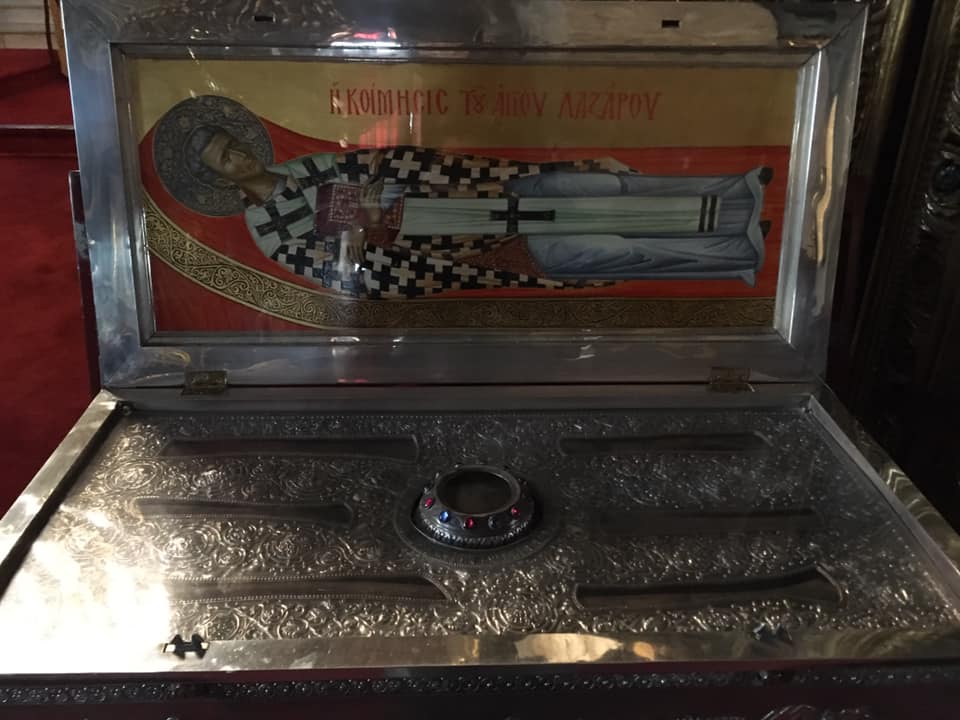
A very joyful Lazarus Saturday – Лазарева суббота to you all.
As we celebrate the rising of Lazarus, we look forward to baptising our catechumen George, in the sea at Watch House bay, in Barry, at 18:00 this evening. We would have liked to have done so in the morning, but the tide dictates the hour of his baptism, which will follow Palm Sunday vespers.
Having celebrated Lazarus’s resurrection from his four-day tomb, we rejoice that on this day, George will be baptised into the Saviour’s death and resurrection, and will celebrate the Entrance of the Lord into Jerusalem by receiving the same Lord, Himself, in the communion of His Most Holy and Precious Body and His Most Holy and Life-Giving Blood.
Looking forward tomorrow, I would like to remind you of a tradition that has been followed by our Church Abroad from it’s earliest days in the emigration:
Following pre-Revolutionary tradition and supported by the founders of the Russian Orthodox Church Outside of Russia and their successors, parishes across the ROCOR will be making plate collections on Palm Sunday to benefit the Russian Ecclesiastical Mission in Jerusalem.
Следуя дореволюционной традиции, поддерживаемой основоположниками Русской Зарубежной Церкви и их преемниками, во всех ее храмах и монастырях в праздник Вербного воскресенья будут проводиться тарелочные сборы на нужды Русской Духовной Миссии в Иерусалиме (РДМ).
Also, any offerings towards the cost of Holy Week and Pascha flowers may be given to Deacon Mark.
As the Orthodox Church passes from Lent to Holy Week with the the Saturday of Lazarus marking the boundary, the Canon for the feast is posted below for use in the home or monastic cell – i.e. outside matins, in which it would normally be chanted.
Ode I, Irmos: Let us sing to the Lord, Who led His people through the Red Sea: for He alone is gloriously glorified.
Glory to Thee, our God, glory to Thee.
With Thy divine command Thou hast raised dead Lazarus, in Thy love for mankind; for Thou art the Fashioner and Guardian of Life.
Glory to Thee, our God, glory to Thee.
O immortal Lord, with Thy word Thou hast raised Lazarus, four days dead, and by Thy power Thou hast destroyed the dark kingdom of hell.
Glory to Thee, our God, glory to Thee.
Thou hast given to all, O Master, a proof of Thy transcendent Godhead, raising Lazarus from the dead on the fourth day.
Glory to Thee, our God, glory to Thee.
Today Bethany proclaims beforehand the Resurrection of Christ the giver of Life, and it rejoices at the rising of Lazarus.
Glory to Thee, our God, glory to Thee.
In the beginning Thou hast brought all creation out of nothing, and Thou knowest the secrets of our hearts; and now as Master Thou dost foretell to Thy disciples the falling asleep of Lazarus.
Glory to Thee, our God, glory to Thee.
O Christ, Thou hast become man, taking human nature from the Virgin, and as man Thou hast asked where Lazarus was buried, although as God Thou wast not ignorant of this.
Glory be to the Father and to the Son and to the Holy Spirit.
O Word, giving us an assurance of Thine own Resurrection, Thou hast raised Thy friend as if from sleep, though he had lain four days in the tomb and already stank.
Both now and ever, and unto the ages of ages. Amen.
The host of angels and of mortal men praise thee, O Virgin Mother, without ceasing. For thou hast carried their creator as a babe in thine arms.
Ode III, Irmos: Thou art the support of those who flee unto Thee, O Lord, Thou art the light of those in darkness, and my spirit doth hymn Thee.
Glory to Thee, our God, glory to Thee.
Displaying Thy two energies, O Saviour, Thou hast made manifest Thy two natures: for Thou art both God and man.
Glory to Thee, our God, glory to Thee.
Though Thou art the Abyss of knowledge, Thou dost ask where they have laid the body of Lazarus. For it was Thy purpose, O Giver of Life, to raise him from the dead.
Glory to Thee, our God, glory to Thee.
Going from one place to another, Thou hast as mortal man, appeared circumscribed; but, as God uncircumscribed, Thou fillest all things.
Glory to Thee, our God, glory to Thee.
At Thy divine word, Thou hast raised Lazarus, O Christ, I pray Thee, raise me also, dead through my many sins.
Glory to Thee, our God, glory to Thee.
O Lord who workest miracles, standing in Bethany by the tomb of Lazarus, Thou hast shed tears for him in accordance with the law of nature, confirming the full reality of the flesh which Thou hast taken, O Jesus my God.
Glory to Thee, our God, glory to Thee.
Straightway Thou hast made the sorrow of Mary and Martha to cease, O Saviour, showing Thy sovereign authority. For, as Thou hast said, Thou art in truth the Resurrection and the Life and the Lord of all.
Glory be to the Father and to the Son and to the Holy Spirit.
O Lord, from the ranks of the dead and the darkness of hell thou hast snatched Thy friend Lazarus, bound in his grave-clothes; and by Thine all-powerful word Thou hast broken open the gates of the kingdom of death.
Both now and ever, and unto the ages of ages. Amen.
Taking up Thy dwelling in a Virgin, O Lord, Thou hast appeared to men incarnate, enabling them to see Thee with their eyes; Thou hast made her in very truth the Theotokos and the help of the faithful, O Thou who alone lovest mankind.
Lord, have mercy. Lord, have mercy. Lord, have mercy.
Sessional hymn, Tone 4: The sisters of Lazarus stood beside Christ and, lamenting with bitter tears, they said to Him: “O Lord, Lazarus is dead.” And though as God He knew the place of burial, yet He asked them, “Where have ye laid him?” Coming to the tomb, He called Lazarus that was four days dead; and he arose and worshipped the Lord who had raised him.
Glory be to the Father, and to the Son, and to the Holy Spirit; both now and ever, and unto the ages of ages. Amen.
Sessional hymn, Tone 8: Foreknowing all things as Creator, Thou hast warned the disciples at Bethany saying: “Our friend Lazarus has fallen asleep today.” And, though Thou was not ignorant, Thou hast asked: “Where have ye laid him?” Weeping as a man, Thou hast prayed to the Father; Thou hast called Thy friend Lazarus from hell, O Lord, and raised him when he had been four days dead. Therefore, we cry to Thee: Accept, O Christ our God, the praise we dare to offer, and count us all worthy of Thy glory.
Ode IV, Irmos: I have heard, O Lord, of the mystery of Thy dispensation, and I considered Thy works, and I have glorified Thy Godhead.
Glory to Thee, our God, glory to Thee.
Thou hast prayed to the Father, not because Thou art in need of any help, but to fulfill the mystery of Thine incarnation; and so, almighty Lord, Thou hast raised up a corpse that was four days dead.
Glory to Thee, our God, glory to Thee.
Coeternal with the Father, the Word that was revealed from the beginning as God, now offers prayers as man, though it is He that receives the prayers of all.
Glory to Thee, our God, glory to Thee.
O Saviour, Thy voice destroyed all the power of death, and the foundations of hell were shaken by Thy divine might.
O most holy Theotokos, save us.
Let us sing the praises of the Virgin, for she remained a virgin after bearing child, and she gave birth to Christ our God, who has delivered the world from error.
Glory to Thee, our God, glory to Thee.
As Shepherd, O Saviour and Creator, Thou hast snatched from the fierce and all-devouring wolf a man that had been four days dead; and through him, in Thy power as Lord, Thou hast revealed beforehand the universal glory of Thy Resurrection on the third day.
Glory to Thee, our God, glory to Thee.
Beholding Thee, O Christ the Life, the companions of Martha cried aloud: “If Thou hadst been here, O Lord, the Light and Life of all, Lazarus would not have died.” But since Thou art the Life of the dead, in Thy love for mankind Thou hast turned their sorrow into joy.
Glory be to the Father and to the Son and to the Holy Spirit.
The depths are afraid at Thy presence, O Lord, the source of life; all the waters are Thy servants. The gatekeepers tremble before Thee, O Christ, and the bars of hell are broken by Thy power, as Lazarus rises from the dead at Thy command, almighty Saviour who lovest mankind.
Both now and ever, and unto the ages of ages. Amen.
Unwedded Virgin, thou art the glory of the faithful; thou art the advocate and refuge of Christians, their rampart and haven, for, Undefiled, thou dost offer intercession to thy Son, saving from danger those who in faith and love acknowledge thee as the pure Theotokos.
Ode V, Irmos: Wherefore hast Thou turned Thy face from me, O Light never-waning? And why hath a strange darkness covered me, wretch that I am? But turn me, and guide my steps to the light of Thy commandments, I pray.
Glory to Thee, our God, glory to Thee.
In Thy love for mankind, coming to the tomb of Lazarus Thou hast called him and granted him life, for Thou art the immortal life of all mortal men; and so Thou hast as God clearly foretold the future Resurrection.
Glory to Thee, our God, glory to Thee.
His feet bound in the grave-clothes, Lazarus walked out from the tomb. O wonder of wonders! Christ who gave him strength is greater than the power of death which held him back. All things obey Christ’s word, serving Him as God and Master.
Glory to Thee, our God, glory to Thee.
Thou hast raised Lazarus on the fourth day, though his corpse already stank. Raise me up, O Christ, for I am dead in sin and lie in the pit and the dark shadow of death; deliver and save me in Thy compassion.
Glory to Thee, our God, glory to Thee.
Thou hast prayed and given glory to the Father, for Thy power is not opposed to His. To confirm the faith of the multitude that stood round Thee, Thou hast thanked Thy Father, O longsuffering Lord, and then raised Lazarus by Thy command.
Glory to Thee, our God, glory to Thee.
O voice of God! O divine power and might! With that voice, O Saviour, Thou hast shattered the gates of hell and all-devouring death. Deliver me from my passions, as once Thou hast delivered Thy friend Lazarus that was four days dead.
Glory be to the Father and to the Son and to the Holy Spirit.
At the prayers of Lazarus, of Martha and Mary, O loving Lord, make us worthy to behold Thy Cross and Passion, and the joyful Queen of Days, the feast of Thy Resurrection.
Both now and ever, and unto the ages of ages. Amen.
Since, all-pure Virgin, thou hast a mother’s boldness before thy Son, do not forget us and our needs, we pray, for we are thy kinsfolk: thee alone we Christians bring as intercessor, to win the gracious mercy of the Master.
Ode VI, Irmos: O Lord, who hast made Jonah dwell within the whale, deliver me from corruption, as Thou hast delivered him; for I am caught in the snares of the enemy.
Glory to Thee, our God, glory to Thee.
Love led Thee, Master, to Lazarus at Bethany; and as God Thou hast raised him, though his corpse already stank, and hast delivered him from the bonds of hell.
Glory to Thee, our God, glory to Thee.
Martha despaired when she saw Lazarus already four days dead. But Christ, as God, raised him from decay and brought him back to life by His word.
Glory be to the Father and to the Son and to the Holy Spirit.
As true God Thou hast known of the falling asleep of Lazarus and hast announced it beforehand to Thy disciples, giving them a proof, O Master, of the infinite power of Thy divinity.
Both now and ever, and unto the ages of ages. Amen.
Thou who art by nature uncircumscribed wast circumscribed in the flesh; coming to Bethany, O Master, as man Thou dost weep over Lazarus, and by Thy power as God Thou dost raise him on the fourth day from the dead.
Lord, have mercy. Lord, have mercy. Lord, have mercy.
Glory be to the Father, and to the Son, and to the Holy Spirit; both now and ever, and unto the ages of ages. Amen.
Kontakion, Tone 2: Christ, the Joy of all, the Truth, the Light, the Life, the Resurrection of the world, hath, of His goodness, appeared to those on earth, and become the archetype of the Resurrection, granting divine forgiveness unto all.
Ikos: The Creator of the world foretold to His disciples what would come to pass, proving to them that He knows all things as the Maker of all. “Brethren and companions, our friend has fallen asleep”, He said. “Let us go, then, and see a strange burial, and behold the tears of Mary and the tomb of Lazarus. For I shall work a miracle there, as the prelude to My Crucifixion, granting divine forgiveness unto all.”
Ode VII, Irmos: In the furnace the Hebrew children boldly trod the flame underfoot and transformed the fire into dew, crying out: Blessed art Thou, O Lord God, forever!
Glory to Thee, our God, glory to Thee.
Weeping as man in Thy compassion, Thou hast as God raised Lazarus from the tomb; and, delivered from hell, he cried aloud: “Blessed art Thou, O Lord God, forever!”
Glory to Thee, our God, glory to Thee.
At the Master’s word Lazarus came out bound in grave clothes, escaping from the chaos and darkness of hell, and he cried aloud: “Blessed art Thou, O Lord God, forever!”
Glory to Thee, our God, glory to Thee.
Shedding tears over Thy friend, O merciful Lord, Thou hast made the tears of Martha cease, and by Thy voluntary Passion Thou hast wiped away all tears from the face of Thy people. O God of our fathers, blessed art Thou.
Glory be to the Father and to the Son and to the Holy Spirit.
Master of Life and Saviour, Thou hast called the dead man as if he were asleep. With Thy word thou hast burst asunder the belly of hell and raised up Lazarus as he sang: “O God of our fathers, blessed art Thou.”
Both now and ever, and unto the ages of ages. Amen.
O Master, Thou hast raised a dead man bound in grave clothes, a corpse that already stank. I am held fast in the bonds of sin; raise me up and I shall sing: O God of our fathers, blessed art Thou.
Ode VIII, Irmos: When the instruments of music sounded, countless multitudes worshipped the image in Dura; but the three Children, refusing to bow down, praised and glorified the Lord forever.
Glory to Thee, our God, glory to Thee.
As Shepherd, Thou hast gone to seek Thy sheep; rescuing the dead man from the fierce and destructive wolf, in Thy power Thou hast brought him from corruption to new life, and he cried out to Thee: “Praise the Lord and exalt Him above all forever.”
Glory to Thee, our God, glory to Thee.
As mortal man Thou hast asked where Lazarus was buried; as Maker, Thou hast raised him from the dead by Thy royal command. Hell was afraid of him when he cried out to Thee: “Praise the Lord and exalt Him above all forever.”
Glory to Thee, our God, glory to Thee.
As a mortal, Thou dost search for Lazarus; as God, Thou dost raise him by Thy word, though he was four days dead. Therefore we sing Thy praises forever.
Glory be to the Father and to the Son and to the Holy Spirit.
Fulfilling a debt of gratitude for her brother, Mary brought Thee, O Lord, sweet-smelling spices; and she sings Thy praises forever.
Both now and ever, and unto the ages of ages. Amen.
As man Thou dost pray to the Father, as God Thou dost raise Lazarus. Therefore, O Christ, we sing Thy praises for ever.
Ode IX, Irmos: O ye people, with glory let us honour the pure Theotokos, who conceived within her womb the divine fire and yet was not consumed, and let us magnify her with hymns.
Glory to Thee, our God, glory to Thee.
Seeing a four-day corpse walking, the people were struck with wonder at the miracle and cried out to the Deliverer: “We magnify Thee in hymns, O God.”
Glory to Thee, our God, glory to Thee.
Thou hast established men’s faith in Thy glorious Resurrection, O my Saviour, before it came to pass, by freeing Lazarus from hell when he was four days dead; and I magnify Thee in hymns.
Glory to Thee, our God, glory to Thee.
Honouring Thy Father, O Christ, and showing that Thou art not opposed to Him, after praying Thou hast by Thine own authority raised Lazarus that was four days dead.
Glory to Thee, our God, glory to Thee.
O my Christ, Thou hast raised from the tomb Lazarus that was four days dead, and so Thou makest him a truthful witness to Thy Resurrection on the third day.
Glory be to the Father and to the Son and to the Holy Spirit.
Thou dost walk and weep and speak, my Saviour, showing the action of Thy human nature; and, revealing Thy divine nature, Thou dost raise Lazarus.
Both now and ever, and unto the ages of ages. Amen.
In ways surpassing speech, my Master and Saviour, Thou hast brought about my salvation by the free will exercised in each of Thy two natures.
Having already celebrated the Sunday of St Mary of Egypt, and Mariino-Stoyanie / ‘Mary’s Standing’ – when her life was read in addition to the Great Canon – we now celebrate the feast of the ‘Earthly Angel’ and ‘Heavenly Woman’ whose example of profound repentance brings us consolation, encouragement and joy.
Venerable Mother, Mary, pray to God for us!
The Canon to Our Venerable Mother, Mary of Egypt, In Tone IV:
Ode I, Irmos: Through the deep of the Red Sea, * marched dry shod Israel of old, * and by Moses’ outstretched hands, * raised in the form of a cross, * the power of Amalek was routed in the wilderness.
Venerable Mother, Mary, pray to God for us.
With Thy mercy, O Christ, wash away the defilement of transgressions from my lowly soul, and by the supplications of Thy venerable one dispel the darkness and gloom of the passions.
Venerable Mother, Mary, pray to God for us.
Having polluted the nobility of thy soul with carnal passions, thou didst enlighten thy mind again by abstinence, making thy soul bright with the outpouring of thy tears.
Glory be to the Father, and to the Son, and to the Holy Spirit.
Thou didst flee from the passions of Egypt as from a wellspring of sin; and having freed thyself of the defilement of the cruel Pharaoh, thou hast now inherited the land of dispassion, ever holding chorus with the angels.
Both now and ever, and unto the ages of ages. Amen.
Gazing upon the icon of thee and the Word Who was born of thy most pure womb, O pure Virgin Birthgiver of God and Sovereign Lady, the most glorious one fervently entreated thee to be a surety for herself before Thy Son.
Ode III, Irmos: Thy Church, O Christ, rejoiceth in Thee crying aloud: * Thou, O Lord, art my strength, * my refuge and foundation.
Venerable Mother, Mary, pray to God for us.
The sores of thy soul were fetid and festering, but by the fountain of thy tears thou didst fervently cleanse them.
Venerable Mother, Mary, pray to God for us.
Legions of demons were vanquished by thee, and thou didst route the uprisings of the passions with thy tears.
Glory be to the Father, and to the Son, and to the Holy Spirit.
Thou hast become like a cloud of the morning and like a trickling droplet pouring forth the waters of saving repentance upon all.
Both now and ever, and unto the ages of ages. Amen.
Having thee as our intercessor, salvation and strength, O pure one, the honored Mary bowed down in worship before the Tree of the holy Cross.
Lord, have mercy. Lord, have mercy. Lord, have mercy.
Sessional Hymn, in Tone VIII: Spec. Mel.: “Of the wisdom …”: Restraining all the uprisings of the flesh with the pangs of fasting, thou didst reveal the manly wisdom of thy soul; for desiring to behold the form of the Cross, O evermemorable one, thou didst crucify thyself to the world, and hence fervently raise thyself up to the zeal for an undefiled life, O most glorious and all-blessed Mary. Entreat Christ God, that He grant forgiveness of sins unto those who with love honor thy holy memory.
Glory be to the Father, and to the Son, and to the Holy Spirit; both now and ever, and unto the ages of ages. Amen.
Theotokion in Tone VIII: All we, the generations of mankind, * call thee blessed, * in that thou art the Virgin who alone among women * gavest birth without seed unto God in the flesh; * for the fire of the Godhead made its abode within thee, * and thou didst feed the Creator and Lord * with milk as an infant. * Wherefore, we, the race of mankind and of angels, * glorify thy birthgiving, * and together we cry out to thee: * Entreat Christ God to grant forgiveness of sins ** unto those who with faith worship thy most holy Offspring.
Ode IV, Irmos: Beholding Thee, the Sun of righteousness, * lifted up upon the cross, * the Church now standeth arrayed and doth worthily cry aloud: * Glory be to Thy power, O Lord.
Venerable Mother, Mary, pray to God for us.
Fleeing all the pleasurable things which are in the world, thou didst take thyself away, and through extreme abstinence and the endurance of those things which thou didst accomplish, cleaving unto Him alone in a pure manner.
Venerable Mother, Mary, pray to God for us.
The movements and burnings of the flesh didst thou truly quell through abstinence; hence thou didst adorn thy soul with divine visions and actions, O all-glorious Mary.
Glory be to the Father, and to the Son, and to the Holy Spirit.
Through the power of thy virtue, thy tears and extreme fasting, by prayer, heat, winter’s cold and nakedness, thou didst become a precious receptacle for the Holy Spirit.
Both now and ever, and unto the ages of ages. Amen.
Having had recourse unto the icon of thee and Him Who was born from thee, O Virgin Mary, Mary the Egyptian hath now found immortal life through thee, holding chorus in Paradise.
Ode V, Irmos: Thou, O Lord, who camest into the world, * art my light, * a holy light turning from the darkness of ignorance * those who sing Thy praises in faith.
Venerable Mother, Mary, pray to God for us.
Rejoicing, thou didst follow after Christ, bearing thine own cross on thy shoulder, O Mary, thus wounding the demons.
Venerable Mother, Mary, pray to God for us.
Thou hast shown us the medicine of repentance, and hast shown us also the path which leadeth again to life which perisheth not.
Glory be to the Father, and to the Son, and to the Holy Spirit.
Be thou for me an invincible helper, O honoured one, and deliver me from the passions and from all pain by thine entreaties to the Lord.
Both now and ever, and unto the ages of ages. Amen.
Ever beseeching thee, the venerable one gazed upon thine icon, O pure Lady, and put to shame the assaults of the passions.
Ode VI, Irmos: The church crieth out unto Thee O Lord, * ‘I will sacrifice unto Thee with a voice of praise’ * having been cleansed of the blood of the demons’ * by the blood that for mercy’s sake flowed from Thy side.
Venerable Mother, Mary, pray to God for us.
With sweat thou didst wash away the defilement of sin; and, directing thy gaze noetically towards that glory which corrupteth not, thou hast now found fruitfulness through thy sufferings, O glorious one.
Venerable Mother, Mary, pray to God for us.
Thy life, O Mary, hath been shown to be a model for all sinners who have sinned immeasurably in life, that they also may arise and wash away their defilement with tears.
Glory be to the Father, and to the Son, and to the Holy Spirit.
Take pity, O Lover of mankind, on my lowly soul which I have polluted by giving rein to the impure desires of my flesh; and through the supplications of the venerable one have mercy on me.
Both now and ever, and unto the ages of ages. Amen.
With all thine heart and soul thou didst love the living Word of God Who was born and assumed flesh from the Virgin, and Who spake unto thee, O venerable one.
Lord, have mercy. Lord, have mercy. Lord, have mercy.
Glory be to the Father, and to the Son, and to the Holy Spirit; both now and ever, and unto the ages of ages. Amen.
Kontakion, in Tone IV: Spec. Mel.: “Having been lifted up …”: Having fled the gloom of sin * and illumined thine heart with the light of repentance, * O glorious one, thou didst go to Christ * and bring His all-immaculate and holy Mother to Him * as a merciful intercessor; * by which thou didst find forgiveness of thy sins ** and dost now rejoice ever with the angels.
Ikos: The serpent who of old caused Eve to fall through the deception of the tree in Eden, hast thou cast down into the pit by the Tree of the Cross, O glorious Mary; and, fleeing from pleasure, thou didst desire purity. Hence, with the virgins thou hast been deemed worthy to enter the chamber of thy Master and delight with them as is meet. Him do thou earnestly beseech, that He grant us forgiveness of our many sins and count us worthy of His life and to ever rejoice with the angels.
Ode VII, Irmos: In the Persian furnace the youths and descendants of Abraham, * burning with a love of piety * rather than by a flame of fire, * cried aloud saying: * Blessed art Thou in the temple of Thy glory, O Lord.
Venerable Mother, Mary, pray to God for us.
Having manifestly traversed the narrow path of tribulation and made thy soul radiant with the comeliness of the virtues, thou hast attained unto the eternal life of heaven, where Christ is the never-ending Light.
Venerable Mother, Mary, pray to God for us.
Having trampled down all the transient things in the world, thou dost now join chorus with all the armies of the angels, chanting: Blessed art Thou in the temple of Thy glory, O Lord!
Glory be to the Father, and to the Son, and to the Holy Spirit.
With thy fasting, prayer and tears, O venerable one, thou didst cause all of the wiles and devices of the enemy to fail; therefore, the uprisings of the passions have been utterly driven away from thee, O honoured Mary.
Both now and ever, and unto the ages of ages. Amen.
O most pure one, who without knowing wedlock truly gave birth unto the incorporeal God yet remained truly Virgin, by thy power thou hast driven away the passions and legions of demons.
Ode VIII, Irmos: Having spread his hands, Daniel closed the lions jaws * in their den; * while the zealously pious youths, * girded with virtue, * quenched the power of the fire and cried aloud: * Bless ye the Lord, all ye works of the Lord.
Venerable Mother, Mary, pray to God for us.
Having illumined thy whole mind with the radiance of the virtues, O glorious Mary, and having conversed with God, and broken down thy flesh with great fasting and pious thought, rejoicing thou didst chant: Bless the Lord, all ye works of the Lord!
Venerable Mother, Mary, pray to God for us.
Protecting thyself with the sign of the Cross, and with faith traversing the waters of Jordan with dryshod feet, and having received communion of the Body and Blood of the heavenly Christ, thou didst say: Bless the Lord, all ye works of the Lord!
Glory be to the Father, and to the Son, and to the Holy Spirit.
The godly priest Zosimas, an initiate of the mysteries of grace, beholding thee crossing the Jordan’s stream with dryshod feet, O glorious one, was seized with fear, and rejoicing, and trembling chanted,: Bless the Lord, all ye works of the Lord!
Both now and ever, and unto the ages of ages. Amen.
Through thee, O all-immaculate one, the venerable one put off corruption and defilement; by thee, O Sovereign Lady, she was clothed in the garment of incorruption; and with thee she cried aloud to thy Son: Bless the Lord, all ye works of the Lord!
Ode IX, Irmos: A cornerstone not cut by hand O Virgin, * was cut from thee the unhewn mountain: * even Christ, Who hath joined together the disparate natures; * therefore rejoicing we magnify thee, * O Theotokos.
Venerable Mother, Mary, pray to God for us.
Thou art now nurtured on truly incorruptible and divine food, delighting in the noetic and unwaning Light in the mansions of heaven, where the ranks of angels entreat God on our behalf.
Venerable Mother, Mary, pray to God for us.
Disdaining transient and corruptible glory, O Mary, thou didst inherit blessed life and glory. Entreat Christ on behalf of those who ever celebrate thine all-holy memory.
Glory be to the Father, and to the Son, and to the Holy Spirit.
Behold my sorrow and the groaning of my heart, O venerable one! Behold the imprisonment of my life! Save me from my sin, and take pity on my soul by Thine intercessions before the Lord!
Both now and ever, and unto the ages of ages. Amen.
O pure Lady Theotokos, salvation of sinners, accept this entreaty, and, by the supplications of thy venerable one, deliver me who flee to thy Son from my many transgressions.
Troparion, in Tone VIII: In thee, O mother, the image of God was preserved, * for taking up thy cross, thou didst follow after Christ; * by activity thou didst learn to disdain the flesh, as something transient, * but to care for thy soul as something immortal. ** Wherefore, with the angels thy spirit doth rejoice, O venerable Mary.
Yesterday, it was a great blessing to receive what was probably the most well-packaged parcel to ever arrive on the doorstep of anywhere I have called home, with a much-anticipated icon of the Saviour emerging from yard upon yard of bubble-wrap.
The bright and stylistically-solid icon is a product of the Vilnius School of Old Believer icon-painting, and everything, apart from the board, would suggest that it was painted by the renowned Pomortsy iconographer Ivan Ipatievich Mikhailov (1893-1993), whose century-long life was devoted to the preservation of traditional iconography. In Lithuania, Belarus, Poland and Latvia, his pupils continue to preserve and promote the traditions of the Vilnius School.
Many emigrees from the former empire – in Riga, Prague, Paris and other centres of Russian life in exile – looked to traditional icon painting, as the grip of debased westernised painting weakened, appreciating the importance of Old Believer icon painters and the collections of influential Old Believers in the rebirth of an authentic, canonical iconography.
Our Russian Church Abroad showed its appreciation for the Baltic Old Believer iconographic legacy, with the renowned Estonian born Old Believer iconographer Pimen Sofronov having taught iconography to Archbishop Anthony (Bartoshevich) of Geneva and Western Europe and Bishop Konstantin (Jesensky) of Richmond and Great Britain – both predecessors of Bishop Irenei.
The influence of Sofronov, through Bishop Konstantin can be seen in the icons painted by the late Igumen Seraphim of our former ROCOR parish in Birmingham, and the icon that arrived today reminds me of the icons in the Birmingham Podvorie chapel, sadly no longer part of our ROCOR.
It is a joy to see the newly arrived icon in the light of candles and lamps, venerated and an object of prayer and devotion, and I am pleased that it has arrived in time for Pascha: the Queen of Feasts.
I am now able to able finalise the following services for Holy Week and Pascha, all of which will take place in the Church of St Mary the Virgin, North Church St, Butetown, CF10 5HB.
We are most grateful to Father Dean for his continuous generosity in opening the doors of St Mary’s to us once more. It is a very special place, in which many of our parishioners feel very much at home.
As I am required to attend the Service of Holy Unction in the Cathedral, we will regrettably be unable to hold a service on Wednesday evening. The Service in Chiswick will commence at 18:15.
Unction will be performed after other Holy Week Services, using the oil blessed at the Hierarchical Service in the Cathedral. As this is a Holy Mystery, all receiving unction must prepared with a recent confession.
+
Holy and Great Thursday:
The Service of the Twelve Passion Gospels (Matins of Holy Friday) 20:00
+
Holy and Great Friday:
Vespers and the bringing out of the Plashchanitsa 16:00
The Burial Service of the Lord (Matins of Holy and Great Saturday 19:30
+
Holy and Great Saturday:
The Midnight Office (Rush Service), Procession and Matins of the Resurrection and Paschal Liturgy and blessing of Paschal Food 23:30
+
Daytime services will be celebrated in Llanelli, and announced on Fr Luke’s Service Schedule, which we will share on our Facebook page.
All wishing to confess this week, should email by Wednesday evening: otetzmark@hotmail.com
Given George’s baptism this Saturday, I will not be in Cardiff to hear confessions in Deacon Mark’s office, and scheduled confessions will be in St Mary Butetown from 18:00, on Friday.
I will confess some parishioners whilst making visits, and anyone wishing to confess in preparation for Holy Unction and Paschal Communion, may also do so after Sunday’s Liturgy.
Palm Sunday Liturgy will be in St John’s, Canton, following the Hours at 11:00.


 The more fanatical pagans plotted and swore to kill the Prince, or drive him out of Murom. When Constantine discovered the plot he prayed fervently to God. Then taking with him the Icon of the Mother of God, which he brought from Kiev, he went to confront the conspirators, trusting in the intercession and the help of the Queen of Heaven. When the pagans saw the Icon, they were so overcome with astonishment that they begged the Prince to forgive them. Then they agreed to be baptized into the Christian Faith.