The Life of St Mary of Egypt, by St Sophronios, Patriarch of Jerusalem.
“It is good to hide the secret of a king, but it is glorious to reveal and preach the works of God” (Tobit 12:7). So said the Archangel Raphael to Tobit when he performed the wonderful healing of his blindness. Actually, not to keep the secret of a king is perilous and a terrible risk, but to be silent about the works of God is a great loss for the soul. And I (says St. Saphronius), in writing the life of St. Mary of Egypt, am afraid to hide the works of God by silence. Remembering the misfortune threatened to the servant who hid his God-given talent in the earth (Mat. 25:18-25), I am bound to pass on the holy account that has reached me. And let no one think (continues St. Saphronius) that I have had the audacity to write untruth or doubt this great marvel –may I never lie about holy things! If there do happen to be people who, after reading this record, do not believe it, may the Lord have mercy on them because, reflecting on the weakness of human nature, they consider impossible these wonderful things accomplished by holy people. But now we must begin to tell this most amazing story, which has taken place in our generation.
There was a certain elder in one of the monasteries of Palestine, a priest of the holy life and speech, who from childhood had been brought up in monastic ways and customs. This elder’s name was Zosima. He had been through the whole course of the ascetic life and in everything he adhered to the rule once given to him by his tutors as regard spiritual labours. he had also added a good deal himself whilst labouring to subject his flesh to the will of the spirit. And he had not failed in his aim. He was so renowned for his spiritual life that many came to him from neighboring monasteries and some even from afar. While doing all this, he never ceased to study the Divine Scriptures. Whether resting, standing, working or eating food (if the scraps he nibbled could be called food), he incessantly and constantly had a single aim: always to sing of God, and to practice the teaching of the Divine Scriptures.
Zosima used to relate how, as soon as he was taken from his mother’s breast, he was handed over to the monastery where he went through his training as an ascetic till he reached the age of 53. After that, he began to be tormented with the thought that he was perfect in everything and needed no instruction from anyone, saying to himself mentally, “Is there a monk on earth who can be of use to me and show me a kind of asceticism that I have not accomplished? Is there a man to be found in the desert who has surpassed me?” Thus thought the elder, when suddenly an angel appeared to him and said: “Zosima, valiantly have you struggled, as far as this is within the power of man, valiantly have you gone through the ascetic course. But there is no man who has attained perfection. Before you lie unknown struggles greater than those you have already accomplished. That you may know how many other ways lead to salvation, leave your native land like the renowned patriarch Abraham and go to the monastery by the River Jordan.”
Zosima did as he was told. he left the monastery in which he had lived from childhood, and went to the River Jordan. At last he reached the community to which God had sent him. Having knocked at the door of the monastery, he told the monk who was the porter who he was; and the porter told the abbot. On being admitted to the abbot’s presence, Zosima made the usual monastic prostration and prayer. Seeing that he was a monk the abbot asked: “Where do you come from, brother, and why have you come to us poor old men?” Zosima replied: “There is no need to speak about where I have come from, but I have come, father, seeking spiritual profit, for I have heard great things about your skill in leading souls to God.” “Brother,” the abbot said to him, “Only God can heal the infirmity of the soul. May He teach you and us His divine ways and guide us. But as it is the love of Christ that has moved you to visit us poor old men, then stay with us, if that is why you have come. May the Good Shepherd Who laid down His life for our salvation fill us all with the grace of the Holy Spirit.” After this, Zosima bowed to the abbot, asked for his prayers and blessing, and stayed in the monastery.
There he saw elders proficient both in action and the contemplation of God, aflame in spirit, working for the Lord. They sang incessantly, they stood in prayer all night, work was ever in their hands and psalms on their lips. Never an idle word was heard among them, they know nothing about acquiring temporal goods or the cares of life. But they had one desire — to become in body like corpses. Their constant food was the Word of God, and they sustained their bodies on bread and water, as much as their love for God allowed them Seeing this, Zosima was greatly edified and prepared for the struggle that lay before him.
Many days passed and the time drew near when all Christians fast and prepare themselves to worship the Divine Passion and Ressurection of Christ. The monastery gates were kept always locked and only opened when one of the community was sent out on some errand. It was a desert place, not only unvisited by people of the world but even unknown to them. There was a rule in that monastery which was the reason why God brought Zosima there. At the beginning of the Great Fast [on Forgiveness Sunday] the priest celebrated the holy Liturgy and all partook of the holy body and blood of Christ. After the Liturgy they went to the refectory and would eat a little lenten food. Then all gathered in church, and after praying earnestly with prostrations, the elders kissed one another and asked forgiveness. And each made a prostration to the abbot and asked his blessing and prayers for the struggle that lay before them.
After this, the gates of the monastery were thrown open, and singing, “The Lord is my light and my Savior; whom shall I fear? The Lord is the defender of my life; of whom shall I be afraid?” (Psalm 26:1) and the rest of that psalm, all went out into the desert and crossed the River Jordan. Only one or two brothers were left in the monastery, not to guard the property (for there was nothing to rob), but so as not to leave the church without Divine Service. Each took with him as much as he could or wanted in the way of food, according to the needs of his body: one would take a little bread, another some figs, another dates or wheat soaked in water. And some took nothing but their own body covered with rags and fed when nature forced them to it on the plants that grew in the desert. After crossing the Jordan, they all scattered far and wide in different directions. And this was the rule of life they had, and which they all observed — neither to talk to one another, nor to know how each one lived and fasted. If they did happen to catch sight of one another, they went to another part of the country, living alone and always singing to God, and at a definite time eating a very small quantity of food.
In this way they spent the whole of the fast and used to return to the monastery a week before the Resurrection of Christ, on Palm Sunday. Each one returned having his own conscience as the witness of his labour, and no one asked another how he had spent his time in the desert. Such were rules of the monastery. Everyone of them whilst in the desert struggled with himself before the Judge of the struggle — God — not seeking to please men and fast before the eyes of all. For what is done for the sake of men, to win praise and honour, is not only useless to the one who does it but sometimes the cause of great punishment.
Zosima did the same as all. And he went far, far into the desert with a secret hope of finding some father who might be living there and who might be able to satisfy his thirst and longing. And he wandered on tireless, as if hurrying on to some definite place. He had already waled for 20 days and when the 6th hour came he stopped and, turning to the East, he began to sing the sixth Hour and recite the customary prayers. He used to break his journey thus at fixed hours of the day to rest a little, to chant psalms standing and to pray on bent knees. And as he sang thus without turning his eyes from the heavens, he suddenly saw to the right of the hillock on which he stood the semblance of a human body. At first he was confused thinking he beheld a vision of the devil, and even started with fear. But, having guarded himself with he sign of the Cross and banished all fear, he turned his gaze in that direction and in truth saw some form gliding southwards. It was naked, the skin dark as if burned up by the heat of the sun; the hair on its head was white as a fleece, and not long, falling just below its neck. Zosima was so overjoyed at beholding a human form that he ran after it in pursuit, but the form fled from him. He followed. At length, when he was near enough to be heard, he shouted: “Why do you run from an old man and a sinner? Slave of the True God, wait for me, whoever you are, in God’s name I tell you, for the love of God for Whose sake you are living in the desert.” “Forgive me for God’s sake, but I cannot turn towards you and show you my face, Abba Zosima. For I am a woman and naked as you see with the uncovered shame of my body. But if you would like to fulfil one wish of a sinful woman, throw me your cloak so that I can cover my body and can turn to you and ask for your blessing.” Here terror seized Zosima, for he heard that she called him by name. But he realized that she could not have done so without knowing anything of him if she had not had the power of spiritual insight. He at once did as he was asked. He took off his old, tattered cloak and threw it to her, turning away as he did so. she picked it up and was able to cover at least a part of her body.
Then she turned to Zosima and said: “Why did you wish, Abba Zosima, to see a sinful woman? What do you wish to hear or learn from me, you who have not shrunk from such great struggles?” Zosima threw himself on the ground and asked for her blessing. She likewise bowed down before him. And thus they lay on the ground prostrate asking for each other’s blessing. And one word alone could be heard from both: “Bless me!” After a long while the woman said to Zosima: “Abba Zosima, it is you who must give blessing and pray. You are dignified by the order of priesthood and for may years you have been standing before the holy altar and offering the sacrifice of the Divine Mysteries.” This flung Zosima into even greater terror. At length with tears he said to her: “O mother, filled with he spirit, by your mode of life it is evident that you live with God and have died to the world. The Grace granted to you is apparent — for you have called me by name and recognized that I am a priest, though you have never seen me before. Grace is recognized not by one’s orders, but by gifts of the Spirit, so give me your blessing for God’s sake, for I need your prayers.” Then giving way before the wish of the elder the woman said: “Blessed is God Who cares for the salvation of men and their souls.” Zosima answered: “Amen.” And both rose to their feet. Then the woman asked the elder: “Why have you come, man of God, to me who am so sinful? Why do you wish to see a woman naked an devoid of every virtue? Though I know one thing — the Grace of the Holy Spirit has brought you to render me a service in time. Tell me, father, how are the Christian peoples living? And the kings? How is the Church guided?” Zosima said: “By your prayers, mother, Christ has granted lasting peace to all. But fulfill the unworthy petition of an old man and pray for the whole world and for me who am a sinner, so that my wanderings in the desert may not be fruitless.” She answered: “You who are a priest, Abba Zosima, it is you who must pray for me and for all — for this is your calling. But as we must all be obedient, I will gladly do what you ask.” And with these words she turned to the East, and raising her eyes to heaven and stretching out her hands, she began to pray in a whisper.
One could not hear separate words, so that Zosima could not understand anything that she said in her prayers. Meanwhile he stood, according to his own word, all in a flutter, looking at the ground without saying a word. And he swore, calling God to witness, that when at length he thought that her prayer was very long, he took his eyes off the ground and saw that she was raised about a forearm’s distance from the ground and stood praying in the air. When he saw this, even greater terror seized him and he fell on the ground weeping and repeating may times, “Lord have mercy.” And whilst lying prostrate on the ground he was tempted by a thought: Is it not a spirit, and perhaps her prayer is hypocrisy. But at the very same moment the woman turned round, raised the elder from the ground and said: “Thoughts, tempting you about me, trouble you, Abba, telling you I am a spirit, and that my prayer is feigned? Know, holy father, that I am only a sinful woman, though I am guarded by Holy baptism. And I am no spirit but earth and ashes, and flesh alone.” And with these words she guarded herself with the sign of the Cross on her forehead, eyes, mouth and breast, saying: “May God defend us from the evil one and from his designs, for fierce is his struggle against us.”
Hearing and seeing this, the elder fell to the ground and, embracing her feet, he said with tears: “I beg you, by the Name of Christ our God, Who was born of a Virgin, for Whose sake you have stripped yourself, for Whose sake you have exhausted your flesh, do not hide from your slave, who you are and whence and how you came into this desert. Tell me everything so that the marvellous works of God may become known. A hidden wisdom and a secret treasure — what profit is there in them? Tell me all, I implore you. for not out of vanity or for self-display will you speak but to reveal the truth to me, an unworthy sinner. I believe in God, for whom you live and whom you serve. I believe that He led me into this desert so as to show me His ways in regard to you. It is not in our power to resist the plans of God. If it were not the will of God that you and you r life would be known, He would not have allowed be to see you and would not have strengthened me to undertake this journey, one like me who never before dared to leave his cell.”
Much more said Abba Zosima. But the woman raised him and said: “I am ashamed, Abba, to speak to you of my disgraceful life, forgive me for God’s sake! But as you have already seen my naked body I shall likewise lay bare before you my work, so that you may know with what shame and obscenity my soul is filled. I was not running away out of vanity, as you thought, for what have I to be proud of — I who was the chosen vessel of the devil? But when I start my story you will run from me, as from a snake, for your ears will not be able to bear the vileness of my actions. But I shall tell you all without hiding anything, only imploring you first of all to pray incessantly for me, so that I may find mercy on the day of Judgment.” The elder wept and the woman began her story.
“My native land, holy father, was Egypt. Already during the lifetime of my parents, when I was twelve years old, I renounced their love and went to Alexandria. I am ashamed to recall how there I at first ruined my maidenhood and then unrestrainedly and insatiably gave myself up to sensuality It is more becoming to speak of this briefly, so that you may just know my passion and my lechery. for about seventeen years, forgive me, I lived like that. I was like a fire of public debauch. And it was not for the sake of gain — here I speak the pure truth. Often when they wished to pay me, I refused the money. I acted in this way so as to make as many men as possible to try to obtain me, doing free of charge what gave me pleasure. do not think that I was rich and that was the reason why I did not take money. I lived by begging, often by spinning flax, but I had an insatiable desire and an irrepressible passion for lying in filth. This was life to me. Every kind of abuse of nature I regarded as life. That is how I lived. Then one summer I saw a large crowd of Lybians and Egyptians running towards the sea. I asked one of them, `Where are these men hurrying to?’ He replied, `They are all going to Jerusalem for the Exaltation of the Precious and Lifegiving Cross, which takes place in a few days.’ I said to him, `Will they take me with them if I wish to go?’ `No one will hinder you if you have money to pay for the journey and for food.’ And I said to him, `To tell you truth, I have no money, neither have I food. But I shall go with them and shall go aboard. And they shall feed me, whether they want to or not. I have a body — they shall take it instead of pay for the journey.’ I was suddenly filled with a desire to go, Abba, to have more lovers who could satisfy my passion. I told you, Abba Zosima, not to force me to tell you of my disgrace. God is my witness, I am afraid of defiling you and the very air with my words.”
Zosima, weeping, replied to her: “Speak on for God’s sake, mother, speak and do not break the thread of such an edifying tale.”
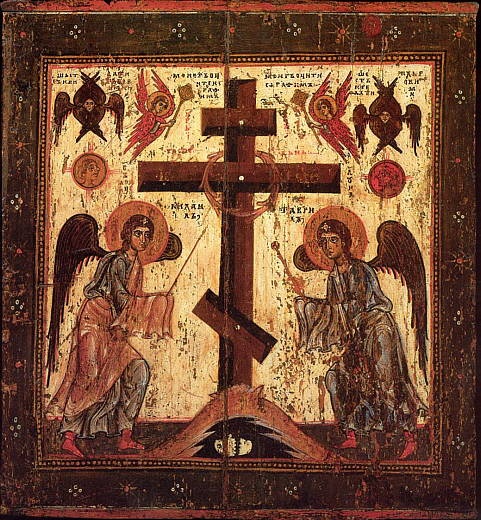
And, resuming her story, she went on: “That youth, on hearing my shameless words, laughed and went off. While I, throwing away my spinning wheel, ran off towards the sea in the direction which everyone seemed to be taking. and, seeing some young men standing on the shore, about ten or more of them, full of vigour and alert in their movements, I decided that they would do for my purpose (it seemed that some of them were waiting for more travellers whilst others had gone ashore). Shamelessly, as usual, I mixed with the crowd, saying, `Take me with you to the place you are going to; you will not find me superfluous.’ I also added a few more words calling forth general laughter. Seeing my readiness to be shameless, they readily took me aboard the boat. Those who were expected came also, and we set sail at once. How shall I relate to you what happened after this? Whose tongue can tell, whose ears can take in all that took place on the boat during that voyage! And to all this I frequently forced those miserable youths even against their own will. There is no mentionable or unmentionable depravity of which I was not their teacher. I am amazed, Abba, how the sea stood our licentiousness, how the earth did not open its jaws, and how it was that hell did not swallow me alive, when I had entangled in my net so many souls. But I think God was seeking my repentance. For He does not desire the death of a sinner but magnanimously awaits his return to Him. At last we arrived in Jerusalem. I spent the days before the festival in the town, living the save kind of life, perhaps even worse. I was not content with the youths I had seduced at sea and who had helped be to get to Jerusalem; many others — citizens of the town and foreigners — I also seduced. The holy day of the Exaltation of the Cross dawned while I was still flying about — hunting for youths. At daybreak I saw that everyone was hurrying to the church, so I ran with the rest. When the hour for the holy elevation approached, I was trying to make my way in with the crowd which was struggling to get through the church doors.
“I had at last squeezed through with great difficulty almost to the entrance of the temple, from which the lifegiving Tree of the Cross was being shown to the people. But when I trod on the doorstep which everyone passed, I was stopped by some force which prevented by entering. Meanwhile I was brushed aside by the crowd and found myself standing alone in the porch. Thinking that this had happened because of my woman’s weakness, I again began to work my way into the crowd, trying to elbow myself forward. But in vain I struggled. Again my feet trod on the doorstep over which others were entering the church without encountering any obstacle. I alone seemed to remain unaccepted by the church. It was as if there was a detachment of soldiers standing there to oppose my entrance. Once again I was excluded by the same mighty force and again I stood in the porch. Having repeated my attempt three or four times, at last I felt exhausted and had no more strength to push and to be puched, so I went aside and stood in a corner of the porch. And only then with great difficulty it began to dawn on me, and I began to understand the reason why I was prevented from being admitted to see the life-giving Cross. The word of salvation gently touched the eyes of my heart and revealed to me that it was my unclean life which barred the entrance to me. I began to weep and lament and beat my breast, and to sigh from the depths of my heart.
“And so I stood weeping when I saw above me the ikon of the most holy Mother of God. Not taking my eyes off her, I said, `O Lady, Mother of God, who gave birth in the flesh to God the Word, I know, O how well I know, that it is no honour or praise to thee when one so impure and depraved as I look up to thy icon, O ever-virgin, who didst keep thy body and soul in purity. Rightly do I inspire hatred and disgust before thy virginal purity. But I have heard that God Who was born of thee became man on purpose to call sinners to repentance. Then help me, for I have no other help. Order the entrance of the church to be opened to me. Allow me to see the venerable Tree on which He Who was born of thee suffered in the flesh and on which He shed His holy Blood for the redemption of sinners an for me, unworthy as I am. Be my faithful witness before thy son that I will never again defile my body by the impurity of fornication, but as soon as I have seen the Tree of the Cross I will renounce the world and its temptations and will go wherever thou wilt lead me.’ Thus I spoke and as if acquiring some hope in firm faith and feeling some confidence in the mercy of the Mother of God, I left the place where I stood praying. And I went again and mingled with the crowd that was pushing its way into the temple. And no one seemed to thwart me, no one hindered my entering the church. I was possessed with trembling, and was almost in delirium.
“Having got as far as the doors which I could not reach before — as if the same force which had hindered me cleared the way for me — I now entered without difficulty and found myself within the holy place. And so it was I saw the lifegiving Cross. I saw too the Mysteries of God and how the Lord accepts repentance. Throwing myself on the ground, I worshipped that holy earth and kissed it with trembling. The I came out of the church and went to her who had promised to be my security, to the place where I had sealed my vow. And bending my knees before the Virgin Mother of God, I addressed her with these words: `O loving Lady, thou hast shown me thy great love for all men. glory to God Who receives the repentance of sinners through thee. What more can I recollect or say, I who am so sinful? It is time for me, O Lady to fulfil my vow, according to thy witness. Now lead me by the hand along the path of repentance!’ And at these words I heard a voice from on high: `If you cross the Jordan you will find glorious rest.’ Hearing this voice and having faith that it was for me, I cried to the Mother of God: `O Lady, Lady, do not forsake me!’ With these words I left the porch of the church and set off on my journey.
“As I was leaving the church a stranger glanced at me and gave me three coins, saying: `Sister, take these.’ And, taking the money, I bought three loaves and took them with me on my journey, as a blessed gift. I asked the person who sold the bread: `Which is the way to the Jordan?’ I was directed to the city gate which led that way. Running on I passed the gates and still weeping went on my journey. Those I met I asked the way, and after walking for the rest of that day (I think it was nine o’clock when I saw the Cross) I at length reached at sunset the Church of St. John the Baptist which stood on the banks of the Jordan. After praying in the temple, I went down to the Jordan and rinsed my face and hands in its holy waters. I partook of the holy and life-giving Mysteries in the Church of the Forerunner and ate half of one of my loaves. Then, after drinking some water from Jordan, I lay down and passed the night on the ground. In the morning I found a small boat and crossed to the opposite bank. I again prayed to Our Lady to lead me whither she wished. Then I found myself in this desert and since then up to this very day I am estranged from all, keeping away from people and running away from everyone. And I live here clinging to my God Who saves all who turn to Him from faintheartedness and storms.”
Zosima asked her: “How many years have gone by since you began to live in this desert?” She replied: “Forty-seven years have already gone by, I think, since I left the holy city.” Zosima asked: “But what food do you find?” The woman said: “I had two and a half loaves when I crossed the Jordan. Soon they dried up and became hard as rock. Eating a little I gradually finished them after a few years.” Zosima asked. “Can it be that without getting ill you have lived so many years thus, without suffering in any way from such a complete change?” The woman answered: “You remind me, Zosima, of what I dare not speak of. For when I recall all the dangers which I overcame, and all the violent thoughts which confused me, I am again afraid that they will take possession of me.” Zosima said: “Do not hide anything from me; speak to me without concealing anything.”
She said to him: “Believe me, Abba, seventeen years I passed in this desert fighting wild beasts — mad desires and passions. When I was about to partake of food, I used to begin to regret the meat and fish which of which I had so much in Egypt. I regretted also not having wine which I loved so much. for I drank a lot of wine when I lived in the world, while here I had not even water. I used to burn and succumb with thirst. The mad desire for profligate songs also entered me and confused me greatly, edging me on to sing satanic songs which I had learned once. But when such desires entered me I struck myself on the breast and reminded myself of the vow which I had made, when going into the desert. In my thoughts I returned to the ikon of the Mother of God which had received me and to her I cried in prayer. I implored her to chase away the thoughts to which my miserable soul was succumbing. And after weeping for long and beating my breast I used to see light at last which seemed to shine on me from everywhere. And after the violent storm, lasting calm descended.
“And how shall I tell you, O Abba, of teh thoughts that pushed me towards lust once more? A fire was kindled in my miserable heart which seemed to burn me up completely and to awake in me a thirst for embraces. As soon as this craving came to me, I flung myself on the earth and watered it with my tears, as if I saw before me my witness, who had appeared to me in my disobedience, and who seemed to threaten punishment for the crime. And I did not rise from the ground (sometimes I lay thus prostrate for a day and a night) until a calm and sweet light descended and enlightened me and chased away the thoughts that possessed me. But always I turned to the eyes of my mind to my Protectress, asking her to extend help to one who was sinking fast in the waves of the desert. And I always had her as my Helper and the Accepter of my repentance. And thus I lived for seventeen years amid constant dangers. And since then even till now the Mother of God helps me in everything and leads me as it were by the hand.”
Zosima asked: “Can it be that you did not need food and clothing?” She answered: “After finishing the loaves I had, of which I spoke, for seventeen years I have fed on herbs and all that can be found in the desert. The clothes I had when I crossed the Jordan became torn and worn out. I suffered greatly from the cold and greatly from the extreme heat. At times the sun burned me up and at other times I shivered from the frost, and frequently falling to the ground I lay without breath and without motion. I struggled with many afflictions and with terrible temptations. But from that time till now the power of God in numerous ways had guarded my sinful soul and my humble body. When I only reflect on the evils from which Our Lord has delivered me I have imperishable food for hope o of salvation. I am fed and clothed by the all-powerful Word of God, the Lord of all. For it is not by bread alone that man lives. And those who have stripped off the rags of sin have no refuge, hiding themselves in the clefts of the rocks (Job 24; Heb. 11:38).”
Hearing that she cited words Scripture, from Moses and Job, Zosima asked her: “And so you have read the psalms and other books?” She smiled at this and said to the elder: “Believe me, I have not seen a human face ever since I crossed the Jordan, except yours today. I have not seen a beast or a living being ever since I came into the desert. I never learned from books. I have never even heard anyone who sang and read from them. But the word of God which is alive and active, by itself teaches a man knowledge. And so this is the end of my tale. But, as I asked you in the beginning, so even now I implore you for the sake of the Incarnate word of God, to pray to the Lord for me who am such a sinner.”
Thus concluding her tale she bowed down before him. And with tears the elder exclaimed: “Blessed is God Who creates the great and wondrous, the glorious and marvellous without end. Blessed is God Who has shown me how He rewards those who fear Him. Truly, O Lord, Thou dost not forsake those who seek Thee!” And the woman, not allowing the elder to bow down before her, said: “I beg you, holy father, for the sake of Jesus Christ our God and Savior, tell no one what you have heard, until God delivers me of this earth. And now depart in peace and again next year you shall see me, and I you, if God will preserve us in His great mercy. But for God’s sake, do as I ask you. Next year during Lent do not cross the Jordan, as is your custom in the monastery.” Zosima was amazed to hear that she know the rules of the monastery and could only say: “Glory to God Who bestows great gifts on those who love Him.” She continued: “Remain, Abba, in the monastery. And even if you wish to depart, you will not be to do so. And at sunset of the holy day of the Last super, put some of the lifegiving Body and Blood of Christ into a holy vessel worthy to hold such Mysteries for me, and bring it. And wait for me on the banks of the Jordan adjoining the inhabited parts of the land, so that I can come and partake of the lifegiving Gifts. For, since the time I communicated in the temple of the Forerunner before crossing the Jordan even to this day I have not approached the Holy Mysteries. And I thirst for them with irrepressible love and longing. and therefore I ask and implore you to grant me my wish, bring me the lifegiving Mysteries at the very hour when Our Lord made His disciples partake of His Divine Supper. Tell John the Abbot of the monastery where you live. Look to yourself and to your brothers, for there is much that needs correction. Only do not say this now, but when God guides you. Pray for me!” With these words she vanished in the depths of the desert. And Zosima, falling down on his knees and bowing down to the ground on which she had stood, sent up glory and thanks to God. And, after wandering thorough the desert, he returned to the monastery on the day all the brothers returned.
For the whole year he kept silent, not daring to tell anyone of what he had seen. To himself he prayed God to show him again the face that he desired. He tormented himself and worried himself to pieces, imagining to himself how long a year is and wanting, if possible, that the year be shortened into one single day. And when at length the first Sunday of the Great Fast came, all went out into the desert with the customary prayers and the singing of psalms. Only Zosima was held back by illness — he lay in a fever. And then he remembered what the saint had said to him: “and even if you wish to depart, you will not be able to do so.”
Many days passed and at last recovering from his illness he remained in the monastery. And when attain the monks returned and the day of the Last Supper dawned, he did as he had been ordered. and placing some of the most pure Body and Blood into a small chalice and putting some gis and dates and lentils soaked in water into a small basket, he departed for the desert and reached the banks of the Jordan and sat down to wait for the saint. He waited for a long while and then began to doubt. then raising his eyes to heaven, he began to pray: “Grant me O Lord, to behold that which Thou hast allowed be to behold once. do not let me depart in vain, being the burden of my sins.” And then another thought struck him: “And what if she does come? There is no boat; how will she cross the Jordan to come to me who am so unworthy?” And as he was pondering thus he saw the holy woman appear and stand on the other side of the river. Zosima got up rejoicing and glorifying and thanking God. And again the thought came to him that she could not cross the Jordan. Then he saw that she made the sign of the Cross over the waters of the Jordan (and the night was a moonlight one, as he related afterwards) and then she at once stepped on to the waters and began walking across the surface towards him. And when he wanted to prostrate himself, she cried to him while still walking on the water: “What are you doing, Abba, you are a priest and carrying the divine Gifts!” He obeyed her and on reaching the shore she said to the elder: “Bless, father, bless me!” He answered her trembling, for a state of confusion had overcome him at the sight of the miracle: “Truly God did not lie when He promised that when we purify ourselves we shall be like Him. Glory to Thee, Christ our God, Who has shown me through this thy slave how far away I stand from perfection.” Here the woman asked him to say the Creed and our Father. He began, she finished the prayer and according to the custom of that time gave him the kiss of peace on the lips. Having partaken of the Holy Mysteries, she raised her hands to heaven and sighed with tears in her eyes, exclaiming: “Now lettest Thou Thy servant depart in peace, O Lord, according to Thy word; for my eyes have seen Thy salvation.”
Then she said to the elder: “Forgive me, Abba, for asking you, but fulfil another wish of mine. Go now to the monastery and let God’s grace guard you. and next year come again to the same place where I first met you. come for God’s sake, for you shall again see me, for such is the will of God.” He said to her: “From this day on I would like to follow you and always see your holy face. but now fulfil the one and only wish of an old man and take a little of the food I have brought for you.” And he showed her the basket, while she just touched the lentils with the tips of her fingers, and taking three grains said that the Holy spirit guards the substance of the soul unpolluted. Then she said: “Pray, for God’s sake pray for me and remember a miserable wretch.” Touching the saint’s feet and asking for her prayers for the Church, the kingdom and himself, he let her depart with tears, while he went off sighing and sorrowful, for he could not hope to vanquish the invincible. Meanwhile she again made the sign of the Cross over the Jordan, and stepped on to the waters and crossed over as before. And the elder returned filled with joy and terror, accusing himself of not having asked the saint her name. But he decided to do so next year.
And when another year had passed, he again went into the desert. he reached the same spot but could see no sign of anyone.
So raising his eyes to heaven as before, he prayed: “Show me, O Lord, Thy pure treasure, which Thou hast concealed in the desert. Show me, I pray Thee, the angel in the flesh, of which the world is not worthy.” Then on the opposite bank of the river, her face turned towards the rising sun, he saw the saint lying dead. Her hands were crossed according to custom and her face was turned to the East. Running up he shed tears over the saint’s feet and kissed them, not daring to touch anything else. For a long time he wept. Then reciting the appointed psalms, he said the burial prayers and thought to himself: “Must I bury the body of a saint? Or will this be contrary to her wishes?” And then he saw words traced on the ground by her head: “Abba Zosima, bury on this spot the body of humble Mary. Return to dust that which is dust and pray to the Lord for me, who departed in the month of Fermoutin of Egypt, called April by the Romans, on the first day, on the very night of our Lord’s Passion, after having partaken of the Divine Mysteries.” Reading this the elder was glad to know the saint’s name. He understood too that as soon as she had partaken of the Divine Mysteries on the shore of the Jordan she was at once transported to the place where she died. The distance which Zosima had taken twenty days to cover, Mary had evidently traversed in an hour and had at once surrendered her soul to God.
Then Zosima thought: “It is time to do as she wished. But how am I to dig a grave with nothing in my hands?” And then he saw nearby a small piece of wood left by some traveller in the desert. Picking it up he began to dig the ground. But the earth was hard and dry and did not yield to the efforts of the elder. He grew tired and covered with sweat. he sighed from the depths of his soul and lifting up his eyes he saw a big lion standing close to the saint’s body and licking her feet. At the sight of the lion he trembled with fear, especially when he called to mind Mary’s words that she had never seen wild beasts in the desert. But guarding himself with the sign of the cross, the thought came to him that the power of the one lying there would protect him and keep him unharmed. Meanwhile the lion drew nearer to him, expressing affection by every movement. Zosima said to the lion: “The Great One ordered that her body was to be buried. But I am old and have not the strength to dig the grave (for I have no spade and it would take too long to go and get one), so can you carry out the work with your claws? Then we can commit to the earth the mortal temple of the saint.” While he was still speaking the lion with his front paws began to dig a hole deep enough to bury the body.
Again the elder washed the feet of the saint with his tears and calling on her to pray for all, covered the body with earth in the presence of the lion. It was as it had been, naked and uncovered by anything but the tattered cloak which had been given to her by Zosima and with which Mary, turning away, had managed to cover part of her body. Then both departed. The lion went off into the depth of the desert like a lamb, while Zosima returned to the monastery glorifying and blessing Christ our Lord. And on reaching the monastery he told all the brothers about everything, and all marvelled on hearing of God’s miracles. And with fear and love they kept the memory of the saint. Abbot John, as St. Mary had previously told Abba Zosima, found a number of things wrong in the monastery and got rid of them with God’s help. And Saint Zosima died in the same monastery, almost attaining the age of a hundred, and passed to eternal life.
The monks kept this story without writing it down and passed it on by word of mouth to one another. But I (adds Sophronius) as soon as I heard it, wrote it down. Perhaps someone else, better informed, has already written the life of the Saint, but as far as I could, I have recorded everything, putting truth above all else. May God Who works amazing miracles and generously bestows gifts on those who turn to Him with faith, reward those who seek light for themselves in this story, who hear, read and are zealous to write it, and may He grant them the lot of blessed Mary together with all who at different times have pleased God by their pious thoughts and labours. And let us also give glory to God, the eternal King, that He may grant us too His mercy in the day of judgment for the sake of Jesus Christ our Lord, to Whom belongs all glory, honour, dominion and adoration with the Eternal Father and the Most Holy and Life-giving Spirit, now and always, and through all ages. Amen.
The End and Glory Be to God