Talking last night of caravans and pilgrimage with Father Mark of Mettingham, I couldn’t avoid musing on the profound experience of our glorious midsummer pilgrimage to Pennant Melangell: peace and tranquility, the length of the midsummer sunset, the clear night-sky, the sound of bees in the morning, summer flowers… and above all, walking down the dark lane, opening the ancient church door and approaching St Melangell’s shrine clutching a single taper, and praying next to her relics.
That day and night were such a contrast to the past day and present night – wet and cold, weeks from midwinter – yet a little connection was made as I browsed in Oxfam bookshop before buying groceries.
Among the poetry books was a very obvious title – “The Lady and the Hare”, new and selected poems from Pauline Stainer – and within its pages the poem of that very title.
Canon of the Feast, the acrostic whereof is: “O Mistress, grant me the grace of discourse”, the composition of George, Tone IV
Ode I,Irmos: I shall open my mouth, * and be filled with the Spirit, * and utter discourse to the Queen and Mother; * and be seen radiantly keeping festival, * joyfully praising her entry.
Most Holy Theotokos, save us.
O most pure one, we know thee to be a treasury of wisdom and an ever-flowing fountain of grace; and we pray thee rain down upon us knowledge, that we may praise thee forever.
Most Holy Theotokos, save us.
Being a temple and palace more exalted than the heavens, O most pure one, thou wast set apart in the Temple of God to be prepared as a divine dwelling-place for His advent.
Most Holy Theotokos, save us.
Shining with the Light of grace, the Theotokos hath illumined all and assembled us to adorn her most splendid festival. Come ye, let us draw nigh to her!
Most Holy Theotokos, save us.
The glorious portal which surpasseth human thought, having opened the doors of the Temple of God, doth now command us who have assembled to delight in her divine wonders.
Canon to the Great-Martyr Catherine, the acrostic whereof is: “With hymns do I hymn the ever-memorable Catherine,” the composition of Theophanes, Tone VIII—
Irmos:The staff of Moses, once working a wonder, striking the sea in the form of the Cross and dividing it, drowned the mounted tyrant Pharaoh, and saved Israel who fled on foot, chanting a hymn unto God.
Holy Great-Martyr, Catherine, pray to God for us.
By the prayers of the most wise martyr Catherine, O Christ, enlighten Thou the darkened eye of my soul, granting me a ray of thy splendour, O Master, which destroyeth all the gloom of my soul-destroying falls.
Holy Great-Martyr, Catherine, pray to God for us.
O most wise one, guided by the divine commandments of the Master and consumed with love for Him, in haste thou didst run to thy struggles and didst awe the tormentors with thy knowledge, discourse, wisdom and grace.
Holy Great-Martyr, Catherine, pray to God for us.
Directed by the mighty hand of Christ, thou didst escape the tempests of idolatry without foundering, O martyr, propelled by the sail of the Cross and the divine winds of the Spirit, chanting a hymn unto God.
Holy Great-Martyr, Catherine, pray to God for us.
Rejoicing in the beauties of virginity, O wise Catherine, and possessed of divine knowledge from heaven, thou didst right boldly and courageously put to shame the proponents of false knowledge, vanquishing them mightily.
Most Holy Mother of God, save us.
O all-pure one, he who proclaimeth thee to be the Theotokos doth reject every heresy; for thou gavest birth unto the eternal Word of God, Who became flesh immutably, O Theotokos, who art more exalted than all creation.
Canon to the Great-Martyr Mercurius, the acrostic whereof is: “May the might of Mercurius preserve me!” the composition of Joseph the Hymnographer, Tone VIII
Irmos: That which had been hewn down cut through the undivided, and the sun saw land which it had not seen before; the water engulfed the cruel enemy, and Israel traversed the impassable, and chanted the hymn: Let us sing to the Lord, for gloriously is He glorified!
Holy Great-Martyr, Mercurius, pray to God for us.
Standing joyfully before the Wellspring of blessings with the choirs of heaven, O Mercurius, and filled with divine delight, O ever-memorable one, preserve those who with love celebrate thy festival, chanting unto the Lord: Gloriously hast Thou been glorified!
Holy Great-Martyr, Mercurius, pray to God for us.
Willingly didst thou enter the arena of torment, O wise one, strengthened with the power of Christ, Who for our sakes willingly endured His saving sufferings; and, rejoicing, thou didst cry out: Let us chant unto the Lord, for gloriously hath He been glorified!
Glory be to the Father, and to the Son, and to the Holy Spirit.
Adorned with the confession of Christ, O blessed one, thou didst openly revile the words of the tyrant and, with gladness, didst endure all manner of pain, O Mercurius, crying out to Him Who strengthened thee: Let us chant unto the Lord, for gloriously hath He been glorified!
Now and ever, and unto the ages of ages. Amen.
For our sake didst Thou appear incarnate of the Virgin Maiden, becoming man like unto us; and Thou dost reveal Mercurius, Thy valiant athlete, to be a faithful witness to Thy sufferings, who chanteth mightily unto Thee: Let us chant unto the Lord, for gloriously hath He been glorified!
Ode III,Irmos: O Theotokos, thou living and plentiful fount, * establish in spiritual fellowship those who sing hymns of praise * of thine honoured entry: * grant them crowns of glory.
Most Holy Theotokos, save us.
Receiving the pure and undefiled one, who is more splendid than all creation, the animate bridal chamber of God, the beautiful Temple and chamber doth appear today like a bride adorned for her wedding.
Most Holy Theotokos, save us.
David, preceding the chorus, doth leap and dance with us, declaring thee, O all-pure one, to be the queen all-adorned, standing in the Temple before our King and God, O most pure one.
Most Holy Theotokos, save us.
From her, whom transgressions issued forth among the race of mankind, hath her correction and incorruption blossomed forth, the Theotokos, who is led today into the house of God.
Most Holy Theotokos, save us.
The angelic armies and the multitudes of all mankind leap for joy, and they advance as lamp-bearers before thy countenance, proclaiming thy majesty in the house of God.
Irmos:O Christ, Who in the beginning established the heavens in wisdom and founded the earth upon the waters, make me steadfast upon the rock of Thy commandments; for none is holy as Thee, O Thou Who lovest mankind.
Holy Great-Martyr, Catherine, pray to God for us.
Responding of thine own will, thou didst go to thy suffering voluntarily, emulating Christ; and, having radiantly vanquished the myriads of the prince of this world, thou wast revealed as crowned, O God-pleasing Catherine.
Holy Great-Martyr, Catherine, pray to God for us.
With strength of mind didst thou denounce the tormentors, who were sunk in the abyss of godlessness, O all-praised martyr, plainly propounding the dogmas of the knowledge of God, illumined with the wisdom of God.
Holy Great-Martyr, Catherine, pray to God for us.
He Who whispered thoughts of equality with God into the ears of Eve is now trodden underfoot by a young maiden; for, defended with the sword of the Cross, the martyr Catherine hath put him to shame, glorying over him immeasurably.
Most Holy Theotokos, save us.
O Theotokos, who alone art all-pure, raise up my morbid mind through the activity of the Life Who, from thee, manifested Himself to the world, cleansing the wounds and stripes of my sins.
Irmos:Thou art the confirmation of those who have recourse to Thee, O Lord; Thou art the light of the benighted; and my spirit doth hymn Thee.
Holy Great-Martyr, Mercurius, pray to God for us.
All aflame with divine love, O glorious Mercurius, thou didst regard fire and bonds, the sword and torments as but a dream.
Holy Great-Martyr, Mercurius, pray to God for us.
Meeting with grievous wounds, thou didst hymn the Creator, O wise martyr, and didst receive the healing thereof, O glorious one.
Glory be to the Father, and to the Son, and to the Holy Spirit.
Strengthened by the divine staff, O right valorous martyr, like an athlete thou didst mightily cast down the audacity of the enemy.
Now and ever, and unto the ages of ages. Amen.
To prefigure thy birth-giving, which passeth understanding, O pure one, a bush appeared, burning with fire, yet unconsumed.
Lord, have mercy. Lord, have mercy. Lord, have mercy.
Kontakion of the feast, Tone IV, Spec. Mel. “Willingly lifted up on the Cross…”: The most pure temple of the Saviour, the precious bridal chamber and Virgin, the sacred treasury of the glory of God, is on this day brought into the house of the Lord, bringing with her the grace that is in the divine Spirit. To her do the angels of God chant the hymn: She is the heavenly tabernacle!
Ikos: Beholding the grace of the ineffable and divine mysteries of God made plainly manifest in and filling the Virgin, I rejoice; yet I know not how to understand this strange and ineffable image. How hath the pure one alone been shown to be above all creation, visible and noetic? Wherefore, desiring to praise her, I am greatly in awe in mind and word; yet, making bold, I proclaim and magnify her, saying: She is the heavenly tabernacle!
Kontakion of the Great-martyr Mercurius, Tone IV, Spec. Mel. “Thou hast appeared today…”:Glorifying him with hymns, let us bless Mercurius, the warrior unvanquished in battle, the helper unashamed amid misfortunes, for he delivereth from tribulations and sorrows those who celebrate his memory with gladness.
Sessional hymn of the Great-Martyr Catherine, Tone IV, Spec. Mel. “Having been lifted up on the Cross…”: Thou didst love Christ thy Bridegroom, radiantly trimming thy lamp and shining forth with virtue, O glorious one. Wherefore, with Him thou hast entered into the bridal chamber, receiving a crown of suffering from Him. From misfortunes do thou deliver us who keep thy memory, O Catherine.
Glory be to the Father, and to the Son, and to the Holy Spirit.
Sessional hymn of the Great-Martyr Mercurius, in the same tone: Spec. Mel. “Go thou quickly before…”: Struggling, the martyr Mercurius put the deceiver to shame and became a mighty champion of Christ. Therefore, he hath now been numbered among the choirs of heaven, worthily sharing in everlasting glory. Wherefore, we faithfully celebrate his sacred memory.
Now and ever, and unto the ages of ages. Amen.
Sessional hymn of the feast, in the same tone: O David, go thou before us into the Temple of God, and, rejoicing, receive thou our Queen, and cry out unto her: Enter thou, O Lady! Enter thou into the Temple of the King! Her glory is understood allegorically, for from her doth Christ the Light desire to pour Himself forth upon all!
Ode IV,Irmos: Perceiving the profound counsel of God, * that the incarnation of Thee the Most High, * will be from a Virgin, * the Prophet Habbakuk cried aloud: * Glory to Thy power, O Lord!
Most Holy Theotokos, save us.
The Temple of God, receiving today the portal through whom none may pass, hath ceased to perform any service of the Law, crying: Truly truth hath appeared to those who are on earth!
Most Holy Theotokos, save us.
The mountain overshadowed, which Habbakuk beheld of old, prefigured her who hath made her abode in the inaccessible chambers of the Temple, flourishing with virtues, for she doth cover the ends of the earth therewith.
Most Holy Theotokos, save us.
All the earth hath seen most glorious things, things strange and marvellous, for the Virgin, receiving food from an angel, doth receive tokens of God’s dispensation.
Most Holy Theotokos, save us.
Revealed as the temple and palace and animate heaven, O divine bride of the King, thou art brought today to the Temple of the Law to be kept for Him, O most pure one.
Irmos: Thou art my strength, O Lord, Thou art my power; Thou art my God, Thou art my joy, Who, without leaving the bosom of the Father, hast visited our lowliness. Wherefore, with the Prophet Habbakuk I cry unto Thee: Glory to Thy power, O Thou Who lovest mankind!
Holy Great-Martyr, Catherine, pray to God for us.
O ever-memorable martyr Catherine, thou didst show the determination of an athlete, setting thyself against the hostile one with great endurance, trampling him beneath thy lovely feet by the power of the Cross, O passion-bearer, thou boast of the martyrs.
Holy Great-Martyr, Catherine, pray to God for us.
O most blessed Catherine, bride of Christ, thou art luminous with the radiant beams of divine beauty, splendid in comeliness. Wherefore, in gladness thou dost chant unto the Master: Glory to Thy power, O Thou Who lovest mankind!
Holy Great-Martyr, Catherine, pray to God for us.
Thou didst set at naught the audacity of the tyrant with the godly discourse of thy wisdom, for thou didst rescue from the abyss of the false worship of demons those who were deceived, teaching them to cry out unto Christ in hymns: Glory to Thy power, O Thou Who lovest mankind!
Holy Great-Martyr, Catherine, pray to God for us.
O all-praised one, who hast mightily trampled down the audacity of the enemy, the right glorious and splendid festival of thy memory hath dawned like the sun, and thereon we cry aloud to the Master: Glory to Thy power, O Thou Who lovest mankind!
Most Holy Theotokos, save us.
Now hath been cast down the mighty of those who reject the veneration of the icons of thee, O pure Maiden, and of Him Who, in manner surpassing understanding, was incarnate of thee and enlightened the whole world, and of all the saints. Enlighten those who honour thee with faith, O thou who alone art all-hymned.
Irmos: I have heard, O Lord, the mystery of Thy dispensation; I have understood Thy works, and have glorified Thy divinity.
Holy Great-Martyr, Mercurius, pray to God for us.
Thou didst make thyself like unto thy Creator, O divinely wise one, by the sufferings of thy divine martyrdom, and from Him hast thou received splendid crowns, in that thou art unvanquished, O glorious one.
Holy Great-Martyr, Mercurius, pray to God for us.
Now hast thou been arrayed in a garment woven of the grace of the Most High, O martyr, having shed the robe of mortality.
Glory be to the Father, and to the Son, and to the Holy Spirit.
Having contended, even to the shedding of thy blood, against sin, thou wast shown forth as a victor and hast been vouchsafed the glory of the Most High, O Mercurius.
Now and ever, and unto the ages of ages. Amen.
O Ever-virgin, the saving Word descended upon thee like a shower and hath dried up the flood of polytheism.
Ode V,Irmos: All creation stands in awe of thy divine glory; * for thou, O Virgin who hast not known wedlock, * didst enter into the temple of the Lord; * thyself being a most pure temple, * bestowing peace, upon all who hymn thee.
Most Holy Theotokos, save us.
The most pure Virgin, the glorious sanctity and sacred offering which is brought today to the Temple of God, is preserved as a habitation for our one God, the King of all, as He Himself knoweth.
Most Holy Theotokos, save us.
Zachariah, having of old beheld the beauty of thy soul, cried out in faith: Thou art the deliverance, thou art the joy of all, thou art our restoration, through whom the Uncontainable One shall appear unto me contained.
Most Holy Theotokos, save us.
O, thy wonders which pass understanding, O all-pure one! Strange is thy birth-giving; strange is the manner of thy maturation; strange also, most glorious and unutterable by mortals, are all thy wonders, O Bride of God.
Most Holy Theotokos, save us.
As a most radiant lamp, O Bride of God, hast thou shone forth today in the house of the Lord, illumining us with the precious gifts of thy wonders, O pure and all-hymned Theotokos.
Irmos: Wherefore hast Thou turned Thy face from me, O Light never-waning? And why hath a strange darkness covered me, wretch that I am? But turn me, and guide my steps to the light of Thy commandments, I pray.
Holy Great-Martyr, Catherine, pray to God for us.
Aflame with the fire of love for thy Master, O most glorious martyr, and seeking to behold His incomprehensible beauty, thou didst surrender thyself to wounds of thine own accord, radiant with the graces of virginity.
Holy Great-Martyr, Catherine, pray to God for us.
Having splendidly adorned thyself with most sacred sufferings, O good virgin maiden, thou didst ascend to the heavenly bridal chamber of Christ, and hast now been radiantly joined to thy Bridegroom in gladness, O most blessed one.
Holy Great-Martyr, Catherine, pray to God for us.
Thou art shown to be a most radiant maiden who hast loved Him Who also is desired; and having finished a most difficult course, following Him Who hath been poured forth as the fragrance of thy noetic myrrh, thou didst cry out: I come, O my Bridegroom!
Most Holy Theotokos, save us.
Knowing thee to be the true Theotokos, and knowing the Word of God Who was born of thee, O all-pure Mistress, we all preach Him Who is known in two independent natures and wills, O Mother and Bride of God.
Irmos: Waking at dawn, we cry to Thee: Save us, O Lord! For Thou art our God, and we know none other than Thee.
Holy Great-Martyr, Mercurius, pray to God for us.
Lacerated, cut with a blade without respite, O Mercurius, thou didst endure, strengthened by divine hope.
Holy Great-Martyr, Mercurius, pray to God for us.
Having fortified thy heart with noetic Stone, O glorious Mercurius, thou didst not waver when crushed by a stone.
Glory be to the Father, and to the Son, and to the Holy Spirit.
Having shared in the sufferings of thy Master, thou didst partake of His glory and divine splendour.
Now and ever, and unto the ages of ages. Amen.
O Virgin, who hast given birth unto the Life which hath slain death: Slay thou the sin which liveth within me.
Ode VI,Irmos: Celebrating the divine and solemn feast * of the Mother of God * O ye divinely wise, * let us come, clapping our hands, * and glorify God who was born of her.
Most Holy Theotokos, save us.
Thou Who hast upheld all things by Thy word hast hearkened to the prayer of the righteous ones. Wherefore, Thou hast loosed the infirmity of the barren woman, in that Thou art compassionate, and given them her who is the cause of joy.
Most Holy Theotokos, save us.
Wishing to make His salvation known to the Gentiles, the Lord hath now taken from among mankind her who hath not known wedlock, as a sign of reconciliation and renewal.
Most Holy Theotokos, save us.
As a house of grace, wherein treasures of the ineffable dispensation of God are laid up, O all-pure one, thou didst share in unfading delight in the Temple.
Most Holy Theotokos, save us.
Receiving thee as a royal diadem, O Bride of God, the Temple hath been rendered splendid and been elevated to better things, beholding in thee the fulfilment of the prophecies.
Irmos: The abyss of my sins and the tempest of my transgressions discomfit me and thrust me down into the depths of violent despondency; but stretch forth Thy mighty arm unto me, as Thou didst to Peter, and save my, O my Guide.
Holy Great-Martyr, Catherine, pray to God for us.
Beholding thee all resplendent in the radiance and beauty of virginity and empurpled in the blood of thy martyrdom, O maiden, the good and all-pure Word caused thee to dwell in the mansions of heaven.
Holy Great-Martyr, Catherine, pray to God for us.
By the Cross wast thou able to overthrow the dominion of the tyrants, denouncing the vanity of earthly wisdom and pouring forth dogmas of divinely inspired teaching, O most wise and ever-memorable Catherine.
Holy Great-Martyr, Catherine, pray to God for us.
Mightily enduring the pain of thy wounds, O most glorious martyr, thou didst cast down to the ground him who of old drove Adam from the sweetness of paradise through deceit, and thou hast been crowned with the crowns of the kingship.
Most Holy Theotokos, save us.
By thine entreaties, O Mother, Virgin Theotokos, make thy Son and our Judge, Who delivereth us from evil circumstances, to be merciful unto me on the day of judgment, for in thee alone do I place my trust.
Irmos: I pour forth my prayer unto the Lord, and to Him do I declare my grief; for my soul is full of evil and my life hath drawn nigh unto hell, and like Jonah I pray: Lead me up from corruption, O God!
Holy Great-Martyr, Mercurius, pray to God for us.
The eternal Word enlivened thee, beholding thee enduring all manner of torments for His sake, O wise martyr, and through His angel He commanded thee to take heart, O Mercurius, and in no wise to fear the opposition of the tormentors.
Holy Great-Martyr, Mercurius, pray to God for us.
The serpent of many guises is slain and trampled beneath the beautiful feet of the athlete, the valiant warrior, for, striving unto death towards the wounds of torture of thine own will, thou wast full of glory.
Glory be to the Father, and to the Son, and to the Holy Spirit.
To the Master didst thou wholly offer the desire of thy heart, O martyr; and, having endured the rack, thou wast crowned by Him as a victor and dost now stand before Him in the heavens with all the martyrs, O Mercurius.
Now and ever, and unto the ages of ages. Amen.
At the angel’s cry thou didst conceive the Angel of Great Counsel, O Maiden, and thou didst give birth unto Him incarnate of thy most pure blood Who, in His unutterable mercy, hath shown to all the ways which lead to life, O all-immaculate one.
Lord, have mercy. Lord, have mercy. Lord, have mercy.
Glory be to the Father, and to the Son, and to the Holy Spirit; now and ever, and unto the ages of ages. Amen.
Kontakion of the Great-Martyr Catherine, Tone II, Spec. Mel. “Seeking the highest…”: O ye who love the martyrs, raise up an honoured chorus in godly manner, honouring the most wise Catherine; for in the arena she preached Christ and trod upon the serpent, putting down the knowledge of the rhetors.
Ikos: Having received the wisdom of God from childhood, O martyr, thou didst also master well all external wisdom; and learning therefrom the movement of the elements and creation through discourse and Him Who by His word fashioned them in the beginning, day and night didst thou render thanksgiving unto Him, setting at naught idols and those who worship them, putting down the knowledge of the rhetors.
Ode VII, Canon I,Irmos: Refusing to worship created things * in place of the Creator, * the divinely wise youths bravely trampled down the threatening fire * and rejoicing they sang aloud: * O supremely hymned Lord and God of our Fathers, Blessed art Thou.
Most Holy Theotokos, save us.
Lo, today a joyous spring hath dawned upon the ends of the earth, enlightening our souls, thoughts and minds with grace: the festival of the Theotokos. Let us mystically make festival this day!
Most Holy Theotokos, save us.
Let all things – heaven and earth, the ranks of angels and the multitudes of mankind – bear gifts today unto the Queen and Mother of God; and let them cry aloud: Our joy and deliverance is brought into the Temple!
Most Holy Theotokos, save us.
The Scriptures have come to pass, the Law hath faded like a shadow, and rays of grace have shone forth upon thee who hast entered into the Temple of God, O pure Virgin Mother wherein thou art blessed.
Most Holy Theotokos, save us.
Heaven and earth and the netherworld are subject to thine Offspring as Creator and God, O all-pure one, and every nation of mortals doth confess that the Lord and Saviour of our souls hath appeared.
Irmos: Once, in Babylon, the fire stood in awe of the condescension of God; wherefore, the youths, dancing with joyous step in the furnace, as in a meadow, chanted: Blessed art Thou, O God of our fathers!
Holy Great-Martyr, Catherine, pray to God for us.
The boast of martyrs and a teacher of piety wast thou, leading a multitude of martyrs unto Christ, thy radiant Bridegroom. And with them dost thou cry aloud, O all-praised one, chanting: Blessed is the God of our fathers!
Holy Great-Martyr, Catherine, pray to God for us.
Thy discourse most wise brought many out of the madness of idolatry unto salvation, and thou didst show them forth as radiant martyrs, who cry aloud with thee: Blessed is the God of our fathers!
Holy Great-Martyr, Catherine, pray to God for us.
Following after Thee, the maiden was brought to Thee beheaded by the sword, emulating Thy most pure Passion, crying out unto Thee, our Creator, and saying: Blessed is the God of our fathers!
Most Holy Theotokos, save us.
The Holy of holies dwelt within thee in hallowed manner, O pure Virgin Theotokos, and He was born of thee incarnate to save those who cry out in faith: Blessed is the God of our fathers!
Irmos: In the furnace the Hebrew children boldly trod the flame underfoot and transformed the fire into dew, crying out: Blessed art Thou, O Lord God, forever!
Holy Great-Martyr, Mercurius, pray to God for us.
Illumined with the light of heavenly enlightenment, O valiant warrior, thou dost enlighten those who now do hymn thee and chant: Blessed art Thou, O Lord God, forever!
Holy Great-Martyr, Mercurius, pray to God for us.
O blessed one, thou hast hymned the Benefactor of all, consumed with love for Him and burning with material fire; and thou didst chant: Blessed art Thou, O Lord God, forever!
Holy Great-Martyr, Mercurius, pray to God for us.
They that rendered honour unto stone and were stony of heart, O martyr, with a stone weighted down the neck of thee who cried: Blessed art Thou, O Lord God, forever!
Glory be to the Father, and to the Son, and to the Holy Spirit.
Having mingled thy precious blood with the blood of the Master Who loveth mankind, thou didst show thyself to share in His sufferings, O Mercurius, crying out: Blessed art Thou, O Lord God, forever!
Now and ever, and unto the ages of ages. Amen.
The ranks of angels stand in awe of the depth of thy mystery, O Theotokos; for God appeared incarnate of thee, He to Whom we chant: Blessed art Thou, O Lord God, forever!
Ode VIII,Irmos: Hearken, O pure Virgin Maiden, * that Gabriel may tell thee the true counsel of the Most High of old. * Make ready to receive the Godhead; * for through thee the Infinite One hath come to dwell among mankind. *
Most Holy Theotokos, save us.
Wherefore, rejoicing, I cry aloud: * Bless the Lord, all ye works of the Lord! Anna, once, leading the most pure temple to the house of God, faithfully said unto the priest, crying aloud: Now accept thou this child, given me by God; lead her into the Temple of the Creator; and, rejoicing, chant unto Him: Bless the Lord, all ye works of the Lord!
Most Holy Theotokos, save us.
And Zachariah then, beholding them in the Spirit, said unto Anna: Thou dost bring hither the true Mother of Life, whom the prophets of God have clearly foretold as the Theotokos! How, therefore, can the Temple hold her?
Most Holy Theotokos, save us.
Wherefore, marvelling, I cry out: Bless the Lord, all ye works of the Lord! The handmaid of God have I been, answered Anna unto him, and I call upon Him with faith and prayer to accept the fruit of my birth-pangs, that, having received this child, I might bring her that was born unto Him that bestowed her. Wherefore, I cry aloud: Bless the Lord, all ye works of the Lord!
Most Holy Theotokos, save us.
Truly this is a matter of the Law, the priest said to her, and strange doth this thing seem unto me, beholding her that doth most gloriously surpass the holy ones in grace led into the house of God. Wherefore, rejoicing, I cry out: Bless the Lord, all ye works of the Lord!
Irmos: Madly did the Chaldæan tyrant heat the furnace sevenfold for the pious ones; but, beholding them saved by a higher Power, he cried out to the Creator and Deliverer: Ye children, bless; ye priests, hymn; ye people, exalt Him supremely for all ages!
Holy Great-Martyr, Catherine, pray to God for us.
Converted by thy teachings, the empress advanced in piety and, mightily enduring the infliction of pain, was clearly vouchsafed the everlasting kingdom of heaven, crying out to the Master: Ye priests, bless; ye people, exalt Christ supremely for all ages!
Holy Great-Martyr, Catherine, pray to God for us.
Let the entreaties of the faithful be entrusted to the martyrs, for the passion-bearer doth stand before Christ, asking that which is best for all and mediating salvation for those who earnestly celebrate her all-holy and honoured memory and faithfully cry out: Ye people, exalt Christ supremely for all ages!
Holy Great-Martyr, Catherine, pray to God for us.
Throwing wide the portals of paradise, the Bridegroom doth receive thee, O all-wise one; and He hath made thee to dwell in a most radiant chamber, showing thee to be one who shareth in His kingdom and His suffering. And, standing now before Him, splendidly adorned, O daughter of the King, forget us not.
Holy Great-Martyr, Catherine, pray to God for us.
The tyrant tempted thee with alluring words; the cruel one sought to deceive thee with persuasions, hoping thereby to weaken thy resolve, O glorious one; but, wishing to betroth thyself to Christ, thou didst cry out to the Master: Ye priests, hymn; ye people, exalt Christ supremely forever!
Most Holy Theotokos, save us.
O all-immaculate Theotokos, thou art more sacred than the supernatural ranks of angels, for from thy virginal womb, which knew not wedlock, thou gavest birth unto their Creator and Lord in two natures, unconfused and immutable, God incarnate in a single hypostasis.
Irmos: [same as that of the preceding canon]
Holy Great-Martyr, Mercurius, pray to God for us.
The choir of passion-bearers accepted as one of their number thee who wast adorned and radiant with the precious beauties of thy sufferings and thy pious and honourable martyrdom. And now thou dost unceasingly cry out: Ye priests, bless; ye people, exalt Christ supremely forever!
Holy Great-Martyr, Mercurius, pray to God for us.
Piously didst thou finish thy course, O glorious one, and valiantly didst thou put the foe to shame; and, laying hold of a heavenly trophy as victor, thou dost now rejoice with the angelic choirs and dost cry out with them unceasingly: Ye priests, hymn; ye people, exalt Christ supremely forever!
Glory be to the Father, and to the Son, and to the Holy Spirit.
In meeting thy death by the sword, and receiving the expected end, which thou didst desire, O most blessed one, thou didst water the ground with outpourings of thy blood; and thy blessed and victorious body didst thou show forth as whiter than snow, chanting: Ye priests, hymn; ye people, exalt Christ supremely forever!
Now and ever, and unto the ages of ages. Amen.
All of us, the faithful, hymn thee, O all-pure one, as her who is the cause of our restoration; for in manner beyond reproach thou didst give birth unto God, the Cause of all, Who in His loving-kindness hath restored His image which hath been marred by wickedness, O thou who alone art all-blessed and joyous.
Ode IX, Canon I,Irmos: In nowise may the hand of the defiled * touch the animate ark of God; * and let the lips of the faithful * never-silently cry out with joy to the Theotokos, * chanting the words of the angel: * Rejoice, O thou who art full of grace! * The Lord is with thee!
Most Holy Theotokos, save us.
O pure Theotokos, as thou hast the most radiant beauty of purity of soul and art full of the grace of God from heaven, with the ever-existent light thou dost ever enlighten those who cry out with joy: Truly thou art more highly exalted than all, O pure Virgin!
Most Holy Theotokos, save us.
Thy wonder doth surpass the power of words, O pure Theotokos, for in thee I perceive a body impervious to the movement of sin. Wherefore, thankfully I cry out to thee: Truly thou art more highly exalted than all, O pure Virgin!
Most Holy Theotokos, save us.
Most gloriously did the Law prefigure thee, O pure one, as the tabernacle, the divine jar, the awe-some ark, the veil, the staff, the inviolable temple and portal of God. Wherefore, all these things teach us to cry to thee: Truly thou art more highly exalted than all, O pure Virgin!
Most Holy Theotokos, save us.
In hymnody David cried out to thee prophetically, calling thee the daughter of the King in the comeliness of thy virtues, beholding thee standing, elaborately adorned, at the right hand of God. Wherefore, in prophecy he cried out: Truly thou art more highly exalted than all, O pure Virgin!
Most Holy Theotokos, save us.
Foreseeing thee who art pleasing to God, Solomon proclaimed thee to be the bower of the King, the living and sealed fountain, from whence untroubled waters have issued forth for us who cry out with faith: Truly thou art more highly exalted than all, O pure Virgin!
Most Holy Theotokos, save us.
O Theotokos, thou givest to my soul the tranquility of thy gifts, pouring forth life upon those who honour thee as is meet, defending, protecting and preserving them thyself, that they might cry to thee: Truly thou art more highly exalted than all, O pure Virgin!
Irmos: Heaven was stricken with awe, and the ends of the earth were amazed, that God hath appeared in the flesh, and that thy womb became more spacious than the heavens. Wherefore, the ranks of men and angels magnify thee as the Theotokos.
Holy Great-Martyr, Catherine, pray to God for us.
Adorned with bridal ornaments, thou hast passed on to splendid bridal chambers, holding the lamp of virginity in thy right hand and thy severed head in the other. And now, standing before Christ thy Bridegroom, preserve thou those who hymn thee.
Holy Great-Martyr, Catherine, pray to God for us.
Thy prayer was accepted, O divinely wise one, for the Master doth save from temptations those who call upon thy name with faith, O honoured one, and He doth bestow health upon them, delivering them from divers ailments, spiritual and bodily. Wherefore, in gladness we bless thee, O Catherine.
Holy Great-Martyr, Catherine, pray to God for us.
Thou hast now attained the calm harbour, O martyr, having sailed over this world’s sea of threefold waves easily and in good order, not being tempted, O most wise virgin; and thou dost offer varied riches, a multitude of martyrs, unto Christ, O most blessed Catherine.
Holy Great-Martyr, Catherine, pray to God for us.
Joining chorus now with choirs of virgins within the bridal chambers of heaven, and illumined with rays of thy sufferings, O most wise Catherine, thou hast loosed the bonds of my falls, earnestly entreating the Benefactor of all, for Whom thou didst shed thy blood.
Most Holy Theotokos, save us.
Thou hast appeared, O Virgin Mother of God, giving birth in the body, in manner transcending nature, unto the good Word to Whom the Father gave utterance from His own heart before all ages, in that He is good, and Whom we now know to be more exalted than all bodies, even though clad in a body Himself.
Irmos: Every ear trembleth to hear of the ineffable condescension of God, for the Most High willingly came down even to the flesh, becoming man through the Virgin’s womb. Wherefore we, the faithful, magnify the all-pure Theotokos.
Holy Great-Martyr, Mercurius, pray to God for us.
With grace the martyrs now dispel the stench of dung and with ineffable discourse they drive away our fœtid passions, and pour forth waters for the healing of our bones and water the souls of those who hymn their wondrous miracles.
Holy Great-Martyr, Mercurius, pray to God for us.
We honour thee in sacred manner as a great pillar of the Church of Christ, an indestructible rampart, a city which cannot be taken captive, a mighty warrior of God the King of all, a destroyer of our enemies and a noetic and universal beacon, O martyr.
Holy Great-Martyr, Mercurius, pray to God for us.
Thou didst receive an angel of light as a companion before thy suffering, O divinely wise one. Wherefore, lacerated, burned with torches and horribly dismembered and beheaded with a sword, thou wast not afraid, O most valiant athlete of Christ.
Glory be to the Father, and to the Son, and to the Holy Spirit.
Thy divine memorial hath dawned as a day full of enlightenment, gladness and joy for us that honour thee, O martyr Mercurius, whereon do thou remember us that keep thy memory and deliver us from grievous temptations, misfortunes and passions.
Now and ever, and unto the ages of ages. Amen.
O portal of Light, enlighten my soul which hath been blinded by the passions and darkened by wicked thoughts, and endangered; and deliver me from temptations, misfortunes and sorrows, that I may glorify thee, the hope and confirmation of the faithful.
Troparion of the Great Martyr Catherine, Tone IV: Thy ewe-lamb Catherine crieth out to Thee with a loud voice, O Jesus: “I love Thee, O my Bridegroom, and, seeking Thee, I pass through many struggles; I am crucified and buried with Thee in Thy baptism, and suffer for Thy sake, that I might reign with Thee; I die for Thee, that I might live with Thee. As an unblemished sacrifice accept me, who sacrifice myself with love for Thee.” By her prayers save Thou our souls, in that Thou art merciful.
Another troparion, in the same tone: With thy virtues, as with the rays of the sun, thou didst enlighten the unbelieving philosophers; and, like the most radiant moon shining on those who walk at night, thou didst drive away the darkness of unbelief. Thou didst bring the empress to faith and didst denounce the tyrant, O divinely elect bride. O blessed Catherine, with desire didst thou make haste to the heavenly bridal chamber, to Christ the most comely Bridegroom, and by Him hast thou been crowned with a royal crown. Standing with the angels before Him, do thou pray for us who keep thy most honoured memory.
Troparion of the Great Martyr Mercurius, in the same tone: In his sufferings, O Lord, thy martyr Mercurius received an imperishable crown from Thee, our God. For, possessed of Thy might, he cast down the tormentors and set at naught the feeble audacity of the demons. By his prayers do Thou save our souls.
Troparion of the feast, in the same tone: Today is the prelude of God’s good will and the proclamation of the salvation of man. The Virgin hath manifestly appeared in the Temple of God and proclaimeth Christ unto all. To her let us cry aloud: Rejoice, O thou fulfilment of the Creator’s dispensation!
The Holy Great-Martyr Catherine was the daughter of the governor of Alexandrian Egypt Constus during the reign of the emperor Maximian (305-313). Living in the capital – the centre of Hellenistic knowledge, and possessed of an uncommon beauty and intellect, Catherine received a most splendid of educations, having studied the works of the finest philosophers and teachers of antiquity. Young men from the most worthy families of the empire sought the hand of the beautiful Catherine, but none of them was chosen. She declared to her parents that she would be agreeable to enter into marriage only with someone who surpassed her in illustriousness, wealth, comeliness and wisdom.
Catherine’s mother, a secret Christian, sent her for advice to her own spiritual father – a saintly elder pursuing prayerful deeds in solitude in a cave not far from the city. Having listened to Catherine, the elder said that he knew of a Youth, who surpassed her in everything, such that “His beauty was more radiant than the shining of the sun, His wisdom governed all creation, His riches were spread throughout all the world – this however did not diminish but rather added to the inexpressible loftiness of His lineage”. The image of the Heavenly Bridegroom produced in the soul of the holy maiden an ardent desire to see Him. Truth, to which her soul yearned, revealed it to her. In parting, the elder handed Catherine an icon of the Mother of God with the God-Child Jesus on Her arm and bid her to pray with faith to the Queen of Heaven – the Mother of the Heavenly Bridegroom – for the bestowing of the vision of Her Son.
Catherine prayed all night and was given to see the Most Holy Virgin, Who sent Her Divine Son to look upon the kneeling of Catherine before Them. But the Child turned His face away from her saying, that He was not able to look at her because she was ugly, of shabby lineage, beggarly and mindless like every person – not washed with the waters of holy Baptism and not sealed with the seal of the Holy Spirit. Catherine returned again to the elder deeply saddened. He lovingly received her, instructed her in the faith of Christ, admonished her to preserve her purity and integrity and to pray unceasingly; he then performed over her the mystery / sacrament of holy Baptism. And again Saint Catherine had a vision of the Most Holy Mother of God with Her Child. Now the Lord looked tenderly at her and gave her a ring – a wondrous gift of the Heavenly Bridegroom.
At this time the emperor Maximian was himself in Alexandria for a pagan feastday. Because of this, the feast was especially splendid and crowded. The cries of the sacrificial animals, the smoke and the smell of the sacrifices, the endless blazing of fires, and the bustling crowds at the arenas filled Alexandria. Human victims also were brought – because they consigned to death in the fire the confessors in Christ, those not recanting from Him under torture. The Saint’s love for the Christian martyrs and her fervent desire to lighten their fate impelled Catherine to go to the pagan head-priest and ruler of the empire, the emperor-persecutor Maximian.
Introducing herself, the saint confessed her faith in the One True God and with wisdom denounced the errors of the pagans. The beauty of the maiden captivated the emperor. In order to convince her and show the superiourity of pagan wisdom, the emperor gave orders to gather 50 of the most learned men (rhetoricians) of the empire, but the Saint got the better of the wise men, such that they themselves came to believe in Christ. Saint Catherine shielded the martyrs with the sign of the cross, and they bravely accepted death for Christ and were burnt by order of the emperor.
Maximian, no longer hoping to convince the saint, tried to entice her with the promise of riches and fame. Having received an angry refusal, the emperor gave orders to subject the saint to terrible tortures and then throw her in prison. The Empress Augusta, who had heard much about the saint, wanted to see her. Having prevailed upon the military-commander Porphyry to accompany her with a detachment of soldiers, Augusta went to the prison. The empress was impressed by the strong spirit of Saint Catherine, whose face glowed with Divine grace. The holy martyress explained the Christian teaching to the newly-arrived, and they in believing were converted to Christ.
On the following day they again brought the martyress to the judgement court where, under the threat of being broken on the wheel, they urged that she recant from the Christian faith and offer sacrifice to the gods. The saint steadfastly confessed Christ and she herself approached the wheels; but an Angel smashed the instruments of execution, which broke up into pieces with many pagans passing nearby. Having beheld this wonder, the empress Augusta and the imperial courtier Porphyry with 200 soldiers confessed their faith in Christ in front of everyone, and they were beheaded. Maximian again tried to entice the holy martyress, proposing marriage to her, and again he received a refusal. Saint Catherine firmly confessed her fidelity to the Heavenly Bridegroom – Christ, and with a prayer to Him she herself put her head on the block under the sword of the executioner. The relics of Saint Catherine were taken by the Angels to Mount Sinai. In the VI Century, through a revelation, the venerable head and left hand of the holy martyress were found and transferred with honour to a newly-constructed church of the Sinai monastery, built by the holy emperor Justinian (527-565; Comm. 14 November).
The Holy GreatMartyr Mercurius (Mercury), a Scythian by descent, served as a soldier in the Roman army. The impious emperors Decius (249-251) and Valerian (253-259) issued a law, ordering all Roman citizens to worship the pagan gods and condemning Christians to death.
During these times barbarians attacked the Roman empire, and the emperor Decius went on campaign with a large army. In one of the battles an Angel of the Lord appeared to Mercurius and presented him a sword with the words: “Fear not. Go forth bravely against the enemy. And when thou art victorious, forget not the Lord thy God”. With this sword the holy warrior broke through the ranks of the barbarian horde; he destroyed an hoste of the enemy and killed the leader of the barbarians, winning victory for the Romans. The grateful emperor rewarded Saint Mercurius for his bravery, and made him a military commander.
The Angel of the Lord appeared again to the holy warrior, who had received great honours and riches, and reminded him by Whom the victory had been given, and bidding him to serve the Lord. Saint Mercurius recalled that his father Gordian had also confessed the Christian faith; – he himself had been baptised and with all his soul he yearned for Christ. He refused to participate in the solemn offering of sacrifice to the pagan gods and was summoned before the dread emperor. Openly declaring himself a Christian, Mercurius threw down at the feet of the emperor his soldier’s belt and mantle and he repudiated all the honours. The Angel of the Lord again appeared to Saint Mercurius in the prison, encouraging him and inspiring him to bravely endure all the suffering for Christ.
They stretched the holy martyr over fire; they cut at him with knives, and lashed at him so much, that the blood from his wounds extinguished the fire. But each time, when they threw him back into the prison nearly dying from his wounds, Saint Mercurius received complete healing from the Lord, manifesting before the impious the great power of faith in Christ. Condemned to a sentence of death, the saint was deemed worthy of a vision of the Lord Himself, promising him a quick release from his sufferings. The GreatMartyr Mercurius was beheaded at Caesarea Cappadocia. His holy body exuded fragrant myrh and incense, bestowing healing on many of the sick.
Even after his death the warrior of Christ, united unto the Heavenly Church, served a soldier’s service for the good of the earthly Church. Through the prayer of Sainted Basil the Great (Comm. 1 January) in front of an icon of the Most Holy Mother of God for deliverance of Christians under persecution of the Christian faith by the emperor Julian the Apostate (361-363), the Mediatrix for Christians dispatched the holy Warrior Mercurius in assist from the Church Triumphant unto the Church Militant. The image of the holy GreatMartyr Mercurius, depicted on the icon alongside the image of the Most Holy Mother of God, became invisible. It reappeared again later with a bloodied spear.
At this very moment Julian the Apostate on his Persian campaign was pierced by the spear of an unknown assailant, who disappeared immediately. The mortally wounded Julian, as he lay dying, cried out: “Thou hast conquered, Galileian!”
Saint Amphilochius, Bishop of Iconium, was born in Caesarea in Cappadocia, a city which has given the world some of the greatest Fathers and teachers of the Orthodox Church. He was a first cousin to Saint Gregory the Theologian, and a close friend of Saint Basil the Great. He was their disciple, follower and of like mind with them.
The saint, on the way back to his cell, encountered seven bishops who were seeking him at the command of God, in order to establish him as archpastor of Iconium. Saint Amphilochius told them that he was already consecrated by the angels.
Saint Amphilochius toiled hard in the field of Christ. He lived in the wilderness as a strict ascetic for about forty years, until the time when the Lord summoned him for hierarchic service. In the year 372 the Bishop of Iconium died. Angels of the Lord thrice appeared in visions to Saint Amphilochius, summoning him to go to Iconium to be the bishop. The truthfulness of these visions was proven when the angel, appearing to him the third time, sang together with the saint the angelic song: “Holy, Holy, Holy, Lord of Sabaoth.” The heavenly messenger led the saint to the nearest church, where an assembly of angels consecrated Amphilochius bishop.
For many years Saint Amphilochius tended the flock of Iconium entrusted to him by the Lord. The prayer of the righteous one was so intense that he was able to ask the Lord to heal the spiritual and bodily infirmities of his flock. The wise archpastor, gifted as writer and preacher, unceasingly taught piety to his flock. A strict Orthodox theologian, the saint relentlessly confronted the Arian and Eunomian heresies. He participated in the Second Ecumenical Council (381), and he headed the struggle against the heresy of Macedonius. Letters and treatises of Saint Amphilochius are preserved, which are profoundly dogmatic and apologetic in content. The holy Bishop Amphilochius of Iconium departed peacefully to the Lord in the year 394.
The Orthodox Church in America
12/5/2017
Ode I, Canon of the feast, the composition of Basil, in Tone I:
Ode I, Irmos: Let us all chant a triumphant hymn unto God * Who wrought wondrous miracles * with His upraised arm, * and saved Israel, * for He hath been glorified.
Most Holy Theotokos, save us.
Let us hasten today, honouring the Theotokos with hymns, and let us celebrate a spiritual feast; for she is offered as a gift to God in the temple.
Most Holy Theotokos, save us.
With songs let us hymn the glorious arrival of the Theotokos; for today, as the prophets foretold, she is borne as a gift of great price into the temple, though she is herself the temple of God.
Most Holy Theotokos, save us.
The blameless Anna rejoiced, maternally bringing a gift of great price to God in the temple; and with her Joachim keepeth splendid festival.
Most Holy Theotokos, save us.
Of old, David, thine ancestor, hymned thee, O Virgin Bride of God, calling thee the daughter of Christ the King; and, having given birth to Him, as a Mother thou didst feed Him with milk as a babe.
Canon of the Holy Amphilochius, the acrostic whereof is, “I hymn the pastor who put delusion to shame”, the composition of Theophanes, in Tone IV:
Irmos: Through the deep of the Red Sea, * marched dry shod Israel of old, * and by Moses’ outstretched hands, * raised in the form of a cross, * the power of Amalek was routed in the wilderness.
Holy father,Amphilochius, pray to God for us.
Thou didst easily destroy the words and insolence of heresies, illumined with the radiance of Orthodoxy. O thou who art manifestly sacred, preserve us also who honour thee therein.
Holy father,Amphilochius, pray to God for us.
The Lord Who ever desires the salvation of all appointed thee as a guide for His sacred flock, O hierarch, seeing thee shining excellently in word and life.
Holy father,Amphilochius, pray to God for us.
Having chosen to contend lawfully for the Church of Christ, O glorious father, thou didst protect thyself with the sword of the Cross, and through grace wast revealed to be a victor and crown-bearer.
Most Holy Theotokos, save us.
To the Word Who is co-unoriginate and equally everlasting with the Father, and is the image of His essence, didst thou ineffably give birth, incarnate, O thou who knewest not wedlock.
Canon of Saint Gregory, the acrostic whereof is, “I marvel at the wonder-working Gregory”, the composition of Joseph, in Tone VIII:
Irmos: To Him who crushed the enemy with His arm * and led Israel through the Red Sea, * to our Redeemer and our God let us sing, * for He hath been glorified.
Holy father,Gregory, pray to God for us.
Ever illumined with the rays of the Spirit and having become a brilliant star, O sacred Gregory, wholly enlighten me by thy prayers, that I my hymn thee.
Holy father,Gregory, pray to God for us.
He Who knoweth all things beforehand, having shown grace to thy mind with divinely imparted effulgence, from thine earliest infancy hallowed thee, who desired to shine forth with godly virtues and miracles, O father.
Glory be to the Father, and to the Son, and to the Holy Spirit.
Casting off the slumber of despondency from thine eyelids, thou didst show thyself to be a vigilant luminary, O God-bearer, showing forth thy calling which is confirmed as true by material things, O Gregory.
Now and ever, and unto the ages of ages. Amen.
I truly and decisively confess thee to be the Theotokos; for thou didst ineffably give birth to the Lord Who is understood in two natures and wills, O most pure Virgin.
Ode III, Irmos: Let my heart be established in Thy will O Christ God, * Who hath established a second heaven over the waters, * and founded the earth upon the waters, * O all-powerful One.
Most Holy Theotokos, save us.
O ye who love the feasts of the Church, let us keep festival and rejoice today together in spirit, and in gladness, on the holy feast of the daughter of the King, the Mother of our God.
Most Holy Theotokos, save us.
Rejoice today, O Joachim! Be thou glad in spirit, O Anna, leading to the Lord the three year old child born from thee, as though she were a pure and most immaculate heifer.
Most Holy Theotokos, save us.
Mary, the Theotokos, the habitation of God, is led into the holy temple, being three years of age in the flesh; and, going before her, virgins bear lighted lamps.
Most Holy Theotokos, save us.
The pure ewe-lamb of God, the undefiled turtle-dove, the tabernacle containing God, the sanctuary of glory, hath chosen to dwell within the holy tabernacle.
Irmos: Thy Church rejoiceth in Thee, O Christ, crying aloud: Thou art my might, O Lord, my refuge and confirmation!
Holy father,Amphilochius, pray to God for us.
The divine and luminous effulgence of thy dogmas put down the evil hordes of the heretics, O glorious Amphilochius.
Holy father,Amphilochius, pray to God for us.
As a high priest, like a river filled by God to overflowing with life-creating waters, thou dost give us thy piety to drink.
Holy father,Amphilochius, pray to God for us.
Illumined with abundant radiance, thou didst illumine thy mind with the mystic splendour of thy teachings, O venerable one.
Most Holy Theotokos, save us.
All of us, the faithful, declare thee to be the lustrous candle-stand, the spiritually nourishing banquet of piety, and the ark, O most pure one.
Irmos: My heart is established in the Lord, * my horn is exalted in my God, * my mouth is enlarged against mine enemies, * and I rejoice in Thy salvation.
Holy father,Gregory, pray to God for us.
The Creator, accepting thy labours for His sake, O father Gregory, led thee to an elder in the desert, who taught thee the meaning of every Scripture.
Holy father,Gregory, pray to God for us.
Passing a whole week without food, O father, thou wast nourished with heavenly food, drinking the rain of thy tears, divinely filled to repletion.
Glory be to the Father, and to the Son, and to the Holy Spirit.
To thee, O hierarch, was breadth of heart given by God; for thou didst richly pour forth the most pure waters of teachings watering thereby the hearts of the faithful.
Now and ever, and unto the ages of ages. Amen.
The words of the divinely eloquent preachers have been fulfilled; for, lo! the Virgin hath given birth to a little Babe, Who is more ancient than Adam and co-enthroned with the Father.
Lord, have mercy. Lord, have mercy. Lord, have mercy.
Kontakion of the feast, Tone IV, Spec. Mel. “Having been lifted up…”: The most pure temple of the Saviour, * the precious bridal chamber and Virgin, * the sacred treasury of the glory of God, * hath been brought into the house of the Lord this day, * bringing with her the grace that is in the divine Spirit. * To her do the angels of God chant the hymn: ** She is the heavenly tabernacle!
Ikos: Beholding the grace of the ineffable and divine mysteries of God made plainly manifest in and filling the Virgin, I rejoice; yet I know not how to understand this strange and ineffable image. How hath the pure one alone been shown to be above all creation, visible and immaterial? Wherefore, wishing to praise her, I am greatly in awe in mind and word; yet, bold, I proclaim and magnify her, saying: She is the heavenly tabernacle!
Kontakion of St. Gregory, Tone IV, Spec. Mel. “Thou hast appeared today…”: With effulgence of splendid radiance * the Church of the Holy Spirit, illumine those who celebrate thy splendid repose, ** O venerable and all-blessed father Gregory.
Sessional Hymn of St. Amphilochius, same tone, Spec. Mel. “Go thou quickly before…”: Thou dost enlighten the ends of the earth at thy memorial, O wise and glorious Amphilochius; for thy body poureth forth a well-spring of healings. Wherefore, thou deliverest from every infirmity those who with faith approach thine honoured temple. For this cause, pray thou now, that we be saved.
Glory be to the Father, and to the Son, and to the Holy Spirit.
Tone VIII, Spec. Mel. “Of the Wisdom…”: Offered to the Lord from earliest infancy, as the most glorious Samuel had been of old, thou didst likewise hear the Saviour calling thee, and, having purified thy soul with gifts of good things, thou didst worthily receive the grace of the priesthood. Wherefore, shepherding thy flock in the pasture of divine knowledge, thou didst shine forth acts of healing, O Gregory. Entreat Christ God, that He grant remission of sins unto those who celebrate thy holy memory with love.
Now and ever, and unto the ages of ages. Amen.
Sessional Hymn of the feast, Tone IV, Spec. Mel. “Go thou quickly before…”: O David, go thou before us into the Temple of God, and, rejoicing, receive thou our Queen, and cry out unto her: Enter thou, O Sovereign Lady! Enter thou into the Temple of the King! Her glory is understood allegorically, for from her doth Christ the Light desire to pour Himself forth upon all!
Ode IV, Irmos: Foreseeing in the Spirit O Prophet Habbakuk, * the incarnation of the Word, * thou didst proclaim, crying aloud: * When the years draw nigh, Thou shalt be known; * when the season cometh, Thou shalt be shown forth! * Glory to Thy power, O Lord!
Most Holy Theotokos, save us.
O Prophet Isaiah, prophesy unto us: Who is the Virgin Who will conceive in her womb, who springing forth from the root of Judah, and who shall give birth to the right glorious Fruit of the holy seed of King David?
Most Holy Theotokos, save us.
O virgins, commence ye to chant hymns, holding candles in your hands, and praising the arrival of the pure Theotokos who now cometh to the temple of God, celebrating with us!
Most Holy Theotokos, save us.
Rejoice now, O Joachim and Anna, leading into the temple of the Lord, like a heifer three years of age, the pure one born from you, who will become the Mother of God.
Most Holy Theotokos, save us.
As the holy of holies, O pure one, thou didst love to dwell in the holy Temple, remaining there and conversing most gloriously with the angels, receiving bread from heaven, O Virgin, thou nourisher of Life.
Irmos: Beholding Thee, the Sun of righteousness, * lifted up upon the Cross, * the Church now standeth arrayed and doth worthily cry aloud: * Glory be to Thy power, O Lord!
Holy father,Amphilochius, pray to God for us.
Come, ye divinely wise, let us clap our hands with faith on the sacred festival of the godly and divinely eloquent Amphilochius, strengthened by his doctrines and theology.
Holy father,Amphilochius, pray to God for us.
As an attendant of the Church, the bride in Christ, O God-bearer, thou didst adorn her with the beauty of thy discourses and render her radiant with the comeliness of Orthodoxy.
Holy father,Amphilochius, pray to God for us.
Thy divinely eloquent tongue of theology hath clearly explained to all the dominion of the Trinity, One in honour, that they may worship the one Godhead in three hypostases.
Most Holy Theotokos, save us.
O Virgin, we know thee to be the new tabernacle and pure sanctuary of the Master of all; for thou hast given birth to Him in the flesh in two united hypostases, O all-immaculate one.
Irmos: I have heard report of Thee O Lord, * and I was afraid, * for thy counsel is ineffable, * being the ever-existent God, * Thou didst come forth from the Virgin, * wherefore, I hymn Thee: * glory to thy condescension, O Christ, * glory to Thy power.
Holy father,Gregory, pray to God for us.
Like fertile soil thou didst bring forth grain an hundredfold, O father, and with the axe of thy teachings thou didst cut down the impious opinions of the heretics, showing thyself to be a champion of the Council, O venerable Gregory.
Holy father,Gregory, pray to God for us.
The judgment of heaven showed thee forth as a hierarch, guiding well the flock which Christ, Who perceived the radiance of thy soul, obtained through His blood, O father, favourite of God.
Glory be to the Father, and to the Son, and to the Holy Spirit.
Thou wast a temple of God cleansed of the defilement of the passions, and, standing before Him in the sacred temple, thou didst openly receive the advent of the Spirit in the form of a pure dove, when Christ glorified thee.
Now and ever, and unto the ages of ages. Amen.
The race of mankind hath been saved by thy birthgiving, which surpasseth understanding; and those in the darkness of corruption have seen the Light Which shone forth from thy womb, the Author of our restoration, O most pure Lady and Maiden.
Ode V, Irmos: Shine forth thy radiant and everlasting light * upon us who rise early at dawn, * unto the judgments of Thy commandments, * O Master, Lover of mankind, * Christ our God.
Most Holy Theotokos, save us.
O all ye Orthodox, let us take up lamps, hastening to glorify the Mother of God, for she is led to the Lord today as a right acceptable sacrifice.
Most Holy Theotokos, save us.
Let thine ancestors be glad today, O Lady; and let her who gave birth to thee rejoice with thy father, for their fruit is offered to the Lord.
Most Holy Theotokos, save us.
Celebrating with faith, let us all hymn the unblemished heifer, most glorious and of great renown, for she gave birth to the divine Bullock in the flesh.
Most Holy Theotokos, save us.
The divine tokens of thy betrothal, of thy birthgiving which passeth understanding, O pure Virgin; are recorded today by the Holy Spirit in the house of God.
Irmos: Thou, O Lord, who camest into the world, * art my light, * a holy light turning from the darkness of ignorance * those who sing Thy praises in faith.
Holy father,Amphilochius, pray to God for us.
Illumined with the light of the threefold Sun of the Godhead, O divinely wise Amphilochius, thou didst take thy seat upon thy hierarchal throne.
Holy father,Amphilochius, pray to God for us.
Thou didst dedicate thyself wholly to God and wast a trumpet-voiced divine herald, O all-blessed father Amphilochius.
Holy father,Amphilochius, pray to God for us.
The joyous and most sacred feast of the divine and wise teacher hath dawned for us, sanctifying the world.
Most Holy Theotokos, save us.
O most pure Mother of God, magnificent adornment of all the faithful, by thy supplications wash away the defilement of my soul.
Irmos: Disperse, O Word, the darkness from my soul, * O Christ God, the Light-Giver, * Having driven out the primordial darkness of the abyss, * grant unto me the light of Thy commandments, * that early in the morning I may glorify Thee.
Holy father,Gregory, pray to God for us.
With thy word thou didst once cleanse the vile infirmity of the leper who came to thee with faith; for, like the godly Elisha, O divinely wise Gregory, thou didst receive from God the grace of miracles.
Holy father,Gregory, pray to God for us.
By thine entreaty thou didst open the mouth and ears of the deaf-mute, O all-blessed Gregory; for enriched with the ability to work healings, thou didst also plumb the depths of theology, drying up the seas of ungodliness.
Glory be to the Father, and to the Son, and to the Holy Spirit.
Having cleansed thyself of every passionate earthly attachment, O father, like Peter, the first-chosen of the apostles, thou didst effect healings by thy shadow, divinely curing those held fast by the cruel assaults of illness.
Now and ever, and unto the ages of ages. Amen.
Without leaving the bosom of the Father to become incarnate, the Word is seen held at thy bosom as a babe, O all-immaculate one. Him do thou render merciful unto those who piously honour thee, O Virgin Bride of God.
Ode VI, Irmos: Emulating the Prophet Jonah, I cry aloud: * Free Thou my life from corruption, O Good One; * and save me who crieth out: * O Saviour of the world, Glory be to Thee!
Most Holy Theotokos, save us.
O ye faithful, let us celebrate the spiritual feast of the Mother of God, chanting piously; for she is more holy than the heavenly intelligences.
Most Holy Theotokos, save us.
With spiritual hymns let us praise the Mother of the Light, O ye faithful, for she hath appeared to us today, going forth into the temple of God.
Most Holy Theotokos, save us.
The unblemished ewe-lamb, the pure turtle-dove, is brought to dwell in the house of God, for, as one all-immaculate, she was chosen beforehand to be the Mother of God.
Most Holy Theotokos, save us.
The temple of God, the heavenly tabernacle, maketh entry into the temple of the law, and from her hath the Light shone forth upon us who are in darkness.
Irmos: The church crieth out unto Thee O Lord, * I will sacrifice unto Thee with a voice of praise * having been cleansed of the blood of the demons’ * by the blood that for mercy’s sake flowed from Thy side.
Holy father,Amphilochius, pray to God for us.
Having mortified worldly understanding in the flesh, thou didst array thyself in the grace of dispassion, O father, initiate of the sacred mysteries, proclaiming the Trinity in most pure teachings.
Holy father,Amphilochius, pray to God for us.
Having mortified worldly understanding in the flesh, thou didst array thyself in the grace of dispassion, O father, initiate of the sacred mysteries, proclaiming the Trinity in most pure teachings.
Holy father,Amphilochius, pray to God for us.
Protected by the fear of God, O venerable God-pleaser, having rendered thy soul pure of defilement, thou wast shown to be the most sacred instrument of theology.
Most Holy Theotokos, save us.
Knowing thee to be the pure habitation of the King of glory and the temple and throne of the Most High, we pray: Save thou our souls, O all-hymned one!
Irmos: As Thou didst deliver the prophet from the depths * of the abyss, O Christ God, * so deliver me also from my sins, * O Lover of mankind, * and guide my life, I pray Thee.
Holy father,Gregory, pray to God for us.
The maiden whose body had been paralysed for many years, came to thee with faith and was strengthened by thy prayer, O venerable one, magnifying Christ, the Author of all things.
Holy father,Gregory, pray to God for us.
Following in the steps of the Master with a blameless life, O glorious one, unjustly oppressed and slandered, thou didst remain impervious to thine ill treatment.
Glory be to the Father, and to the Son, and to the Holy Spirit.
Seizing thee like savage beasts, as if an innocent lamb, O father, those who lived together in wickedness condemned thee to prison; but by divine grace thou didst remain unharmed.
Now and ever, and unto the ages of ages. Amen.
The mind is at a loss how to understand the great mystery of thy birthgiving; for thou hast given birth to the incomprehensible God Who become a man, O Ever-virgin.
Lord, have mercy. Lord, have mercy. Lord, have mercy.
Glory be to the Father, and to the Son, and to the Holy Spirit; now and ever, and unto the ages of ages. Amen.
Kontakion of St. Amphilochius, Tone II, Spec. Mel. “Seeking the highest…”: O hierarch Amphilochius, * thou divine thunder, trumpet of the Spirit, * husbandmen of the garden of Faith, * scythe cutting down heresies, * great favourite of the Trinity, * standing ever with the angels, ** pray thou unceasingly on behalf of us all.
Ikos: Inspired by the Holy Spirit, the all-wise hierarch of Christ sealed the Church; for, possessed of the working of power, the glorious initiate of the mysteries, the acceptable teacher of the Faith, having hearkened to the reading of the divine Scriptures, drove away Eunomius by making the sign of the life-bearing and precious Cross; and, explaining the Faith and preaching Christ, he prayeth unceasingly on behalf of us all.
Ode VII, Irmos: The furnace became bedewed, O Saviour, * and the children dancing, chanted: * O God of our fathers, blessed art Thou!
Most Holy Theotokos, save us.
O ye who love the feasts of the Church let us join chorus and hymn the pure Lady honouring Joachim and Anna as is meet.
Most Holy Theotokos, save us.
Prophesy, O David, speaking in the Spirit: The virgins who follow after thee shall be brought to thee into the Temple of the Queen and Mother.
Most Holy Theotokos, save us.
The ranks of the angels rejoiced and the souls of the righteous were gladdened, for the Mother of God is led into the Holy of Holies.
Most Holy Theotokos, save us.
Receiving heavenly food, she who was to become the Mother of Christ God in the flesh, excelled in wisdom and grace.
Irmos: In the Persian furnace the youths and descendants of Abraham, * burning with a love of piety * rather than by a flame of fire, * cried aloud saying: * Blessed art Thou in the temple of Thy glory, O Lord.
Holy father,Amphilochius, pray to God for us.
Heeding thy most mystical and divine admonitions, O father, we avoid Arius’ division of the Godhead, glorifying with faith the uncreated and consubstantial Trinity.
Holy father,Amphilochius, pray to God for us.
Beholding Macedonius denounced by thy teachings, O father, with faith we glorify the good Spirit, Who is equally worshipped and co-unoriginate with the Father and the Son.
Holy father,Amphilochius, pray to God for us.
Explaining by thy words the incarnation of the Word in a manner surpassing words, O God-pleaser, with divine wisdom thou didst teach us to worship the one God in two natures and to avoid division and commingling.
Most Holy Theotokos, save us.
Come and, saved by faith in the Almighty Who was born of her, let us all fervently praise the Theotokos, crying: Blessed art thou among women, O all-immaculate one.
Irmos: By an angel didst Thou refresh the Children in the furnace * transforming the roaring flames into dew. * O God of our fathers, blessed art Thou.
Holy father,Gregory, pray to God for us.
The Creator worked a miracle when thou wast condemned, O blessed one; for the adulterous woman fell prey to the assault of the demons and showed thee to be pure, O Gregory.
Holy father,Gregory, pray to God for us.
The light-bestowing divine disciples of the Saviour, standing before thee, O venerable one, loosed the bonds which bound thee to the tree kissing them with joy.
Glory be to the Father, and to the Son, and to the Holy Spirit.
Taking heed of thy patience, O father, the Master sacredly adorned thee with yet greater miracles, in that thou drivest away the gloom of infirmities.
Now and ever, and unto the ages of ages. Amen.
As a Mother thou hast given birth to the Creator of all and bore in thine arms, as though thou wast the throne of the cherubim, Him Who holdeth all things, O thou who knewest not wedlock.
Ode VIII, Irmos: Him of whom the angels and all the hosts of heaven are in awe * as their Lord and Creator, * ye priests hymn, ye children praise, * ye peoples bless and supremely exalt * throughout all ages.
Most Holy Theotokos, save us.
Joachim rejoiceth today in splendour, and the blameless Anna offereth to the Lord God a sacrifice: the holy daughter given her according to God’s promise.
Most Holy Theotokos, save us.
The holy David and Jesse render praise, and Judah offereth homage; for the pure Virgin, of whom the pre-eternal God was born, grew forth as fruit from their root.
Most Holy Theotokos, save us.
The most pure Mary, the animate tabernacle, is brought today into the house of God; and Zachariah taketh her in his arms as the sanctified treasure of the Lord.
Most Holy Theotokos, save us.
O ye faithful, let us truly honour the Virgin Mother of God, who is blessed by the hands of the priests, as the portal of salvation, the noetic mountain and the animate ladder.
Irmos: Having spread his hands, Daniel closed the lions jaws * in their den; * while the zealously pious youths, * girded with virtue, * quenched the power of the fire and cried aloud: * Bless ye the Lord, all ye works of the Lord.
Holy father,Amphilochius, pray to God for us.
Thy mouth, adorned with hymns, manifestly theologised concerning the uncreated, unoriginate, consubstantial Trinity uncommingled in three Hypostases, O divinely wise father, wherefore to the Trinity we cry aloud: Bless the Lord, all ye works of the Lord!
Holy father,Amphilochius, pray to God for us.
The hypostatic Wisdom gave thee riches and the glory of honour, O most wise one, when thou didst piously theologise, casting down the arrogance of heresies and chanting with love: Bless the Lord, all ye works of the Lord!
Holy father,Amphilochius, pray to God for us.
He Who bestoweth life upon all led thee into the church of the firstborn as a faithful and divinely eloquent hierarch who mystically exercised the priestly office and who chanteth with faith: Bless the Lord, all ye works of the Lord!
Most Holy Theotokos, save us.
Behold, the tribe of Judah shall not now lack for a guide and leader; for thou, O all-immaculate one, hast given birth to Christ, the long-awaited expectation of the nations. To Him do we chant: Bless the Lord, all ye works of the Lord!
Irmos: O Thou who dost cover Thy chambers on high with the waters, * Thou Who hast set the sands to bound the sea * and Who upholdest all things: * the sun doth sing Thy praises, * the moon giveth Thee glory, * every creature offereth a hymn unto Thee, * as their Fashioner, throughout the ages.
Holy father,Gregory, pray to God for us.
The maiden who slandered thee, a most righteous man, because of the wickedness of all-iniquitous men, was freed from the dreadful wounding of the demons by thy prayer, O blessed one, and in the midst of the council God, the Judge of the contest, doth glorify thee throughout all ages.
Holy father,Gregory, pray to God for us.
Those who through wickedness taught against thee are filled with gloomy darkness, O father Gregory, and thy radiant life didst shine forth before the fathers, in whose presence thou didst work a miracle, holding a burning coal in thy hand.
Glory be to the Father, and to the Son, and to the Holy Spirit.
Thou hast been truly revealed to be like a most brilliant star in the firmament of the Church, O father, ever illumining with virtues and rays of miracles those who hymn thy luminous memory, O divinely wise and holy hierarch Gregory.
Now and ever, and unto the ages of ages. Amen.
Thy most glorious birthgiving doth fill our thoughts with awe, O thou who alone art blessed; for God received flesh from thee, while remaining immutable in essence, as He was, O Theotokos. Him do we supremely exalt throughout the ages.
Ode IX, Irmos: The light-bearing cloud upon whom * the unoriginate Master of all descended from heaven, * like the dew upon the fleece, * and of whom He was incarnate, * becoming a man for our sake, * let us all magnify as the pure Mother of God.
Most Holy Theotokos, save us.
The divine maiden Mary, the fruit of the promise, issued forth from the righteous Joachim and Anna, and, a babe in the flesh, she is brought into the holy sanctuary like pleasing incense, to dwell in the Holy of holies.
Most Holy Theotokos, save us.
With hymns let us praise her who was a babe by nature and was supernaturally revealed as the Mother of God; for she is led unto the Lord in the temple of the law, as the fragrance of sweet savour for the righteous, as the spiritual fruit of her righteous parents.
Most Holy Theotokos, save us.
O ye faithful, with the angel let us fittingly cry out to the Theotokos “Rejoice!” Rejoice, O most comely Bride! Rejoice, O radiant cloud, from whom the Lord hath shone forth upon us who sit in the darkness of ignorance! Rejoice, thou hope of all!
Most Holy Theotokos, save us.
O pure Mary Mother of God, thou Holy of holies, from the snares of the enemy and from all heresy and tribulation do thou free us by thy supplications, who bow down with faith before the image of thy holy countenance.
Irmos: A cornerstone not cut by hand O Virgin, * was cut from thee the unhewn mountain: * even Christ, Who hath joined together the disparate natures; * therefore rejoicing we magnify thee, * O Theotokos.
Holy father,Amphilochius, pray to God for us.
Most piously theologising concerning the one Essence in three Hypostases, the most holy, divine and unapproachable Trinity, thou hast been honoured thereby, O Amphilochius manifest in sanctity.
Holy father,Amphilochius, pray to God for us.
Possessing boldness before God as a hierarch, O God-bearer, standing before thy Master be thou ever mindful of those who celebrate thy sacred and luminous memory, O blessed one.
Holy father,Amphilochius, pray to God for us.
O divinely wise and venerable father Amphilochius, as a most faithful hierarch thou dost grant an abundance of grace unto those who with an ardent heart weave praises for thee and ask for the remission of sins.
Most Holy Theotokos, save us.
Thou wast revealed to be a descendant of Adam and art known to be the Mother of God; for from ages past thou wast revealed to be more holy than all of creation, O most pure and blessed one, wherefore, we magnify thee.
Irmos: Blessed be the Lord God of Israel, * Who hath exalted the horn of salvation on our behalf * in the house of His child David, * wherein the Dayspring from on high hath visited us, * and guided us on the path of peace.
Holy father,Gregory, pray to God for us.
Behold, the radiant festival! Behold, the sacred memorial! Behold, the grace which is upon all the faithful who have assembled, pouring forth healings in abundance! Let us draw nigh, for the shrine of Gregory poureth forth ever-flowing enlightenment and immortality upon us.
Holy father,Gregory, pray to God for us.
Like a river full of the waters of Christ, like an olive-tree pouring forth the oil of life, like a date-palm wast thou exalted, O Gregory. Like a vine thou didst bear the grapes of thy virtues for us, and we drink the wine of incorruption therefrom.
Holy father,Gregory, pray to God for us.
Let the council of the sanctified, the multitude of the venerable and the ranks of all the angels rejoice with us today in thy memory, O father. Standing with them, illumined, before the Creator, be thou mindful of those who hymn thee with love.
Glory be to the Father, and to the Son, and to the Holy Spirit.
Thou wast the sanctified vessel of Christ, O father, a pillar of the Church, the haven of the faithful, a sword cutting down falsehood, a wellspring of healings, and an abyss of divine understanding, an inextinguishable lamp and a shepherd of shepherds.
Now and ever, and unto the ages of ages. Amen.
O Virgin Maiden who hast given birth to the timeless Light Who shone forth from the Father, illumine my soul and mind, driving far from me the darkness of the passions, that I may bless thee, the ever-blessed hope of the faithful.
Troparion of the holy hierarchs, in Tone IV: O God of our fathers, * ever deal with us according to Thy meekness. * Take not Thy mercy from us, * but by the prayers of these saints ** direct our life in peace.
Saints Archippus, Philemon and Apphia, Apostles of the Seventy were students and companions of the holy Apostle Paul. In the Epistle to Philemon, the Apostle Paul names Saint Archippus as his companion, and mentions him again in the Epistle to the Colossians (Col. 4:17).
Saint Archippus was bishop of the city of Colossae in Phrygia. Saint Philemon was an eminent citizen of this city, and the Christians gathered in his home to celebrate church services. He was also made a bishop by Saint Paul and he went about the cities of Phrygia, preaching the Gospel. Later on, he became archpastor of the city of Gaza. Saint Apphia, his wife, took the sick and vagrants into her home, zealously attending to them. She was her husband’s co-worker in proclaiming the Word of God.
During the persecution against Christians under the emperor Nero (54-68), the holy Apostles Archippus and Philemon and Apphia were brought to trial by the ruler Artocles for confessing faith in Christ. Saint Archippus was brutally slashed with knives. After torture, they buried Saints Philemon and Apphia up to the waist in the ground, and stoned them until they died.
Source: The Orthodox Church of America
Ode I, Canon of the feast, the acrostic whereof is “O Lady, grant thou grace and discourse”, the composition of George, in Tone IV:
Irmos: I shall open my mouth, * and be filled with the Spirit, * and utter discourse to the Queen and Mother; * and be seen radiantly keeping festival, * joyfully praising her entry.
Most Holy Theotokos, save us.
O most pure one, we know thee to be a treasury of wisdom and an ever-flowing fountain of grace; and we pray thee rain down upon us knowledge, that we may praise thee forever.
Most Holy Theotokos, save us.
Being a temple and palace more exalted than the heavens, O most pure one, thou wast set apart in the Temple of God to be prepared as a divine dwelling-place for His advent.
Most Holy Theotokos, save us.
Shining with the Light of grace, the Theotokos hath illumined all and assembled us to adorn her most splendid festival. Come ye, let us draw nigh to her!
Most Holy Theotokos, save us.
The glorious portal which surpasseth human thought, having opened the doors of the Temple of God, doth now command us who have assembled to delight in her divine wonders.
Canon of the saints, the acrostic whereof is “I glorify thee who lovest Christ, O Philemon”, the composition of Joseph, in Tone II:
Irmos: Come, O ye people, * let us sing a song to Christ our God, * Who divided the sea, * and made a way for the nation * which He had brought up out of the bondage of Egypt; * for He hath been glorified.
Holy Apostles, pray to God for us.
Joining chorus joyously in the mansions of heaven, O accomplisher of sacred things, grant grace unto me who hymn thy holy memory in a godly manner, for thou hast been glorified.
Holy Apostles, pray to God for us.
Giving drink to men’s hearts with the streams of thy words, O blessed and right wondrous Apostle Philemon, thou hast prepared them to accomplish divine understandings with faith.
Glory be to the Father, and to the Son, and to the Holy Spirit.
Having delivered men’s souls from the gloom of the madness of idolatry, O wise apostle, thou hast illumined them with the splendours of the Spirit, doing the sanctified works of the sacred Gospel.
Now and ever, and unto the ages of ages. Amen.
O pure one, of old the divine assembly of the prophets truly described thee from afar in many and varied images, as the only one who gave birth to the Master.
Ode III, Canon of the Feast, Irmos: O Theotokos, thou living and plentiful fount, * establish in spiritual fellowship those who sing hymns of praise * of thine honoured entry: * grant them crowns of glory.
Most Holy Theotokos, save us.
Receiving the pure and undefiled one, who is more splendid than all creation, the animate bridal chamber of God, the beautiful Temple and chamber doth appear today like a bride adorned for her wedding.
Most Holy Theotokos, save us.
David, preceding the chorus, doth leap and dance with us, declaring thee, O all-pure one, to be the queen all-adorned, standing in the Temple before our King and God, O most pure one.
Most Holy Theotokos, save us.
From her, whom transgressions issued forth among the race of mankind, hath her correction and incorruption blossomed forth, the Theotokos, who is led today into the house of God.
Most Holy Theotokos, save us.
The angelic armies and the multitudes of all mankind leap for joy, and they advance as lamp-bearers before thy countenance, proclaiming thy majesty in the house of God.
Canon of the Saints, Irmos: O Lord, who didst slay sin upon the tree, * firmly establish us in Thee, * and in the hearts of us who hymn Thee * plant the fear of Thee.
Holy Apostles, pray to God for us.
Preaching the sufferings and resurrection of Christ, O right glorious Philemon, thou dost raise us up from the tomb of unbelief and mortality.
Holy Apostles, pray to God for us.
With sacred hymnody let us praise the godly Onesimus and Philemon, Apphia and Archippus, the stars who illumine the ends of the earth.
Glory be to the Father, and to the Son, and to the Holy Spirit.
Having purified the eyes of your mind, ye received divine vision and have raised erring hearts up to knowledge, O most sacred ones.
Now and ever, and unto the ages of ages. Amen.
Having been shown to be pure and supremely incorrupt, O Virgin, thou didst receive within thy womb God the Word Who hath cleansed nature, which had been defiled by our fall into sin.
Lord, have mercy. Lord, have mercy. Lord, have mercy.
Kontakion of the saints, Tone II, Spec. Mel. “Seeking the highest…”: Let us praise the apostles of Christ, * the glorious Philemon, the sacred Archippus, Onesimus, Mark and Apollos, * and with them the all-wise Apphia * as most radiant stars illumining the ends of the earth; ** and let us cry out: Pray ye unceasingly on behalf of us all!
Sessional Hymn of the apostle, Tone VIII, Spec. Mel. “Of the Wisdom…”: Cultivating stony hearts with the plough of the word, O sacred husbandman, thou didst prepare them for divine knowledge, and, casting down the temples of the idols, O blessed one, thou didst erect churches to the glory of thy Creator. Wherefore, assembling, we who are illumined in a most sacred manner glorify thy holy memory, O Philemon, and cry out to thee together: Entreat Christ God, that He grant remission of sins unto those who honor thy holy memory with love.
Glory be to the Father, and to the Son, and to the Holy Spirit; now and ever, and unto the ages of ages. Amen.
Sessional Hymn of the feast, the same tone, Spec. Mel. “That which was mystically commanded…”: Let David the psalmist rejoice, and let Joachim and Anna join chorus, for the radiant Mary, the divine lamp, issued forth from them like a holy fruit, and she rejoiceth, entering the temple, and beholding her, the son of Barachiah blessed her, and, rejoicing, cried aloud: “Rejoice, O wonder of the universe!”
Ode IV, Canon of the Feast, Irmos: Perceiving the profound counsel of God, * that the incarnation of Thee the Most High, * will be from a Virgin, * the Prophet Habbakuk cried aloud: * Glory to Thy power, O Lord!
Most Holy Theotokos, save us.
The Temple of God, receiving today the portal through whom none may pass, hath ceased to perform any service of the Law, crying: Truly truth hath appeared to those who are on earth!
Most Holy Theotokos, save us.
The mountain overshadowed, which Habbakuk beheld of old, prefigured her who hath made her abode in the inaccessible chambers of the Temple, flourishing with virtues, for she doth cover the ends of the earth therewith.
Most Holy Theotokos, save us.
All the earth hath seen most glorious things, things strange and marvellous, for the Virgin, receiving food from an angel, doth receive tokens of God’s dispensation.
Most Holy Theotokos, save us.
Revealed as the temple and palace and animate heaven, O divine bride of the King, thou art brought today to the Temple of the Law to be kept for Him, O most pure one.
Canon of the Saints, Irmos: I hymn Thee, O Lord, for I have heard report of Thee, * and I was afraid; * for Thou comest to me, seeking me who am lost. * Wherefore, I glorify Thy great condescension towards me, * O greatly Merciful One.
Holy Apostles, pray to God for us.
With the Cross as mast and sail, thou didst pass over the cruel abyss of the temptations of life without foundering, O blessed one, directing many of those at sea to the harbour of salvation through divine grace.
Holy Apostles, pray to God for us.
The godly city of Colossae manifestly setteth forth radiant luminaries: the sacred Archippus, Philemon and Apphia, and the glorious Onesimus, who enlighten the ends of the world.
Glory be to the Father, and to the Son, and to the Holy Spirit.
A divine river arose in thy heart, O godly eloquent one, stopping the rivers and torrents of ungodliness; and through grace giving drink to souls parched by the burning heat of ignorance, O glorious one.
Now and ever, and unto the ages of ages. Amen.
I hymn thee, O truly all-hymned one, who supra-naturally gave birth to the all-hymned Word of God, and I pray: In that thou art good, O Bride of God, heal thou the infirmities of my lowly soul.
Ode V, Canon of the Feast, Irmos: All creation stands in awe of thy divine glory; * for thou, O Virgin who hast not known wedlock, * didst enter into the temple of the Lord; * thyself being a most pure temple, * bestowing peace, upon all who hymn thee.
Most Holy Theotokos, save us.
The most pure Virgin, the glorious sanctity and sacred offering which is brought today to the Temple of God, is preserved as a habitation for our one God, the King of all, as He Himself knoweth.
Most Holy Theotokos, save us.
Zachariah, having of old beheld the beauty of thy soul, cried out in faith: Thou art the deliverance, thou art the joy of all, thou art our restoration, through whom the Uncontainable One shall appear unto me contained.
Most Holy Theotokos, save us.
O, thy wonders which pass understanding, O all-pure one! Strange is thy birthgiving; strange is the manner of thy maturation; strange also, most glorious and unutterable by mortals, are all thy wonders, O Bride of God.
Most Holy Theotokos, save us.
As a most radiant lamp, O Bride of God, hast thou shone forth today in the house of the Lord, illumining us with the precious gifts of thy wonders, O pure and all-hymned Theotokos.
Canon of the Saints, Irmos: O Lord, Bestower of light and Creator of the ages: * guide us in the light of Thy commandments, * for we know none other God than Thee.
Holy Apostles, pray to God for us.
Seeing those ailing with the wounds of evil deeds, O glorious Philemon, by thine active discourse thou didst heal those cruelly sick with the madness of idolatry.
Holy Apostles, pray to God for us.
As a sure guide, O Philemon, thou didst point out the paths of salvation to those grievously lost, and wondrously led them to love Christ, the only Way.
Glory be to the Father, and to the Son, and to the Holy Spirit.
Today the honoured Church of Christ in Colossae doth sing the splendid festival of the godly Archippus, honouring also the divinely eloquent Philemon.
Now and ever, and unto the ages of ages. Amen.
O Lady, save us who are tempest-tossed by the cruel billows of temptations, the audacious assaults of barbarians and the attacks of the cruel demons.
Ode VI, Canon of the Feast Irmos: Celebrating the divine and solemn feast * of the Mother of God * O ye divinely wise, * let us come, clapping our hands, * and glorify God who was born of her.
Most Holy Theotokos, save us.
Thou Who hast upheld all things by Thy word hast hearkened to the prayer of the righteous ones. Wherefore, Thou hast loosed the infirmity of the barren woman, in that Thou art compassionate, and given them her who is the cause of joy.
Most Holy Theotokos, save us.
Wishing to make His salvation known to the Gentiles, the Lord hath now taken from among mankind her who hath not known wedlock, as a sign of reconciliation and renewal.
Most Holy Theotokos, save us.
As a house of grace, wherein treasures of the ineffable dispensation of God are laid up, O all-pure one, thou didst share in unfading delight in the Temple.
Most Holy Theotokos, save us.
Receiving thee as a royal diadem, O Bride of God, the Temple hath been rendered splendid and been elevated to better things, beholding in thee the fulfilment of the prophecies.
Canon of the Saints, Irmos: Whirled about in the abyss of sin, * I appeal to the unfathomable abyss of Thy compassion: * Raise me up from corruption, O God.
Holy Apostles, pray to God for us.
Thou hast been revealed to be a heaven proclaiming to all the saving glory of Him Who glorified thee and numbered thee among His seventy apostles, O most noetically rich martyr.
Holy Apostles, pray to God for us.
Having become a stranger to thy native land, with thy strange discourse thou didst pursue those who had become estranged from God, O hierarch Philemon, and showing them to be inhabitants of Sion.
Glory be to the Father, and to the Son, and to the Holy Spirit.
Shining with sacred virtues, and splendidly pleasing God, thou didst hasten to the heavens, where thou dost rejoice with the angels, O Apphia.
Now and ever, and unto the ages of ages. Amen.
The Word became incarnate within thy womb and became known as a man in His compassion, that He might deify mankind, O all-immaculate Maiden.
Lord, have mercy. Lord, have mercy. Lord, have mercy.
Glory be to the Father, and to the Son, and to the Holy Spirit; now and ever, and unto the ages of ages. Amen.
Kontakion of the feast, Tone IV, Spec. Mel. “Having been lifted up …”: The most pure temple of the Saviour, * the precious bridal chamber and Virgin, * the sacred treasury of the glory of God, * hath been brought into the house of the Lord this day, * bringing with her the grace that is in the divine Spirit. * To her do the angels of God chant the hymn: ** She is the heavenly tabernacle!
Ikos: Beholding the grace of the ineffable and divine mysteries of God made plainly manifest in and filling the Virgin, I rejoice; yet I know not how to understand this strange and ineffable image. How hath the pure one alone been shown to be above all creation, visible and immaterial? Wherefore, wishing to praise her, I am greatly in awe in mind and word; yet, bold, I proclaim and magnify her, saying: She is the heavenly tabernacle!
Ode VII, Canon of the Feast, Irmos: Refusing to worship created things * in place of the Creator, * the divinely wise youths bravely trampled down the threatening fire * and rejoicing they sang aloud: * O supremely hymned Lord and God of our Fathers, Blessed art Thou.
Most Holy Theotokos, save us.
Lo, today a joyous spring hath dawned upon the ends of the earth, enlightening our souls, thoughts and minds with grace: the festival of the Theotokos. Let us mystically make festival this day!
Most Holy Theotokos, save us.
Let all things – heaven and earth, the ranks of angels and the multitudes of mankind – bear gifts today unto the Queen and Mother of God; and let them cry aloud: Our joy and deliverance is brought into the Temple!
Most Holy Theotokos, save us.
The Scriptures have come to pass, the Law hath faded like a shadow, and rays of grace have shone forth upon thee who hast entered into the Temple of God, O pure Virgin Mother wherein thou art blessed.
Most Holy Theotokos, save us.
Heaven and earth and the netherworld are subject to thine Offspring as Creator and God, O all-pure one, and every nation of mortals doth confess that the Lord and Saviour of our souls hath appeared.
Canon of the Saints, Irmos: When the golden image was worshipped on the plain of Dura, * Thy three children spurned the impious command, * and, cast into the midst of the flame, * they were bedewed, and sang: * O God of our fathers, Blessed art Thou!
Holy Apostles, pray to God for us.
Beautiful were thy precious feet, O Philemon, which meekly trod the paths of the Gospel, announcing sacred peace to all those who do battle, and hindering the assaults of the demons.
Holy Apostles, pray to God for us.
The profound darkness of the Gazanenes was dispelled by the light of thy words, in that thou art a most sacred performer of the sacraments, O apostle, and among them thou wast most excellent, shepherding them all and teaching them to chant: O God of our fathers, Blessed art Thou!
Holy Apostles, pray to God for us.
The city of Gaza first shared in thy god-pleasing labours, being the first bishop there, O salvific hierarch Philemon, and as a sacred herald thou didst instruct them to cry aloud: O God of our fathers, Blessed art Thou!
Glory be to the Father, and to the Son, and to the Holy Spirit.
As a lover of Christ, Who loved mortals in His compassion, O Philemon, thou didst transform hate-filled enemies into loving friends through love, whereby they chanted unto God: O God of our fathers, Blessed art Thou!
Now and ever, and unto the ages of ages. Amen.
O Virgin, thou art the strength of the lowly, the radiant lamp, the divine table, the impassable gate, the throne and palace of God, the staff of Aaron and the golden jar bearing Christ, the Manna of life.
Ode VIII, Canon of the Feast, Irmos: Hearken, O pure Virgin Maiden, * that Gabriel may tell thee the true counsel of the Most High of old. * Make ready to receive the Godhead; * for through thee the Infinite One hath come to dwell among mankind. * Wherefore, rejoicing, I cry aloud: * Bless the Lord, all ye works of the Lord!
Most Holy Theotokos, save us.
Anna, once, leading the most pure temple to the house of God, faithfully said unto the priest, crying aloud: Now accept thou this child, given me by God; lead her into the Temple of the Creator; and, rejoicing, chant unto Him: Bless the Lord, all ye works of the Lord!
Most Holy Theotokos, save us.
And Zachariah then, beholding them in the Spirit, said unto Anna: Thou dost bring hither the true Mother of Life, whom the prophets of God have clearly foretold as the Theotokos! How, therefore, can the Temple hold her? Wherefore, marvelling, I cry out: Bless the Lord, all ye works of the Lord!
Most Holy Theotokos, save us.
The handmaid of God have I been, answered Anna unto him, and I call upon Him with faith and prayer to accept the fruit of my birth-pangs, that, having received this child, I might bring her that was born unto Him that bestowed her. Wherefore, I cry aloud: Bless the Lord, all ye works of the Lord!
Most Holy Theotokos, save us.
Truly this is a matter of the Law, the priest said to her, and strange doth this thing seem unto me, beholding her that doth most gloriously surpass the holy ones in grace led into the house of God. Wherefore, rejoicing, I cry out: Bless the Lord, all ye works of the Lord!
Canon of the Saints, Irmos: God Who descended into the fiery furnace * with the Hebrew children,* and transformed the flame into dew, * do ye works hymn, * and supremely exalt as Lord throughout all ages.
Holy Apostles, pray to God for us.
Bearing the word in thy heart like a splendidly lit lamp, O glorious one, thou didst raise up to the day of the knowledge of God those who before were like lamps extinguished and lay in the deep-darkness of ignorance.
Holy Apostles, pray to God for us.
Thy sacred departure unto God was rendered magnificent by the sacred presence of the apostles and the incorporeal intelligences, whose life thou didst emulate on earth, as an initiate of the sacred mysteries, O divinely eloquent Philemon.
Holy Apostles, pray to God for us.
Manifestly exuding the sweet-smelling myrrh of sacred miracles, O blessed and wise Philemon, thou didst perfume the minds and thoughts of the pious, dispelling the fetid passions of those who supremely exalt Christ.
Glory be to the Father, and to the Son, and to the Holy Spirit.
Like radiant stars ever shining in the firmament of the Church, the wondrous Archippus, Apphia, Philemon and Onesimus illumine our souls.
Now and ever, and unto the ages of ages. Amen.
Thy womb hath truly been revealed to us as a new garden of paradise, O pure Theotokos, producing the Tree of Life, and it hath led back into paradise those who died through the fruit of the tree, giving them life.
Ode IX, Canon of the Feast, Irmos: In nowise may the hand of the defiled * touch the animate ark of God; * and let the lips of the faithful * never-silently cry out with joy to the Theotokos, * chanting the words of the angel: * Rejoice, O thou who art full of grace! * The Lord is with thee!
Most Holy Theotokos, save us.
O pure Theotokos, as thou hast the most radiant beauty of purity of soul and art full of the grace of God from heaven, with the ever-existent light thou dost ever enlighten those who cry out with joy: Truly thou art more highly exalted than all, O pure Virgin!
Most Holy Theotokos, save us.
Thy wonder doth surpass the power of words, O pure Theotokos, for in thee I perceive a body impervious to the movement of sin. Wherefore, thankfully I cry out to thee: Truly thou art more highly exalted than all, O pure Virgin!
Most Holy Theotokos, save us.
Most gloriously did the Law prefigure thee, O pure one, as the tabernacle, the divine jar, the awesome ark, the veil, the staff, the inviolable temple and portal of God. Wherefore, all these things teach us to cry to thee: Truly thou art more highly exalted than all, O pure Virgin!
Most Holy Theotokos, save us.
In hymnody David cried out to thee prophetically, calling thee the daughter of the King in the comeliness of thy virtues, beholding thee standing, elaborately adorned, at the right hand of God. Wherefore, in prophecy he cried out: Truly thou art more highly exalted than all, O pure Virgin!
Canon of the Saints, Irmos: God the Word, God of God, * Who by ineffable wisdom came to create Adam anew * after his grievous fall to corruption through eating * and Who took flesh beyond all telling from the Holy Virgin for our sake, * Him we faithful with one accord magnify in song.
Holy Apostles, pray to God for us.
Deified by divine communion, shining ‘with ineffable light and ever filled with spiritual joy, O Philemon, thou dwellest in the heavens with the most sacred choir of the sacred apostles as is meet.
Holy Apostles, pray to God for us.
Wondrous is thy character, comely and beautiful thy life, and most glorious was thy repose, O blessed apostle, as the radiant day whereon, forsaking that which is on earth, thou didst ascend in gladness to the circles of heaven.
Holy Apostles, pray to God for us.
Today the whole Church of Christ is glad, spiritually ordaining festive joy at thy memorial, for thou hast preserved it unshaken by thy god-pleasing supplications to God the Saviour, O most sacred Philemon.
Glory be to the Father, and to the Son, and to the Holy Spirit.
The shrine of thy relics poureth forth drops of healing upon those who approach it reverently, O blessed Apostle Philemon, for it banishes illnesses and hallows the souls of all who ever celebrate thy divine memory.
Now and ever, and unto the ages of ages. Amen.
O all-immaculate one, thou bearest Him Who holdeth all things, and who didst nourish the Nurturer, in nowise experiencing the usual pangs of birthgiving. Thy wonder surpasseth understanding, and fills with awe both angels and mortals, who know thee to be the only Virgin Mother of God.
Troparion of the apostles, in Tone III: O holy Apostles * entreat the Merciful God * that He grant remission of sins ** unto our souls.
Glory be to the Father, and to the Son, and to the Holy Spirit; now and ever, and unto the ages of ages. Amen.
Troparion of the feast, in Tone IV: Today is the prelude of God’s good will * and the proclamation of the salvation of mankind. * The Virgin hath manifestly appeared in the temple of God, proclaiming Christ unto all. * To her let us cry aloud: ** Rejoice, O thou fulfillment of the Creator’s dispensation!
Greetings on this feast of the Entrance of the Mother of God into the Temple, whose celebration early in this season of the Nativity Fast is apt, given that the much-longed for child of the previously barren Joachim and Anna did not leave the Temple with her parents after her presentation to Zacharias the priest, but rather entered into the sanctuary and Holy of Holies, where her childhood would be an advent of preparation for the the wonderful divine-conception in which she would become the mother of the Saviour.
Like the other consecrated virgins who lived within the sacred precincts, she would have spun thread and woven cloth for the liturgical use of the Temple priests, perhaps even making the vestments of the priests, but unlike them she was set aside for a unique obedience and place in the economy of salvation in a life in prayer and contemplation, no longer nursed and cared for by her parents, but rather by the angels who ministered to her, not only within the precincts of the Temple, but within the Holy of Holies itself – as infant and child.
The Mother of God was set aside and chosen by the Lord, and in some ways this feast is a betrothal to God, as the infant Theotokos is accompanied by other girls – perhaps other Temple virgins -approaching the sanctuary with her parents, as we see in the icons of the feast and hear narrated in the stikhera of vespers:
“Rejoicing today and bearing candles, the maidens precede the noetic lamp and escort her with sanctity to the Holy of holies, revealing beforehand the Effulgence which would ineffably shine forth from her to illumine with the Spirit those who sit in darkness of ignorance.” (Verses on Lord, I have cried)
But, the scandal of the feast is that the child mounts the steps of the sanctuary and passes beyond the veil of the Temple, to where it was not lawful for any but the high-priest to go, only once a year, and not without blood.
“Into the Holy of holies is the holy and immaculate one led by the Holy Spirit; and she is fed by a holy angel, in that she is the most holy temple of our holy God, Who hath sanctified all things by her entry and hath deified the nature of mortal men which had fallen.” (Verses on Lord, I have cried)
She was brought to be sanctified, but in many ways, the bare and empty Holy of Holies was rather sanctified by her presence, and St Germanos of Constantinople develops this theme in his first homily for the feast, as he imagines the words of Zacharias the priest.
“Come to me, child, child higher than the heavens. Come, you who are seen as a child but are known as God’s workshop. Come hallow rather the gateway of the holy place, for you, so to speak, are not purified and hallowed by this gate: but instead you hallow it more.
Come gaze upon the Holy of Holies and the awesome treasury, You who will become the inexhaustible, unsearchable treasure. Come into the entry doors of the Bema, you who destroy the doors of death. Gaze upon the veil, you who enlighten through your lightning flash those who are blinded by their dull-sighted tastes…
Approach in order to venerate the table, you who are called the living, undefiled table, which has been spoken of in many symbols . Make your way through the courts of the whole sanctuary breathing out as an odour of incense. You have become more fragrant than myrrh, you who have been proclaimed by the God-chosen tongue of the spirit-filled prophet to be a censer.
Go up, go up to the steps of the holy house. Daughters of Jerusalem taking pleasure in the beauty of your comeliness joyously compose a hymn . The kings of the Earth call you blessed . Your ascent of the steps is recognised as divine and delightfully shown as a God- supported ladder to the great patriarch Jacob. Sit down O Lady, for it is proper to you as the Queen glorified above all earthly kingdoms to be seated upon such steps.
This holy place is a fitting dwelling for you who are the throne of the Cherubim. Behold, as Queen of all I have attributed, as it is fitting to you, the most honourable throne. Do you yourself raise up those who have been cast down. And now with David I cry unto you: ‘Hearken O daughter consider and incline your ear; forget not your people and your father’s house; and the king will desire your beauty.’ (Psalm 45.11)’ ”
Thus, the Temple which the prophets rejected, robbed of the Ark of the Covenant and the cherubim by the Babylonians, was consecrated and received a legitimacy as the place in which a three year-old child chosen by God to become the greater Holy of Holies – more honourable than the cherubim and truly more glorious than the seraphim – was prepared for the mystery of the Incarnation, as the one who would become the new Ark of the Covenant bearing within her the Giver of the Law and the Bread of Life; the new Mercy-Seat, upon whom the Saviour would be enthroned; the new Table of the Bread of the Presence – Christ the Heavenly Bread; and the new golden lamp-stand bearing the Light of the World.
Within the Temple, she may have even made vestments for the priests, even as the one who would give birth to the Great High Priest, Whose vestment would be the flesh that He took from her.
As she spent hours in communion with the Lord, in prayer and contemplation, in the years in which angels ministered to her and she learned mysteries that were unknown to all other children of Adam and Eve, she spiritually wove for her Lord, who would not take flesh from any random woman, but from her, prepared for the moment of His Incarnation in this childhood of dedicated holiness, set apart and consecrated to the Lord.
Thus, when – after her betrothal to Joseph – the Archangel Gabriel was sent to her with the news of the Annunciation, he was not sent to any random Hebrew girl, but to one who had already been prepared and initiated into heavenly mysteries within the Holy of Holies; whose relationship with Him, through prayer and communion within the most holy place of creation had prepared her for the Word to become flesh within her.
After the experience of the long season of preparation for the coming of the Messiah, and the realisation that she, herself, was the virgin of which the prophet Isaiah spoke…
“Behold, the virgin will conceive and give birth to a son, and she will name Him Immanuel.”
… the second advent – with the Annunciation, the Visitation to the house of Elizabeth, the journey to Bethlehem – had a context and meaning for the Mother of God, and we should remember that as we contemplate the present feast.
What did that little girl hear and see in the Holy of Holies? In what mysteries did the angels of God instruct her and what did God reveal to her? To what great depths had she already come to know God, even as a child, and with what confidence and intimacy? What great love for God had been planted and nurtured in her, in even her tenderest and youngest years?
We will never know the answers to these mysteries, but we should reflect upon the wonder of this feast and the life that it began, and the otherness of the childhood life in the Lord’s sanctuary, rejoicing that the infant Theotokos was thus prepared for the saving glory of the Nativity, in which God’s immeasurable love, mercy and compassion would be laid, as a little child, in the manger, when the God-Man would enter the world in the darkness of the first Christmas in the cave of Bethlehem.
May Christ our true God, who for our salvation didst deign to fulfil the sign foretold of Emmanuel, through the prayers of His most pure Mother; of the holy, glorious, prophet, forerunner, and Baptist John; of the holy prophet and herald of the Saviour, Isaiah; of the holy fathers, prophets and just ones who lived under the Law and awaited the Messiah’s coming; and through the prayers of all the saints; have mercy on us and save us for He is good and lovest mankind. Amen.
Canon I of the Theotokos: The acrostic whereof is: “O Lady, grant me the grace of discourse”, the composition of George, in Tone IV.
Ode I, Irmos: I shall open my mouth, * and be filled with the Spirit, * and utter discourse to the Queen and Mother; * and be seen radiantly keeping festival, * joyfully praising her entry.
Most Holy Theotokos, save us.
O most pure one, we know thee to be a treasury of wisdom and an ever-flowing fountain of grace; and we pray thee rain down upon us knowledge, that we may praise thee forever.
Most Holy Theotokos, save us.
Being a temple and palace more exalted than the heavens, O most pure one, thou wast set apart in the Temple of God to be prepared as a divine dwelling-place for His advent.
Most Holy Theotokos, save us.
Shining with the Light of grace, the Theotokos hath illumined all and assembled us to adorn her most splendid festival. Come ye, let us draw nigh to her!
Most Holy Theotokos, save us.
The glorious portal which surpasseth human thought, having opened the doors of the Temple of God, doth now command us who have assembled to delight in her divine wonders.
Canon II of the Theotokos, the composition of Basil, in Tone I:
Irmos: Let us all chant a triumphant hymn unto God * Who wrought wondrous miracles * with His upraised arm, * and saved Israel, * for He hath been glorified.
Most Holy Theotokos, save us.
Let us hasten today, honoring the Theotokos with hymns, and let us celebrate a spiritual feast; for she is offered as a gift to God in the temple.
Most Holy Theotokos, save us.
With songs let us hymn the glorious arrival of the Theotokos; for today, as the prophets foretold, she is borne as a gift of great price into the temple, though she is herself the temple of God.
Glory be to the Father, and to the Son, and to the Holy Spirit.
The blameless Anna rejoiced, maternally bringing a gift of great price to God in the temple; and with her Joachim keepeth splendid festival.
Now and ever, and unto the ages of ages. Amen.
Of old, David, thine ancestor, hymned thee, O Virgin Bride of God, calling thee the daughter of Christ the King; and, having given birth to Him, as a Mother thou didst feed Him with milk as a babe.
Katavasia: Christ is born, render ye glory. * Christ cometh from heaven, meet ye Him. * Christ is on earth, be ye exalted. * O all the earth, sing unto the Lord, * and sing praises in gladness, O ye people, * for He hath been glorified.
Ode III, Canon I, Irmos: O Theotokos, thou living and plentiful fount, * establish in spiritual fellowship those who sing hymns of praise * of thine honored entry: * grant them crowns of glory.
Most Holy Theotokos, save us.
Receiving the pure and undefiled one, who is more splendid than all creation, the animate bridal chamber of God, the beautiful Temple and chamber doth appear today like a bride adorned for her wedding.
Most Holy Theotokos, save us.
David, preceding the chorus, doth leap and dance with us, declaring thee, O allpure one, to be the queen all-adorned, standing in the Temple before our King and God, O most pure one.
Most Holy Theotokos, save us.
From her, whom transgressions issued forth among the race of mankind, hath her correction and incorruption blossomed forth, the Theotokos, who is led today into the house of God.
Most Holy Theotokos, save us.
The angelic armies and the multitudes of all mankind leap for joy, and they advance as lamp-bearers before thy countenance, proclaiming thy majesty in the house of God.
Canon II, Irmos: Let my heart be established in Thy will O Christ God, * Who hath established a second heaven over the waters, * and founded the earth upon the waters, * O all-powerful One.
Most Holy Theotokos, save us.
O ye who love the feasts of the Church, let us keep festival and rejoice today together in spirit, and in gladness, on the holy feast of the daughter of the King, the Mother of our God.
Most Holy Theotokos, save us.
Rejoice today, O Joachim! Be thou glad in spirit, O Anna, leading to the Lord the three year old child born from thee, as though she were a pure and most immaculate heifer.
Glory be to the Father, and to the Son, and to the Holy Spirit.
Mary, the Theotokos, the habitation of God, is led into the holy temple, being three years of age in the flesh; and, going before her, virgins bear lighted lamps.
Now and ever, and unto the ages of ages. Amen.
The pure ewe-lamb of God, the undefiled turtle-dove, the tabernacle containing God, the sanctuary of glory, hath chosen to dwell within the holy tabernacle.
Katavasia: To the Son who was begotten of the Father * without change before all ages, * and in the last times, without seed, was made flesh of the Virgin, * to Christ our God let us cry aloud: * Thou hast raised up our horn, holy art Thou, O Lord.
Lord, have mercy. Lord, have mercy. Lord, have mercy.
Sessional Hymn, Tone IV, Spec. Mel. “Joseph marvelled …”: Tell us, O David: what is this present festival? Who is she whom of old thou didst hymn in the Book of Psalms as the daughter, divine Maiden and Virgin? “The virgins that follow after her,;together with those near her,” said he, “shall be mystically brought unto the King.” Make this a wondrous and universal feast for those who cry aloud: the Theotokos is come unto us, the mediatress of salvation!
Glory be to the Father, and to the Son, and to the Holy Spirit; now and ever, and unto the ages of ages. Amen.
Tone IV & same melody: With gladness Mary, the Theotokos, is most gloriously brought into the house of God: the unblemished ewe-lamb, the undefiled bridal-chamber, whom the angels of God, escort with faith and all the faithful ever call blessed and hymn her unceasingly with a loud voice in thanksgiving: Thou art our glory and salvation, O most immaculate one!
Ode IV, Canon I, Irmos: Perceiving the profound counsel of God, * that the incarnation of Thee the Most High, * will be from a Virgin, * the Prophet Habbakuk cried aloud: * Glory to Thy power, O Lord!
Most Holy Theotokos, save us.
The Temple of God, receiving today the portal through whom none may pass, hath ceased to perform any service of the Law, crying: Truly truth hath appeared to those who are on earth!
Most Holy Theotokos, save us.
The mountain overshadowed, which Habbakuk beheld of old, prefigured her who hath made her abode in the inaccessible chambers of the Temple, flourishing with virtues, for she doth cover the ends of the earth therewith.
Most Holy Theotokos, save us.
All the earth hath seen most glorious things, things strange and marvelous, for the Virgin, receiving food from an angel, doth receive tokens of God’s dispensation.
Most Holy Theotokos, save us.
Revealed as the temple and palace and animate heaven, O divine bride of the King, thou art brought today to the Temple of the Law to be kept for Him, O most pure one.
Canon II, Irmos: Foreseeing in the Spirit O Prophet Habbakuk, * the incarnation of the Word, * thou didst proclaim, crying aloud: * When the years draw nigh, Thou shalt be known; * when the season cometh, Thou shalt be shown forth! * Glory to Thy power, O Lord!
Most Holy Theotokos, save us.
O Prophet Isaiah, prophesy unto us: Who is the Virgin Who will conceive in her womb, who springing forth from the root of Judah, and who shall give birth to the right glorious Fruit of the holy seed of King David?
Most Holy Theotokos, save us.
O virgins, commence ye to chant hymns, holding candles in your hands, and praising the arrival of the pure Theotokos who now cometh to the temple of God, celebrating with us!
Glory be to the Father, and to the Son, and to the Holy Spirit.
Rejoice now, O Joachim and Anna, leading into the temple of the Lord, like a heifer three years of age, the pure one born from you, who will become the Mother of God.
Now and ever, and unto the ages of ages. Amen.
As the holy of holies, O pure one, thou didst love to dwell in the holy temple, remaining there and conversing most gloriously with the angels, receiving bread from heaven, O Virgin, thou nourisher of Life.
Katavasia: Rod of the root of Jesse, * and flower that blossomed from his stem, * O Christ, Thou hast sprung from the Virgin. * From the Mountain overshadowed by the forest * Thou hast come, made flesh from her that knew not wedlock, * O God who art not formed from matter. * Glory to Thy power, O Lord.
Ode V, Canon I, Irmos: All creation stands in awe of thy divine glory; * for thou, O Virgin who hast not known wedlock, * didst enter into the temple of the Lord; * thyself being a most pure temple, * bestowing peace, upon all who hymn thee.
Most Holy Theotokos, save us.
The most pure Virgin, the glorious sanctity and sacred offering which is brought today to the Temple of God, is preserved as a habitation for our one God, the King of all, as He Himself knoweth.
Most Holy Theotokos, save us.
Zachariah, having of old beheld the beauty of thy soul, cried out in faith: Thou art the deliverance, thou art the joy of all, thou art our restoration, through whom the Uncontainable One shall appear unto me contained.
Most Holy Theotokos, save us.
O, thy wonders which pass understanding, O all-pure one! Strange is thy birthgiving; strange is the manner of thy maturation; strange also, most glorious and unutterable by mortals, are all thy wonders, O Bride of God.
Most Holy Theotokos, save us.
As a most radiant lamp, O Bride of God, hast thou shone forth today in the house of the Lord, illumining us with the precious gifts of thy wonders, O pure and allhymned Theotokos.
Canon II, Irmos: Shine forth thy radiant and everlasting light * upon us who rise early at dawn, * unto the judgments of Thy commandments, * O Master, Lover of mankind, * Christ our God.
Most Holy Theotokos, save us.
O all ye Orthodox, let us take up lamps, hastening to glorify the Mother of God, for she is led to the Lord today as a right acceptable sacrifice.
Most Holy Theotokos, save us.
Let thine ancestors be glad today, O Lady; and let her who gave birth to thee rejoice with thy father, for their fruit is offered to the Lord.
Glory be to the Father, and to the Son, and to the Holy Spirit.
Celebrating with faith, let us all hymn the unblemished heifer, most glorious and of great renown, for she gave birth to the divine Bullock in the flesh.
Now and ever, and unto the ages of ages. Amen.
The divine tokens of thy betrothal, of thy birthgiving which passeth understanding, O pure Virgin; are recorded today by the Holy Spirit in the house of God.
Katavasia: As Thou art the God of peace and Father of compassions, * Thou hast sent unto us Thine Angel of great counsel, * granting us peace. * Wherefore guided towards the light of the knowledge of God, * and watching by night we glorify Thee, * O Lover of mankind.
Ode VI, Canon I, Irmos: Celebrating the divine and solemn feast * of the Mother of God * O ye divinely wise, * let us come, clapping our hands, * and glorify God who was born of her.
Most Holy Theotokos, save us.
Thou Who hast upheld all things by Thy word hast hearkened to the prayer of the righteous ones. Wherefore, Thou hast loosed the infirmity of the barren woman, in that Thou art compassionate, and given them her who is the cause of joy.
Most Holy Theotokos, save us.
Wishing to make His salvation known to the Gentiles, the Lord hath now taken from among mankind her who hath not known wedlock, as a sign of reconciliation and renewal.
Most Holy Theotokos, save us.
As a house of grace, wherein treasures of the ineffable dispensation of God are laid up, O all-pure one, thou didst share in unfading delight in the Temple.
Most Holy Theotokos, save us.
Receiving thee as a royal diadem, O Bride of God, the Temple hath been rendered splendid and been elevated to better things, beholding in thee the fulfillment of the prophecies.
Canon II, Irmos: Emulating the Prophet Jonah, I cry aloud: * Free Thou my life from corruption, O Good One; * and save me who crieth out: * O Savior of the world, Glory be to Thee!
Most Holy Theotokos, save us.
O ye faithful, let us celebrate the spiritual feast of the Mother of God, chanting piously; for she is more holy than the heavenly intelligences.
Most Holy Theotokos, save us.
With spiritual hymns let us praise the Mother of the Light, O ye faithful, for she hath appeared to us today, going forth into the temple of God.
Glory be to the Father, and to the Son, and to the Holy Spirit.
The unblemished ewe-lamb, the pure turtle-dove, is brought to dwell in the house of God, for, as one all-immaculate, she was chosen beforehand to be the Mother of God.
Now and ever, and unto the ages of ages. Amen.
The temple of God, the heavenly tabernacle, maketh entry into the temple of the law, and from her hath the Light shone forth upon us who are in darkness.
Katavasia: The sea monster spat forth Jonah as it had received him, * like a babe from the womb: * while the Word, having dwelt in the Virgin and taken flesh, * came forth from her yet kept her incorrupt. * For being Himself not subject to decay. * He preserved His Mother free from all harm.
Lord, have mercy. Lord, have mercy. Lord, have mercy.
Glory be to the Father, and to the Son, and to the Holy Spirit; now and ever, and unto the ages of ages. Amen.
Kontakion of the feast, Tone IV, Spec. Mel. “Having been lifted up …”: The most pure temple of the Savior, * the precious bridal chamber and Virgin, * the sacred treasury of the glory of God, * hath been brought into the house of the Lord this day, * bringing with her the grace that is in the divine Spirit. * To her do the angels of God chant the hymn: ** She is the heavenly tabernacle!
Ikos: Beholding the grace of the ineffable and divine mysteries of God made plainly manifest in and filling the Virgin, I rejoice; yet I know not how to understand this strange and ineffable image. How hath the pure one alone been shown to be above all creation, visible and immaterial? Wherefore, wishing to praise her, I am greatly in awe in mind and word; yet, bold, I proclaim and magnify her, saying: She is the heavenly tabernacle!
Ode VII, Canon I, Irmos: Refusing to worship created things * in place of the Creator, * the divinely wise youths bravely trampled down the threatening fire * and rejoicing they sang aloud: * O supremely hymned Lord and God of our Fathers, Blessed art Thou.
Most Holy Theotokos, save us.
Lo, today a joyous spring hath dawned upon the ends of the earth, enlightening our souls, thoughts and minds with grace: the festival of the Theotokos. Let us mystically make festival this day!
Most Holy Theotokos, save us.
Let all things – heaven and earth, the ranks of angels and the multitudes of mankind – bear gifts today unto the Queen and Mother of God; and let them cry aloud: Our joy and deliverance is brought into the Temple!
Most Holy Theotokos, save us.
The Scriptures have come to pass, the Law hath faded like a shadow, and rays of grace have shone forth upon thee who hast entered into the Temple of God, O pure Virgin Mother wherein thou art blessed.
Most Holy Theotokos, save us.
Heaven and earth and the netherworld are subject to thine Offspring as Creator and God, O all-pure one, and every nation of mortals doth confess that the Lord and Savior of our souls hath appeared.
Canon II, Irmos: The furnace became bedewed, O Savior, * and the children dancing, chanted: * O God of our fathers, blessed art Thou!
Most Holy Theotokos, save us.
O ye who love the feasts of the Church let us join chorus and hymn the pure Lady honoring Joachim and Anna as is meet.
Most Holy Theotokos, save us.
Prophesy, O David, speaking in the Spirit: The virgins who follow after thee shall be brought to thee into the temple of the Queen and Mother.
Glory be to the Father, and to the Son, and to the Holy Spirit.
The ranks of the angels rejoiced and the souls of the righteous were gladdened, for the Mother of God is led into the Holy of holies,
Now and ever, and unto the ages of ages. Amen.
Receiving heavenly food, she who was to become the Mother of Christ God in the flesh, excelled in wisdom and grace.
Katavasia: Scorning the impious decree of the godless one, * the Children brought up together in godliness * feared not the threat of fire, * but standing in the midst of the flames, they sang: * O God of our fathers, blessed art Thou.
Ode VIII, Canon I, Irmos: Hearken, O pure Virgin Maiden, * that Gabriel may tell thee the true counsel of the Most High of old. * Make ready to receive the Godhead; * for through thee the Infinite One hath come to dwell among mankind. *
Most Holy Theotokos, save us.
Wherefore, rejoicing, I cry aloud: * Bless the Lord, all ye works of the Lord! Anna, once, leading the most pure temple to the house of God, faithfully said unto the priest, crying aloud: Now accept thou this child, given me by God; lead her into the Temple of the Creator; and, rejoicing, chant unto Him: Bless the Lord, all ye works of the Lord!
Most Holy Theotokos, save us.
And Zachariah then, beholding them in the Spirit, said unto Anna: Thou dost bring hither the true Mother of Life, whom the prophets of God have clearly foretold as the Theotokos! How, therefore, can the Temple hold her?
Most Holy Theotokos, save us.
Wherefore, marveling, I cry out: Bless the Lord, all ye works of the Lord! The handmaid of God have I been, answered Anna unto him, and I call upon Him with faith and prayer to accept the fruit of my birth-pangs, that, having received this child, I might bring her that was born unto Him that bestowed her. Wherefore, I cry aloud: Bless the Lord, all ye works of the Lord!
Most Holy Theotokos, save us.
Truly this is a matter of the Law, the priest said to her, and strange doth this thing seem unto me, beholding her that doth most gloriously surpass the holy ones in grace led into the house of God. Wherefore, rejoicing, I cry out: Bless the Lord, all ye works of the Lord!
Canon II, Irmos: Him of whom the angels and all the hosts of heaven are in awe * as their Lord and Creator, * ye priests hymn, ye children praise, * ye peoples bless and supremely exalt * throughout all ages.
Most Holy Theotokos, save us.
Joachim rejoiceth today in splendor, and the blameless Anna offereth to the Lord God a sacrifice: the holy daughter given her according to God’s promise.
Most Holy Theotokos, save us.
The holy David and Jesse render praise, and Judah offereth homage; for the pure Virgin, of whom the pre-eternal God was born, grew forth as fruit from their root.
We bless the Father, the son and the Holy Spirit, the Lord:
The most pure Mary, the animate tabernacle, is brought today into the house of God; and Zachariah taketh her in his arms as the sanctified treasure of the Lord.
Now and ever, and unto the ages of ages. Amen.
O ye faithful, let us truly honor the Virgin Mother of God, who is blessed by the hands of the priests, as the portal of salvation, the noetic mountain and the animate ladder.
Katavasia: The furnace moist with dew showed forth an image * of a wonder past nature, * for it burned not the youths whom it had received; * neither did the fire of the Godhead consume the Virgin * when it descended into her womb. * Wherefore, chanting, we sing: * Let all creation bless the Lord and supremely exalt Him throughout all ages!
Ode IX, Canon I, Irmos: In nowise may the hand of the defiled * touch the animate ark of God; * and let the lips of the faithful * never-silently cry out with joy to the Theotokos, * chanting the words of the angel: * Rejoice, O thou who art full of grace! * The Lord is with thee!
Refrain: The angels, beholding the entry of the all-pure one, were amazed to see the Virgin enter into the Holy of holies.
O pure Theotokos, as thou hast the most radiant beauty of purity of soul and art full of the grace of God from heaven, with the ever-existent light thou dost ever enlighten those who cry out with joy: Truly thou art more highly exalted than all, O pure Virgin!
Refrain: The angels, beholding the entry of the all-pure one, were amazed to see the Virgin enter into the Holy of holies.
Thy wonder doth surpass the power of words, O pure Theotokos, for in thee I perceive a body impervious to the movement of sin. Wherefore, thankfully I cry out to thee: Truly thou art more highly exalted than all, O pure Virgin!
Refrain: The angels, beholding the entry of the all-pure one, were amazed to see the Virgin enter into the Holy of holies.
Most gloriously did the Law prefigure thee, O pure one, as the tabernacle, the divine jar, the awe-some ark, the veil, the staff, the inviolable temple and portal of God. Wherefore, all these things teach us to cry to thee: Truly thou art more highly exalted than all, O pure Virgin!
Refrain: The angels, beholding the entry of the all-pure one, were amazed to see the Virgin enter into the Holy of holies.
In hymnody David cried out to thee prophetically, calling thee the daughter of the King in the comeliness of thy virtues, beholding thee standing, elaborately adorned, at the right hand of God. Wherefore, in prophecy he cried out: Truly thou art more highly exalted than all, O pure Virgin!
Refrain: The angels, beholding the entry of the all-pure one, were amazed to see the Virgin enter into the Holy of holies.
Foreseeing thee who art pleasing to God, Solomon proclaimed thee to be the bower of the King, the living and sealed fountain, from whence untroubled waters have issued forth for us who cry out with faith: Truly thou art more highly exalted than all, O pure Virgin!
Refrain: The angels, beholding the entry of the all-pure one, were amazed to see the Virgin enter into the Holy of holies.
O Theotokos, thou givest to my soul the tranquility of thy gifts, pouring forth life upon those who honor thee as is meet, defending, protecting and preserving them thyself, that they might cry to thee: Truly thou art more highly exalted than all, O pure Virgin!
Canon II, Refrain: Magnify, O my soul, her who hath been led into the temple of the Lord and been blessed by the hands of the priest.
Irmos: The light-bearing cloud upon whom * the beginningless Master of all descended from heaven, * like the dew upon the fleece, * and of whom He was incarnate, * becoming a man for our sake, * let us all magnify as the pure Mother of God.
Refrain: Magnify, O my soul, her who hath been led into the temple of the Lord and been blessed by the hands of the priest.
The divine maiden Mary, the fruit of the promise, issued forth from the righteous Joachim and Anna, and, a babe in the flesh, she is brought into the holy sanctuary like pleasing incense, to dwell in the Holy of holies.
Refrain: Magnify, O my soul, her who hath been led into the temple of the Lord and been blessed by the hands of the priest.
With hymns let us praise her who was a babe by nature and was supernaturally revealed as the Mother of God; for she is led unto the Lord in the temple of the law, as the fragrance of sweet savor for the righteous, as the spiritual fruit of her righteous parents.
Refrain: Magnify, O my soul, her who hath been led into the temple of the Lord and been blessed by the hands of the priest.
O ye faithful, with the angel let us fittingly cry out to the Theotokos “Rejoice!” Rejoice, O most comely Bride! Rejoice, O radiant cloud, from whom the Lord hath shone forth upon us who sit in the darkness of ignorance! Rejoice, thou hope of all!
Refrain: Magnify, O my soul, her who hath been led into the temple of the Lord and been blessed by the hands of the priest.
O pure Mary Mother of God, thou Holy of holies, from the snares of the enemy and from all heresy and tribulation do thou free us by thy supplications, who bow down with faith before the image of thy holy countenance.
Refrain: Magnify, O my soul, her who hath been led into the temple of the Lord and been blessed by the hands of the priest.
With the Angel Gabriel all creation uttereth a fitting hymn to the Theotokos, crying: Rejoice, O most immaculate Mother of God, by whom we have been delivered from the primal curse, coming to share in incorruption!
Refrain: Magnify, O my soul, her who hath been led into the temple of the Lord and been blessed by the hands of the priest.
O Virgin, thou hast been shown to be greater than the cherubim, more exalted than the seraphim and more spacious than the heavens, for thou didst contain within thy womb our God Whom naught can contain, and hast given birth to Him ineffably. Him do thou earnestly beseech on our behalf.
Refrain: Magnify, O my soul, her who hath been led into the temple of the Lord and been blessed by the hands of the priest.
Triadicon: Let us glorify the indivisible Trinity, the Essence in three Hypostases, the undivided glory, Who in a single Godhead, is unceasingly hymned in heaven and on earth, piously worshiping the Father, the Son and the Spirit.
Refrain: Magnify, O my soul, her who hath been led into the temple of the Lord and been blessed by the hands of the priest.
O Virgin Birthgiver of God, pray thou, that we who flee with faith beneath thy compassion and piously worship thy Son as God and Lord of the world be delivered from corruption, misfortunes and all manner of temptations.
Refrain: The angels, beholding the entry of the most pure one, were amazed to see the Virgin enter into the Holy of holies.
O Virgin Birthgiver of God, pray thou, that we who flee with faith beneath thy compassion and piously worship thy Son as God and Lord of the world be delivered from corruption, misfortunes and all manner of temptations.
Katavasia: A strange and most wondrous mystery do I see: * the cave is heaven; * the Virgin the throne of the cherubim; * the manger a room, in which Christ God, * whom nothing can contain, is laid. * Whom we praise and magnify.
Troparion, Tone IV: Today is the prelude of God’s good will * and the proclamation of the salvation of mankind. * The Virgin hath manifestly appeared in the temple of God, proclaiming Christ unto all. * To her let us cry aloud: ** Rejoice, thou fulfillment of the Creator’s dispensation!
Today saw the celebration of the first Sunday of the Nativity Fast in Nazareth House, and we were relieved that we had fifteen minutes more than usual to set up for Liturgy – not much it may seem, but a significant help for us. I was happy that though today saw a fair few parishioners with commitments or circumstances keeping them away from Cardiff, we still mustered a goodly sized congregation for the beginning of Advent.
We were glad to have Hierodeacon Avraamy back with us, after being in Florence and only arriving home in Swansea in the early hours of last Sunday morning. We are very fortunate in having two deacons for Liturgy, and the solemnity that their concelebration adds to our services.
Thanks to all who contributed to today’s celebration, especially our servers, who though only two in number did so much, especially with the tidying up and packing away of the church.
It was lovely to see such sociable post-Liturgy fellowship as eighteen of us relaxed in our local café, with the clergy and students being the last to make their way home after animated conversation.
I neglected to announce that tomorrow’s Liturgy for the feast of the Presentation of the Mother of God in the Temple will be in Llanelli, with the Hours at 10:00 and the Liturgy at 10:30.
At least one person has understandably asked why there would not be a Liturgy in Cardiff in the morning, and that is due to a few reasons and not a casual decision.
With the parish lacking clergy-accommodation in Cardiff, it is not always possible to stay in town, and – as mentioned in the announcements – the present industrial action already has a major impact on travel from Llanelli to Cardiff. I spent ninety minutes standing and squashed in a corner on extremely crowded trains yesterday, after and before three mile walks at either end of the journey. As some of our parishioners know, trains are constantly cancelled or late, making the those that are running extremely overcrowded, and every journey a gamble.
Each Liturgy requires the church to be set up after the end of Catholic masses of various and unpredictable length, someone to sing the Liturgy, and then for everything to be put away again. Without a guarantee that this support can be provided, Liturgy is Cardiff will not be practicable and our weekday Liturgies will be in Llanelli when there is no assistance for me in Nazareth House.
Such decisions are not taken casually, and I would ideally wish to see every festal Liturgy in Nazareth House, not to mention the celebration of Saturday Liturgies, but for this to happen, we need guaranteed support.
Given this weekend’s Saturday mission Liturgy in Cheltenham, I will make Thursday the confession weekday, and will fit in with parishioners’ needs in the afternoon and evening, though there will be a pause in confessions to chant an Advent Moleben at 16:00, as was done last week. May I have confession requests by noon on Wednesday, please.
Confessions can also be heard at the time of setting up the church in Cardiff, but we would like requests, given that we will be doing so on the way back from Cheltenham.
Looking ahead, may I remind you that Monday 11th December will see the Penarth Community Choir’s Christmas Concert, which our parishioner Marina (who sings in the Community Choir), hopes parishioners will be able to support. The performance will be in Tabernacle Baptist Church, Plassey St, Penarth CF64 1AE and starts at 19:00. Tickets cost £5 for adults and £4 for children.
Later in the week, Wednesday 13th December sees the charity concert in St John’s Church, Canton, CF5 1NX at 19:30. Masha, Edmund and Aldhelm will perform to raise money for the support of our communities in Israel’s West Bank in this time of crisis and urgent need. There is no entry fee but there will be a retiring collection to raise money for this needy and worthy cause.
Finally – we have heard the sad news that Paddy, whom we first met at St John’s died last week. Few people understood that this homeless man was a man of faith, with a deep knowledge of the scriptures and lively trust in God. His cancer noticeably wasted him over the time in which we knew him, and during that time he never asked for anything material, though members of community tried to give a little financial assistance. He did, however, always ask to pray, and constantly gave thanks for life, despite being destitute, seriously ill with little hope of recovery, enduring homelessness to avoid the culture of drugs and alcohol in hostels.
After our return from St John’s, he was able to overcome his fears and visit us, having grown up as an abandoned child in Nazareth House. Having talked of moving to accommodation in Northampton to have a clean break from negative influences in Cardiff, we were unaware that he was even in the city, until hearing the sad news. Please remember him in your prayers. Memory eternal! May the Lord have mercy upon his soul, and remember him in His Kingdom.
Saint Gregory the Decapolite was born in the Isaurian city of Decapolis (ten cities) in the eighth century. From his childhood he loved the temple of God and church services. He read the Holy Scripture constantly and with reverence.
In order to avoid the marriage which his parents had intended for him, he secretly left home. He spent all his life wandering: he was in Constantinople, Rome, Corinth, and he lived as an ascetic on Olympus for a while. Saint Gregory preached the Word of God everywhere, denouncing the Iconoclast heresy, strengthening the faith and fortitude of the Orthodox, whom the heretics in those times oppressed, tortured and imprisoned.
Through his ascetic effort and prayer, Saint Gregory attained the gifts of prophecy and wonderworking. After overcoming the passions and reaching the height of virtue, he was permitted to hear angelic singing in praise of the Holy Trinity. Saint Gregory left the monastery of Saint Menas near Thessalonica, where he had labored for a long time, and he went again to Constantinople in order to combat the Iconoclast heresy. At the capital, a grievous illness undermined his strength, and he departed to the Lord in the year 816.
Saint Gregory was buried at a monastery in Constantinople, and many miracles took place at his tomb. As a result, the monks removed the holy relics of Saint Gregory and enshrined them in the church where people could venerate them.
When Constantinople fell to the Turks in 1453, the relics of Saint Gregory were carried to the region of the Danube by a Turkish official. In 1498 Barbu Craiovescu, the Ban of the Romanian Land (Wallachia) heard of the miracles performed by the holy relics and bought them for a considerable sum of money. Barbu Craiovescu placed the relics in the main church of Bistritsa Monastery which he founded in Rimnicu Vilcea, where they remain to the present day.
Saint Proclus, Archbishop of Constantinople, from his early years devoted all his time to prayer and the study of Holy Scripture. The Lord granted him the great good fortune to be a disciple of Saint John Chrysostom (November 13), who at first ordained him as a deacon, and then to the holy priesthood. He witnessed the appearance of the Apostle Paul to Saint John Chrysostom. Saint Proclus received from his teacher a profound understanding of Holy Scripture, and learned to elucidate his thoughts in a polished form.
After the exile and death of Saint John Chrysostom, the holy Patriarch of Constantinople Sisinius (426-427) consecrated Saint Proclus as bishop of the city of Kyzikos, but under the influence of Nestorian heretics he was expelled by his flock there.
Saint Proclus then returned to the capital and preached the Word of God in the churches of Constantinople, strengthening listeners in the Orthodox Faith and denouncing the impiety of the heretics. He once preached a sermon before Nestorius in which he fearlessly defended the title “Theotokos” in speaking of the holy Virgin. Upon the death of the Patriarch Saint Sisinius, Saint Proclus was chosen to take his place. Having thus been made Patriarch of Constantinople, he guided the Church over the course of twelve years (434-447). By the efforts of Saint Proclus, the relics of Saint John Chrysostom were transferred from Comana to Constantinople in the time of the holy emperor Saint Theodosius II (408-450).
When Saint Proclus was Patriarch, the Empire suffered destructive earthquakes, lasting for several months. At Bithynia, in the Hellespont, and in Phrygia cities were devastated, rivers disappeared from the face of the earth, and terrible flooding occurred in previously dry places. The people of Constantinople came out of the city with the patriarch and emperor at their head and offered prayers for an end to the unprecedented calamities.
During one prayer service, a boy from the crowd was snatched up into the air by an unseen force and carried up to such a height that he was no longer to be seen by human eyes. Then, whole and unharmed, the child was lowered to the ground and he reported that he heard and he saw the angels glorifying God singing: “Holy God, Holy Mighty, Holy Immortal.” All the people began to sing this Trisagion Prayer, adding to it the refrain, “Have mercy on us!” Then the earthquakes stopped. The Orthodox Church sings still this prayer at divine services to this very day.
The Constantinople flock esteemed their Patriarch for his ascetic life, for his concern about the downtrodden, and for his preaching. Many works of the saint have survived to the present day. Best known are his discourses against the Nestorians, two tracts of the Saint in praise of the Mother of God, and four tracts on the Nativity of Christ, setting forth the Orthodox teaching about the Incarnation of the Son of God. The activity of the holy patriarch in establishing decorum in all the church affairs gained him universal esteem. Surrounded by love and respect, Saint Proclus departed to the Lord after serving as Patriarch for twenty years.
Canon of the Venerable Gregory, the composition of Joseph, in Tone VIII.
Irmos: The wonderworking staff of Moses, * striking and dividing the sea in the figure of a cross, * once drowned Pharaoh the pursuing charioteer, * while it saved the fleeing people of Israel * as they fled on foot, * chanting a hymn unto God.
Venerable father, Gregory, pray to God for us.
By thy supplications, O blessed Gregory, enliven my lowly soul, which hath been slain by the passions; for thou hast now received the life which ageth not, having mortified thy members on earth with the struggles of asceticism, O venerable one.
Venerable father, Gregory, pray to God for us.
Abstaining from the pleasures of the body with purity of mind, O father, from childhood thou wast an instrument of the Spirit, splendidly receiving His powers and being recognized as godly of visage.
Venerable father, Gregory, pray to God for us.
With divine desire thou didst cause the desires of the flesh to wither away, O blessed one, espousing to thyself purity as a bride, from whom thou didst beget all the virtues as children for thyself, and who made thee a child of God, O ever memorable one.
Most Holy Mother of God, save us.
O most pure and blessed one, thou heavenly ladder stretching from earth unto the heavens, ineffable is the wonder and incomprehensible the vision, for God the Word hath come down to mortal mankind! Do thou save those who have recourse unto thee.
Canon of the Holy Hierarch Proclus, the composition of Theophanes, in Tone I.
Irmos: Thy victorious right arm, * in a manner befitting God, * hath been glorified in strength, O Immortal One; * for in its infinite strength it shattered the enemy, * fashioning anew a path for the Israelites through the deep.
Holy father, Proclus, pray to God for us.
The peer of the noetic archangels in activity and true discourse, O God-receiver, thou standest with them before the throne of the adored Trinity, O Proclus, Whom do thou beseech, that we be saved.
Holy father, Proclus, pray to God for us.
Manifestly following in the footsteps of Chrysostom, O all-blessed and ever-memorable one, thou didst receive his divine priestly vestments as a paternal inheritance, O right glorious father.
Glory be to the Father, and to the Son, and to the Holy Spirit.
In that Isaiah of old cried out in the Spirit that God would come to earth, Nestorius, who blasphemously slandered the incarnation, was deposed in council by thee, O thrice blessed one.
Now and ever, and unto the ages of ages. Amen.
With divinely inspired discourses thou didst explain the awesome incarnation of the Word of God from the Virgin, proclaiming her to be the Theotokos, following the all-wise dogmas of the apostles.
Ode III, Canon of the Venerable One, Irmos: O Lord, Creator of the vault of Heaven * and Builder of the Church, * do Thou strengthen me in Thy love, O Summit of desire, * O Support of the faithful, * O only Lover of mankind.
Venerable father, Gregory, pray to God for us.
Having ascended the mountain of the virtues, O venerable father, thou didst enter into the darkness of vision and, comprehending, thou didst contain, as far as thou wast able, Him Who is unapproachable in essence, O father, being filled with enlightenment.
Venerable father, Gregory, pray to God for us.
With heavenly light He Who was born in a cave for the deliverance of mortal mankind illumined thee like Paul, O all-blessed one, who of old wast dwelling in a cave, showing thee to be luminous, O father Gregory.
Venerable father, Gregory, pray to God for us.
The heavenly portal, the most pure Mother of Christ, furnished thee with wings, O father, who wast beset by the assaults of the demons, and through the grace of the Spirit rendered thee able to soar above them with strength.
Most Holy Mother of God, save us.
Rejoice, O thou who alone hast given birth to the Lord of all! Rejoice, thou who hast mediated life for all! Rejoice, thou mountain overshadowed and unquarried, confirmation of the faithful! Rejoice, O all-immaculate one!
Canon of the Holy Hierarch, Irmos: Thou alone knowest the weakness of human nature * and in compassion hast assumed its form; * do Thou gird me with power from on high, * that I may cry unto Thee: * Holy is the animate temple of Thine ineffable glory, O Lover of mankind!
Holy father, Proclus, pray to God for us.
Receiving light from Light in a most godly manner, O all-blessed one, thou didst become a light for the Church. Wherefore, the divine Light shone upon thee noetically, as is written, and, illumined thereby, thou dost enlighten those who hymn thy memory.
Holy father, Proclus, pray to God for us.
Sounding forth the thunder of thy dogmas, and as the walls of Jericho were cast down so were all the audacities and armies of heresy, and thou hast won the trophy of victory, manifestly proclaiming the incarnation of God from the Virgin.
Glory be to the Father, and to the Son, and to the Holy Spirit.
Setting thy mouth to the well-spring of wisdom, O Proclus in that thou art pleasing to God, thou didst draw forth divine waters of spiritual wisdom, drowning the turbid rivers, and ungodly opinions of Nestorius, O all-blessed one.
Now and ever, and unto the ages of ages. Amen.
The only-begotten Son who is ineffably understood to be with the Father on high, was the only-begotten born of thee below in a supra-natural manner past understanding, O most pure one; and hath deified mankind, O most pure Lady Theotokos. Wherefore, we call thee blessed.
Lord, have mercy. Lord, have mercy. Lord, have mercy.
Kontakion of Saint Proclus, Tone IV, Spec. Mel. “Thou hast appeared…”: Today the most honoured of all cities * doth truly celebrate as is meet on the feast of thine honoured repose, ** O wise Proclus, father of fathers.
Sessional Hymn of Saint Gregory, Tone IV, Spec. Mel. “Go thou quickly before…”: Illumined with divine splendour, thou hast driven away the darkness of the soul-destroying passions, O most wise Gregory; and caught up to the most-pure heights of dispassion, thou hast most gloriously shone forth rays of healings, having made thine abode in the never-waning light of the Kingdom of Christ.
Glory be to the Father, and to the Son, and to the Holy Spirit; now and ever, and unto the ages of ages. Amen.
Sessional Hymn of Saint Proclus, Tone III, Spec. Mel. “Of the divine Faith…”: Being a divine and sacred preacher, O all-praised teacher of the mysteries, enriching the Church with divine doctrine, thou didst proclaim the most pure Virgin to be the Theotokos and didst thereby put Nestorius to shame. Wherefore, we all faithfully honour thy memory, asking that we be granted great mercy.
Ode IV, Canon of the Venerable One, Irmos: Thou, O Lord, art my strength and Thou art my power, * Thou art my God and Thou art my joy, * Thou Who, while never leaving the bosom of Thy Father, * hast visited our poverty. * Therefore, with the Prophet Habbakuk I cry unto Thee, * ‘Glory to Thy power, O Lover of mankind!’
Venerable father, Gregory, pray to God for us.
He Who in His goodness for our sake became a stranger by a strange descent, O Gregory, seeing thee a stranger for His sake, received thee who wast far from thy homeland and made thee a divine heir of His Kingdom, adorned with the virtues.
Venerable father, Gregory, pray to God for us.
For Christ Who for our sake became a babe and a child, O venerable one, didst thou give thyself over to a school of children, being as innocent as a babe, O divinely wise and venerable father; and with divine humility thou didst humble the malice of the enemy, O blessed Gregory.
Venerable father, Gregory, pray to God for us.
Watered with the showers of thy tears as with divine dew, O father Gregory, thou didst cause every virtue to grow bringing forth the blossoming of fruitfulness from the tree of perfect fasting planted by the springs of water.
Most Holy Mother of God, save us.
O blessed and all-immaculate Mother of God, heal thou the wounds of my soul, still the pleasures of the flesh, illumine my darkened heart, bring peace to my mind and deliver me from all the harm and assaults of the enemy.
Canon of the Holy Hierarch, Irmos: Perceiving thee with prophetic eyes * as the mountain overshadowed by the grace of God, * Habbakuk proclaimed that the Holy One of Israel * would come forth from thee, * for our salvation and restoration.
Holy father, Proclus, pray to God for us.
The resounding thunder of the words of thy proclamation and the teachings of thy doctrines gladden the Church of God with wisdom, dispelling the audacity of heresy, O all-glorious and sacred Proclus.
Holy father, Proclus, pray to God for us.
Having purified thine honoured body by abstinence like gold by fire, O most sacred and wise one, didst thou present it to the Creator as beautiful. Wherefore, He hath forever bestowed the vesture of the priesthood upon thee.
Glory be to the Father, and to the Son, and to the Holy Spirit.
Being a sacred hierarch, and accustomed to divine knowledge, thou didst generously grant the divine radiance of enlightenment unto all, for the salvation of souls, O right glorious one.
Now and ever, and unto the ages of ages. Amen.
Having in a manner past understanding received the divine Ember in thy womb, O all-immaculate one, thou wast truly not consumed; for the bush of old prefigured thy birth-giving, for our salvation and restoration.
Ode V, Canon of the Venerable One, Irmos: O Light never-waning, * why hast Thou turned Thy face from me * and why hath the alien darkness surrounded me, * wretched though I be? * But do Thou guide my steps I implore Thee * and turn me back towards the light of Thy commandments.
Venerable father, Gregory, pray to God for us.
By thine actions thou didst show thyself to be a fertile vine of the Word, O venerable father, bearing the magnificent ripe grapes of the virtues which exude the spiritual wine of salvation, making glad the hearts of the faithful.
Venerable father, Gregory, pray to God for us.
Glorious Rome, receiving thee from the East with faith, O father, as a never-waning lamp, became enlightened by thy precious gifts; for thou didst have Christ within thy soul like a light illumining those who beheld thee, O father.
Venerable father, Gregory, pray to God for us.
Walking the paths of life with godly vigilance as a favourite of God, as a husbandman of the commandments of Christ with the power of the Spirit, thou didst slay the serpent who lay in wait to bruise thy heel.
Most Holy Mother of God, save us.
O Ever-Virgin Mother, intercessor for the world, pilot me and guide me to the right path, and direct my thoughts along the straight paths of righteousness, setting aright the steps of my soul.
Canon of the Holy Hierarch, Irmos: Thou hast shone upon us with the radiance * of Thy coming O Christ, * and illumined the ends of the world with Thy Cross, * enlighten with the light of thine understanding * the hearts of those who with right worship hymn Thee.
Holy father, Proclus, pray to God for us.
Radiant as a beacon, O all-blessed one, thou wast shown to be a champion of the Church of God, clearly explaining the nativity of the Immutable One from the divine and all-holy Virgin, O glorious one.
Holy father, Proclus, pray to God for us.
Placing the dogmas of the glorious incarnation of God from the Virgin in thy sling, like the godly David of old didst thou fell the audacious character of Nestorius as did Goliath the Philistine.
Glory be to the Father, and to the Son, and to the Holy Spirit.
Full of the teachings of Paul, and having beheld a vision of him, O most elect one, thou wast shown to be another Elisha, mystically anointed with the priesthood as with divine unction.
Now and ever, and unto the ages of ages. Amen.
God took upon Himself neither confusion nor co-mingling in the womb of the Virgin, issuing forth in the flesh; but what He had been, that He remained: revealed immutably to be both God and man in His activities.
Ode VI, Canon of the Venerable One, Irmos: Cleanse me, O Saviour, * for many are mine iniquities; * lead me up from the abyss of evils I pray Thee, * for unto Thee have I cried, * and Thou hast hearkened unto me, * O God of my salvation.
Venerable father, Gregory, pray to God for us.
Deified by mystic visions and divine splendours, and by thy yearning for God, O most sacred one, as a divine prophet, as a favourite of God thou hast been deemed worthy of the grace of God.
Venerable father, Gregory, pray to God for us.
Thou didst perfect thy life in silence, O divinely inspired one, and wast revealed to be greater than the tumults of this life, higher than the passions, and a strange wanderer throughout all the earth.
Venerable father, Gregory, pray to God for us.
Like a clear mirror thou wast enriched with divine radiance; like a sacred vessel thou hast adorned the temple, O Gregory, illumining the heavenly Church of the firstborn.
Most Holy Mother of God, save us.
O Mary, pure palace of the King, having cleansed me who have become the impure den of thieves by thy supplications, show me to be a holy temple for Him Who was born from thee.
Canon of the Holy Hierarch, Irmos: The deepest abyss hath surrounded us, * and there is none to deliver us, * yea we have been counted as sheep for the slaughter; * save Thy people O our God, * for thou art the strength and restoration of the weak.
Holy father, Proclus, pray to God for us.
With the noetic staff of thy teachings didst thou thou drive the proponents of heresy from the flock of Christ like marauding wild beasts, O blessed Proclus, leading thy flock into the fold of Orthodoxy.
Holy father, Proclus, pray to God for us.
Like another ark, through thine exhortations, O Proclus, thou didst present the body of the all-blessed Chrysostom to the Church of Christ, gladdening the choirs of the Orthodox by its arrival.
Glory be to the Father, and to the Son, and to the Holy Spirit.
Ascending the great cathedra, O venerable one, with magnificent instructions didst thou adorn it in a most godly manner. Wherefore, assembling, we praise thee, O greatly wise and glorious hierarch Proclus.
Now and ever, and unto the ages of ages. Amen.
Thou hast been revealed to surpass the cherubim, O Virgin full of the grace of God; for He Who is borne upon their shoulders, O pure one, was borne also in thine arms. Wherefore, we all ever glorify thee, O Theotokos.
Lord, have mercy. Lord, have mercy. Lord, have mercy.
Glory be to the Father, and to the Son, and to the Holy Spirit; now and ever, and unto the ages of ages. Amen.
Kontakion of the Venerable Gregory, Tone III: The Church knoweth thee to be a sun radiant with the beauties of the virtues, * illumining all with rays of healings, O favourite of Christ. * Wherefore, we celebrate thine honoured memory * and honour thy struggles, ** O all-blessed and most wise father Gregory.
Ode VII, Canon of the Venerable Gregory, Irmos: Once in Babylon the fire stood in awe * of God’s condescension; * for which sake the youths in the furnace, * dancing with joyous steps as in a meadow, chanted: * O God of our fathers, Blessed art Thou!
Venerable father, Gregory, pray to God for us.
With the outpourings of thy tears didst thou quench the fire, O Gregory, pouring forth the water of dispassion and the pure beverage of healings upon those who chant: O God of our fathers, Blessed art Thou!
Venerable father, Gregory, pray to God for us.
Borne up by the perfection of honourable love as in a chariot of fire, didst thou mount to the summit, upon which thou didst acquire thy life, O divinely wise one, crying aloud: O God of our fathers, Blessed art Thou!
Venerable father, Gregory, pray to God for us.
With thy standing in all-night vigils thou didst still the threefold billows of the passions, and having fallen into the sleep of the righteous, thou hast passed over into the never-waning light, crying aloud: O God of our fathers, Blessed art Thou!
Most Holy Mother of God, save us.
O pure virgin, thou who hast given birth to Light, enliven me who am perishing and dying through sin; save me and rescue me from Gehenna, who chant: O God of our fathers, Blessed art Thou!
Canon of the Holy Hierarch, Irmos: We the faithful perceive thee, O Theotokos, * to be a noetic furnace; * for as He, the supremely exalted One, * saved the three children, * so hath He wholly refashioned fallen humanity, in thy womb, * O Thou praised and supremely glorified God of our fathers.
Holy father, Proclus, pray to God for us.
Having purified body, mind and soul by removing the passions, O wise hierarch Proclus, from thence thou didst declare the dogmas of God Who was born and received a body, soul and mind from the Virgin, without undergoing change, that He might save us.
Holy father, Proclus, pray to God for us.
Having acquired boldness before Christ, O holy one, pray thou that those who with hymnody praise thy glorious memory on earth, hymning the praised and supremely glorious God, may be delivered from all manner of dangers.
Glory be to the Father, and to the Son, and to the Holy Spirit.
Having kindled a noetic fire in thy thoughts, thou didst utterly consume the vile heresy of the abominable Nestorius; wherefore, we beseech thee: having burned up the fuel of our pleasures by thy supplications to God, O glorious one, do thou cleanse us.
Now and ever, and unto the ages of ages. Amen.
O pure one, like the throne of the cherubim thou didst bear in thine embrace God Who became wrapped in the flesh, and Who beareth up all things by the word of His power. To Him do we chant in gladness: O all-hymned and supremely glorious God of our fathers, blessed art Thou!
Ode VIII, Canon of the Venerable One, Irmos: In his wrath the Chaldean Tyrant made the furnace blaze, * with heat fanned sevenfold for the servants of God; * but when he perceived that they had been saved by a greater power * he cried aloud to the Creator and Redeemer; * ‘ye children bless, ye priests praise, * ye people, supremely exalt Him throughout all ages’.
Venerable father, Gregory, pray to God for us.
Patiently sending up thy supplications to God, thou didst receive that for which thou didst ask with faith, O all-blessed one; for when thou didst sleep at night, an angel appeared to thee, who gave thee a fiery sword which cutteth down the passions of thy heart, cleanseth thee with immaterial fire and illumining thee with ineffable glory.
Venerable father, Gregory, pray to God for us.
Like the most radiant sun hast thou shone noetically with the brilliant light of the virtues, O Gregory, illumining all the earth with the effulgence of thy miracles and enlightening those who piously chant: Ye children bless; ye priests chant; ye people supremely exalt Christ throughout the ages!
Venerable father, Gregory, pray to God for us.
Hearing the hymnody of the angels while still in thy mortal body, from which the senses of thy soul were manifestly delighted, O Gregory, thou wast shown to be godly and radiant of visage, crying out to the Master: Ye children bless; ye priests chant; ye people supremely exalt Him throughout the ages!
Most Holy Mother of God, save us.
O all-pure one who hast given birth to the Judge and Lord, Him do thou entreat as thy Son, at the hour of judgment, condemnation and fire, of darkness devoid of light and the gnashing of teeth, to deliver those who piously chant with faith: Ye priests chant; ye people supremely exalt Him throughout the ages!
Canon of the Holy Hierarch, Irmos: In the furnace as in a fiery smelter * the Israelite children shone more brightly than gold * with the beauty of godliness, * as they exclaimed: Bless the Lord all ye works of the Lord, * hymn and supremely exalt Him throughout all ages.
Holy father, Proclus, pray to God for us.
Having cleansed the carnal passions like gold through purity in the glowing crucible, O all-glorious one, thou didst shine forth upon all, chanting: All ye works, hymn the Lord and supremely exalt Him throughout the ages!
Holy father, Proclus, pray to God for us.
Adorned by the sound of the instrument of thine honourable tongue, the Church of God: hymned the descent of the Saviour to earth, manifestly singing for all to hear and crying: Thee do we supremely exalt, O Christ, throughout all ages!
Glory be to the Father, and to the Son, and to the Holy Spirit.
Thou hast truly been shown to be a divine harp whose music soundeth for all who with faith accept the saving incarnation of God for us, O blessed father Proclus, who chantest with faith: Hymn the Lord, ye works, and supremely exalt Him throughout the ages!
Now and ever, and unto the ages of ages. Amen.
God the Master, preserving the tokens of thy virginity intact, O Virgin, passed through thee in a manner past understanding, that He might save those who cry: Hymn the Lord and supremely exalt Him throughout the ages!
Ode IX, Canon of the Venerable One, Irmos: Every ear is awestruck at hearing of God’s ineffable condescension, * for the Most High voluntarily descended and assumed flesh, * becoming man in the Virgin’s womb; * wherefore we the faithful magnify the most pure Theotokos.
Venerable father, Gregory, pray to God for us.
With the sweat of thy fasting didst thou quench the burning ember of sin, O wise one, and manifestly receive graced from heaven in the guise of fire which burneth not, but rather bedewed and showed thee to be one mighty in strength over the passions.
Venerable father, Gregory, pray to God for us.
Thou didst blossom like a rose, like a fragrant lily, amid the vales of fasting, O father Gregory. Wherefore, thou pourest forth fragrant myrrh, and thy bones abundantly perfume our life; for thy cheeks have been shown to be full, like a cup, of sweet fragrance.
Venerable father, Gregory, pray to God for us.
Today, the council of fasters and the venerable, the patriarchs and prophets, rejoice with us on thy memorial, O blessed one, and the apostles and martyrs celebrate with us. With them be thou mindful of those who honour thee with faith, O right wondrous one.
Venerable father, Gregory, pray to God for us.
The shrine wherein thy precious and much suffering body lieth, poureth forth the grace of miracles upon us, O father Gregory, sanctifying the souls and bodies of us who have been enriched by thee and have thee as an intercessor and fervent helper.
Most Holy Mother of God, save us.
We, the faithful, with the cry of Gabriel joyfully cry aloud to thee: Rejoice, O garden of paradise who put forth the Tree of Life! Rejoice, thou lifting of the curse, crown of martyrs, boast of the venerable and confirmation of the pious.
Canon of the Holy Hierarch, Irmos: The Bush, which burnt without being consumed, * prefigured thy pure birth-giving, O Theotokos. * Wherefore we now entreat Thee: * quench the raging furnace of temptations that beset us, * that we may unceasingly magnify Thee.
Holy father, Proclus, pray to God for us.
Holy father, passing by images and shadows, and truly understanding Christ, having been reborn in the baptismal font, thou wast anointed a most sacred priest. Wherefore, thou didst proclaim as Theotokos her who gave Him birth.
Holy father, Proclus, pray to God for us.
Thou didst embrace the sacred character and dogmas of Chrysostom, O blessed one, and with his sacred zeal for the Faith, thou didst raise up from the noetic depths thy dogmas, which dry up the torrents of heresies with grace.
Glory be to the Father, and to the Son, and to the Holy Spirit.
By thy sacred prayers bring an end to the turmoil which riseth up against us, and dispel the darkness of the passions and the afflictions of all mankind, in that thou hast boldness before our Master and God.
Now and ever, and unto the ages of ages. Amen.
O thy wonders which pass understanding! For thou alone hast given birth supra-naturally to the Word of God, Who became flesh and wisely sustaineth, nurtureth, and preserveth all things by His divine will.
Troparion of the saints, in Tone IV: O God of our fathers, * ever deal with us according to Thy meekness. * Take not Thy mercy from us, * but by the prayers of these saints ** direct our life in peace.
The Holy Prophet Obadiah [or Abdia] is the fourth of the Twelve Minor Prophets, and he lived during the ninth century B.C. He was from the village of Betharam, near Sichem, and he served as steward of the impious Israelite King Ahab. In those days the whole of Israel had turned away from the true God and had begun to offer sacrifice to Baal, but Obadiah faithfully served the God of Abraham, Isaac and Jacob in secret.
When Ahab’s wife, the impious and dissolute Jezebel, hunted down all the prophets of the Lord (because of her quarrel with the Prophet Elias), Obadiah gave them shelter and food (3/1 Kgs 18:3 ff). Ahab’s successor King Okhoziah [Ahaziah] sent three detachments of soldiers to arrest the holy Prophet Elias (July 20). One of these detachments was headed by The Holy Prophet Obadiah. Through the prayer of the Prophet Elias, two of the detachments were consumed by heavenly fire, but Obadiah and his detachment were spared by the Lord 4/2 Kgs 1).
From that moment Obadiah resigned from military service and became a follower of the Prophet Elias. Afterward, he himself received the gift of prophecy. The God-inspired work of The Prophet Obadiah is the fourth of the Books of the Twelve Minor Prophets in the Bible, and contains predictions about the future salvation of the Gentiles (Ch. 15) and that the Savior would come forth from Sion (Ch. 17). The holy Prophet Obadiah, whose name means servant (or worshipper) of the Lord, was buried in Samaria.
In iconography, the Prophet Obadiah is depicted as a grey-haired old man with a rounded beard. His scroll reads: “In that day, saith the Lord, I shall destroy the wise men out of Idumea.”(Obadiah1:8).
The Holy Martyr Barlaam lived in Antioch of Syria. During Diocletian’s persecution against Christians, the aged Saint Barlaam was arrested and brought to trial, where he confessed himself a Christian.
The judge, wanting to compel the saint to renounce Christ, ordered that Saint Barlaam be brought to the pagan altar. His right hand was placed over it, and a red-hot censer burning with incense was put into his hand. The torturer thought that a physically weak old man could not endure the pain and would drop it on the altar. In this way he would involuntarily be offering sacrifice to the idol. However, the saint held on to the censer until his hand fell off. After this, the holy Martyr Barlaam surrendered his soul to the Lord.
Source: The Orthodox Church in America
Canon of the prophet, the acrostic whereof is: “I hymn the glory of the clairvoyant Obadiah,” the composition of Theophanes, Tone V.
Ode 1, Irmos: Unto God the Saviour * Who made His people pass dryshod through the sea, * but drowned Pharaoh with all his host, * unto Him alone let us sing: * For He hath been glorified.
Holy prophet, Obadiah, pray to God for us.
Standing now as a prophet before God the Saviour, entreat Him with boldness, that He enlighten with rays of light those who with faith call thee blessed, O divinely inspired one.
Holy prophet, Obadiah, pray to God for us.
He who manifestly foreknoweth all things, beholding the untroubled and radiant purity of thy heart, O blessed one, appointed thee a God-pleasing prophet.
Holy prophet, Obadiah, pray to God for us.
Truly beholding visions revealed to thee by God, thou didst proclaim the impiety and cruel perniciousness of thy brethren and their just destruction, O blessed one.
Most Holy Mother of God, save us.
Saved by thy seedless birthgiving, O pure Theotokos, we beseech thee: from the temptations of the world do thou deliver us, who together offer a hymn of victory unto thee.
Canon of the martyr, the acrostic whereof is: “I hymn thy pangs of endurance, O Barlaam,” the composition of Theophanes, in Tone IV.
Ode 1, Irmos: I hymn Thee, O Lord my God, * for Thou hast led Thy people out of the bondage of Egypt, * and hast drowned in the waters * the chariots and the might of Pharaoh.
Holy martyr, Barlaam, pray to God for us.
Rendered luminous by the splendours of thy contest, O Barlaam, do thou preserve us by thy supplications, for with faith we honour thy sacred memory.
Holy martyr, Barlaam, pray to God for us.
With hymnody let the wondrous Barlaam be honoured, who, with fame, quenched the fire of impiety by the divinely inspired fire of his reverence for God.
Holy martyr, Barlaam, pray to God for us.
Having contended for piety, O crown-bearer Barlaam, thou hast now been honoured at the right hand of the Almighty with a crown of glory, as is meet.
Glory be to the Father, and to the Son, and to the Holy Spirit.
The Master gave thee strength against divers wounds, O all-blessed martyr; wherefore, thou didst vanquish the savagery of the godless.
Now and ever, and unto the ages of ages. Amen.
The ladder leading to heaven, which Jacob, thine ancestor, foresaw of old, hast thou truly been revealed to be, whereby the Word hath descended to us, O Virgin.
Ode III, canon of the prophet, Irmos: By the power of Thy Cross, O Christ, * do Thou make steadfast mine understanding, * that I may hymn and glorify ** Thy saving Ascension.
Holy prophet, Obadiah, pray to God for us.
Like the waters of a mystic river didst thou appear, issuing forth from the abyss of the gifts of the Spirit, O herald of God.
Holy prophet, Obadiah, pray to God for us.
Thou wast put forth by the will and providence of God to proclaim things to come, O right glorious one.
Holy prophet, Obadiah, pray to God for us.
Illumined by the divine and heavenly light, O all-blessed one, thou didst proclaim the future salvation of the Gentiles.
Most Holy Mother of God, save us.
The Word made His abode within thee, O Virgin Mother, and by thy mediation He doth save those who know thee to be the Theotokos, O all-immaculate one.
Canon of the Martyr, Irmos: The bow of the mighty hath waxed feeble * and the weak have girded themselves with strength: * therefore is my heart established * in the Lord.
Holy martyr, Barlaam, pray to God for us.
The whole bond of thy body and the cohesion of thy members were broken; yet the strength of thy soul was preserved intact.
Holy martyr, Barlaam, pray to God for us.
Mightily showing forth the endurance of youth, O all-blessed one, thou didst right mightily endure the assaults of those who lacerated thy sides.
Glory be to the Father, and to the Son, and to the Holy Spirit.
Who can rightly praise the mighty, powerful and tranquil understanding of thy thought, as is meet, O all-blessed one?
Now and ever, and unto the ages of ages. Amen.
In the hypostatic Life which appeared unto us through thy womb, O most pure Bride of God, hath the corruption of death been brought to an end.
Lord, have mercy. Lord, have mercy. Lord, have mercy.
Sessional Hymn of the prophet, Tone I, Spec. Mel. “Thy tomb, O Saviour …”: The great Obadiah, having acquired a mind luminous with divine splendour, spoke through the Holy Spirit, proclaiming things to come. Honouring him today with pious mind, we celebrate his sacred memory which enlightened men’s hearts.
Glory be to the Father, and to the Son, and to the Holy Spirit.
Sessional Hymn of the martyr, Tone IV, Spec. Mel. “Having been lifted up …”: Let the glorious Barlaam, who quenched the flame of impiety and set the hearts of the faithful afire with the dew of the knowledge of God, now be faithfully honoured with divine hymns; for he put to shame the deception of idolatry and, having taken the crown of victory, asketh remission of sins for all.
Now and ever, and unto the ages of ages. Amen.
Theotokion, Tone IV: He that sitteth upon the throne of the cherubim * and abideth in the bosom of the Father * sat in thy womb as upon a throne, O Lady; * for, being truly God incarnate, * He reigneth over all nations, * and with understanding we now chant to Him. * Him do thou also entreat, ** that thy servants be saved.
Stavrotheotokion (replaces the theotokion on Wednesdays and Fridays): She who in the latter days * gave birth in the flesh unto Thee O Christ, * Who wast begotten of the unoriginate Father, * upon seeing Thee hanging upon the Cross, cried aloud: * “Woe is me, O Jesus, most beloved Christ! * How is it that Thou Who art glorified as God by the angels * dost now consent to be crucified by iniquitous men O my Son? ** I hymn Thee, O Thou Long-suffering One!”
ODE IV, Canon of the Prophet, Irmos: I have heard report of the mighty deed * of Thy Cross, O Lord, * how Paradise was opened thereby, and I cried: * Glory to Thy power, O Lord.
Holy prophet, Obadiah, pray to God for us.
Having cleansed thy soul of the passions beforehand, receiving the grace of prophecy through the Holy Spirit, thou didst cry out: Glory to Thy power, O Lord!
Holy prophet, Obadiah, pray to God for us.
The prophet Obadiah, illumined by the brilliance of the lightning of the Bestower of light, hath enlightened us to cry to Thee: Glory to Thy power, O Lord!
Holy prophet, Obadiah, pray to God for us.
Thou wast revealed to be like a wedding attendant of the Church, the Bride of Christ, O all-blessed one, proclaiming that the Saviour would come forth from Sion, to Whom we cry aloud: Glory to Thy power, O Lord!
Most Holy Mother of God, save us.
In a divine manner thou hast given birth, O pure one, unto the co-unoriginate and everlasting Word of the Father, to Whom we cry: Glory to Thy power, O Lord!
Canon of the Martyr, Irmos: Proclaiming the advent of Thine appearance on earth, O Christ God, * the prophet cried aloud with gladness: * Glory to Thy power, O Lord!
Holy martyr, Barlaam, pray to God for us.
Spurning the foolish speech of the rhetors and accepting the true teaching of the apostles, O glorious one, thou wast a true witness.
Holy martyr, Barlaam, pray to God for us.
Thou didst withstand the fire and torments even unto death for Christ, O patient-hearted one, chanting aloud: Glory to Thy power, O Lord!
Glory be to the Father, and to the Son, and to the Holy Spirit.
Constrained by the most powerful fervour, O all-blessed one, thou didst trample deception underfoot with godly wisdom, chanting: Glory to Thy power, O Lord!
Now and ever, and unto the ages of ages. Amen.
The Incorporeal One, incarnate of the Virgin, hath come to us on earth; wherefore, with faith we cry aloud: Glory to Thy power, O Lord!
ODE V, Canon to the Prophet, Irmos: Waking at dawn, * we cry unto Thee, O Lord: * Save us, for Thou art our God; * we know none other besides Thee.
Holy prophet, Obadiah, pray to God for us.
Rising early unto the Lord, O all-praised one, thou didst receive the gift of the Most Holy Spirit from heaven.
Holy prophet, Obadiah, pray to God for us.
Having acquired the godly life of Him Who helped thee, thou wast deemed worthy to behold Him Who is understood to be invisible.
Holy prophet, Obadiah, pray to God for us.
Light shone upon thee, in that thou art a prophet, O all-blessed one, and gladness was given thee as a bride.
Most Holy Mother of God, save us.
The supremely divine One, Who created all things by His will, was formed from thee after our kind, O most pure one.
Canon of the Martyr, Irmos: O Thou Who hast caused the light to shine, * who hast made bright the dawn and revealed the day; * glory be to Thee, glory be to Thee, * O Jesus Thou Son of God.
Holy martyr, Barlaam, pray to God for us.
Christ hath shown us a witness to His own sufferings, who crieth out: Glory to Thee! Glory to Thee, O Jesus, Thou Son of God! For thy great endurance is a reward given, and a wreath of victory woven for thee who criest: Glory to Thee!
Holy martyr, Barlaam, pray to God for us.
Christ hath shown us a witness to His own sufferings, who crieth out: Glory to Thee! Glory to Thee, O Jesus, Thou Son of God! For thy great endurance is a reward given, and a wreath of victory woven for thee who criest: Glory to Thee!
Glory be to the Father, and to the Son, and to the Holy Spirit.
Glory to Thee, O Jesus, Thou Son of God! With the darts of thy words thou didst penetrate the hearts of the foe, crying: Glory to Thee! Glory to Thee, O Jesus, Thou Son of God!
Now and ever, and unto the ages of ages. Amen.
Understanding thee to be a holy mountain and the tabernacle of the Most High, O Virgin, we cry aloud: Glory to thee, O Theotokos, our hope!
ODE VI, Canon of the Prophet, Irmos: The abyss hath encompassed me, * the sea monster hath become my grave; * but I cried unto Thee, * the Lover of mankind, * and Thy right hand saved me, O Lord.
Holy prophet, Obadiah, pray to God for us.
By the power of the divine Spirit thou didst behold things to come, receiving images of divine revelations as in a mirror through the splendour of thy soul.
Holy prophet, Obadiah, pray to God for us.
By thy supplications entreat the Lord, O all-blessed prophet, asking that He grant forgiveness of sins unto those who with faith keep thy memory.
Holy prophet, Obadiah, pray to God for us.
Take pity on Thy servants and grant them forgiveness of transgressions, O Lover of mankind, for Thy prophet who proclaimed Thee beforehand to the world doth entreat Thee.
Most Holy Mother of God, save us.
He Who beareth up all things by His word and divine power was borne in thine embrace, O thou who knewest not wedlock. Him do thou now beseech, that our souls be saved.
Canon of the Martyr, Irmos: Prefiguring Thy three-day burial * Prophet Jonah praying in the belly of the sea-monster cried aloud: * Deliver me from corruption * O Jesus Thou King of hosts.
Holy martyr, Barlaam, pray to God for us.
Let the faces of the demons be smitten with the martyr’s burned right hand; let the hearts of the faithful leap up, and let the choirs of the incorporeal ones be radiantly glad!
Holy martyr, Barlaam, pray to God for us.
The conquests and victories of thy good struggles and the athletic contests of those who watched are adorned, O chosen and radiant triumph of the firstborn.
Glory be to the Father, and to the Son, and to the Holy Spirit.
Arise now, ye good artists! Adorn ye the image of the martyr with your goodly skills, manifestly depicting therein the Judge of the contest.
Now and ever, and unto the ages of ages. Amen.
Delivered by thy birthgiving from the ancient curse and the bitter condemnation of death, our first mother rejoiceth in thee, O all-praised Mother of God.
Lord, have mercy. Lord, have mercy. Lord, have mercy.
Glory be to the Father, and to the Son, and to the Holy Spirit; now and ever, and unto the ages of ages. Amen.
Kontakion of the martyr, Tone IV, Spec. Mel. “Thou hast appeared …”: Thou wast shown to be most amazing * in the fortitude whereby thou didst endure immolation, * offering thyself in sacrifice unto Christ as incense of sweet savour. * Having received a crown of honour, O Barlaam, ** do thou ever pray for us, O spiritual athlete.
ODE VII, Canon of the Prophet, Irmos: The children were saved * in the burning furnace, * chanting: Blessed art Thou * O God of our fathers.
Holy prophet, Obadiah, pray to God for us.
Truly supra-natural is the glory of Thy prophets, O blessed God of our fathers!
Holy prophet, Obadiah, pray to God for us.
Having been deemed worthy to dwell with God, thou dost chant: Blessed is the God of our fathers!
Holy prophet, Obadiah, pray to God for us.
Thou revealest Thy divine grace in Thy prophets, O blessed God of our fathers.
Most Holy Mother of God, save us.
Delivered by thy birth-giving, O most pure Virgin, we chant: Blessed is the God of our fathers!
Canon of the Martyr, Irmos: O God of our fathers, put us not to shame, * but grant that with boldness we may sing to Thee: * ‘O God of our fathers, Blessed art Thou’.
Holy martyr, Barlaam, pray to God for us.
As an invincible martyr hast thou been deemed worthy to cry aloud to Christ with the choirs of the martyrs: O God of our fathers, Blessed art Thou!
Holy martyr, Barlaam, pray to God for us.
With radiant lamps thou didst enter into the divine bridal chamber, O great martyr, crying out to Christ: O God of our fathers, Blessed art Thou!
Glory be to the Father, and to the Son, and to the Holy Spirit.
Having acquired a right hand stronger than fire, as an intercessor at the right hand of thy Master thou criest out: O God of our fathers, Blessed art Thou!
Now and ever, and unto the ages of ages. Amen.
Delivered by thy most pure birth-giving, we, the faithful, hymn thee, crying out unceasingly: Blessed is the Fruit of thy womb, O most pure one!
Ode VIII, Canon of the Prophet, Irmos: Unto God the Son, Who was begotten of the Father before the ages * and was incarnate of a Virgin Mother in these last times, * give praise, O ye priests, ** and supremely exalt Him, O ye people, throughout all ages.
Holy prophet, Obadiah, pray to God for us.
Enlightened by God, the prophets proclaim beforehand knowledge of things to come, crying aloud with divine wisdom: Ye priests hymn; ye people supremely exalt God throughout all ages!
Holy prophet, Obadiah, pray to God for us.
Enlightened by God, the prophets proclaim beforehand knowledge of things to come, crying aloud with divine wisdom: Ye priests hymn; ye people supremely exalt God throughout all ages!
Holy prophet, Obadiah, pray to God for us.
Illumined with divine beams of light, thou didst enlighten those who were in darkness like a ray in the deep, O herald of God, crying: Ye priests hymn; ye people supremely exalt God throughout all ages!
Most Holy Mother of God, save us.
Thou hast revealed Thyself as of one nature with us, O Thou Who art consubstantial with Thy Father in the divine Essence, having become incarnate of the Mother, who kneweth not man. Wherefore, we hymn Thee, O Christ, and bless Thee throughout all ages.
Canon of the Martyr, Irmos: O all ye works of God and all creation, * bless ye the Lord, * ye venerable and humble of spirit * chant ye and supremely exalt Him throughout all ages
Holy martyr, Barlaam, pray to God for us.
Thou didst destroy all the armour of the enemy, O right glorious Barlaam, utterly consuming the deception of idolatry, crying aloud: Thee do we supremely exalt, O Christ, throughout all ages!
Holy martyr, Barlaam, pray to God for us.
Adorned with magnificence, thou didst stand before Christ, O ever-memorable spiritual athlete, arrayed in fine linen empurpled with thy martyr’s blood and hymning the Master throughout all ages.
Glory be to the Father, and to the Son, and to the Holy Spirit.
Enkindled with the fire of piety, thou didst utterly consume all the illusions of the demons as if they were thorns, crying aloud: Thee do we exalt supremely, O Christ, throughout all ages!
Now and ever, and unto the ages of ages. Amen.
Those who with faith call thee blessed, O all-immaculate one, are blessed by the Lord; for thou hast given birth unto the Master Who blesseth creation, Whom we supremely exalt, O pure one, throughout all ages.
Ode IX, Canon of the Prophet, Irmos: O thou who art God’s Mother transcending mind and word, * who ineffably in time hast given birth unto the Timeless One, * thee do we the faithful * with one accord magnify.
Holy prophet, Obadiah, pray to God for us.
Adorned with divine discourse and activity, and having taken wing in the Spirit, O wondrous prophet, thou wast deemed worthy to behold things to come.
Holy prophet, Obadiah, pray to God for us.
O glorious one, who dwellest where the choirs of the prophets and the splendours of the saints are, entreat the Lord to save those who praise thee with faith.
Holy prophet, Obadiah, pray to God for us.
Cleaving wholly unto God with fervour, thou didst converse in a pure manner through divine revelations, wherein thou dost now delight, O all-blessed one.
Most Holy Mother of God, save us.
We hymn thee, the candle-stand of the Light and the tablet of grace, O pure one, and we magnify thee, who received the incarnate Word.
Canon of the Martyr, Irmos: A cornerstone not cut by hand O Virgin, * was cut from thee the unhewn mountain: * even Christ, Who hath joined together the disparate natures; * therefore rejoicing we magnify thee, * O Theotokos.
Holy martyr, Barlaam, pray to God for us.
The law of praise is overturned by the magnificence of thy struggles. Christ, the only Master, knoweth to glorify thee with divine radiance. Him do thou earnestly entreat on behalf of those who hymn thee.
Holy martyr, Barlaam, pray to God for us.
Having brought thy whole self to the Lord as a living sacrifice, thou wast revealed to be a fellow heir and sharer in His kingdom; and, rejoicing, thou now reignest with Him, O ever-memorable one.
Glory be to the Father, and to the Son, and to the Holy Spirit.
The godly martyr, having arrayed himself against sword, fire and torments, shedding his blood for the love of Thee, even unto death, O Saviour, doth delight, receiving immortality from Thee, O Lover of mankind.
Now and ever, and unto the ages of ages. Amen.
Rejoicing, I set thee forth as the helper of the world, the Virgin Mother of God, the intercessor and salvation of all my life; for having given birth unto God, thou art able to save those who hymn thee.
Troparion of the martyr, in Tone IV: In his sufferings, Thy martyr Barlaam O Lord, * received an imperishable crown from Thee, our God; * for, possessed of Thy might, * he set at naught the tyrants and crushed the feeble audacity of the demons. ** By his supplications save Thou our souls.
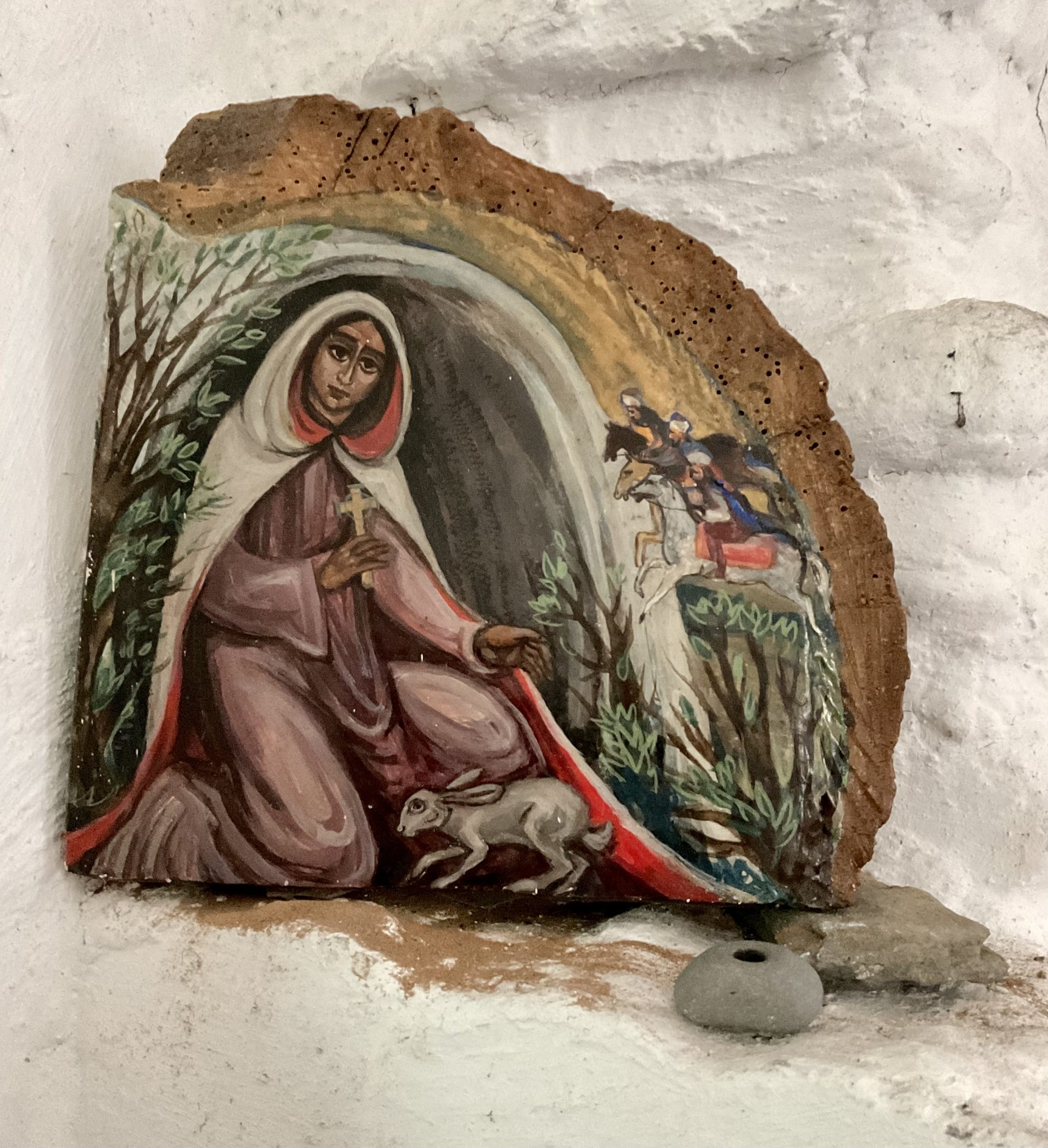




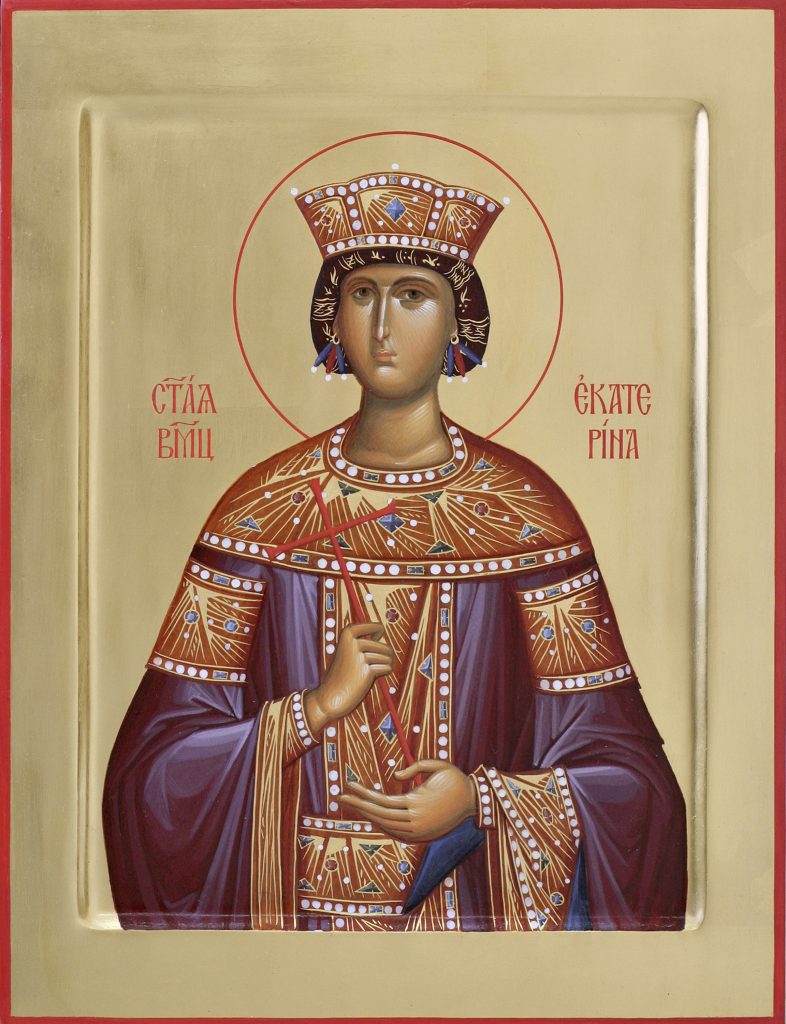

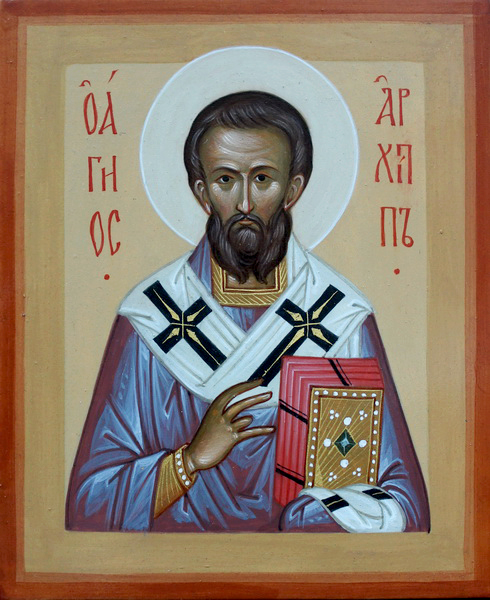


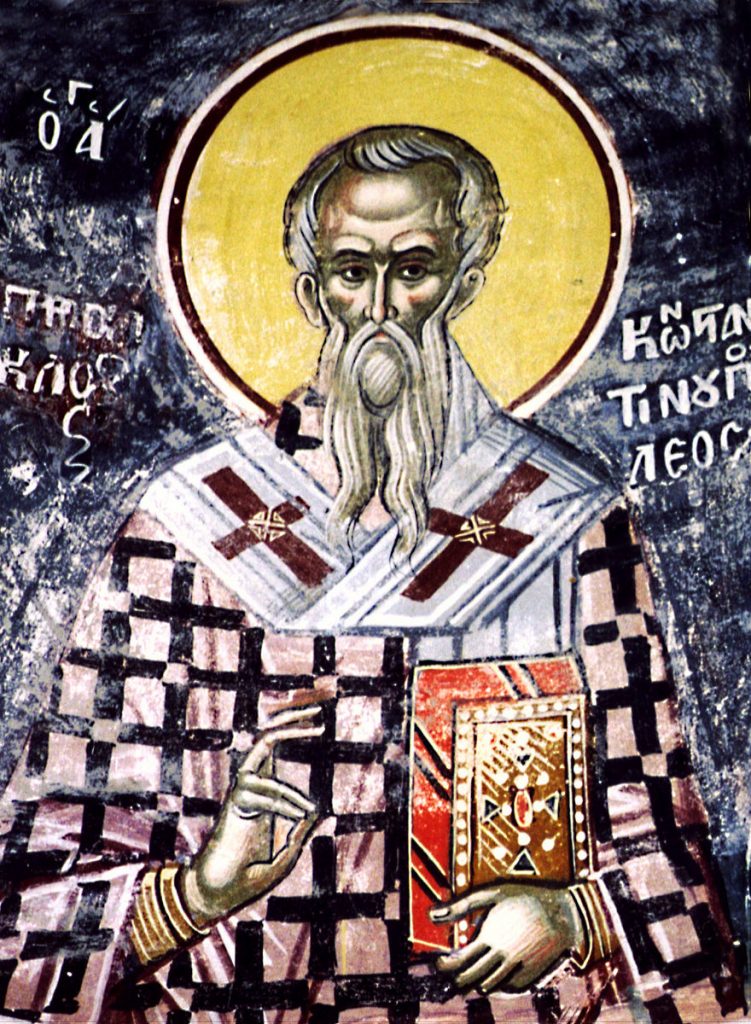

 When Ahab’s wife, the impious and dissolute Jezebel, hunted down all the prophets of the Lord (because of her quarrel with the Prophet Elias), Obadiah gave them shelter and food (3/1 Kgs 18:3 ff). Ahab’s successor King Okhoziah [Ahaziah] sent three detachments of soldiers to arrest the holy Prophet Elias (July 20). One of these detachments was headed by The Holy Prophet Obadiah. Through the prayer of the Prophet Elias, two of the detachments were consumed by heavenly fire, but Obadiah and his detachment were spared by the Lord 4/2 Kgs 1).