The Nativity of the Mother of God


Greetings on this glorious feast, so joyfully lauded by the Church Fathers as the beginning of the renewal of creation through the birth of the Virgin, from whom the Creator would be born and come in the flesh to restore fallen Adam and make creation new.

The hymns of the feast boldly declare that today is the great day of the beginning of our deliverance, liberation and salvation, triumphantly declaring in the first stikhiron of the vespers litia that –

“Today is the beginning of our salvation, O ye people! For, lo! the Virgin Mother, who was foretold from generations of old as the receptacle of God, cometh forth to be born of a barren woman…”

St John Damascene, calls all of humanity to celebrate this wonderful event, saying, “Come, all nations, every race of men, every language, every age and every rank! Let us joyfully celebrate the nativity of joy for the whole world!”

But, as we celebrate this long-past Nativity through which the economy of salvation was put into motion upon the face of the earth, he also calls renewed creation itself to join in the joy and wonder of the momentous birth of the Mother of God: “Let the whole of creation make festival and sing of the most holy birth-giving of the holy Anna. For she bore for the world an inviolable treasury of blessings. Through her the Creator transformed all nature into a better state by means of humanity.”

And, today is the joyful prelude to the Creator’s transformation of our humanity by means of the very humanity that He received from His Virgin-Mother. In her Nativity, the Mother of God rises like the day-star which announces the bright dawn of the Sun of Righteousness, after the long and deepening spiritual darkness of the centuries before the coming of Christ.

The rising of this day-star was foreordained by God from the very moment of the fall of the first-father and the first-mother, and the children of the old Israel advanced towards it through the long night of the Old Covenant, with the continuum of the successive generations of the forebears of the Mother of God as the ascent and rising of her as the morning star, growing closer – century by century – to her rising and shining in the darkness before the dawn of the Light of the World in His Nativity in the cave of Bethlehem.

In the Old Testament scriptures the Church Fathers and early Christians saw many prefigurings of the Mother of God: in Jacob’s Ladder, in the Burning Bush, in the Tabernacle, in the Ark of the Covenant within the Holy of Holies, in the stem from the root of Jesse, in the sealed gate of Ezekiel.

In such a manner, St Andrew of Crete wrote that the Theotokos is “the vision which was mystically foreshadowed of old in Moses’ burning bush – the fleece of Gideon – David’s divinely embroidered purple robe – the  cherubic throne, supremely great, fiery and lofty, holding in its womb the Lord King Sabaoth… The gate of heaven, through which the Master of the Heavens alone passed, having granted the entrance to no one before Him.”

In this rich typology, the Church Fathers saw prophetic images leading Israel towards the momentous day on which types and figures would be fulfilled in the birth of the Virgin, when symbols and shadows would pass away in the arrival of the foreordained Mother of the God-Man, Messiah and Saviour of the world.

Thus, according to the Faith of the Church, there was nothing random or accidental, no element of chance or coincidence in the birth of the Mother of God, but the foreordained council of God and His redemptive love working through the generations of the ancestors of the Theotokos, right down to the Forebears of God, Joachim and Anna, and – through prophecies and foreshadowings – God spiritually prepared Israel for the coming of the Mother of God.

To show God’s sovereign will and the workings of grace, nature was stalled in the conception of the Mother of God, as observed by St John Damascene in his festal oration:

“Nature has been defeated by grace and stands trembling, no longer ready to take the lead… But why has the Virgin Mother been born from a sterile woman?… Nature has been defeated by grace and stands trembling, no longer ready to take the lead. Therefore when the God-bearing Virgin was about to be born from Anna, nature did not dare to anticipate the offshoot of grace; instead it remained without fruit until grace sprouted its fruit.”

Her Nativity, though a natural one of human seed, was nevertheless only made possible through grace, after the parents of the Theotokos had been prepared for this unique birth by years of waiting, though it seemed mad and fruitless to the eyes of the world.

In those years of waiting in patient hope, they were transformed by God’s grace, and their long-awaited child was the fruit not only of their humanity, but also of their humility and patience, born after years spent in contrition, fasting and prayer, in which Joachim and Anna never abandoned hope in the All-Merciful God – as observed by St Gregory Palamas:

“See, all of you, how chastity, fasting and prayer, linked with contrition, made Joachim and Anna the parents of a divine vessel, a vessel chosen not just to bear the name of God, like Paul who was to be born later, but to bear Him “Whose name is Wonderful..”

The Church is clear in seeing the birth of the Mother of God, this divine vessel, as a moment of return, yet to be brought to fruition in the Saviour’s works of salvation through the cross, passion and resurrection, but still a cosmic turning point in which humanity turns back to its ancient dignity, inasmuch as the Mother of God represents all of humanity.

The great hymnographer, St Andrew of Crete, observed that,

“Today the pure nobility of humankind takes back the gift of the dignity of the first divine creation and restores it to itself… And in a word, today the reshaping of our nature begins, and the world, which had grown old, takes up a most God-like composition, receiving the beginnings of a second divine modelling.”

Each of us is called to participate in this very reshaping and remodelling, not simply by joyfully celebrating this event as passive onlookers, happy but untouched by its message, but by constantly labouring for the realisation of its inner-meaning in our lives, conforming our will to God’s will for each of us, exemplified by the parents of the Theotokos, and that of the Virgin, herself.

Living blameless lives like Joachim and Anna, we are called to constant vigil in watchfulness, prayer and spiritual labour, so that our spiritual barrenness and sterility may be overcome by God’s grace, which we must actively struggle to attain, day by day.

As their God-pleasing humility, contrition and patience was rewarded with the blessed answer to their prayers, so our perseverance and persistence will be rewarded by God. The cultivation of these virtues in our lives will transform us, and make us receptive to the grace of God. Through the struggle to acquire them, our hearts will be softened, our souls cleansed, and through this purification we will become vessels ready to receive spiritual treasures through the work and operation of the Holy Spirit.

However, we are not simply called to emulate Joachim and Anna, but above all to emulate the Mother of God, who is the apex and crown of creation, seeing in her the perfect example of of holiness, selflessness, obedience, total dedication to Christ and creation transfigured, exalted and glorified: the greatest living temple of the Holy Spirit, whose life shows what is possible when our will is perfectly conformed to the will of God, leading us from earth to the heights of heaven. 

In using Old Testament typology and symbolism, St John Damascene wrote,

“Today the “Son of the carpenter” has prepared for himself a living ladder whose base has been set on earth and whose top reaches to heaven itself. God has come to rest in her; the type that Jacob saw was of her; God descended without change through her, or in other words, having accommodated himself, he was seen on earth and lived along with humankind… The spiritual ladder, the Virgin, has been established on earth, for she had her origin from earth.”

As the Hodegetria – the one who shows the way – the Mother of God is indeed a spiritual ladder, and by emulating her wonderful example, we may climb towards the Kingdom of Heaven, but no-one will make us climb: the choice is ours, and this calling may be heeded or rejected, accepted or refused.

May this feast inspire us, to embrace its meaning with our hearts and souls, translating its joys and promises into action – spiritually, physically and mentally – loving God with our whole heart and with all our soul, with all our mind and with all our strength, as did the Mother of God, whose Nativity calls us to embrace the Gospel and respond actively and positively to the wonder of God’s love, manifested in the birth of the child who would become the Virgin-Mother through whom the Word became flesh and dwelt among us.

Let us who love God love the Mother of God, who is a sign of His love for mankind, and the chosen instrument of the Incarnation and salvation, and in loving let us struggle for holiness, even as she shows us the way to holiness.

Let us mirror our festal joy with action, offering our lives as a spiritual offering to the Virgin who offered herself for us, bearing the Saviour for each and every one of us, who in our humanity “makes it bloom again, grants it to flourish for ever, brings it up to heaven, and leads it into paradise.” (St Gregory Palamas: Oration on the Natvity of the Mother of God)

Most Holy Theotokos, save us!

Weekly News – 17th September

Dear brothers and sisters,

Greetings for the Church New Year!

I have just come through the front door and set the kettle to boil after a busy week in the parish, having spent the more than twenty six hours travelling to and fro across South Wales, but having used the time for prayer and reading, as well as keeping touch with our scattered parishioners.

Monday saw the celebration of the Divine Liturgy for the feast of the Beheading of St John the Forerunner, with one of our young brothers chanting Demestvenny melodies at the kliros, contrasting with the harmonised singing of the previous day’s Liturgy, and bringing a very different liturgical aesthetic to our worship.

A community choir practice in church precluded the celebration of vespers and the Lesser Blessing of Water on Wednesday evening, though I still returned to Cardiff ready for an early start on Thursday, arranging the church for Divine Liturgy for the Church New Year, and to perform the proskomedia before confessions and the expectation that I would chant. Unfortunately, a motorway puncture prevented Fr Luke and one of his parishioners from being with us, so I combined roles during the Liturgy, though there was some welcome help from the kliros. Confessions after a break for refreshment, then putting things away in church made for a long day, but a very blessed and productive one.

Friday teatime saw confessions for those working and studying in the daytime, before our evening study group met in the nuns’ choir, and the following afternoon a group of us arranged the church for worship before we had our Saturday evening service.

I’m not sure that everyone realises the great amount of effort that goes into arranging the church for worship and putting everything away. This can easily takes three hours each day, and sometimes more, when clergy are doing this without assistance, and on a Sunday our servers have much to do after Liturgy. We are very grateful to them.

Despite Saturday’s church set-up, today saw even greater pressure on our final arrangements, as mass became even longer, and this situation will be closely monitored. Hearing confessions at the back of the church (from 10:15) makes a great difference, but not being able to set up the church until 10:45 makes the time before our service extremely pressurised. Mercifully, we were able to commence the Hours at 11:05.

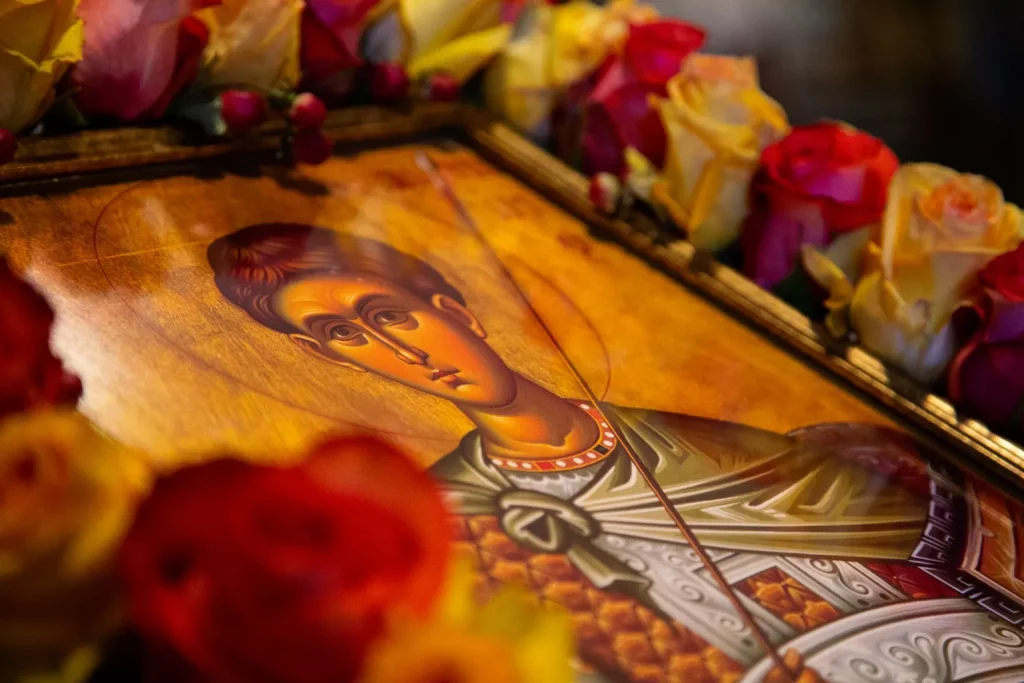
We were blessed with another lovely Liturgy today, with a slightly smaller choir than the last few weeks and only a few servers. Once again, the icons looked lovely with the flowers adorning them and I am glad to hear that our sisterhood have a flower rota in place for the next few months.

It was lovely to see parishioners who have been away in Greece and Ukraine and to welcome them home, and we are always glad to be joined by parishioners from Llanelli, who are now with us regularly on the Sundays of the month when there is no Llanelli Liturgy.

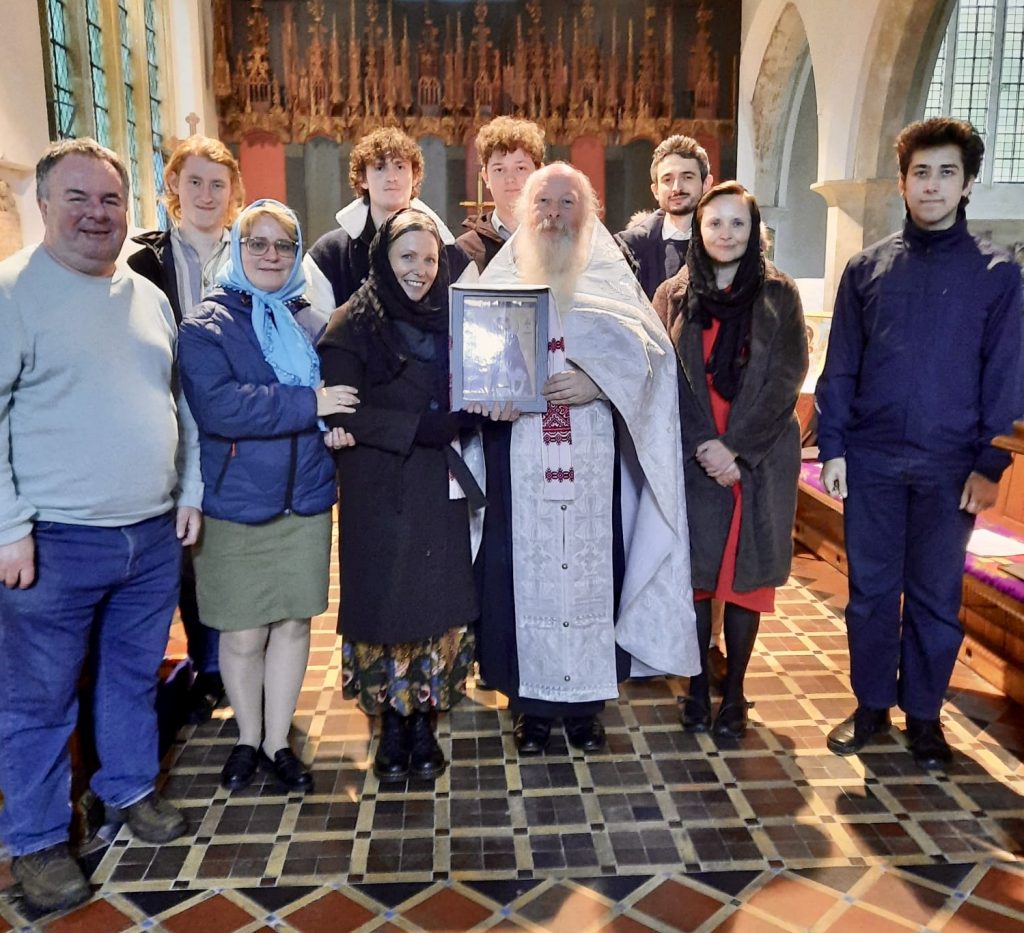
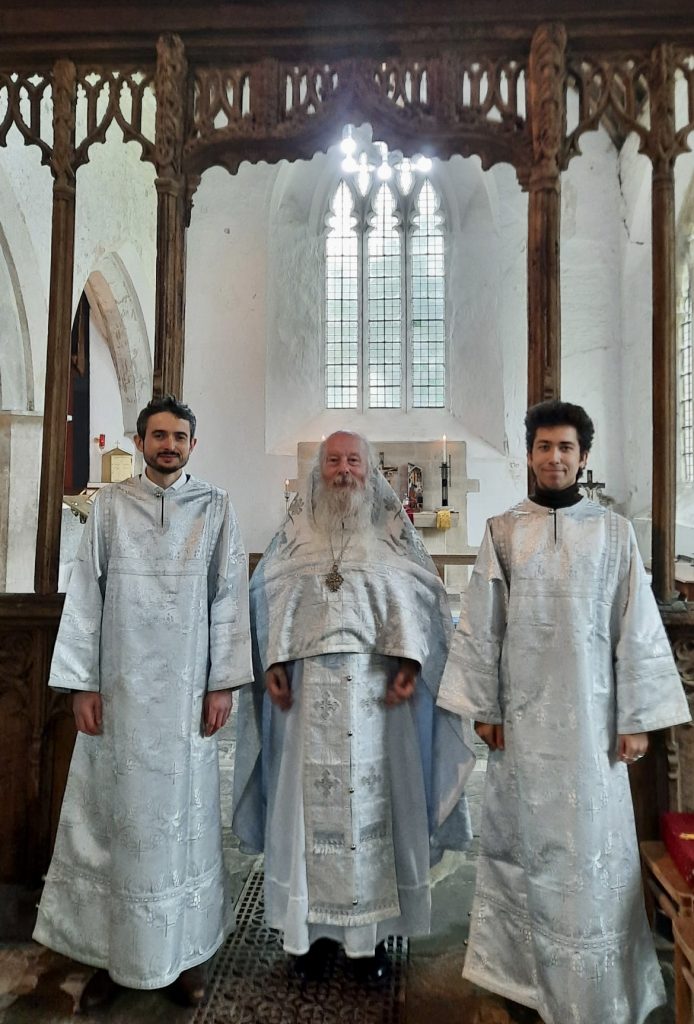
The coming week will see Deacon Mark and I go to the cathedral for the altar-feast, together with several of the young brothers of our parish, and we will be away on Wednesday and Thursday, looking forward to seeing other parishioners there.

I will be able to hear daytime confessions in church on Friday, and anyone only able to confess on Saturday should let me know, and arrangements will be made to do so after our visit to Llantwit Major and its ancient church of St Illtyd (see below).

Again, on Sunday, I will her confessions from 10:15 until the end of the Hours.

As announced at today’s Liturgy, despite assurances that we were welcome to visit Llancarfan once again, our communication regarding celebrating the Divine Liturgy received no response. Therefore, there is a change of plan next Saturday, and rather then heading to Llancarfan, we will visit St Illtyd’s Church at Llantwit Major, meeting at the church at 11:00.

Having visited the church with its museum of ancient Christian carved stones, and prayers to honour St Illtyd, we will have lunch in one of the local hostelries and enjoy time together. Given that Father Luke’s background is in archeology and medieval history, we will be glad to have him with us in a place so central to Christianity in South Wales.

We look forward to returning to Llancarfan in the near future, when our previous guide has returned from his travels.

Would anyone requiring confessions on Friday or Saturday please email by Wednesday evening?

Looking ahead to the end of the month, may I remind you that the feast of the Exultation of the Cross falls on Wednesday 27th September  (14th September on the Church Calendar), on which day the Hours and Divine Liturgy will be celebrated at 11:00.

Finally, we congratulate Adam, on his reception to the catechumenate, and thank our outgoing starosta, Norman John, for his generous support for the parish. I personally would be lost without the immense support and help from both Norman and Georgina. We pray that God will grant them and our brother Adam “Many, blessed years!”

Asking your prayers.

In Christ – Hieromonk Mark

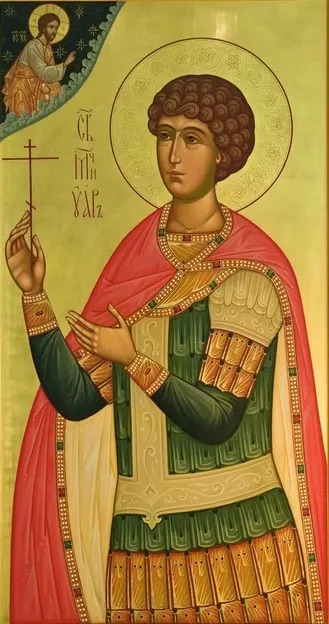
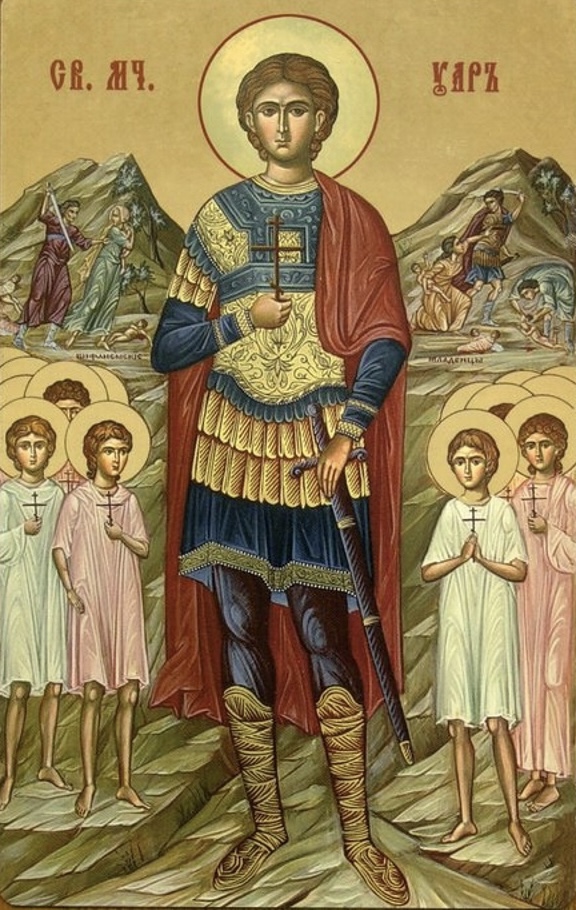
2/15 September: The Holy Martyr Mamas

Dear brothers and sisters, greetings for the feast of the Holy Martyr Mamas, a truly inspirational example of the sanctity of youth and steadfast witness to the Truth of Faith.

Despite his tender years, his unshakeable courage in the Faith is a great example and inspiration for us, as the Church and Faith face renewed hostility, but in a more subtle and insidious, though even more dangerous way. 

For St Mamas and his parents there was no grey area of compromise: Faith or death, all or nothing, confession or apostasy.

The danger for us is that by casuistry and self-delusion we fool ourselves into not recognising that we compromise the Faith, betray the Lord, and deny Christ in so many subtle ways that we may not even notice – such is the danger.

The passion and witness of this young, but fearless martyr need to make us take a long hard look at ourselves, asking uncomfortable questions about who resolute we are in confessing Christ, and how far we would go to preserve our Faith, as we behold St Mamas mounted on the lion of courage and journeying independently and willingly to his own death in martyrdom for Christ: the Way, the Truth and the Life.

Troparion, Tone IV: In his suffering, O Lord,/ Thy martyr Mamas received an imperishable crown from Thee our God;/ for, possessed of Thy might,/ he set at nought the tormentors and crushed the feeble audacity of the demons.// By his supplications save Thou our souls.
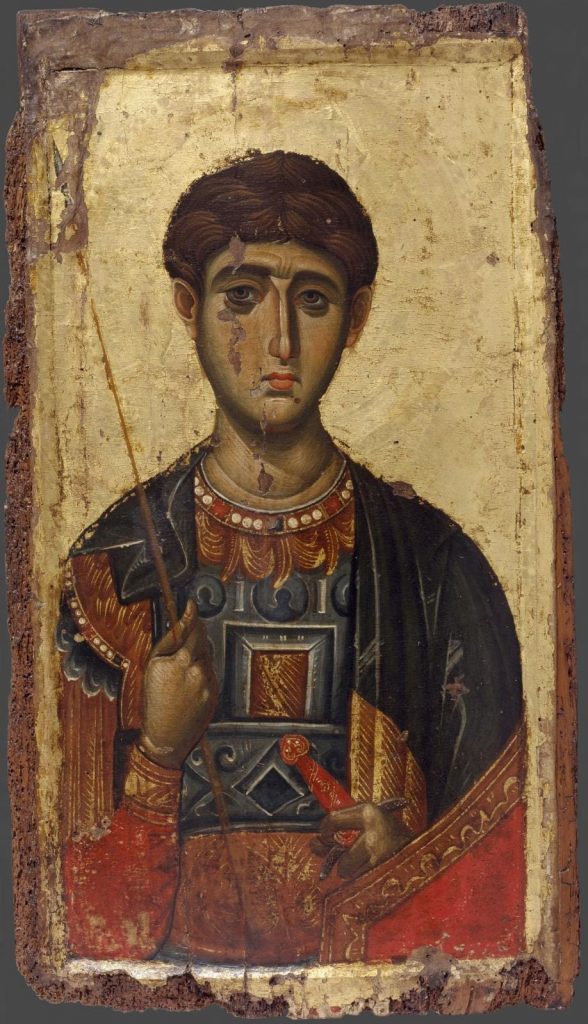
Kontakion, Tone III: With the staff given thee by God, O holy one,/ thou didst shepherd thy people in life-bearing pastures;/ and thou didst crush the invisible and untamed wild beasts/ beneath the feet of those who hymn thee.// For all who find themselves amid misfortunes have thee as their fervent intercessor, O Mamas.

The Holy Great Martyr Mamas was born in Paphlagonia, Asia Minor in the third century of pious and illustrious parents, the Christians Theodotus and Rufina. The parents of the saint were arrested by the pagans for their open confession of their faith and locked up in prison in Caesarea in Cappadocia.

Knowing his own bodily weakness, Theodotus prayed that the Lord would take him before being subjected to tortures. The Lord heard his prayer and he died in prison. Saint Rufina died also after him, after giving birth to a premature son. She entrusted him to God, beseeching Him to be the Protector and Defender of the orphaned infant.

God heard the dying prayer of Saint Rufina: a rich Christian widow named Ammia reverently buried the bodies of Saints Theodotus and Rufina, and she took the boy into her own home and raised him as her own son. Saint Mamas grew up in the Christian Faith. His foster mother concerned herself with the developing of his natural abilities, and early on she sent him off to study his grammar.

The boy learned easily and willingly. He was not of an age of mature judgment but distinguished himself by maturity of mind and of heart. By means of prudent conversations and personal example young Mamas converted many of his own peers to Christianity.

The governor, Democritus, was informed of this, and the fifteen-year-old Mamas was arrested and brought to trial. In deference to his illustrious parentage, Democritus decided not to subject him to torture, but instead sent him off to the emperor Aurelian (270-275). The emperor tried at first kindly, but then with threats to turn Saint Mamas back to the pagan faith, but all in vain. The saint bravely confessed himself a Christian and pointed out the madness of the pagans in their worship of lifeless idols.

Infuriated, the emperor subjected the youth to cruel tortures. They tried to drown the saint, but an angel of the Lord saved Saint Mamas and bade him live on a high mountain in the wilderness, not far from Caesarea. Bowing to the will of God, the saint built a small church there and began to lead a life of strict temperance, in exploits of fasting and prayer.

Soon he received a remarkable power over the forces of nature: wild beasts inhabiting the surrounding wilderness gathered at his abode and listened to the reading of the Holy Gospel. Saint Mamas nourished himself on the milk of wild goats and deer.

The saint did not ignore the needs of his neighbours. Preparing cheese from this milk, he gave it away freely to the poor. Soon the fame of Saint Mamas’s life spread throughout all of Caesarea.

The governor sent a detachment of soldiers to arrest him. When they encountered Saint Mamas on the mountain, the soldiers did not recognize him, and mistook him for a simple shepherd. The saint then invited them to his dwelling, gave them a drink of milk and then told them his name, knowing that death for Christ awaited him. The servant of God told the servant of the Emperor to go on ahead of him into Caesaria, promising that he would soon follow. The soldiers waited for him at the gates of the city, and Saint Mamas, accompanied by a lion, met them there.

Surrendering himself into the hands of the torturers, Saint Mamas was brought to trial under a deputy governor named Alexander, who subjected him to intense and prolonged tortures. They did not break the saint’s will, however. He was strengthened by the words addressed to him from above: “Be strong and take courage, Mamas.”

When they threw Saint Mamas to the wild beasts, these creatures would not touch him. Finally, one of the pagan priests struck him with a trident. Mortally wounded, Saint Mamas went out beyond the city limits. There, in a small stone cave, he gave up his spirit to God, Who in the hearing of all summoned the holy Martyr Mamas into His heavenly habitation. He was buried by believers at the place of his death.

Christians soon began to receive help from him in their afflictions and sorrows. Saint Basil the Great speaks thus about the holy Martyr Mamas in a sermon to the people: “Remember the holy martyr, you who live here and have him as a helper. You who call on his name have been helped by him. Those in error he has guided into life. Those whom he has healed of infirmity, those whose children were dead he has restored to life, those whose life he has prolonged: let us all come together as one, and praise the martyr!”


Weekly News, Sunday 10 September

Dear brothers and sisters,

As all who participated in today’s Liturgy were well aware, changes in our circumstances certainly posed new challenges, as did the intense heat in the convent church, particularly for those vested in the sanctuary. In priests vestments, I must admit that today was a real trial – especially after the same challenge in Cheltenham, yesterday, where Deacon Mark and I struggled through Liturgy and on the homeward journey.

With one of the new Catholic chaplains celebrating, the Mass was close to double its usual length, making for a very late and pressurised set up for Liturgy.

However, quietly hearing confessions at the back of the church during the service alleviated some of the pressure, but our deacons and servers still had a rather short time in which to ready the church for our Orthodox service.

I will repeat today’s confession arrangement next week, having walked round to the back of the church at 10:15, with parishioners already waiting for confessions – which continued in a steady and smooth progression until towards the end of the Sixth Hour.

Looking ahead, I hope that I will have already been able to her the majority of local confessions on Thursday, Friday and Saturday afternoons. See below.

Despite the pressure and the rush, today’s Hours began only five minutes late, at 11:05, though I hope it will begin at 11:00 as scheduled, next week – even if the Church set-up continues after that time. However, I will put out everything needed in the nave, so that things simply have to be moved a few metres.

From the choir’s initial amen, the Liturgy was a joyous celebration, with our singers chanting harmoniously and confidently, showing sympathy and sensitivity to one another, and supporting and helping one another. Thanks to our regent Olga, and to our two young basses, who acquitted themselves very well.

Yet again, the flowers adorning our icons, and vases of late summer blooms added so much to the makeshift setting for our Orthodox worship, tangibly showing parishioners’ love for God and the saints.

It was lovely to leave the church, at teatime, today, seeing the flowers on the shrines ready for the morning Liturgy for the Beheading of the Holy Prophet, Forerunner and Baptist, John. The Liturgy will commence at 11:00, as I will pray the Hours after the proskomedia before church set-up.

On Thursday, our Liturgy for the Church New Year will be celebrated at 11:00, and I will be available to hear confessions as needed in the afternoon, after lunch. However, due to a choir practice in church, there will be no service on Wednesday evening, as previously hoped.

Friday sees the resumption of our discussion group on prayer, at 19:00, in Nazareth House, and I will hear confessions beforehand, and after, if – again according to demand.

I will celebrate Great Vespers at 16:00 on Saturday, and any confessions will need to be BEFORE the service, as I have a potentially long journey home afterwards.

Please email regarding confessions on any of these days, so that I can plan, accordingly, and do so by 18:00 on Wednesday.

Tomorrow: Monday 11 September, New Style, Beheading of St John the Forerunner – Liturgy, Nazareth House 11:00. 

Thursday 1/14 September – Church New Year – Liturgy, Nazareth House 11:00. Afternoon confessions by arrangement.

Friday 2/15 September – Church discussion group 19:00. Afternoon/evening confessions by arrangement.

Saturday 3/16 – Great Vespers, 16:00. Afternoon confessions by arrangement.

Sunday 4/17 September. Hours and Liturgy 11:00. Confessions from 10:10

Please email me regarding weekday confessions by Wednesday, 18:00.

In Christ – Fr Mark


Canon for the Meeting of the Vladimir Icon

Canon to the Most Holy Mother of God In Honour of the Meeting of Her Vladimir Icon and the Deliverance of Moscow from the Invasion of Tamerlane in the Year 1395

Ode I, Irmos: I will open my mouth, and with the Spirit will it be filled; and I shall utter discourse unto the Queen and Mother, and shall appear, keeping splendid festival; and, rejoicing, I will hymn her wonders.

Most Holy Theotokos, save us.

O Mistress, illumine our souls with divine radiance, with thy grace which passeth understanding, and grant me the bountiful gift to hymn thee as the helper of human nature, O all-hymned one, faithful ally against all heresies for our pious Orthodox hierarchs.

Most Holy Theotokos, save us.

Come ye, let us gather together, O ye assemblies of Russia, in the all-honourable temple of the most immaculate Mistress, and let us chant with compunction, praying before the precious image, and crying aloud: O Theotokos who knewest not wedlock, save those who praise thee!

Glory be to the Father, and to the Son, and to the Holy Spirit.

The most godly Luke, the divinely eloquent recorder of the glad tidings of Christ, in painting thy most precious image, O Mother of God, depicted the Creator of all in thine honoured arms. And those who have recourse thereto thou deliverest from perils and grief, and coverest all with thy mercy.

Now and ever, and unto the ages of ages. Amen.

The Creator of all, finding thee alone to be an all-comely temple, made His abode within thee and hath deified men. Pray thou to Him for us, O Theotokos, that He save us from capture by the heathen and from every other tribulation which assaileth us, that with all honour we may celebrate the meeting of thine image today.

Ode III, Irmos: O Theotokos, thou living and abundant fountain: in thy divine glory establish those who hymn thee and spiritually form themselves into a choir; and vouchsafe unto them crowns of glory.

Most Holy Theotokos, save us.

Putting aside all earthly thought, O ye divinely wise, come ye to greet the all-comely beam who holdeth the all-luminous Ray Who enlighteneth and enricheth the whole world with mercy.

Most Holy Theotokos, save us.

Having acquired thy most precious and wonder-working icon as a mighty ally and an impregnable rampart, O Mother of God, the princes of Russia pray to thee, that thou grant victory over all heresies to our pious Orthodox hierarchs.

Glory be to the Father, and to the Son, and to the Holy Spirit.

Thou hast been shown to be a radiant cloud washing clean the defilements of our bodies with the dew of grace and enlightening our souls, O thou who alone art most hymned.

Now and ever, and unto the ages of ages. Amen.

Thou hast been revealed as a most fruitful tree delighting all with food which perisheth not, and gladdening men’s souls, O pure Bride of God. Pour forth goodly gifts upon all, and save us from violent tribulations.

Lord, have mercy. Lord, have mercy. Lord, have mercy. 

Sessional Hymn, Tone IV:, Spec. Mel “Joseph marvelled…”: O ye God-loving people, come to greet the Virgin! For, lo! she who surpasseth all the prophets doth arrive, bearing in the arms of her precious image Him Who bestoweth life upon the world, that she might preserve her suffering city, cast down the boldness of the barbarians and show herself to be the steadfast guardian of all who entreat her might and protection with faith.

Glory be to the Father, and to the Son, and to the Holy Spirit; now and ever, and unto the ages of ages. Amen.

The foregoing is repeated.

Ode IV, Irmos: Perceiving the inscrutable counsel of God – the Incarnation of Thee, the Most High, from the Virgin – the Prophet Habbakuk cried aloud: Glory to Thy power, O Lord!

Most Holy Theotokos, save us.

The true and radiant Sun hath shown forth the all-great mountain, from whence came the Stone that was cut not by the hand of man, which hath crushed all temptations to dust and illumined the faithful, shedding light in rays, O Ever-virgin Theotokos.

Most Holy Theotokos, save us.

The children of Hagar arm themselves against thy people, O pure Theotokos, taking evil counsel, razing cities and destroying the faithful; yet do thou annihilate them all by thy mercy, O most hymned one, granting ascendancy to the Orthodox Faith over their false religion.

Glory be to the Father, and to the Son, and to the Holy Spirit.

O only Mother of God, thou animate heaven who received the great Light, illumining all, dispel the darkness of the misfortunes which have beset us, and vouchsafe unto us communion with the Most High.

Now and ever, and unto the ages of ages. Amen.

David danced before the ark, and the Levites chanted hymns; and all the more doth Russia sing praises before thee as Queen, O pure Theotokos, earnestly giving utterance to thee with voices of entreaty: Rejoice, O ally of our city!

Ode V, Irmos: All things are filled with awe at thy divine glory; for thou, O Virgin who hast not known wedlock, didst contain within thy womb Him Who is God over all, and gavest birth to the timeless Son, granting peace unto all who hymn thee.

Most Holy Theotokos, save us.

Thee, O Mother of God, did Isaiah, great among the prophets, behold in the Spirit as containing within thy womb the burning Ember Who illumineth the faithful and utterly consumeth all temptations, saving the human race.

Most Holy Theotokos, save us.

Thou didst put forth the Rod of Aaron and hast uprooted the root of evil, O Virgin Bride of God, having given birth for the world unto the Bestower of life. Him do thou beseech, that this city be saved from manifold perils.

Glory be to the Father, and to the Son, and to the Holy Spirit.

With gladness approach ye now the most honoured Mother of God, O divinely chosen flock, ye assemblies of Russia, and lovingly receive her precious image. For, lo! her grace is inexhaustible, pouring forth divine waters in abundance. Her do we honour, and we bow down before her precious image.

Now and ever, and unto the ages of ages. Amen.

From the root of Jesse the Tree of life hath grown forth for all, and thou didst produce its Fruit in thy womb, O pure Virgin, nurturing all men with thy mercy.

Ode VI, Irmos: Celebrating this divine and most honoured festival of the Mother of God, come, ye divinely wise, let us clap our hands and glorify God Who was born of her.

Most Holy Theotokos, save us.

From thee, O Mother of God, hath a Torrent of sweetness issued forth, giving drink to all men and washing their souls clean of defilement. O Mistress Theotokos, save all who with faith bow down before thy precious image.

Most Holy Theotokos, save us.

Having assembled together, let us all hymn the pure Virgin, the divinely chosen Maiden of Jacob, the fleece of Gideon, the mediatress of joy, the might and boast of those who are saved, the pure Theotokos.

Glory be to the Father, and to the Son, and to the Holy Spirit.

Behold, gladness now draweth nigh, and sorrow is destroyed! The faithful are saved, drawing forth joy as from a wellspring, and they chant continually in praise: Rejoice, O pure Mistress, thou inception of our salvation, bulwark and boast of all the faithful!

Now and ever, and unto the ages of ages. Amen.

By thine entreaties grant us thine aid, O all-pure Theotokos, for sorrows descend upon us, griefs have multiplied, and the enemy array themselves against us. Yet, interceding, O all-pure one, deliver us: cast down the arrogance of our foes and grant us victory over our enemies, that all who do evil to thy servants may be put to shame.

Lord, have mercy. Lord, have mercy. Lord, have mercy. 

Glory be to the Father, and to the Son, and to the Holy Spirit; now and ever, and unto the ages of ages. Amen.

Kontakion, Tone VIII, Spec. Mel. “To thee, the chosen leader…”: As ones delivered from evils by the arrival of thy precious image, O Mistress Theotokos, do we splendidly chant hymns of victory to thee, the chosen leader, on the feast of thy meeting, and we cry to thee as is our wont: Rejoice, O Bride unwedded!

Ikos: An angelic messenger was sent from heaven to say to the Theotokos: “Rejoice!”, with his incorporeal voice, O Lord; And perceiving Thee incarnate, he was filled with awe and stood, crying out to her such things as these: Rejoice, thou through whom Joy hath shone forth; rejoice, thou who didst annul the curse! Rejoice, restoration of fallen Adam; rejoice, deliverance of Eve from tears! Rejoice, height not easily scaled by the thoughts of men; rejoice, depth not easily plumbed even by the eyes of angels! Rejoice, for thou art the throne of the King; rejoice, for thou bearest Him Who bearest all things! Rejoice, thou star who revealest the Sun; rejoice, womb of the incarnation of God! Rejoice, thou through whom creation hath been restored; rejoice, thou by whom the Creator is worshipped! Rejoice, O Bride unwedded!

Ode VII, Irmos: The divinely wise youths worshipped not a creation rather than the Creator, but, manfully trampling the threat of the fire underfoot, they rejoice, chanting: Blessed art Thou, the all-hymned God of our fathers!

Most Holy Theotokos, save us.

Arrayed by thee as in purple and fine linen dyed scarlet, O Mistress Virgin Theotokos, thy city magnifieth Christ and glorifieth the arrival of thy precious image, which hath appeared outshining the rays of the sun and illumining with light undimmed those who sing aloud thy praises.

Most Holy Theotokos, save us.

The tablets divinely inscribed by the finger of the Spirit did Moses break in anger; yet the all-glorious Creator Who made His abode within thee, O pure one, preserved thee unharmed. To Him do we chant: O God of our fathers, blessed art Thou!

Glory be to the Father, and to the Son, and to the Holy Spirit.

Accept the entreaties of thy servants, O all-pure Virgin Theotokos. By thy supplications still thou the restless tempest, and drive away the councils of the adverse foe who fall upon thy flock, O most immaculate Mistress.

Now and ever, and unto the ages of ages. Amen.

By His nativity the Creator of all signified that thou alone art the helper of the human race, O Theotokos Mary, and the prophet prefigured thee: one as the gate, another as the bower of God. And we hymn thee as the Mother of God, our mediatress before God, our ally against all the evils which assail us.

Ode VIII, Irmos: The birthgiving of the Theotokos saved the pious children in the furnace – then in figure, but now in deed – and it moveth all the world to chant to Thee: Hymn ye the Lord and exalt Him supremely for all ages!

Most Holy Theotokos, save us.

How can we hymn thee as is meet, O Virgin: our steadfast help, the preserver of our life, our sure mediatress before thy Son and our God? Him do we hymn and exalt supremely forever!

Most Holy Theotokos, save us.

O Mary Theotokos, thou all-comely flower, rich fragrance: thou fillest all with sweet savour, savest and deliverest from infirmities, and dispellest the demons; wherefore, we cry out to thee: Rejoice, O helper of all the faithful who pray to thee!

Glory be to the Father, and to the Son, and to the Holy Spirit.

Thou hast shown thyself to be a tower repelling the assaults of the adversary, O Mother of God; for thou hast been revealed as a bulwark and rampart, a refuge of salvation for all who honour thee with ardent hearts.

Now and ever, and unto the ages of ages. Amen.

Like David we chant a hymn to thee, calling thee the mountain of God, O all-pure Virgin; for thou hast poured forth upon us the ever-flowing Wellspring. Him do we hymn and exalt supremely forever.

Ode IX, Irmos: Let every mortal leap for joy, enlightened by the Spirit; and let the nature of the incorporeal intelligences keep festival, honouring the sacred feast of the Mother of God, and let them cry aloud: Rejoice, O most blessed Theotokos, pure Ever-virgin!

Most Holy Theotokos, save us.

O pure Theotokos, mediatress of Joy, gladden thou our minds, that we may cry to thee: Rejoice, O our guardian, might and protection, our refuge of salvation!

Most Holy Theotokos, save us.

Let heaven and earth praise thee together, in that thou gavest birth to the Bestower of life for the world: Rejoice, O tranquil haven, thou inexhaustible wellspring of the water of life, O Mistress!

Glory be to the Father, and to the Son, and to the Holy Spirit.

O ye people, having assembled today to greet the all-pure Mother of God who bore the Fruit of the noetic vine Who ever exudeth the Wine which filleth all with gladness, let us glorify the Theotokos as is meet.

Now and ever, and unto the ages of ages. Amen.

O Mother of God, thou divine river of the waters of life who watereth all valleys: drown thou our temptations, and destroy them utterly.

Troparion, Tone IV: Today the most glorious city of Moscow is adorned, having received thy wonder-working icon like the radiance of the sun; and we, hastening to it and entreating thee, O Mistress, do thus cry out: O all-wondrous Mistress Theotokos, entreat Christ our God, Who became incarnate through thee, that He deliver this city, and all cities and lands where Christians dwell, unharmed by all the assaults of the enemy, and save thou our souls, in that thou art compassionate.

Weekly News: Monday 4th September

Dear brothers and sisters,

As we look forward to next weekend, the important news for everyone to note is that with the new chaplains taking over duties at Nazareth House, Sunday Mass will now be beginning at the later time of 10:00.

Unfortunately, this pushes our start-time later. However, we have no alternative.

This has a massive impact on our worship, which has already been starting at a very late hour for an Orthodox Liturgy. We have been able to set up the church for Orthodox worship and hear Sunday confessions from 10:10, and losing thirty minutes every Sunday will make it impossible to begin the Hours before 11:00.

Confession time will be limited, so it is especially important that those requiring confession on Sundays inform me and that all who can confess in the week do so. On whichever day I am confessing, there will be time for confessions in the evening as well as the day time.

Given the pressures which we now face, I will endeavour to be in Cardiff on Saturdays, as well, unless there is rail industrial action. Please feel free to discuss any specific limitations in your opportunity to confess, so that we can endeavour to make things work.

I will hear confessions on Thursday of this week from around 15:00 (according to need), and will be available for the afternoon and the evening. It will not be possible to be in Nazareth House this Saturday as we will be in Cheltenham, but as always, any Cardiff parishioners supporting the Cheltenham Liturgy can be confessed on Saturday.

Further to the notice of September dates, a few services may need to be relocated due to maintenance, and community choir practices recommencing at Nazareth House on Wednesday evenings.

So… just to be absolutely clear:

The Hours and Liturgy will now (hopefully) start at 11:00 in Nazareth House, and confessions will begin as soon after 10:30 as is possible.

Please be mindful of time constraints if you are confessing and understand that timings will be approximate and experimental until we experience Sunday with the new chaplains.

If you arrive before the end of Mass – probably around 10:25 – please remain at the back of the church until the residents leave the church.

Finally, thanks to all who have contributed to our services during the octave of the Dormition, which ends tomorrow.

We appreciate each contributors gift: musical, liturgical, floral and culinary – or in any other way in which our parishioners made this Dormition such a glorious and wonderful celebration!

In Christ – Hieromonk Mark

The Icon of the Mother of God, ‘Addition of Mind”

On this Sunday after the feast of the Dormition, we celebrate the icon of the Mother of God «Прибавление ума», known in English variously as the “Addition of Mind”, the “Giver (or Increase) of Reason”, or the “Giver of Understanding”, and even a cursory glance makes it obvious that this is a very unusual icon with an unusual history.

But, despite its mysterious and unusual iconography, and western Christian inspiration it is surrounded by great devotion and love.

The other name of this icon “Loretskaya” makes clear its roots in the little town, but great shrine of Loreto, on the Adriatic Coast of Italy, and it is inseparable from the Holy House of Loreto, which the Orthodox Church recognises as the relocated House of the Holy Family, from Nazareth, in which the Mother of God spent her earliest years, to which she returned when she left the Temple and was betrothed to St Joseph, and in which the Archangel Gabriel announced the news of the Incarnation of the Saviour.

Pious Roman Catholic legend claims that the Holy House was miraculously transported by angels away from Jerusalem, conquered by the Muslims, in 1297, firstly to Dalmatia, and from there, in 1294, the Holy House, along with the image of the Mother of God, traveled to the small port of Ancona, and then to Loreto. However, this story was only first recorded in 1400.

History tells us that the Angels who transported the Holy House were the Despot of Epirus in Greece, whose family name was indeed Angelos.

Having been stored in Thessaly, in central Greece, the stones of the Holy House arrived in Italy as part of a marriage dowry.

Once rebuilt, Loreto and its Holy House became a centre of pilgrimages – visited in 1844, by the Russian pilgrim and Archimandrite Porfiry, who described his impressions wrote down in his diary:

“A magnificent church was built on the very site of the wondrous event (presumed by him to be the translation by the heavenly powers). As soon as you enter it, you will immediately see that sacred cave in which the Archangel announced to the Humble One about the incarnation of the Son of God in Her. This cave was within the house and probably made up the lower level of it, where the Mother of God was engaged in handicrafts and divine contemplation. It is remarkable that even today the Nazarene women work in the lower parts of the house, and only rest in the upper room at night. It is also remarkable that even today in some houses there are caves or, better, houses attached to caves. I saw one such house in passing in the upper part of the city. It’s no wonder that Joseph’s house was attached to a natural cave, where there was a workroom and a kitchen.”

It was such a visit, but three centuries earlier that saw the arrival of the prototype of the Pribavlenie Uma icon in Russia, the Russian Great Prince Ivan III, having looked to western Europe for alliances and trade, as well as considering the implications of the Council of Florence.

In 1524, at the invitation of Pope Clement VII, a Russian embassy visited Italy, and the Pope organised an excursion to the Holy House of Loreto hoping to win over the solidly Orthodox delegation. The ambassadors Yeremey Trusov and Dmitri Gerasimov were touched and impressed by by the translated shrine from Nazareth; and related the story and news of the Holy House to Great Prince Vasily on their return. By this time, any icon which had belonged to the the Holy House in its original location were lost, but a carved rendering of the image of the Mother of God we see in the icon was enshrined above the altar of the Holy House.

In Russia, the carved image of the Mother of God was translated into Orthodox iconography, preserving specific features of the Holy House, including the niche above the altar and the hanging lamps, with a town – representing Loreto – beneath the feet of the Mother of God and Christ-Child, both wrapped in an ornate phelonion and crowned with diadems. This image proved popular and became wide-spread.

In 1547, at the time of the Great Fire of Moscow, which destroyed much of the old wooden city, we know an icon of the Mother of God of Loreto was painted “in the Moscow manner”.

A legend from the next century tells of a pious icon painter who suddenly became interested in the book corrections and reforms of Patriarch Nikon, and in spiritual confusion he could not understand whether Patriarch Nikon’s faith was true, or that of the Old Believers.

Such was his confusion that the man went mad, but between fits of madness he was able to pray the Holy Mother of God for forgiveness and the return of a sound mind. The Holy Mother of God appeared to the icon painter several times, and he painted her icon and received healing of his mental state, calling the icon the “Addition of Mind”. Interestingly the story does not tell us whether his conclusion was that the corrected books and reforms were his choice, or the Old Ritual – though presumably the reformed books, given the late and foreign roots of the icon!

In the centuries since then, principally the 18th and 19th,  when the vast majority of the copies of this icon were painted, this holy image of the Mother of God has been associated with the healing of mental afflictions as well as more general illnesses, and with help in learning and mental disability, demonstrating how Orthodox Christianity has been able to be open and inclusive, discovering a truly Orthodox understanding, sacred iconography and spiritual meaning of a devotion that originated outside the traditional Orthodox heartlands, though rooted in the very place of the Annunciation.

The ambassadors to Pope Clement remained unshaken and uncompromised in their Orthodox Faith, and precisely because of their immovability and fearlessness, they were able to appreciate the humble greatness and sacred significance of the house of Galilean limestone, which they entered in Loreto and venerated, far from its original home in Nazareth. Their awe and devotion, and the depth of their impressions, related to the court in Moscow, lie behind the great and precious icon which we honour today.

Despite the Holy House being the place of the Annunciation, we celebrate this icon during the afterfeast of the Dormition, the time of the glorification of the Mother of God in heaven.

When we look at the icon, we see that despite holding the Infant-Saviour, the Mother of God is very much portrayed as the glorious and glorified Queen of Heaven, robed and crowned in royal splendour: the crown of creation and the token of humanity, risen, glorified and welcomed into heaven.

Most Holy Mother of God, our Heavenly Queen, pray to God for us!

Тропарь, глас 4: О, Пресла́вная Ма́ти Христа́ Бо́га на́шего, благи́х Пода́теля, * ми́лостию Свое́ю всю вселе́нную сохрани́, * да́руй нам, рабо́м Твои́м, прему́дрость и ра́зум, * све́том Сы́на Твоего́ ду́ши на́ша просвети́, * еди́на Всепе́тая, от Херуви́м и Серафи́м сла́вимая.

Troparion, tone 4: O most glorious Mother of Christ, our God,  who art the Giver of all good, * preserve the universe by thy mercy; * give us, thy servants, wisdom and reason; * enlighten our souls with the light of thy Son, * |O thou only all-praised one, who art glorified by the cherubim and the seraphim.

September Dates

Sadly, the rail strike yesterday and today, rendered planned activities impossible, so the list of dates and activities starts with tomorrow’s Liturgy.

Again, may I stress that confessions on days when there is no service or talk following them continue till whatever time the last confession finishes.

They are not day-time confessions only, but can and continue until the end, and we have been clear that confessions can be heard after evening services or talks, also.

I would like to be able to do the same on Saturday, with confessions – vespers – confessions, but as I have been relying on public transport over the summer, this has not been possible due to the three hour journey each way (if transport runs according to plan) and repeated cancellations of services beyond Swansea.

We always stress that Sunday morning is the only chance for West of England parishioners, we have also made clear that as confessions begin at 10:10 we can arrange things to accommodate those who may not have been able to come during the week. This continues to work as people have not left confession till last minute, have arrived in good time, and have taken advantage of the time slot.

If the parish is willing to pay for accommodation each Saturday when public transport is my only option, the present very imperfect situation can easily be resolved.

Sunday 3rd September, After-feast of the Dormition: Hours and Divine Liturgy, Nazareth House, Cardiff, 10:45 (confessions from 10:10).

Thursday 7th September: Nazareth House, afternoon confessions time tbc depending on requests

Saturday 9th September, Holy Great Martyr Phanourios: Hours and Divine Liturgy, Cheltenham, 10:00.

Sunday 10th September, Uncovering of the relics of Venerable Job of Pochaev (1651): Hours and Divine Liturgy, Nazareth House, Cardiff, 10:45 (confessions from 10:10).

Monday 11th September, Beheading of St John the Forerunner: Hours and Divine Liturgy, Nazareth House, Cardiff, 11:00.

Wednesday 13th September, Eve of Church New Year: Vespers and Water Blessing, Nazareth House 18:00.

Thursday 14th September (1st September Old Style), Church New Year: Hours and Divine Liturgy, Nazareth House, Cardiff, 11:00. Confessions heard in the afternoon, depending on requests.

Friday 15th September: Nazareth House, afternoon confessions time tbc depending on requests, 19:00 Discussion Group on prayer.

Sunday 17th September, Translation of the relics of Saints Peter and Febronia, Wonderworkers of Murom: Hours and Divine Liturgy, Nazareth House, Cardiff, 10:45 (confessions from 10:10).

Thursday 21st September, Nativity of the Mother of God: Altar-feast of our cathedral – clergy to attend and concelebrate. We hope that some of our parishioners will also join us in this celebration.

Friday 22nd September: Nazareth House, afternoon confessions time tbc depending on requests.

Saturday 23rd September: Pilgrimage to Llancarfan, details tbc.

Sunday 24th September, After Feast of the Nativity of the Mother of God: Hours and Divine Liturgy, Nazareth House, Cardiff, 10:45 (confessions from 10:10).

Tuesday 26th September, Eve of the Exultation: Great Vespers, Nazareth House, 18:00.

Wednesday 27th September, The Universal Exaltation of the Precious and Life-giving Cross: Hours and Divine Liturgy, Nazareth House, Cardiff, 11:00.

Friday 29th September: Nazareth House, afternoon confessions time tbc depending on requests, 19:00 Discussion Group on prayer.


Sunday 1 October: Hours and Divine Liturgy, Nazareth House, Cardiff, 10:45 (confessions from 10:10).

The Five Prayers in Honour of the Mother of God

One of the holy fathers, standing in prayer and being in ecstasy, heard the voice of our Lord Jesus Christ speaking to the Immaculate and Holy Mother of God, His Mother, saying to her: “Tell me, My Mother, which were the greatest of your sufferings, when you lived in the world, which you suffered for My sake?” The Immaculate One replied: “My Son and God, five times I have endured my greatest suffering for you: First, when I heard from the Prophet Simeon that you were to be killed; Second, when I looked for you in Jerusalem, and did not see you for three days; Third, when I heard that you were seized and bound by the Jews; Fourth, when I saw you on the Cross crucified between the robbers; Fifth, when I saw you placed in the Tomb.” And the Lord said to her: “I tell you. My Mother, whoever reads every day each of your sufferings with My prayer, i.e. ‘Our Father,’ for the first suffering I will give the knowledge of his sins and sorrow for them; for the second, I will give the forgiveness of all his sins; for the third, I will restore to him the virtues lost through sin; for the fourth, I will refresh him at death with my Divine Body and Blood; for the fifth, I will appear to him Myself at his death, and receive his soul into eternal life. Amen.”

After this vision of the Holy Father, the following prayers were added by St. Dimitri of Rostov:

+

“Glory to Thee, Christ my God, that Thou hast not destroyed me a sinner, with my sins, but even till now hast borne – with my sin.” Bow

“Vouchsafe, O Lord, to keep me this day without sin. Grant, O Lord, that I may not anger Thee, my Creator, in thought, word or deed, but that all my actions, counsels and thoughts may be to the glory of Thy Holy Name.” Bow

“God be merciful to me, a sinner, throughout my whole life. In my passing and after death, forsake me not.” Bow

Falling low on the earth, say:

“Lord, Jesus Christ, Son of God, accept me, dead in mind and soul, accept me, a sinful prodigal, impure in soul and body. Take from me all shameless enmity and resistance, and turn not Thy Face from me, O Lord, nor say: I know not who thou art. But hear the voice of my prayer: save me, for Thou hast a wealth of compassion and desirest not the death of a sinner. I will never leave Thee nor depart from Thee, my Creator, till Thou hearest me and givest me forgiveness of all my sins, through the prayers of Thy Most Pure Mother, the intercession of the honourable Bodiless Powers of Heaven, of my holy and glorious Guardian Angel, of Thy Forerunner and Prophet, the Baptist John, of the God-speaking Apostles, of the holy and victorious martyrs, of our Reverend and God-fearing fathers, and all Thy Saints, have mercy and save me, a sinner.”

O Heavenly King, Comforter…

Holy God…

Most Holy Trinity, have mercy on us…

Our Father…

Virgin Mother of God, rejoice, Mary full of grace; the Lord is with thee. Blessed art thou among women, and blessed is the fruit of thy womb, for thou hast borne the Saviour of our souls.

First Prayer: “O merciful Mother, Virgin Mary, I thy sinful and unprofitable servant, remembering thy suffering on hearing from the Prophet Simeon of the merciless murder of thy Son, our Lord Jesus Christ, offer thee this prayer and the Angelic Salutation. Accept it in honour and memory of thy suffering, and pray thy Son, our Lord Jesus Christ, to grant me the knowledge of my sins and sorrow for them.” Bow

Our Father …

Virgin Mother of God, rejoice…

Second Prayer: “O Divinely-blessed and Immaculate Maiden, Mother and Virgin, accept from me, thy sinful and unprofitable servant, this prayer and the Angelic Salutation, in honour and memory of thy suffering when thou didst lose thy Son our Lord Jesus Christ, in the Temple, and for three days didst not see Him. Pray and beg of Him the forgiveness and remission of all my sins, O only Blessed One.” Bow

Our Father …

Virgin Mother of God, rejoice…

Third Prayer: “O Mother of Light, most blessed Virgin Mother of God, accept from me, thy sinful and unprofitable servant, this prayer and the Angelic Salutation, in honour and memory of thy suffering on hearing that thy Son, our Lord Jesus Christ, had been seized and bound. Pray Him to restore to me the virtues lost through sin, that I may magnify thee, O Most Pure One, forever.” Bow

Our Father …

Virgin Mother of God, rejoice, Mary full of grace; the Lord is with thee. Blessed art thou among women, and blessed is the fruit of thy womb, for thou hast borne the Saviour of our souls.

Fourth Prayer: “O Fountain of Mercy, Virgin Mother of God, accept from me, thy sinful and unprofitable servant, this prayer and the Angelic Salutation, in honour and memory of thy suffering when thou didst see thy Son, our Lord Jesus Christ, on the Cross between the robbers. Pray Him, O Lady, to grant me the gift of His mercy in the hour of my death, and to refresh me with His Divine Body and Blood, that I may glorify thee, my Defender, forever.” Bow

Our Father …

Virgin Mother of God, rejoice…

Fifth Prayer: “O my Hope, Most Pure Virgin, Mother of God, accept from me, thy sinful and unprofitable servant, this prayer and the Angelic Salutation, in honour and memory of thy suffering when thou didst see thy Son, our Lord Jesus Christ, placed in the Tomb. Pray Him, O Lady, to appear to me in the hour of my death, and to receive my soul into eternal life. Amen.”

Akathist to the Mother of God “Queen of All”

AKATHIST
TO THE WONDERWORKING ICON OF THE MOST HOLY THEOTOKOS “PANTANASSA”

Feast – August 18/31

In Greece, in the holy monastery of Vatopedi, on Mount Athos, there is located the miracle- working icon of the Mother of God named “Pantanassa” (All-Reigning or Queen of All). 

This is a small icon from the 17th century, which from these ancient times has been a focus of pilgrimage for those seeking healing and comfort from the Most Holy One from illness and temptations. 

This icon of the Mother of God is especially known for healing those who pray before it with sincerity from the sickness of cancer.

Kontakion 1: We, Thy faithful servants, standing before Thy Newly-Appeared Icon suppliantly cry unto Thee, O Queen of All: send Thy healing to Thy servants who come to Thee today that all together we may joyfully cry unto Thee: Rejoice, O Queen of All, do Thou heal our ailments by Thy grace!

Ikos 1: An Archangel descended from Heaven and said to the Queen of all: Rejoice! And beholding Thee, O Lord, taking bodily form he cried to Her saying such things as these:

Rejoice, the Crown of our salvation.

Rejoice, the Fulfilment of our Creator’s plan.

Rejoice, Thou through Whom God had been made incarnate.

Rejoice, Thou in Whom Invisible became visible.

Rejoice, Thou Who accepted in Thyself the Mercy of peace.  

Rejoice, Thou Who had made the cloth of flesh for the Word.

Rejoice, incredible Highest Glory.

Rejoice, Heavenly Manna Who has animated many hearts.      

Rejoice, the Star Who radiates grace.

Rejoice, the Spring Who is an effusion of living water.

Rejoice, O Birth-Giver of God blessed among women.

Rejoice, Undefiled Virgin Who gave birth to our Saviour.

Rejoice, O Queen of All, do Thou heal our ailments by Thy grace!

Kontakion 2: Through Thee, O Virgin, the Everlasting Word has become the Infant Child giving healing to those who honour His Birth and Thee crying: Alleluia!

Ikos 2: Seeking to know knowledge that cannot be known, the Virgin cried to the ministering one: “Tell Me how can I, a pure Maiden, be the Mother of the Highest?” Gabriel spoke to Her with fear crying aloud thus:

Rejoice, chosen by the Highest Council.

Rejoice, the quick-hearer of praying voices.

Rejoice, Treasure of the Christ’s world.

Rejoice, the Hope and Strength of Thy people.                          

Rejoice, the miraculous Destroyer of cancer’s wounds.            

Rejoice, the Healer of other sickness.

Rejoice, the only Intercessor of the world.

Rejoice, the true Redemption of sorrow.

Rejoice, the Relief of weeping and tears.

Rejoice, Thou Who opens to all the entrance of salvation.        

Rejoice, the Government of all who live on Athos.                    

Rejoice, the Mace of monks and laity.

Rejoice, O Queen of All, do Thou heal our ailments by Thy grace!

Kontakion 3: The Power of the Most High had overshadowed Thee, O Virgin, and having accepted flesh and showing Thee to be a good pasture for those who desire to reap salvation, and who sing: Alleluia!

Ikos 3: Thy icon called “Queen of All” was miraculously glorified when it appeared conveying healing. Do Thou give healing to those who with faith sing before it that such healing would be multiplied by songs such as these:

Rejoice, the Mother of Unfading Light.

Rejoice, the Victory of those who suffer to the end.

Rejoice, the Medication of those who are in illness and sorrow.

Rejoice, the inviolable Wall of all orphans and widows.

Rejoice, Thou Who opens the doors of Paradise.

Rejoice, Thou Who defends all who labor and are burdened.  

Rejoice, the Intercessor for the salvation of all.

Rejoice, Thou Who prays for mankind.

Rejoice, the Heavenly Ladder that rises from the earth to Heaven.

Rejoice, the Living Water that cleanses deadly sins.

Rejoice, the Lamb that protects the hearts of the honest ones.

Rejoice, the Cover that spreads over the children of the Church.

Rejoice, O Queen of All, do Thou heal our ailments by Thy grace!

Kontakion 4: Granting life to the whole world the Lord settled in Thy womb immaculately and showed Thee to be the Mother for the faithful calling them to sing in peace: Alleluia!

Ikos 4: Thou hast done amazing things, O Place of God, by healing through Thy Holy Icon. Accepting the streams of Thy healing we sing, O Queen of All, the song of thanksgiving:

Rejoice, the Medicine that reduces pain.

Rejoice, the Coolness that cools fever of the ailments.

Rejoice, Thou Who cauterise the illness of cancer like fire.

Rejoice, Thou Who lifts from the bed of illness those who are forgotten by doctors.                                                                      

Rejoice, Thou Who shows Thine All-Pure Image to those who are chosen.

Rejoice, Thou Who absolves us from sinful chains.

Rejoice, Thou by Whom we receive deliverance from death.

Rejoice, Thou by Whom uncountable ranks of the faithful are justified.

Rejoice, the Height Who is not reachable by human thoughts.

Rejoice, the Depth Who is reachable only by the Word.

Rejoice, the Prophecy of patriarchs who lived before Thee.

Rejoice, the Preceptor of hierarchs who prayed unto Thee.

Rejoice, O Queen of All, do Thou heal our ailments by Thy grace!

Kontakion 5: Acknowledging Thee as the Most-Pure Temple of the Savior, O Virgin, we fall down before Thee asking, O Pure One, make us the temples of God, who sing to Him: Alleluia!

Ikos 5: The ranks of the Angels having seen the Creator of all mankind sitting in Thy hands and acknowledging Thee as the only Glorious Lady even though Thou hast called Thyself “the Servant,” strive to serve Thee with such songs as these:

Rejoice, Thou Who art placed by God higher than all Heavenly Powers.

Rejoice, Thou Who fillest the world with miraculous healing.

Rejoice, Thou Who hearest songs of praise and glory from Heaven.

Rejoice, Thou Who accepts thanksgiving from earth.

Rejoice, Thou Who destroyed the seed of corruption.

Rejoice, Thou Who destroyed the yoke of the devil’s tricks.

Rejoice, Thou Who had filled the place of weeping with joy.

Rejoice, Thou Who transfers sorrow into heavenly gladness.

Rejoice, the Fragrance that pleases God.

Rejoice, the great Merriment of penitent sinners.

Rejoice, the Armour of truth that defends from temptations.

Rejoice, the Shield of defence that protects from hostility and adversity.

Rejoice, O Queen of All, do Thou heal our ailments by Thy grace!

Kontakion 6: The God-proclaiming Preachers, the Saviours Disciples, stood miraculously before Thee, O Virgin, when Thou ascended from the earth to Heaven, and with one heart and one mouth they sang to God: Alleluia!

Ikos 6: Marvellous grace shone from Thy icon, O Queen of All, when a young man, obscured by Satan’s teaching, fell down before the icon and was immobile; but after he was rescued by Thee from dark bonds, with fear and joy he cried aloud to Thee thus:

Rejoice, the Amendment of wicked life.

Rejoice, the Consolation of those who suffer exceedingly.      

Rejoice, the Dispersal of demonic regiments from the Church.

Rejoice, the Dispersion of sinful haze.

Rejoice, the Abrogation of invisible tricks.

Rejoice, the Victory over satanic magic.

Rejoice, the Lamp that shows a way for those who have been charmed.

Rejoice, the Cloud that covers the innocent ones from evil.

Rejoice, the Hill that feeds us with heavenly manna.

Rejoice, the Valley that satiates us with Christ’s humbleness.

Rejoice, the Rock of the Heavenly Kingdom.

Rejoice, the Mirror of Heavenly Light.

Rejoice, O Queen of All, do Thou heal our ailments by Thy grace!                 

Kontakion 7: O God, Who was incarnate from the Virgin wishing to be given as food for the faithful, that being the communicants of Thy Precious Body and Blood they would know that Thou art truly God. We being amazed by this Thy wisdom cry aloud: Alleluia!

Ikos 7: Having the Last Supper with His disciples, the Creator revealed to us a new sacrament, and praying to the Queen of All to vouchsafe us of the Divine Holy Things we dedicate to Her such songs:

Rejoice, Thou Who givest the Heavenly Bread.

Rejoice, Thou Who gave birth to Eternal Life.

Rejoice, the Chalice that joins us to Christ.

Rejoice, Thou Who unites our soul and body with God.

Rejoice, O Queen of All, do Thou heal our ailments by Thy grace!

Rejoice, the Golden Spoon full of Divine Mystery.

Rejoice, the Precious Covenant Box, the Container of the Great Holy Thing.

Rejoice, the Finger which directs us to the Holy Eucharist.

Rejoice, the Table that offers us the Holy Food.   

Rejoice, Thou Who situates the worthy communicants at the right side.

Rejoice, Thou Who delivers from hell those who love the Divine Liturgy.

Rejoice, Thou Who leadest we mortals to the Source of immortality.

Rejoice, Thou Who girds Thy children with peace and strength.

Rejoice, O Queen of All, do Thou heal our ailments by Thy grace!     

Kontakion 8: Having beheld the fearful Nativity we have laid aside all earthly care and have raised our hearts on high, because the Most High has come to summon those who sing to Him: Alleluia!

Ikos 8: Being always in the Father’s bosom, the indescribable Word became flesh on earth. The Great God magnified the Virgin and regarded the humbleness of His Handmaiden, who now hears such things as these:

Rejoice, Thou Who contained the Uncontainable God.

Rejoice, Thou Who has shown forth the Creator of the world.

Rejoice, for the authority of death was destroyed.

Rejoice, for Adam’s wound was healed.

Rejoice, the Plaster that heals the scabs of the soul.

Rejoice, the Oil that anoints the ulcers of the body.                        

Rejoice, the Relieving of pain to those who are in child-birth.

Rejoice, the Relief of the torments of those who are dying.                      

Rejoice, Thou Who has defeated hell.

Rejoice, Thou Who has blunted the sting of death.

Rejoice, the Expectation of the Resurrection of all.

Rejoice, the Salvation of all Orthodox people

Rejoice, O Queen of All, do Thou heal our ailments by Thy grace!

Kontakion 9: O Word! All the angels and humans were amazed by the greatness of Thy incarnation that cannot be understood. Being perplexed by this great devotional secret we cry to Thee in fear and tremble with thanksgiving: Alleluia!

Ikos 9: Those who are afflicted by various ailments, O Queen of All, receive more healing from Thy Holy Icon than expected, and having accepted such great grace through faith, cry aloud to Thee: Rejoice, the Preservation of the healthy.

Rejoice, the Restoring of health to the ailing.

Rejoice, the Healing of little children.

Rejoice, the Mother of the Young sufferer.

Rejoice, the Rising of those who are in bed with illness.

Rejoice, the Consolation of those who are in fear of death.      

Rejoice, Thou Who attends to sobbing humans.

Rejoice, Thou Who listens to our moaning.

Rejoice, the Relieving of earthly pain with heavenly gladness.

Rejoice, the Patience of those who are in great distress.

Rejoice, Thou Who prepares joy for those who weep.

Rejoice, Thou Who gives the wings of prayer to the meek.      

Rejoice, O Queen of All, do Thou heal our ailments by Thy grace!

Kontakion 10: The Creator, desiring to save the charred human essence, descended upon Thee as dew on fleece and made Thee the unburning bush and become a Man that we might sing to Him: Alleluia!

Ikos 10: O All-Pure Virgin! Thou art the Wall for maidens and for all who care for purity. God settled in Thee purifying His intelligent creation that having been freed we would offer to Thee hymns to Thee:

Rejoice, the Conversationalist of those who are seeking silence.

Rejoice, the Crown of those who keep virginity.

Rejoice, the Beginning and the End of spiritual accomplishment.

Rejoice, the Repository of the Divine Revelation.

Rejoice, the Secret Place of the Triune Light.

Rejoice, the Source of humans salvation.

Rejoice, the Peak unapproachable for the proud mind.              

Rejoice, the Refuge accessible for the humble heart.                

Rejoice, the Purest of Heaven.

Rejoice, More Honourable than the Cherubim and the Seraphim.

Rejoice, the Highly Favoured One, because from the Archangel Thou heard: “Rejoice.”                                                                              

Rejoice, the Comforted One, for Thou touched the Resurrected Christ.

Rejoice, O Queen of All, do Thou heal our ailments by Thy grace!

Kontakion 11: O Glorious Lady, we, Thy servants, remain unable to offer intelligent hymns to the Saviour. Who can praise God adequately, Whose name is as myrrh poured? Therefore we cry to Him: Alleluia!

Ikos 11: The Great Light had shone to those sitting in darkness because the Orient had visited us from on High, that is Thy Son and Thy God, O Virgin. He had made Thee the candle on the candlestick and commands to the enlightened children of the Church to sing to Thee:

Rejoice, the Dawn of the Intellectual Sun.

Rejoice, the Container of the Divine Fire.

Rejoice, the Light, Thou Who has woven the garment of the Saints.

Rejoice, the Candle, Thou who has scattered the demon’s darkness.

Rejoice, the Enlightenment to those who cannot learn easily.

Rejoice, the Illumination of sinful hearts.

Rejoice, the Right Hand leading out of the sea of difficulty.

Rejoice, the Ray guiding to the Kingdom those who desire to be saved.

Rejoice, the Lightning that defeats the unrepentant.  

Rejoice, the Thunder that scares the destroyers.

Rejoice, the Enlightening of a sly conscience.

Rejoice, the Appeasement of God’s Judgment.

Rejoice, O Queen of All, do Thou heal our ailments by Thy grace!

Kontakion 12: When the Giver of the Old Testament Law wanted to give us His grace He gave us the New Testament; after we have received such grace, we are saved not by the deeds of the law but by faith and we sing: Alleluia!

Ikos 12: While singing to Thy Offspring we also are singing to Thee, O truly Sacred Tent, as former Israel sang to their tabernacle, we glorify Thee with our good works that Thou wouldst hear from all such songs:

Rejoice, the Song sung on high.Rejoice, the Psalm heard below.

Rejoice, Thou Who has served the One God.

Rejoice, Thou Who has pleased the Divine Trinity.

Rejoice, Thou Who has carried the One Who carries the World.

Rejoice, the Altar of the One Who holds the Universe in His hand.

Rejoice, the unspoken Secret of all centuries and times.

Rejoice, the firm Hope of all nations and races.

Rejoice, the Joy of reverent priests’ hearts.

Rejoice, the immediate Receptor of prayers in Churches and in houses.

Rejoice, the House of Wisdom made by God.         

Rejoice, the Vessel of Mercy chosen by God.

Rejoice, O Queen of All, do Thou heal our ailments by Thy grace!

Kontakion 13: O our Mother Queen of All, Who gave birth the Word, Holiest of all Saints! Having accepted our hymns today, heal us from every deadly illness and from the coming condemnation, and save those who sing: Alleluia! Alleluia! Alleluia!

This Kontakion is repeated three times followed by the repetition of Ikos 1 and Kontakion 1

Ikos 1: An Archangel descended from Heaven and said to the Queen of all: Rejoice! And beholding Thee, O Lord, taking bodily form he cried to Her saying such things as these:

Rejoice, the Crown of our salvation.

Rejoice, the Fulfilment of our Creator’s plan.

Rejoice, Thou through Whom God had been made incarnate.

Rejoice, Thou in Whom Invisible became visible.

Rejoice, Thou Who accepted in Thyself the Mercy of peace.  

Rejoice, Thou Who had made the cloth of flesh for the Word.

Rejoice, incredible Highest Glory.

Rejoice, Heavenly Manna Who has animated many hearts.      

Rejoice, the Star Who radiates grace.

Rejoice, the Spring Who is an effusion of living water.

Rejoice, O Birth-Giver of God blessed among women.

Rejoice, Undefiled Virgin Who gave birth to our Saviour.

Rejoice, O Queen of All, do Thou heal our ailments by Thy grace!

Prayer to the Mother of God: O All-Good Mother of God Queen of All! I am not worthy for Thee to come under my roof, but, as the Mother of the Merciful God, say a word that my soul would be healed, and my sick body would be strengthened. O Queen of All, Thou hast an unconquerable might and Thou can ask always; ask for me, pray for me, that I would glorify Thy Most Glorious name always, now and forever. Amen.

Second Prayer to the Mother of God: O Most-Pure Mother of God, O Queen of All! Hearken unto our much-afflicted sighing before Thy miraculous Icon, brought to Russia from the land of Athos. Look upon Thy children, suffering from unhealed ailments, who fall down before Thy holy image with faith! As a bird covers its nestlings with its wings, so do Thou now, who art ever present, cover us with Thy greatly healing omophorion. Here bitter sorrows overcome us, there will Patience and Rest be revealed. Here the torment of despair dwells in the soul, there will shine the ineffable Light of Divinity! Console the fainthearted, strengthen the weak, bestow softening and enlightenment upon embittered hearts. Heal Thine ailing people, O All-merciful Queen! Bless the minds and hands of our physicians, that they might serve as instruments of the All-powerful Physician, Christ our Savior. We pray before Thine Icon, that Thou mightest truly live with us, O Sovereign Lady! Stretch out Thy hands, filled with healing and cures, O Joy of the sorrowful, Consolation in afflictions, that having speedily received miraculous help, wee may glorify the Life-creating and Undivided Trinity, the Father and the Son and the Holy Spirit, unto the ages of ages. Amen.

Troparion, Tone 4: Do Thou, O Sovereign Lady, by Thy joy-bestowing honorable Icon “Queen of All,” saves those who with fervent desire implore Thy grace; deliver from afflictions those who run to Thee; from all dangers do Thou guard Thy flock, who ever calls upon Thine intercession.

Source: http://www.stvladimiraami.org/sheetmusic/akathistvsetsaritsa.pdf