Dear brothers and sisters,
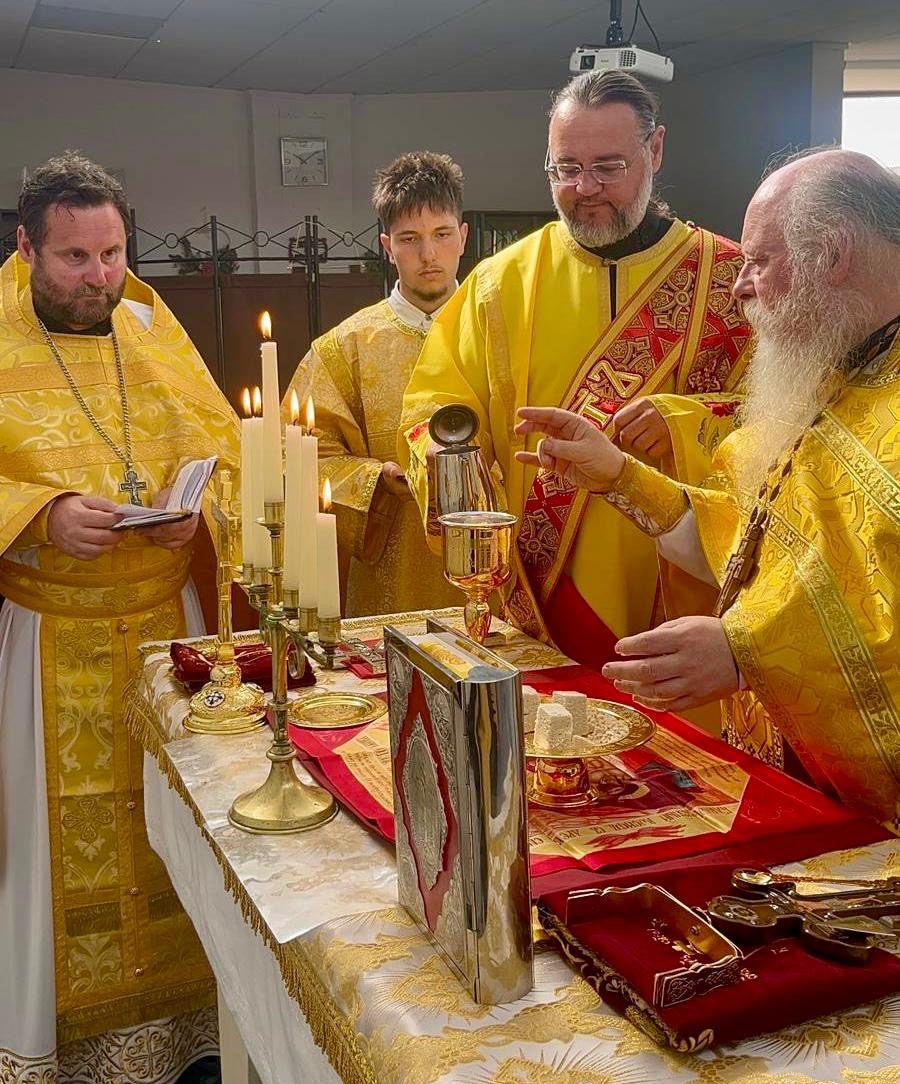
Thanks to those who contributed to our Sunday worship, coming together in a relatively small congregation, in rather a stark contrast to our planned Sunday, with the expected attendance of American pilgrims, who sadly were sent elsewhere (after our considerable planning of hospitality) by their US organiser. However, we were blessed by a deeply prayerful, quiet and contemplative Liturgy for the Sunday of All Saints who have shone forth in the lands of Rus’, and I am thankful to the Lord for such a prayerful celebration after having been blessed with an equally quiet and prayerful Liturgy the previous day, in Warminster. Thanks to our Wessex brothers and sisters.
Such services remind us that Faith is not about being flashy and impressive, and true parish life is not a numbers-game. Golden domes, fancy vestments and a fine choir do not make for authentic Orthodoxy, as modern history and the struggles of persecuted and catacomb Orthodoxy so clearly remind us.
Throughout the dark years of anti-religious oppression, our Russian Church Abroad felt deep a deep connection and brotherhood with those whose resistance to state-controlled Church life lead them to exchange the carefully monitored life of beautifully adorned temples and legal parishes for whispered Liturgies in cellars, thickly curtained domestic rooms, forest clearings and even prison settings.
“The Russian Orthodox Church Underground, 1917-1970” by William C. Fletcher, presents some admittedly dry but interesting details from KGB files describing raided settings for the prayer and worship of unofficial catacomb Orthodox communities, and I encourage the faithful to familiarise themselves with the stark reality of spiritual life for so many believers in the Soviet Union.
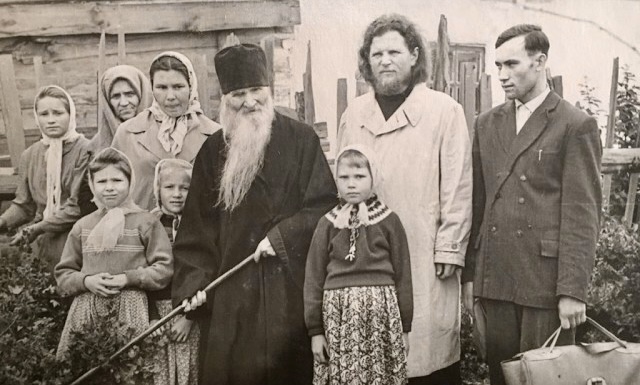
Equally, yesterday, I encouraged a spiritual child to familiarise herself with the life of St Sebastian of Optina and Karaganda, whose exile to Kazakhstan became the opportunity for apostolic labour and pastoral service to those also exiled to the Kazakh steppe.
Against all refusals, resistance and opposition, St Sebastian established a fervent, devout and spiritually-strong community, whose members made their parish and temple a bastion of Faith through their labours, sweat and tears.
This sacrifice, labour and self-giving is the basis on which we will build our own Orthodox presence as we move into our future temple in the coming months, and the hard work will then begin. The transformation and progress towards our completed vision may well be slow.
It will take time, money, labour and self-sacrifice, and in the intervening years we must not be ashamed of poverty or bareness, reflecting on the destitution of the confessing Church in the catacombs and gulag.
In God’s time, we will transform our building, knowing that adornments will be secondary to everything that goes in in our temple, which – in the Eucharistic Mystery – will be the place in which the Saviour, Himself, Who is both Priest and Sacrifice, will come to us and call us to Himself at those words, ‘With the fear of God and Faith, draw near.
This does not require fine icons, murals and a polyphonic choir, but a community united in Faith, and repentant hearts open to the love of God, manifested in the Holy Mysteries.
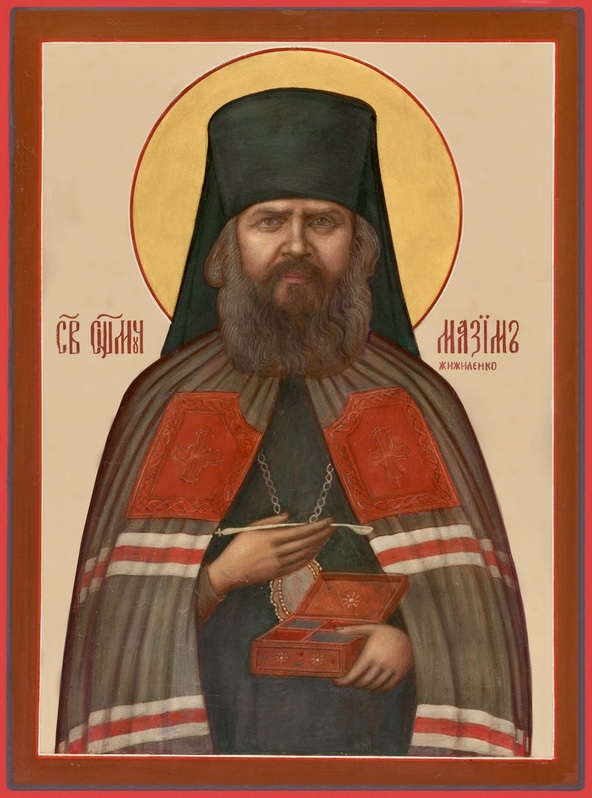
We can learn so much from the confessing Church, and today I am reflecting on the holy new-martyr, St Maxim of Serpukhov, the first catacomb bishop, to whom I referred in my homily.
He described Holy Week and Pascha in the gulag, and I hope that as the Cardiff ROCOR parish (NOT to be confused with the local parish of the Paris-based former Russian exarchate) looks forward to life in its own temple, as yet a promising but bare and empty building, we might contemplate how little we actually need for authentic Orthodoxy and life in Christ.
Having posted this extract before, I make no aplogies for doing so yet again, given the joyful, inspiring example of this memorial of poverty and externally imposed non-possession.
“At Solovki we had several secret Catacomb “churches,” but our “favorites” were two: the “Cathedral Church” of the Holy Trinity, and the church of St. Nicholas the Wonderworker.
“The first was a small clearing in the midst of a dense forest in the direction of the “Savvaty” Assignment Area. The dome of this church was the sky, The wails were the birch forest. The church of St. Nicholas was located in the deep forest towards the “Muksolm” Assignment Area, It was a thicket naturally formed by seven large spruces. Most frequently the secret services were conducted only in the summer, on great feasts and, with special solemnity, on the Day of Pentecost. But sometimes, depending on circumstances, doubly secret services were celebrated also in other places.
Thus, for example, on Great Thursday of 1929, the service of the reading of the Twelve Gospels was celebrated in our physicians’ cell in the 10th Company, Vladika Victor and Fr. Nicholas came to us as if for disinfection. Then, catacomb style, they served the church service with the door bolted.
On Great Friday an order was read in all Companies informing that for the next three days no one would be allowed to leave the Companies after 8 p.m. save in exceptional circumstances and by special written permit of the Camp Commandant.
At 7 p.m. on Friday, when we physicians had just returned to our cells after a 12-hour workday, Fr. Nicholas came to us and told us that a Plashchanitsa (burial shroud with the image of Christ) the size of one’s palm had been painted by the artist R. The service-the rite of burial–was to be held and would begin in an hour. “Where?” Vladika Maxim asked. “In the great box for drying fish which is closest to the forest, next to Camp N. The password: three knocks and then two. It’s better to come one at a time.”
In half an hour Vladika Maxim and I left our Company and started out for the indicated “address.” Twice patrols asked for our permits. We, as physicians, had them. But what about the others?–Vladika Victor, Vladika Ilarion, Vladika Nektary, and Fr. Nicholas? Vladika Victor worked as-a bookkeeper in the rope factory. Vladika Nektary was a fisherman; and the others weaved nets. Here was the edge of the forest. Here was the box, about nine yards long, without windows, the door scarcely noticeable.
Light twilight, the sky covered with dark clouds. We knock three times and then twice. Fr. Nicholas opens. Vladika Victor and Vladika Ilarion are already here… In a few minutes Vladika Nektary also comes. The interior of the box has been converted into a church. On the floor, on the wails, spruce branches. Several candles flickering. Small paper icons. The small Plashanitsa is buried in green branches. Ten people have come to pray. Later another four or five come, of whom two are monks. The service begins, in a whisper. It seemed that we had no bodies, but were only souls. Nothing distracted or interfered with prayer… I don’t remember how we went “home,” i.e., to our Companies. The Lord covered us!
The bright service of Pascha was assigned to our physicians’ cell. Towards midnight under various urgent pretexts arranged by the section, without any kind of written permit, all who intended to come gathered, about fifteen people in all. After the Matins and Liturgy, we sat down and broke the fast. On the table were Paschal cake and cheese, colored eggs, cold dishes, wine (liquid yeast with cranberry extract and sugar). About three o’clock we parted.
Control rounds of our Company were made by the Camp Commandant before and after the services, at 11 p.m. and 4 a.m. Finding us four physicians headed by Vladika Maxim, on his last round, the Commandant said: “What doctors, you’re not sleeping?” And immediately he added: “Such a night…and one doesn’t want to sleep!” And he left.
“Lord Jesus Christ! We thank Thee for the miracle of Thy mercy and power,” pronounced Vladika Maxim movingly, expressing our common feelings.
The white night of Solovki was nearing its end. The delicate, rose-colored Paschal morning of Solovki, the sun playing for joy, greeted the monastery-concentration camp, converting it into the invisible city of Kitezh and filling our free Souls with a quiet, unearthly joy.”
Let us all be encouraged by such an example of determined Orthodoxy, striving for Faith against all odds, and despite every obstacle!
News
Today, Panagiotis has departed for the summer in Greece and we pray for a safe journey, and an enjoyable vacation.
We will chant Small Compline in Nazareth House on Thursday at 18:00, with the litia for the departed after our evening office.
At our Friday service, in the Oratory Church at 15:00, we will chant the akathist to the Life-Giving Cross.
Saturday: Our Gloucester Mission Liturgy will be celebrated in Prestbury United Reformed Church at 10:00, and will be followed by our usual bring-and-share lunch. Given that this week we will celebrate the feast of Saints Mary and Martha, the sisters of St Lazarus of the Four Days, and devoted female disciples of the Lord, we will honour them in our Cheltenham Liturgy, given the devotion, generosity and love of our wonderful sisters.
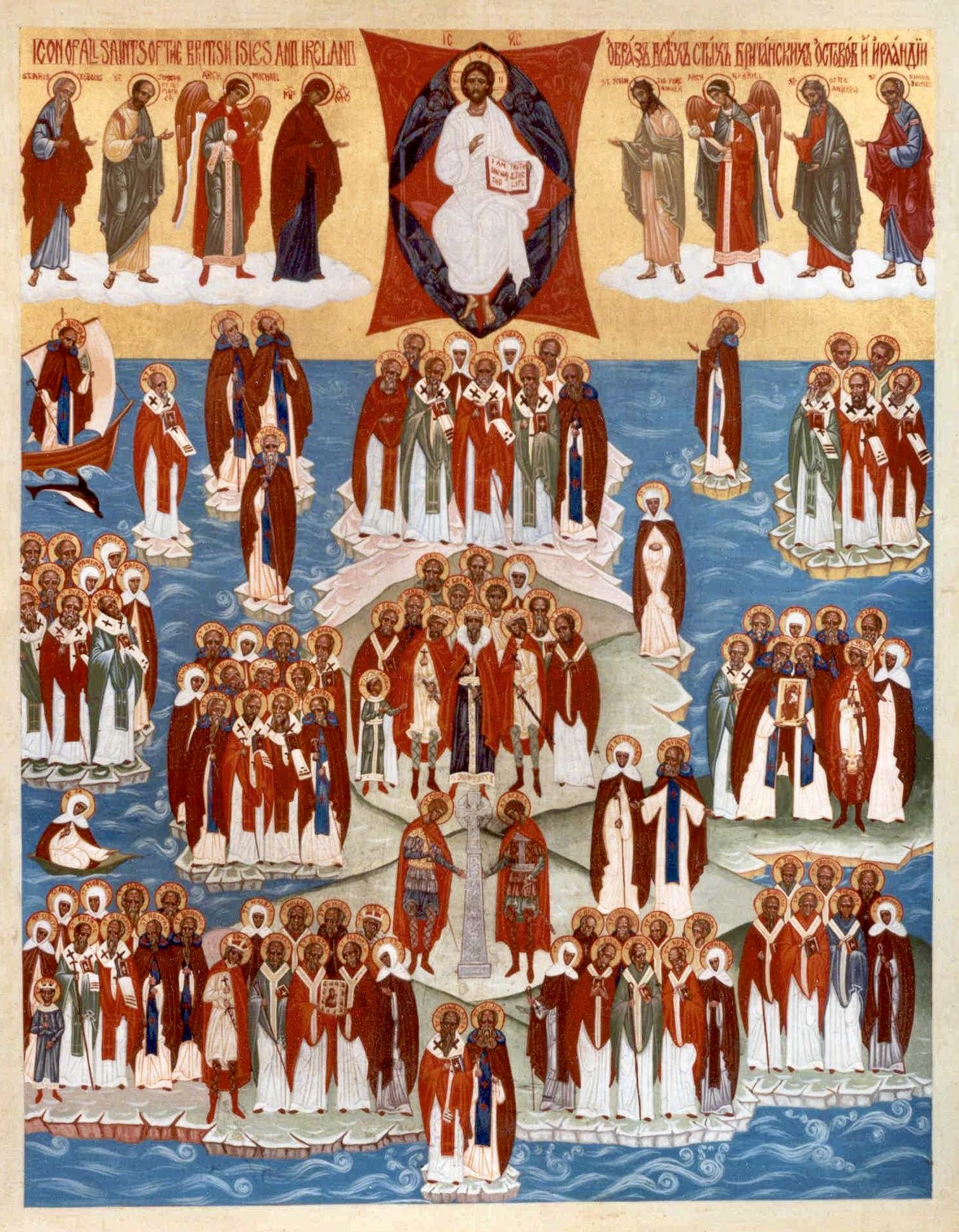
Our Sunday service in Cardiff returns to the normal time of 09:00, and we will celebrate the Synaxis of all the Saints who have shone forth in the British Isles, with a litia to the saints at the end of Liturgy.
I will depart for Glastonbury after our service, and look forward to extending our Synaxis of the Saints of the British Isles with the celebration of the Hours and Divine Liturgy next Monday morning in the Heavenly Path Art Gallery and Glastonbury School of Art (46A High St. Glastonbury, BA6 9DX). Bishop Irenei has blessed the celebration of the Divine Liturgy in the small sanctuary that has been created there, so that the Liturgy can be offered in an Orthodox setting, in a place of not only great sacred-significance, but also of spiritual darkness, given the pagan and occult significance of modern-day Glastonbury.
Later, in our Monday evening service in the Chapel of St Lawrence, in Warminter, we will chant the canon of the Synaxis of the Saints of the British Isle’s in Small Compline.
The morning Liturgy will be celebrated at 10:00 and the evening service at 18:30. After such a wonderful Warminster Liturgy last weekend, it will be wonderful to end the month will a double celebration in Wessex!
July sees a group of parishioners make a pilgrimage to the parish of St Elizabeth, in Wallasey, with car-shares taking the faithful to Wallasey on Friday 3 July. We greatly look forward to celebrating the feast of St John the Wonderworker on Saturday 4 July with Father Paul and his lovely community.
Friday 17 July is the feast of the Holy Royal-Martyrs – the altar-feast of the lower cathedral sanctuary and the second anniversary of Father Mark’s priestly ordination. A group of us will head to Chiswick to celebrate this important feast with our bishop and brothers and sisters from different parts of the diocese.
I very much hope that as many parishioners as possible can work together to car-share and be part of the celebration.
Finally, let’s keep up our fundraising momentum and spread the word! Unlike others, we haven’t had a benefactor stump up the money and buy us a church. We’ve raised everything through effort and the wonderful generosity and kindness of individual donors. Let’s keep things moving!
www.gofundme.com/f/help-us-buy-a-church-for-our-orthodox-parish
Asking your forgiveness and prayers.
May God bless you all!
In Christ – Hieromonk Mark