 If we were able to transport ourselves to the ancient monastic thebaïd of Egypt, many of us would be surprised, if not shocked by the austerity and “bareness” of those primitive monastic services – so different from our expectations, shaped by the subsequent development of Byzantine Liturgy.
Our current practices are very much a result of the fusion of monastic and cathedral rites, with the psalmody and primitive features of prayer supplemented by the hymnographic riches that have developed in the ensuing centuries, with the development of troparia, kontakia, stichera and canons. But, before the centuries in which monastics were resistant to these “innovations”, there was a time when these riches did not even exist, and the sole hymnographic treasury was the Psalter.
It is odd to imagine vespers without the stichera we sing on “Lord, I have cried…” or matins without the canons, yet that was the reality.
When we look at compline or the hours, we can get a general idea of worship consisting almost solely of Psalms, with a minimum of supplementary hymnody. When we think about Great Compline, the ancient pattern is amplified in the stases of Psalms which are still more or less the totality of the service.
Whilst our Byzantine rite now has rich layers of hymnography, often interspersed with hymns, the Coptic rite still preserves a more primitive feamework, in which the Psalter – interspersed with hymns and prayers – IS the Horologion, with all 150 Psalms are chanted each day, more often than not in sets of twelve Psalms.
St John Cassian the Roman tells us that this order was revealed by an angel who appeared in the form of a venerable elder whilst monastics were disputing how many Psalms should be chanted during their synaxis of prayer. The “elder” started chanting Psalms and upon completing the twelfth, he chanted alleluia, and then vanished. The monks understood that this was a heavenly revelation, and twelve Psalm services became the pattern of celebration.
In Great Russian editions of both Old and New Rites we find a relic of this desert practice as a continued and approved part our living sacred tradition.
Towards the end of the Psalter, we find
“The Rite for Singing the Twelve Psalms, Which the venerable fathers of the desert were wont to sing day and night; concerning which, account is found in the books of the fathers and in the lives and sufferings of many saints. This rite was brought to Russia from the Holy Mountain by Dositheus, Archimandrite of the Kiev Caves.”
The said Dositheus was superior of the monastery from 1289 to 1292.
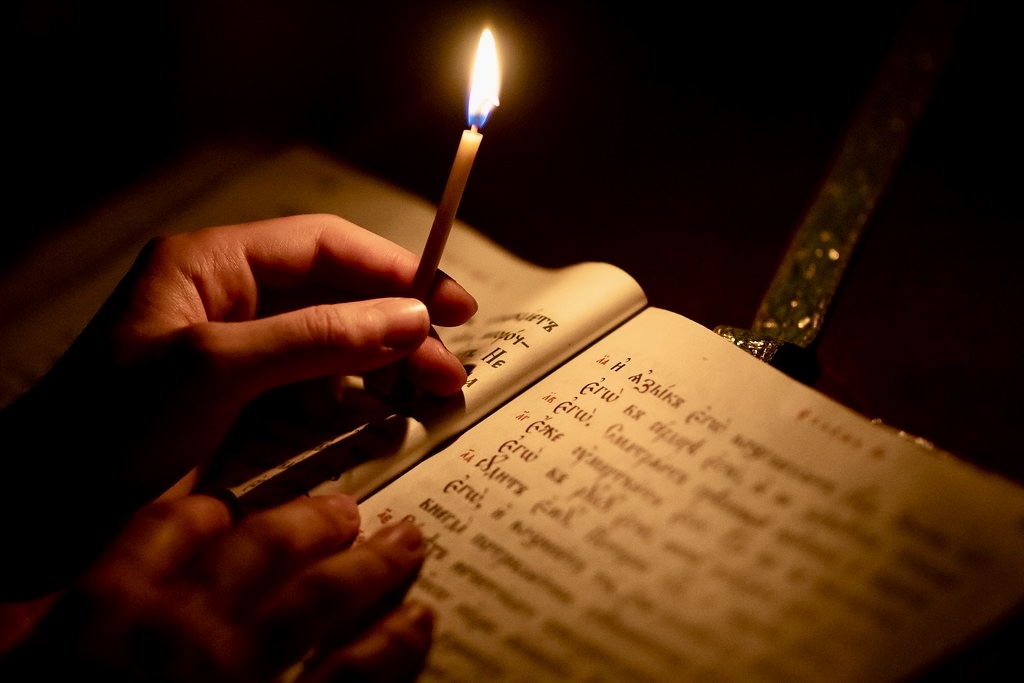
This ancient order, not mentioned in any liturgical typikon, still contained in the Psalter published by Holy Trinity Monastery, Jordanville, and it is not some extinct, dusty relic, but an important part of the living tradition of Orthodox prayer.
Coptic tradition continues to vary the Psalms between the different services of the day, but have become fixed in our order of the Twelve Psalms.
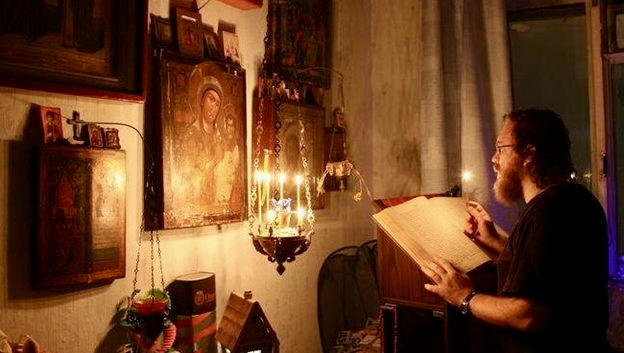
However, this order is still considered a valid aspect of prayer in sketes and hermitages, where stress is upon silence and inner-prayer, as well as in its use by pious lay-people and here we should be clear that the Twelve Psalms are offered as LITURGICAL prayer, in place of horologion services. Though the stress is on the Psalter, there are also troparia and other prayers, with the order divided into three stases.
Psalm 26, Psalm 31, Psalm 56
Psalm 33, Psalm 38, Psalm 40
Psalm 69, Psalm 70, Psalm 76
Psalm 101
Prayer of Manesseh, King of Judah
Small Doxology and Prayer of St Eustratius
Each stasis is followed by the Trisagion prayers and penitential troparia on the Lord’s Prayer, before “Lord, have mercy” thirty times (or forty times in Lent), and in some places “More honourable than the cherubim…” and the lesser dismissal at the end of each stasis, before “O come, let us worship…” and the next cycle of Psalms.
During fasts, the prayer of St Ephrem follows ‘More honourable…’, and according to local practice this might be in each stasis, or just in the final one, before the dismissal.
According to ancient Russian tradition, the Twelve Psalms may replace matins and vespers (changing the Doxology to pray for a sinless evening rather than day), and in chanting this ancient liturgical synaxis, we engage with the ancient ways of monastic prayer and world of the desert fathers and mothers.
So… if you have a Slavonic Psalter, or the Jordanville English language Psalter, check the index and explore the ancient service of the Twelve Psalms, which might become a valuable addition to our home prayers, bringing greater structure and depth. Together with our prayer rule and readings, the Twelve Psalms can greatly enrich and strengthen our lives of prayer.