Dear brothers and sisters – Christ is Risen! Христос Bоскресе!As we enter the third week of Pascha, having celebrated the Sunday of the Myrrh-Bearing Women, yesterday, the need to rejoice in every day of this joyful Resurrection season presses upon us. Repeating myself, hopefully not too monotonously, I encourage all of the members of our community to have the words of the Paschal hymns upon their lips continually, as a means of preserving the Paschal joy in hearts and minds. Again, if possible, pray the Paschal Canon each day.
Paschal joy should overflow in our lives, and we should instinctively wish to share the resurrectional message of the angel, as we read in the Gospels and hear in the Paschal hymns –
“Come from the vision, O ye women, bearers of good tidings, and say ye unto Sion: Receive from us the good tidings of the Resurrection of Christ; adorn thyself, exult, and rejoice, O Jerusalem, for thou hast seen Christ the King, like a bridegroom come forth from the tomb.
The myrrh-bearing women in the deep dawn stood before the tomb of the Giver of life; they found an angel sitting upon the stone, and he, speaking to them, said thus: Why seek ye the Living among the dead? Why mourn ye the Incorruptible amid corruption? Go, proclaim unto His disciples.”
As always, we thank those who laboured for the Lord in celebrating the Sunday of the Myrrh-Bearing Women, on which it was aptly several sisters of the parish who were first to arrive, already waiting and ready to prepare St Philip’s for Orthodox worship. Having more people to set up at 8:30 is pressingly important, given that clergy entrance-prayers, confessions and proskomedia ALL hinge on set up. It doesn’t happen magically or miraculously, and we would particularly value the presence of our young people to assist.
It was lovely to welcome sisters back from Ukraine visits and to have them singing on our kliros. Thanks to our brothers for sharing the load, given there was only a few singers, and chanting the anaphora so prayerfully in English, with the welcome change of Byzantine chant.This weekend’s celebration came after a week of memorial services, in Bradford-on-Avon (at Wessex end-of-month prayers), in Glastonbury, Swansea and Cardiff.
This week will see our evening akathist (to the Resurrection) in Nazareth House at 18:00 on Thursday, and we will serve a moleben for the sick in the Oratory at noon on Friday, after which I will hear confessions before heading to Warminster, where will celebrate the Hours and Divine Liturgy at 10:30 on Saturday, in the Chapel of St Lawrence in Market Place.As previously announced, I will be in Walsingham during the week beginning 12 May, and though serving that week, it will be one of reading, rest and prayer, so may I ask that communication is only for purposes of prayer requests.
Father Luke will concelebrate with Father Mark the Younger on Sunday 18 May, also hearing confessions, as needed, though those who confess in the week ahead will be blessed to commune on the following two Sundays, unless need for confession arises. If in doubt, Father Mark or Father Luke may be consulted for advice.
We ask for continued prayers for Lyudmila among the sick; for the newly departed Irinia, Sophia, Alexey and Sophia; and for oltarnik Panagiotis whose exams start on Friday, and for Stefan, Tara and Annie, who have exams in the following weeks.
Dear brothers and sisters – Christ is Risen! Христос воскресе!
Thanks to all who contributed to the weekend’s joyful services, keeping the triumph and joy of Pascha alive.
Saturday saw a joyful Thomas Saturday in Cheltenham, with the Liturgy celebrated according to the joyful Paschal order of Bright Week.
The service ended with the breaking of the artos, which has now been cut into slices for distribution to parishioners, who should cut it into small portions for drying, to eat on Sundays and festive days when it’s not possible to attend Liturgy – as a blessing and connection with Pascha, and a symbol of the risen Lord in the midst of his disciples.
With various parishioners away or unwell, Sunday saw a quiet celebration in St Philip’s, where we are slowly settling in and getting used to the building.
It was a joy to have an extra teenage server join Stefan in the altar, and we would like to see some of the gentlemen the parish join the boys on Sundays, as well as encouraging parishioners to consider joining our choir.
Masha raised the possibility the regent from the parish in Chipping Sodbury giving some day-courses in Church singing, including learning the traditional Kievan melodies which were a firm foundation of parish singing in the Russian Orthodox Church before the revolution. I very much hope that we may support this, and take advantage of the vast expertise and knowledge available to us.
On coming Sundays Father Mark and I would greatly appreciate more help with set-up at 08:30 to ensure a timely start for the Hours, and especially for confessions.
With the vestry being the only private space, I am unable to commence confessions until everything needed has been removed, and I do not wish to miss the beginning of Liturgy every week.
Please note that if the vestry doors are closed, confessions are being heard, so do NOT enter. If something is needed from the vestry, please take what is needed between the confessions.
After celebrating the joy of Bright Week and its special orders of service, the Sunday of Thomas sees the resumption of the commemorations of the departed with the chanting of panakhida and litia services. However, these still retain a distinctly Paschal form, resounding with the hymns of Pascha as we celebrate Radonitsa, centred on the Paschal Canon interspersed with the usual litanies for the departed.
Having chanted a litia at the end of Liturgy, I have brought the commemoration lists away with me and will celebrate memorial services throughout the week: at our end-of-the-month gather in Bradford-on-Avon this evening; in Glastonbury with Father Luke, tomorrow; in Swansea with Father Marks and matushka on Wednesday; then in Cardiff on Thursday and Friday, before my monthly Saturday visit to Lazarica.
Please post, message or email any names for commemoration.
Anyone wishing to pray a reader’s Radonitsa. service at home will find a full service on our parish web page, though the Paschal Canon is often reduced to simply praying the Irmos.
We will celebrate a panikhida in Nazareth House at 18:00 on Thursday, at noon in the Oratory on Friday.
If anyone would like to join me for Liturgy in Lazarica on Saturday, the Hours commence at 09:00.
Further to Father Mark’s words before communion, at Liturgy, we should remember that once the Holy Gifts have been brought out, we do not venerate icons. Icons should be venerated before lining up. Once the Holy Gifts have been brought out, Christ is in our midst, and all honour is for His Presence alone.
A reminder, as announced by Fr Mark, that I will be on Walsingham duty in the week commencing 12th May, and though I will be away on Sunday 18th, Fr Luke will assist Fr Mark and hear confessions.
The Paschal Canon, the Work of St John of Damascus
Ode I, Irmos: It is the Day of Resurrection, * let us be radiant, O ye people; * Pascha, the Lord’s Pascha: * for from death to life, * and from earth to heaven, * Christ God hath brought us, * as we sing the song of victory.
Christ is risen from the dead.
Let us purify our senses, * and we shall behold Christ, * radiant with the unapproachable light of the Resurrection, * and we shall clearly hear Him say, Rejoice! ** as we sing the hymn of victory.
Christ is risen from the dead.
Let the heavens be glad as is meet, * and let the earth rejoice, * and let the whole world, both visible and invisible, * keep festival: * for Christ is risen, ** O gladness eternal.
To the Theotokos: by Nicephorus Callistos Xanthopolous:
Most Holy Theotokos save us.
Thou dost now gush forth grace for me, O Virgin Theotokos of the Spring, thereby granting me the words, by which I may praise thy Spring, from which issueth forth life and grace unto the faithful; for thou hast caused the Hypostatic Word to flow forth.
Most Holy Theotokos save us.
Thy temple, O honored one, hath been shown to be a supra-natural place of healing for all, O Maiden; for clearly it hath raised up from death the faithful that flee thereto, causing an abundance of sweetness to flow forth unto all.
Glory be to the Father, and to the Son, and to the Holy Spirit.
Thou alone, hast truly been the cause by which grace hath inexhaustibly descended unto us from Heaven; for thou didst cause the blind man to behold light in a manner past understanding, when thou didst call from on high unto Leo in the swampland.
Now and ever, and unto the ages of ages. Amen.
Thou art the common honour of mankind O honored One, Rejoice O Mary, rejoice; for the Creator of all hath clearly descended upon thee like a drop of rain, showing thee to be an immortal Spring, O Bride of God.
Katavasia: It is the Day of Resurrection, * let us be radiant, O ye people; * Pascha, the Lord’s Pascha: * for from death to life, * and from earth to heaven, * Christ God hath brought us, * as we sing the song of victory.
Ode III, Irmos: Come, let us drink a new drink, * not one miraculously brought forth from a barren rock * but the Fountain of Incorruption, * springing forth from the tomb of Christ, * in Whom we are strengthened.
Christ is risen from the dead.
Now all things are filled with light; * heaven and earth, * and the nethermost parts of the earth; * let all creation, therefore, celebrate the arising of Christ ** whereby it is strengthened.
Christ is risen from the dead.
Yesterday I was buried with Thee, O Christ; * today I rise with Thine arising. * Yesterday I was crucified with Thee; * do Thou Thyself glorify me with Thee, O Savior, ** in Thy kingdom.
Most Holy Theotokos save us.
I know thee to be an effulgent and holy temple of the Master of all, O Maiden, and a Spring of incorruption from whence Christ, the Water of incorruption, floweth forth, and from whence we refresh ourselves.
Most Holy Theotokos save us.
God hath granted grace unto thy Spring, O Lady, and by its water it dispelled the fearful gall-stone, granting it passage from the emperor who grievously suffered from it.
Glory be to the Father, and to the Son, and to the Holy Spirit.
Abundant grace doth flow forth from thee, O Virgin Theotokos, pouring forth in floods; through thee, the lame skip with joy, a multitude of lepers are cleansed, and demons are suffocated.
Now and ever, and unto the ages of ages. Amen.
Unto all the faithful dost thou impart healings; to kings and common people, paupers and rulers, to poor and rich alike; pouring forth water as a source of a healing of diverse maladies.
Katavasia: Come, let us drink a new drink, * not one miraculously brought forth from a barren rock * but the Fountain of Incorruption, * springing forth from the tomb of Christ, * in Whom we are strengthened.
Chirst is risen from the dead… (Thrice)
Lord, have mercy. Lord, have mercy. Lord, have mercy.
Kontakion, Tone VIII: Thou didst descend into the tomb, O Immortal, * Thou didst destroy the power of Hades. * In victory didst Thou arise, O Christ God, * proclaiming “Rejoice!” to the myrrh-bearing women; * granting peace to Thine apostles, ** and bestowing resurrection on the fallen.
Sessional Hymn of the Theotokos, Tone VIII: Let us all who ask of grace, * with one accord praise the living and ever- flowing divine source, * the most divine Spring, which daily poureth forth * healings unto all mankind, * by comparison a river’s flow is insignificant. * Wherefore, as is due, as we all draw nigh with love, * with faith let us now draw from the Spring inexhaustible strength, * truly immortal, * bedewing the hearts of the pious; * and with our lips let us cry aloud: ** Thou art the comforting solace of the flock of the faithful.
Glory be to the Father, and to the Son, and to the Holy Spirit; now and ever, and unto the ages of ages. Amen.
Repeat the Sessional Hymn
Ode IV, Irmos: On divine watch let the God-inspired Habakkuk stand with us, * and show forth the light-bearing angel clearly saying: * Today salvation is come to the world, * for Christ is risen * as Almighty.
Christ is risen from the dead.
As a man-child did Christ appear * when He came forth from the Virgin’s womb, * and as a mortal was He called the Lamb. * Without blemish also, is our Pascha * for He tasted no defilement; ** and as true God, perfect was He proclaimed.
Christ is risen from the dead.
Like unto a yearling lamb, * Christ, our blessed Crown, * of His own will was sacrificed for all, * a Pascha of purification; * and from the tomb the beautiful Sun of Righteousness ** shone forth again upon us.
Christ is risen from the dead.
David, the ancestor of God, * danced with leaping before the symbolical Ark; * let us also, the holy people of God, * beholding the fulfillment of the symbols, * be divinely glad; ** for Christ is risen as Almighty.
Most Holy Theotokos save us.
Truly, more numerous than grains of sand, and drops of rain, are the multitude of the deeds of thy Spring, which doth unceasingly and abundantly pour forth upon all the earth, quickly healing all who are grievously ill.
Most Holy Theotokos save us.
From thy Spring, water was poured upon the breast of the woman stricken with cancer, O Virgin; and straightway the fatal malady ceased at the pouring, for the cancer simply knew to leave.
Glory be to the Father, and to the Son, and to the Holy Spirit.
Incomprehensible and surpassing nature is that which hath been manifestly accomplished in thee, O Theotokos; for the water of thy Spring is, for those illnesses that are fatal, an antidote clearly unknown to nature.
Now and ever, and unto the ages of ages. Amen.
The enemy doth ever slay me by the attacks of pleasures, O Lady Theotokos of the Spring; turn not away from me, but do thou hasten, O thou who art quick to help, and deliver me from his snares, that I may ever praise thee, O greatly praised one.
Katavasia: On divine watch let the God-inspired Habakkuk stand with us, * and show forth the light-bearing angel clearly saying: * Today salvation is come to the world, * for Christ is risen * as Almighty.
Ode V, Irmos: Let us awake in the deep dawn, * and instead of myrrh, offer a hymn to the Master, * and we shall see Christ, * the Sun of Righteousness, * Who causeth life to dawn for all.
Christ is risen from the dead.
Seeing Thy boundless compassion * they who were held in the bonds of hades * hastened to the light, O Christ, * with gladsome feet, ** praising the Pascha eternal.
Christ is risen from the dead.
Bearing lights, let us approach Christ, * Who cometh forth from the tomb like a bridegroom, * and with the feast-loving ranks of angels * let us celebrate ** the saving Pascha of God.
Most Holy Theotokos save us.
The wondrous miracles spoken of concerning thy Spring, O Virgin Maiden, truly astonish the minds of mortal men; for in a manner surpassing nature they sanctify all the faithful.
Most Holy Theotokos save us.
The fleece, the manna and Siloam, the rock that poured forth Water, Solomon’s porch, the waters of the Jordan, and the well of the Samaritan woman all depicted thy grace.
Glory be to the Father, and to the Son, and to the Holy Spirit.
Drops from thy Spring, O Virgin Maiden, have raised a dead man. Truly surpassing telling and understanding is that which hath been accomplished! For all things that pertain to thee surpass the telling of mankind, O all-pure one.
Now and ever, and unto the ages of ages. Amen.
O Maiden, thou hast healed my sufferings, as thou didst dry up the source of the woman’s issue of blood, and dispel the blistering of skin shriveled by fire, and cure tuberculosis, and the blockage of urine, and dysentery.
Katavasia: Let us awake in the deep dawn, * and instead of myrrh, offer a hymn to the Master, * and we shall see Christ, * the Sun of Righteousness, * Who causeth life to dawn for all.
Ode VI, Irmos: Thou didst descend into the nethermost parts of the earth, * and didst shatter the eternal bars that held the fettered, O Christ, * and on the third day, * like Jonah from the whale, * Thou didst arise from the tomb.
Christ is risen from the dead.
Having kept the seals intact, O Christ, * Thou didst rise from the tomb, * O Thou Who didst not break the seal of the Virgin by Thy birth, * and Thou hast opened for us ** the doors of Paradise.
Christ is risen from the dead.
O my Savior, the living and un-slain Sacrifice, * when, as God, Thou, of Thine Own will, * hadst offered up Thyself unto the Father, * Thou didst raise up with Thyself the whole race of Adam, ** when Thou didst rise from the tomb.
Most Holy Theotokos save us.
Rational speech hymneth thee as truly a Spring, O pure one; for in a manner surpassing reason thou hast given birth to the Depth of Wisdom, Who suspended the Waters in the sky, and the earth upon the waters.
Most Holy Theotokos save us.
Standing beneath the collapse of the stairs which threatened to crush the painters that were there, O all-holy Spring, thou didst hold them fast, and thou didst save the people when the roof collapsed during the earthquake.
Glory be to the Father, and to the Son, and to the Holy Spirit.
Wombs once bereft of fruit because of barrenness hast thou manifestly healed by the streams of thy Spring; for as thou didst give birth unto the Master of all, while yet a virgin, thou hast also granted them children.
Now and ever, and unto the ages of ages. Amen.
Neither word, nor mind, nor tongue is able to rightly praise thy childbirth, O pure one; even the sublimity of philosophers and the beauty of the eloquence of rhetoricians are humbled before thee.
Katavasia: Thou didst descend into the nethermost parts of the earth, * and didst shatter the eternal bars that held the fettered, O Christ, * and on the third day, * like Jonah from the whale, * Thou didst arise from the tomb.
Chirst is risen from the dead… (Thrice)
Lord, have mercy. Lord, have mercy. Lord, have mercy.
Kontakion, Tone VIII: From thine unfailing fount, O thou who art full of God’s grace, * do thou reward me by the flow of the never-ending streams of thy grace * which surpasseth human telling. * And since thou didst bear the Word in a manner beyond human understanding, * I beseech thee to refresh me with thy divine grace, ** that I may cry to thee: Rejoice, O thou water of salvation.
Ikos: O undefiled Theotokos, thou who ineffably hast given birth to the Word Who was begotten of the Father before the ages, do thou open my mouth, O modest one, that I may praise and acclaim, thee, crying such things as these unto thy Spring: Rejoice, Spring of unceasing joyfulness. Rejoice, Stream of ineffable beauty; Rejoice, Banishment of diverse impairments. Rejoice, Destruction of various ailments; Rejoice, Stream of clarity, curing the believing. Rejoice, water of jubilation, healing a multitude of the ailing; Rejoice, Lymph of wisdom, banishing ignorance. Rejoice, Draught for the heart, brimming with ambrosia in abundance. Rejoice, Bowl of manna streaming with life. Rejoice, Laver and Nectar, divinely-wise flowing; Rejoice, thou who hast shown us the passage from illness. Rejoice, thou who didst quench the fire of sickness; Rejoice, O thou water of salvation.
Hymn of the Resurrection, Tone VI: Having beheld the Resurrection of Christ, * let us worship the holy Lord Jesus, * the only sinless One. * We worship Thy Cross, O Christ, * and Thy holy Resurrection we hymn and glorify. * For Thou art our God, * and we know none other beside Thee; * we call upon Thy name. * O come, all ye faithful, * let us worship Christ’s holy Resurrection, * for, behold, through the Cross joy hath come to all the world. * Ever blessing the Lord, * we hymn His Resurrection; * for, having endured crucifixion, ** He hath destroyed death by death. (Thrice)
Jesus having risen from the tomb, * as He foretold, * hath granted us life eternal, ** and great mercy. (Thrice)
Ode VII, Irmos: He Who delivered the Children from the furnace, * became man, suffereth as a mortal, * and through His Passion * doth clothe mortality with the beauty of incorruption, * He is the only blessed and most glorious * God of our fathers.
Christ is risen from the dead.
The godly-wise women with myrrh * followed after Thee in haste; * but Him Whom they sought with tears as dead, * they worshipped joyfully as the living God, * and they brought unto Thy disciples, O Christ, ** the good tidings of the mystical Pascha.
Christ is risen from the dead.
We celebrate the death of death, * the destruction of hades, * the beginning of another life eternal, * and leaping for joy, * we hymn the Cause, ** the only blessed and supremely glorious God of our fathers.
Christ is risen from the dead.
For truly sacred and all-festive is this saving night, * and this shining, light- bearing day, * the harbinger of the Resurrection, * whereon the Timeless Light bodily ** from the tomb upon all hath shined.
Most Holy Theotokos save us.
O Ye infirm, draw forth healing for yourselves, for the all-pure one causeth true sweetness to flow from her divine Spring, truly pouring forth a torrent of delight. Wherefore, let us all in faith draw forth from these abundant streams.
Most Holy Theotokos save us.
All the faithful are astonished by thy wondrous marvels, O Lady; for thy water hath made the deaf and the dumb eloquent, curing them that suffer grievously and granting them healing.
Glory be to the Father, and to the Son, and to the Holy Spirit.
Thou dost lead out from the furnace of afflictions those who draw nigh unto thee, O pure one, bedewing them with water from thine awesome spring; for thou didst deliver a man from gout and disfigurement; and heal the leper, and quench malignant boils.
Now and ever, and unto the ages of ages. Amen.
Ye young men and maidens, and all ye men, with heartfelt faith let us radiantly acclaim our Lady; for she hath healed cysts, the punctures of nails, foul sores, inflammations, and palsy.
Katavasia: He Who delivered the Children from the furnace, * became man, suffereth as a mortal, * and through His Passion * doth clothe mortality with the beauty of incorruption, * He is the only blessed and most glorious * God of our fathers.
Ode VIII, Irmos: This chosen and holy day * is the first of the Sabbaths, * the queen and lady, * the feas of feasts, * and the festival of festivals, * wherein we bless Christ throughout the ages.
Christ is risen from the dead.
Come, on this auspicious day of the Resurrection, * let us partake of the fruit of the new vine * of divine gladness of the kingdom of Christ, * praising Him as God ** throughout the ages.
Christ is risen from the dead.
Lift up thine eyes about thee, O Zion, * and see, for behold, there cometh unto thee * like God-illumined beacons, * from the west, and from the north, * and from the sea, and from the east, ** thy children, in thee blessing Christ throughout the ages.
O Most Holy Trinity, our God, glory be to Thee.
O Father Almighty, and Word, and Spirit, * one Nature united in three Hypostases, * transcendent and most divine! * Into Thee have we been baptized, ** and Thee will we bless throughout all ages.
Most Holy Theotokos save us.
Thy Spring doth pour forth divine and honorable Water, O Virgin, and by the invocation of divine grace, it doth greatly staunch the effluence of those with dropsy. Wherefore, we honor thee, O Spring, throughout the ages.
Most Holy Theotokos save us.
Let us all gladly praise the honorable and life-streaming water; for it doth staunch the sources of phlegm in respiratory maladies, making an open path that it may freely depart. O how great are thy wonders, O pure Birthgiver of God!
We bless the Father, son, and Holy Spirit, the Lord.
What mouth can rightly praise thy wondrous birth-giving, O all-hymned one? And what mind can gaze upon the well-spring of thy miracles and praise them with words? Nature hath not the strength to stand in awe at that which is thine.
Now and ever, and unto the ages of ages. Amen.
All the might of death hath been banished straightway, O Queen and Lady; for thou art the well-spring of Christ the immortal King, our Life, the Water, the Manna, throughout the ages.
Katavasia: This chosen and holy day * is the first of the Sabbaths, * the queen and lady, * the feast of feasts, * and the festival of festivals, * wherein we bless Christ throughout the ages.
Ode IX, Irmos: Shine, shine, O new Jerusalem, * for the glory of the Lord hath arisen upon thee; * dance now and be glad, O Zion, * and do thou exult, O pure Theotokos, * in the arising of Him Whom thou didst bear.
Christ is risen from the dead.
O how divine, how loving, * how sweet is Thy voice! * For Thou hast truly promised * to be with us unto the end of the age, O Christ; * having this foundation of hope, ** we the faithful rejoice.
Christ is risen from the dead.
O Christ, Thou great and most sacred Pascha! * O Wisdom, Word and power of God! * Grant us to partake of Thee more fully * in the unwaning day ** of Thy kingdom.
Most Holy Theotokos save us.
The water of thy Spring doth surpass all water in essence, O pure Maiden, clearly granting deliverance from grievous illnesses, and supernaturally pouring the fullness of health upon all souls.
Most Holy Theotokos save us.
We all behold thy Spring as a new Siloam, a deliverer from infirmities; for having received noetic eyes, we can all now partake of a healthy noetic life.
Most Holy Theotokos save us.
Ye that seek health, hasten unto the Spring; for the grace of the Virgin Maiden doth dwell therein. Leap for joy and be glad, O ye multitudes of the faithful, for in her temple, each according to his need, shall receive the recompense of his request.
Glory be to the Father, and to the Son, and to the Holy Spirit.
The water of thy Spring hath been exalted above the heavens, coursing in streams throughout the abysses of the earth; it is the nourishment of the soul, the nectar of the faithful, the honey from the rock, and the distribution of manna.
Now and ever, and unto the ages of ages. Amen.
O Virgin, thou dost gladden the faithful in a manner surpassing nature, by pouring forth grace from thine ever-flowing Spring, and thereby granting us strength against our adversaries, as well as victories, health, and peace, and the fulfillment of our prayers.
Katavasia: Shine, shine, O new Jerusalem, * for the glory of the Lord hath arisen upon thee; * dance now and be glad, O Zion, * and do thou exult, O pure Theotokos, * in the arising of Him Whom thou didst bear.
The last week or so has been a rollercoaster for us, having only received the keys for St Philip’s a little over a week ago, and not having our first service until Palm Sunday, with the unnerving bareness and utility of the building as a literally stark challenge for us.
Having started the journey to St Philip’s on 21 January, it has been a long haul, and we are now only just beginning as we see how we can use the building, and can make it spiritually conducive to Orthodox worship. It will be a challenge, but the evolution of our worshipping space in a single week shows us that there is much we can do. As we have said, all ideas are welcome, and some parishioners have already come up with ways to create an Orthodox environment.
Holy Week and Pascha proved to be a concrete sign of what the community can achieve when we all work together, and the blessing of such beautiful services are a testimony to our parishioners’ dedication to serving the Lord and labouring for his local flock.
From Holy Wednesday’s Unction service to the Agape services of Pascha, it was a great joy to gather, with a stream of new people from various traditional Orthodox homelands. It was wonderful to welcome them and chat, and a comfort to know that even in the first week of relocation people were able to find us.
The clergy are extremely grateful for the labours of those who chanted, read, served, provided and arranged flowers, took photographs, cleaned and tidied, moved furniture and showed such kindness and care to clergy, brothers and sisters of the parish and visitors. And… personally, I am extremely grateful to Father Mark the Younger and Father Hierodeacon Avraamy, whose contributions to Holy Week and Pascha, and indeed every celebration, make such a difference and make my own ministrations so much easier. Thank you, Fathers.
One of the greatest joys of this year’s celebration was the flowers, whether the miniature floral halo for the Lord’s icon on the plashchanitsa, the cental stands, the vases of scented blooms or the adornments for the icons. The great island of flowers around the plashchanitsa and the Resurrection icon, was a wonderful offering to the Lord, and it was wonderful to smell the scent of the flowers as well as that of beeswax and incense in our beautiful services.
On the morning of Pascha, we repeated last year’s practice of chanting the Paschal Hours, and communing those were unable to come during the night between this first service and vespers, after which our sisters made tea and coffee to enjoy with kulich.
Having had a correspondence and telephone-call day, yesterday, sending greetings and catching up with people, I remain in Cardiff and will celebrate a 15:00 service in the Oratory tomorrow – Wednesday – chanting the Paschal Hours and moleben, and on Thursday, vespers for the feast of the Life-Giving Spring will be celebrated at 15:00, I will hear confessions after our services.
I will head to Nazareth House, for 18:00 on Thursday, whwere will will chant the canon to the Mother of God, the Life-Giving Spring, and ask that if anyone would like confession before the service to contact me by tomorrow evening, otherwise I will arrive in time to unlock the church at 18:00.
The Lesser-Blessing of Waters for the feast of the Life-Giving Spring will be performed in the Oratory Church at noon on Friday, and will also be performed for our Wessex parishioners in Jessica Anne’s home on Monday.
This coming Saturday 26 April, we will have the joy of celebrating the Saturday of Thomas in Cheltenham, with the breaking and distribution of the loaves of Thomas Bread (artos), blessed on the night of Pascha, with artos being brought back to Cardiff for distribution on Sunday.
If we had our own temple, the artos would stand on a table before the open Holy Doors of the ikonostas, and would be censed in every service and carried in a daily procession – “participating” in every service of Bright Week, as a sign of the Lord’s presence in the midst of the disciples.
At the end of Bright Week, these blessed loaves are broken and divided, to be kept as a Paschal blessing, akin to Great Holy Water at Theophany.
Having been cut up into small pieces and dried, artos may be prayerfully consumed on Sundays and feasts when we are unable to be in church to commune.
Our Cheltenham Hours and Liturgy will commence at 10:00, and we look forward to a shared Paschal meal after our service.
The address is Prestbury United Reformed Church, Deep Street, Cheltenham Gloucestershire, GL52 3AW.
It would be a great joy to welcome Cardiff parishioners to our little mission within sight of the Cotswold Hills.
Next Sunday, Antipascha, or “Thomas Sunday” will see the Octave of the Resurrection, and as the name suggests, we will commemorate the appearance of the Lord to the disciples and His encounter with Thomas, whose hands encounter the reality of the physicality of the Risen Saviour. The variables may be found at orthodoxaustin:
I will travel to Wessex on Sunday afternoon, where a memorial service for Radonitsa will be chanted on Monday evening. Having made a Somerset pastoral visit on Tuesday, I will return to Cardiff on Wednesday and we will offer a Radonitsa panikhida in Nazareth House on Thursday evening (1 May), so please submit commemoration lists for commemoration throughout the week, as well as at the Serbian Orthodox on Saturday, when I will go to Lazarica for the Liturgy on Saturday 3 May, to greet our Birmingham friends with the Resurrection and to celebrate a Paschal Liturgy with Father Nenad. It would be lovely if some of our Cardiff parishioners were able to make a pilgrimage to Bournville that day.
In the meantime, as suggested on WhatsApp, I encourage everyone to try to chant the Paschal canon every day in this glorious season.
I greatly encourage parishioners to try to read the Paschal Canon every day during the Paschal season, and here publish the English text with the Theotokia verses (to the Mother of God) which are added to the canon after the night of Pascha itself.
Ode 1, Eirmos:It is the Day of Resurrection! Let us be radiant, O ye people! Pascha! The Lord’s Pascha! For Christ our God hath brought us from death to life, and from earth unto heaven, as we sing triumphal hymn!
Christ is risen from the dead.
Let us purify our senses and we shall behold Christ, radiant with inaccessible light of the Resurrection, and shall hear Him saying clearly, “Rejoice!” As we sing the triumphal hymn!
Christ is risen from the dead.
Let the heavens rejoice in a worthy manner, the earth be glad, and the whole world, visible and the invisible, keep the Feast. For Christ our eternal joy hath arisen!
Glory be to the Father, and to the Son, and to the Holy Spirit.
Thou hast broken through the barrier of death, by giving birth to Christ, the eternal Life, Who today hath shone forth from the tomb, O Virgin all-blameless, and Who hath enlightened the world.
Now and ever, and unto the ages of ages. Amen
Having beheld thy resurrected Son and God, rejoice thou with the apostles, O Pure One graced of God, and be the first to rejoice, as thou hast received the Cause of joy for all, O Mother of God all-blameless.
Katavasia: It is the Day of Resurrection!…
Ode 3, Eirmos:Come, let us drink a new drink, not miraculously drawn from a barren rock, but the fountain of Incorruption springing from the tomb of Christ in Whom we are established.
Christ is risen from the dead.
Now all things are filled with light: heaven and earth, and the nethermost regions. So let all creation celebrate the Resurrection of Christ, whereby it is established.
Christ is risen from the dead.
Yesterday, O Christ, I was buried with Thee, and today I arise with thy arising. Yesterday I was crucified with Thee. Glorify me, O Saviour, with Thee in Thy Kingdom.
Glory be to the Father, and to the Son, and to the Holy Spirit.
Into incorruptible life have I entered today, through the goodness of Him Who was born of thee, O Pure One, and Who makest all the ends of the earth radiant with joy.
Now and ever, and unto the ages of ages. Amen.
Having beheld God, Whom thou hast borne in the flesh, risen from the dead, as He said, O Pure One, dance, and Him as God, O most Pure One, do thou magnify.
Katavasia: Come, let us drink…
Christ is risen from the dead, trampling down death by death, and upon those in the tombs bestowing life. (Thrice)
Lord, have mercy. Lord, have mercy. Lord, have mercy.
Glory be to the Father, and to the Son, and to the Holy Spirit; now and ever, and unto the ages of ages. Amen.
Hypakoe, tone 4: When at dawn, the women with Mary came and found the stone rolled away from the sepulchre, they heard from the angel: Why seek ye among the dead (as if He were a mortal man) Him Who lives in everlasting light? Behold the grave-clothes. Run and tell the world that the Lord is risen, and has slain death. For He is the Son of God Who saves mankind.
Ode 4, Eirmos: May the divinely speaking Abbacum now stand watch with us, and show forth a shining Angel saying resoundingly: Today salvation hath come to the world; for Christ is risen as Almighty.
Christ is risen from the dead.
Christ revealed Himself as of the male sex when He opened the Virgin’s womb, and as a mortal is He called the Lamb. Thus, without blemish also, is our Pascha, for He tasted no corruption, and, since He is truly God, He was proclaimed perfect.
Christ is risen from the dead.
Christ, our blessed Crown, like a yearling Lamb, of His own good will sacrificed Himself for all, a Pascha of purification, and as the glorious Sun of Righteousness, He has shone upon us again from the grave.
Christ is risen from the dead.
David, the forefather of our divine Lord, leapt and danced before the symbolic Ark of the Covenant. Let us also, the holy people of God, beholding the fulfilment of the symbols, be divinely glad; for Christ hath risen as Almighty.
Glory be to the Father, and to the Son, and to the Holy Spirit.
He Who created Adam thy forefather, O Pure One, took form from thee, and the habitation of the dead hath He demolished today through His death, and shone upon all things with the divine radiance of the Resurrection.
Now and ever, and unto the ages of ages. Amen.
Beholding Christ Whom thou hast borne, shining forth splendidly from the dead, O Pure One, who art good and spotless among women, and comely, today rejoicing with the apostles in the salvation of all, Him do thou glorify.
Katavasia: May divinely speaking Abbacum …
Ode 5, Eirmos:Let us arise in the deep dawn and, instead of myrrh, offer a hymn to the Lord, and we shall behold Christ, the Sun of Righteousness, Who causest life to dawn for all.
Christ is risen from the dead.
When they who were held by the chains of hell beheld Thy boundless compassion, O Christ, they hastened to the light with joyful feet, exalting the eternal Pascha.
Christ is risen from the dead.
Bearing lights, let us meet Christ, Who cometh forth from the tomb like a bridegroom. And with the ranks of joyfully celebrating Angels, let us celebrate the redeeming Pascha of God.
Glory be to the Father, and to the Son, and to the Holy Spirit.
Enlightened by the divine rays and the life-bearing Resurrection of thy Son, O most pure Mother of God, the gathering of the pious is filled with joy.
Now and ever, and unto the ages of ages. Amen.
Thou didst not open the gates of virginity in the incarnation, nor the seal upon the tomb didst Thou destroy, O King of creation; from whence seeing Thee risen, Thy Mother rejoiceth.
Katavasia: Let us arise…
Ode 6, Eirmos: Thou didst descend into the nethermost regions of earth, O Christ, and didst shatter the eternal bars which held the prisoners captive; and like Jonah from the sea-monster, after three days Thou didst rise from the grave
Christ is risen from the dead.
Having kept the seals intact, Thou didst rise from the grave, O Christ, Who didst not violate the Virgin’s womb by Thy birth, and Thou hast opened to us the gates of Paradise.
Christ is risen from the dead.
O my Saviour, while as God Thou didst voluntarily offer Thyself to the Father as an unslain and living sacrifice, Thou didst raise up with Thyself the whole race of Adam, when Thou didst rise from the grave.
Glory be to the Father, and to the Son, and to the Holy Spirit.
He that of old was held by death and corruption is raised up by Him Who was incarnate of the thy most pure womb, O Theotokos Virgin, unto incorruption and everlasting life.
Now and ever, and unto the ages of ages. Amen.
He Who went down into the nethermost part of the earth, and came into thy womb, O Pure One, and dwelt and past understanding was incarnate, hath also raised up Adam with Himself when He rose from the tomb.
Katavasia:Thou didst descend…
Christ is risen from the dead, trampling down death by death, and upon those in the tombs bestowing life. (Thrice)
Lord, have mercy. Lord, have mercy. Lord, have mercy.
Glory be to the Father, and to the Son, and to the Holy Spirit; now and ever, and unto the ages of ages. Amen.
Kontakion of the Resurrection, Tone 8:Though Thou did descend into the grave, O Immortal One, yet didst Thou destroy the power of hell, and did rise again as a conqueror, O Christ our Lord, saying to the myrrh-bearing women, rejoice! And giving peace to Thine Apostles, and offering Resurrection to the fallen.
Eikos: The myrrh-bearing maidens anticipated the dawn and sought, as those who seek the day, their Sun, Who was before the sun and Who had once sat in the grave. And they cried to each other: Friends, come, let us anoint with spices His life-giving and buried body – the Flesh Who raised up fallen Adam, and Who now lies in the tomb. Let us go, let us hasten, and like the Magi, let us worship; and let us bring myrrh as a gift to Him, Who is wrapped, not now in swaddling clothes, but in a shroud. And let us weep and cry: Arise, O Lord, Who dost offer Resurrection to the fallen.
Having beheld the Resurrection of Christ, let us worship the Holy Lord Jesus, the only sinless One. We worship Thy Cross, O Christ, and Thy Holy Resurrection we praise and glorify; for Thou art our God, and we know no other than Thee; we call upon Thy name. O come all ye faithful, let us worship Christ’s holy Resurrection. For behold, through the Cross joy hath come to all the world. Ever blessing the Lord, let us praise His Resurrection. For by enduring the Cross for us He destroyed death by death. (Thrice)
Jesus, having risen from the grave as He foretold, hath given us eternal life and great mercy. (Thrice)
Ode 7, Eirmos:He Who delivered the children from the furnace, and became man and suffered as a mortal, through His suffering, He clothes mortality with the grace of incorruption. He is the only blessed and most glorious God of our fathers.
Christ is risen from the dead.
The godly wise women came to Thee with myrrh. But Him Whom they sought with tears as dead, they joyfully adored as the living God. And they told to Thy disciples, O Christ, the glad tidings of the mystical Pascha.
Christ is risen from the dead.
We celebrate the death of death, the destruction of hell, the beginning of eternal life. And leaping for joy, we celebrate the Cause, the only blessed and most glorious God of our fathers.
Christ is risen from the dead.
For a truly holy and a supreme feast is this saving night radiant with Light, the harbinger of the bright day of Resurrection, on which the Eternal Light shone bodily from the grave upon all.
Glory be to the Father, and to the Son, and to the Holy Spirit.
Thy Son, having put death to death, O All-spotless One, today hath granted unto all mortals the life that abideth unto the ages of ages, the only blessed and most glorious God of our fathers.
Now and ever, and unto the ages of ages. Amen.
He Who reigneth over all creation, became man, dwelling in thy God-graced womb, and having endured crucifixion and death, is risen in a God-befitting manner, raising us up with Himself, for He is almighty
Katavasia:He Who delivered…
Ode 8, Eirmos: This is the chosen and Holy Day, the first of Sabbaths, the Sovereign and Queen, the Feast of Feasts, and Triumph of Triumphs, on which let us bless Christ forever.
Christ is risen from the dead.
O come, let us partake of the fruit of the new vine of divine joy on the auspicious Day of the Resurrection and Kingdom of Christ, praising Him as God forever.
Christ is risen from the dead.
Cast thine eyes about thee, O Zion, and behold! For lo! Thy children have assembled unto thee from the West and from the North and from the South and from the East, as divinely radiant luminaries, Blessing Christ unto the ages.
O Most Holy Trinity, our God, Glory be to thee.
Father, Almighty, the Word, and the Spirit, one Nature in three Persons united, transcending essence supremely Divine! In Thee we have been baptized, and Thou wilt bless us throughout all ages.
Glory be to the Father, and to the Son, and to the Holy Spirit.
Through thee the Lord came into the world, O Virgin Theotokos, and the womb of hades did He tear open, granting unto us mortals resurrection; wherefore, we bless Him unto the ages.
Now and ever, and unto the ages of ages. Amen.
Laying low all the dominion of death by His resurrection, thy Son, O Virgin, as the mighty God, hath raised us up with Himself and deified us; wherefore, we sing His praise unto the ages.
Katavasia: This is the chosen…
Ode 9, Eirmos:Shine, shine, O New Jerusalem, for the glory of the Lord hath risen upon thee. Dance now for joy and be glad, O Sion! And thou, pure Mother of God, rejoice in the rising of Him Whom thou didst bear.
Christ is risen from the dead.
O divine, O dear, O sweetest Voice! For Thou, O Christ, hast faithfully promised to be with us to the end of the world. And holding fast this promise as an anchor of hope, we the faithful rejoice.
Christ is risen from the dead.
O great and holiest Pascha, Christ! O Wisdom, Word and Power of God! Grant that we may more perfectly partake of Thee in the unending Day of Thy Kingdom.
Glory be to the Father, and to the Son, and to the Holy Spirit.
With one voice, O Virgin, the faithful do bless thee: Rejoice, O Portal of the Lord; rejoice, O living City; rejoice, through whom for our sake the Light hath shone, Who, born of thee, is the resurrection of the dead.
Now and ever, and unto the ages of ages. Amen.
Be glad and rejoice, O Portal of the Divine Light; for Jesus set into the grave, hath dawned forth shining more brightly than the sun, and hath illumined all the faithful, O Sovereign Lady who rejoiceth in God.
Katavasia:Shine, shine…
Christ is risen from the dead, trampling down death by death, and upon those in the graves bestowing life. (Thrice)
On the evening of that day, the first day of the week, the doors being locked where the disciples were for fear of the Jews, Jesus came and stood among them and said to them, “Peace be with you.” When he had said this, he showed them his hands and his side. Then the disciples were glad when they saw the Lord. Jesus said to them again, “Peace be with you. As the Father has sent me, even so I am sending you.” And when he had said this, he breathed on them and said to them, “Receive the Holy Spirit. If you forgive the sins of any, they are forgiven them; if you withhold forgiveness from any, it is withheld.”
Dear fathers and mothers, brothers and sisters, Christ is Risen! Христос Воскресе!
After the excitement and hustle and bustle of celebrating and triumphantly proclaiming the Lord’s Saving Resurrection, we now enter a quieter time of contemplative reflection on the risen Saviour and the empty Tomb.
As we read in the Lord’s appearing to the disciples, His first act was to exchange the “shlama”: “Peace with you.”
It is in this peace of Christ, without the chanting of the choir, without the enthusiastic Resurrection exclamations of the clergy with incense, cross and candles, and without the animation and excited joy of the community, that each of us must now prayerfully contemplate and reflect upon the world-changing, history-changing, cosmic reality of the words, “Christ is Risen! Христос Воскресе!”
What do these revolutionary words mean for each us, not simply as a statement of fact, but in relation to the way we live our lives?
It is not enough to have unflinching, cast iron faith in the Lord’s Resurrection, unless the events of that first Pascha have a spiritual and moral impetus for us, and challenge us to live and spiritually struggle in the light and power of Christ’s Resurrection.
Not only are we baptised in the power and image of the events of the resurrection, descending into and rising from the baptismal font, mirroring the Lord’s descent into death and rising from the depths of Sheol (Hades), but we are each called to continually be “rising” from the old fallen person, to resurrectional lives of changed, transformed personhood in Christ.
From the moment each of us rose from the waters of baptism, our spiritual struggle should have been, and should continue to be one of divine ascent, led heavenwards by the Risen Lord, Who in our baptism took hold of each of us, just as He grasps the wrists of Adam and Eve in the Paschal icon of the Harrowing of Hades, as He raises their souls from death to life and from Hades to heaven.
In the letter to the Hebrews, which speaks of the Saviour as our Passover and High Priest, the Apostle Paul writes that “The blood of Christ . . . will purify our conscience from dead works to serve the living God” (Hebrews 9:14), and in the Paschal canon, we sing of Pascha (the new Passover) as “a Pascha of purification”.
We will only understand Pascha and the Mystery of the Resurrection if we struggle to serve the Living Lord, as those who have been purchased and cleansed by Christ’s Blood, and heed the call of the Paschal Canon:
“Let us purify our senses, and we shall behold Christ, radiant with the unapproachable light of the Resurrection, and we shall clearly hear Him say, Rejoice! as we sing the hymn of victory.”
Struggling for this purification, and confessing and repenting when we fall, are the means by which the Resurrection will have an abiding and continuing reality in our lives, and is the only path by which we can hope to be partakers and behold Christ the Conqueror of death.
Now, in the quiet of Holy and Bright Monday, and in the days of the Paschal Season that lie before us, we must contemplate, evaluate, and struggle for this purification, as day-by-day, we sing the Paschal hymns, so that Christ’s victory may trample down all that is fallen and sinful within us, and that He may raise us up, even in this earthly life, to renewed life in Him.
As we sing the Paschal Canon, which is profitable every day in this holy season, we should reflect upon the chains and snares which hold us captive: our bad habits, habitual sins, the recurring temptations, and, perhaps passions which hold us as slaves, not to life, but to a living-death and to the evil one.
We must turn to the Lord, asking Him to grant us freedom from the chains of our sins, just as He freed the righteous in Hades from the captivity of death, knowing that this liberation must come by our fulfilling His will in struggling for purity and fighting temptation, seeking to make each day a day of resurrection.
As much as in the Great Fast, this is a time for struggle – a resurrectional struggle for the freedom which the Lord’s glorious Rising brings: a season for positive, affirmative action in which the joy of the resurrection is reflected in every aspect of our lives.
With St John Chrysostom, we face hell and death knowing that, the great final victory is already won, but that the stealer of souls will do everything to rob us and our brothers and sisters of the new life that the risen Lord brings.
Preserving humility and knowing our weakness, we must find our strength in the risen and victorious Lord, and armed with the cry of victory – “Christ is Risen!” – we must be bold and courageous knowing what Christ has gained for us, and boldly and confidently say,
“O death, where is thy sting?
O hades, where is thy victory?
Christ is risen, and thou art cast down.
Christ is risen, and the demons are fallen.
Christ is risen, and the angels rejoice.
Christ is risen, and life flourisheth.
Christ is risen, and there is none dead in the tombs.
For Christ, being risen from the dead, is become the first-fruits of them that have fallen asleep.”
Let us unite ourselves to the Lord’s victory and third-day rising from the Tomb, and recognise the Resurrection as a constant living reality and not a just future event: as our birthright and calling by the Lord of Life, in Whom all things are made new.
May Christ our true God, Who rose from the dead, and trampled down death by death and upon those in the tombs bestowed life, through the intercessions of His most pure Mother, of the holy and glorious Apostles, of our holy and God-bearing fathers, David, Dyfrig and Teilo, and of all the saints, have mercy upon us and save us, for He is good and He loveth mankind. Amen!
How wonderful it has been to be blessed with such a buoyant and joyful festive weekend, showing us the glory, divine authority and power of the Saviour before His voluntary passion.
Friday saw us mark the last day of Great Lent with the Liturgy of the Pre-Sanctified Gifts in the Oratory Church, in the very place where we had celebrated the first day of the Fast, which seems to have passed at an unbelievable pace, and the verses on Lord I have cried reminded us that in our service we were beginning the feast of the raising of Lazarus – a day very special to some of us, especially with the wonderful paraliturgical hymn to which we look forward, and which I share in full!
“Rejoice, rejoice, O Bethany! On this day God came to thee, God came to thee; and in Him the dead are made alive, as is right for He is the Life! He is the Life! He is the Life! And in Him the dead are made alive, as is right for He is the Life!
When Martha went to receive Him, grieving loudly with bitter tears, bitter tears, she poured out the sorrow of her heart to Him, with great sadness, wailing her lament. Wailing her lament, wailing her lament. She poured out the sorrow of her heart to Him, with great sadness, wailing her lament.
She at once cried out unto Him, “My most compassionate Lord! My Lord! At the great loss of my brother Lazarus my heart is broken, help me! Help me! Help me! At the great loss of my brother Lazarus my heart is broken, help me!
Jesus said to her, “Cease thy weeping, cease thy grieving and sad lament, sad lament; for thy brother, My most beloved friend Lazarus, very soon will live again! He will live again! He will live again! For thy brother, My most beloved friend Lazarus, very soon will live again!”
Then He, the faithful Redeemer, made His way unto the tomb, unto the tomb, where He cried unto him who was buried four days, calling him forth, saying, “Lazarus, arise! Lazarus, arise! Lazarus, arise!” Where He cried unto him who was buried four days, calling him forth, saying, “Lazarus, arise!
Come with haste, ye two sisters, and behold a wondrous thing, wondrous thing, for thy brother from the tomb has returned to life. To the beloved Redeemer now give thanks! Now give thanks! Now give thanks! For thy brother from the tomb has returned to life. To the beloved Redeemer now give thanks!
To Thee, O Lord of creation, we kneel down in reverence profound, reverence profound; for all we who are dead in sin; in Thee, O Jesus, are made alive! We are made alive! We are made alive! For all we who are dead in sin; in Thee, O Jesus, are made alive!
Rejoice, rejoice, O Bethany! On this day God came to thee, God came to thee; and in Him the dead are made alive, as is right for He is the Life! He is the Life! He is the Life! And in Him the dead are made alive, as is right for He is the Life!”
In our joyful celebration of the raising of Lazarus in Warminster, and our first service for the Lord’s Entrance into Jerusalem in Tremorfa, we have celebrated the Divine Sovereignty of the Lord, the Creator and Life-Giver, before His self-emptying and self-effacing love is embodied in His suffering and death, and before the Life-Giving Resurrection to which Lazarus’s own arising points.
Our Warminster Liturgy saw Cardiff parishioners join their brothers and sisters in Wessex, and we were glad to congratulate Lazarus on what we have come to treat as has nameday, as well as George on his baptismal anniversary, singing many years for them, as well as for Isaiah and Seraphim, who also celebrated their baptismal anniversaries.
Arriving in Tremorfa on Palm Sunday was far from ideal, but it was, nevertheless, a blessing to celebrate our entrance to St Philip’s on the feast of the Lord’s Entrance into Jerusalem.
It was good that so many people confessed and communed on Palm Sunday, and lovely to be able to gather the children before the icons at the end of Liturgy and talk about the joy of the raising of Lazarus, the Lord’s Entrance into Jerusalem, and how the events of the coming week will not only show His love for us, but will all be done to open heaven to God’s children, through the Saviour’s own glorious resurrection.
The layout of St Philip’s brought us all closer together and allowed for a more intimate celebration of the Liturgy, and though rather bare, it remains a setting in which to create an Orthodox place of prayer and worship, hence our encouraging everyone to share ideas of ways to do this.
This evening saw the mood of the Church change as we entered the solemnity of Holy Week, with the bringing out of the icon of Christ, the Bridegroom, arrayed in the purple robe of mockery and humiliation for our salvation and heavenly-calling, as we chanted in the praises,
As the Lord went to His voluntary Passion, He said to His apostles on the way: “Behold, we go up to Jerusalem, and the Son of man shall be betrayed, as it is written of Him.” Come, then, and let us also journey with Him, purified in mind; let us be crucified with Him and die for His sake to the pleasures of this life, that we may also live with Him and hear Him say: “No longer do I ascend to the earthly Jerusalem to suffer, but I ascend to My Father and your Father, and to My God and your God; and I shall raise you up to the Jerusalem on High in the Kingdom of heaven.”
Bride-Groom Matins will also be chanted in Father Luke’s chapel at 19:00 tonight and tomorrow.
We will celebrate the Lord’s Passion and resurrection in St Philip’s, and for convenience will repeat our schedule.
Wednesday 16/04/25 at 18:30 – The Service of the Oil (Holy Unction) / ПоследованиеСвятаго Елея. Those who are to be anointed with Holy Unction should be of confessing age and have made a recent confession. Please be aware that we are only to be anointed once a year.
Thursday 17/04/25 – Holy Thursday at 18:30 – Matins : The Service of the Twelve Passion Gospels / Утреня 12 чтений из Св Евангелия
Friday 18/04/25 – Holy Friday at 15:00 – Vespers (the taking out of the Shroud) / Вечерня (вынос Плащаницы). 18:30 – Matins (the burial rite) / Утреня (чин погребения).
Saturday 19/04/25 Pascha Night (Saturday into Sunday) 23:30 – Midnight Office, Matins, Paschal Liturgy / Полунощница, Утреня, Божественная Литургия. Following Liturgy we will bless Paschal eggs and food.
Sunday 20/04/25 – Pascha – NO LITURGY at 09:00, but the Paschal Hours with Holy Communion for parishioners who cannot attend the night service. In a change of schedule. Paschal Agape Vespers will now be chanted in St Philip’s, at 11:00. As I will already be communing parishioners after the Paschal Hours, we will take the opportunity to sit down for a cup of tea and something to eat after the Hours, and then chant vespers before we pack our things away.
Thank you to everyone who contributed to the additional collection for the Holy Land. Our Russian Orthodox Church Outside of Russian has had a special place in the Holy Land since the revolution, continuing the legacy of the Imperial period. Despite the forced-seizure of some of the key holy places by the then separate Moscow Patriarchate in the 1990’s, our clergy and monastics still maintain a prayerful presence at places central to the events of our celebrations this week. Every penny will make a difference, not only for the holy places, but also for the suffering and marginalised local Christians who are supported by our presence. If anyone else wishes to contribute, please pass offerings to Father Mark the Younger. May God bless you all!
In the Name of the Father, and of the Son, and of the Holy Spirit.
Today’s celebration of the raising of the Holy and Righteous Lazarus reverberates with joy, as a foretaste of Pascha, but only as a partial one, in as much as the flesh and bones of Lazarus-of-the-Four-Days were still to once again feel the kiss of death, and to await the final resurrection to which the Lord’s Pascha calls each of us!
In this “little-Pascha” at Bethany, the excitement of a four-day-dead corpse wondrously restored to life by being powerfully and authoritatively ordered to come out from the tomb, sets the scene for the wild excitement of Palm Sunday, as the news of the miracle spread, and the worldly expectations of the populace of Jerusalem and its environs became a frenzy.
Buoyed by the raising of Lazarus the crowds were ready to cry and chant “hosanna”, and “Blessed is He that cometh in the Name of the Lord!” yet in their excited frenzy they had little understanding of Who the wonderworker of Bethany really was.
They failed to truly recognise the nature of His entrance into Jerusalem, and that the Saviour Who went to His voluntary passion possessed the authority over life and death, as had already been shown in those commanding words, “Lazarus, come forth!”
Unlike those who waved branches and spread their cloaks before the Messiah, we know the tortuous and painful events that will unfold in the coming week, and we understand their meaning.
We understand that the Lord rides into the Holy City not to overthrow worldly powers and establish an earthly kingdom, but rather to open the Kingdom of Heaven to all believers.
The bloody and humiliating spectacle of Passion Week that shocked, confused and scandalised the very same people who rushed to Bethany to see the risen Lazarus and to shout “hosanna”, convinced many of them that the Saviour was a failure and even a fraud, Whom they would call the authorities to crucify.
They clearly forgot the image of the Suffering-Servant and the prophetic words of Isaiah concerning the Messiah, “He hath no form nor comeliness; and when we shall see him, there is no beauty that we should desire him. He is despised and rejected of men; a man of sorrows, and acquainted with grief: and we hid as it were our faces from him; he was despised, and we esteemed him not.”
The excited crowds failed to understand, that the prophecies and figures of the Old Covenant had already told of His approaching blessed silence, humility, sacrificial love and obedience in the days following the raising of Lazarus and the entrance into Jerusalem.
“He was oppressed, and he was afflicted, yet he opened not his mouth: he is brought as a lamb to the slaughter, and as a sheep before her shearers is dumb, so he openeth not his mouth.”
In His sacrificial suffering, every blow, every wound, every insult convinces us of the absolute power of Christ’s love to destroy death and shatter the gates of Hades, and having called Lazarus from the dead, the Saviour’s own willingness to enter into the darkness of death, allowed Him show the power of His self-effacing love to not only destroy death, but also to renew creation and raise it to the very heights of heaven.
The mocking and torture, the spitting, insults and punches, the whipping, the crown of thorns, the Cross, the nails, the spear and death – were all endured so that the wonderful but incomplete and partial resurrection of St Lazarus might be superseded and replaced by resurrection to the eternal life of the age to come.
Such was the Saviour’s love for Lazarus, His friend, that He wept and was seized with sorrow, temporarily overturning death for the sake of His love, but this raising was also for the sake of His disciples and those who crowded around Him, as a concrete demonstration and promise of the resurrection of the dead.
But, the events of Passion Week would even more forcefully demonstrate the power of this Divine Love, as the Saviour offered Himself, so that what Lazarus received as a prophetic foretaste of the resurrection, would be a common gift for all of humanity: not as an earthly reprieve, but as the blessing of eternal, heavenly life.
It is by the Lord’s tasting the very death from which He had called His beloved friend that we receive His calling to this new and eternal life.
Unlike the branch-waving, hosanna-shouting crowds, and also unlike the devil and murderer-of-souls, we know that the Saviour, Who today called Lazarus from the tomb, used His own flesh and humanity as the very bait that would be deadly poisonous and would choke Hades.
We know that in swallowing Him, as the earth quaked, the sun was eclipsed, the Veil of the Temple was torn asunder and the bodies of the saints arose, Hades choked on Christ our Life, and could not endure the body of the Word-Made-Flesh, but spewed forth the righteous dead as the Giver of Life stripped it bare.
As Christian’s, like Lazarus, we too have received a foretaste of new life in as much as the risen Saviour has called us by baptism into His death and resurrection.
Lazarus came forth from the tomb and the darkness of death, but we have come forth from the waters of baptism, having been baptised into the dying and rising of Christ.
Through that baptismal descent, the Lord has called us to die to the old man and be restored to newness of life in the power of His resurrection, as children of the resurrection, even though we still abide on earth.
But for what have we emerged from this death to the old me and new life in Christ?
To what life have we emerged from our baptismal foretaste and calling to the resurrection?
Lazarus emerged from the tomb for a life of devoted apostolic ministry, preaching the message of Christ, the Light, the Way, the Truth, the Resurrection and the Life, but has the renewing power and grace of our baptismal resurrection given us drive, direction and the desire to reflect the risen Lord in our earthly lives?
After that first Pascha, the righteous Lazarus, laboured not only in the light of the Lord’s third day arising, but also in the light of his own earthly taste of restored life-in-Christ, with the ultimate meaning of his new life in Christ being the resurrection of the age to come.
Though none of us have received the cold kiss of death, and the embrace of the grave, as did Lazarus, our baptism nevertheless calls us to live in the light of the resurrection of Christ, every hour and every day of our lives in Him.
We must ask ourselves how our earthly lives have been changed by the resurrectional vocation of our baptism, and its call to heavenly life, and whether we are striving and struggling towards the reality of the resurrection in our daily lives, knowing that there is also a resurrection to a life which will not be with the risen Lord, “those who have done good, to the resurrection of life, and those who have done evil, to the resurrection of condemnation” among the goats on the left side?
We must live and struggle in the light of the resurrection, hoping to abide with the Lord, with Lazarus and the company of the saints who died and rose in Christ.
Through the intercessions of Thy beloved friend, St. Lazarus, О Christ our God, have mercy on us and save us. Amen.
Happy feast of the Synaxis of the Holy Archangel Gabriel, and happy nameday to matushka Alla! Many, blessed years! Многая и благая лета!
Thanks to those who made yesterday’s Annunciation Liturgy such a joyful celebration, and provided a lovely lunch, enjoyed together in the lower sacristy.
The feast followed an unusual weekend, with Father Mark the Younger serving alone in Cardiff, whilst I – through pastoral need – served not only in another parish, but another jurisdiction.
With Father Nenad leading a pilgrimage to the Holy Mountain, I was the last possibility to cover for him in Lazarica and ensure the Divine Liturgy not only for the Serbs, but for the many Russians, Belorussians and Ukrainians who worship and commune in St Lazar’s each weekend.
It was a blessing and joy, and I am grateful to Father Mark for his positive insistence that I should help.
Father Mark was pleased that all went smoothly at St Faith’s, with parishioners ensuring a quick and efficient set up and take down.
It is good to hear that numbers were back to normal after a quiet few weeks.
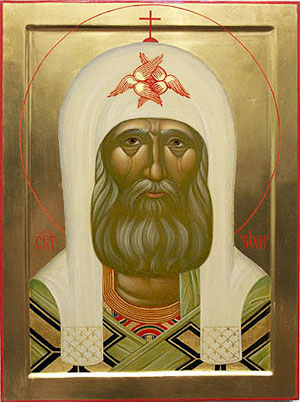
As you are aware, the Sunday anticipated the centenary of the death of Partiarch St Tikhon, through his foresight our Russian Orthodox Church Outside of Russia owes its canonical existence, and this was marked by the litia at the end of the Liturgy and observed in Father Mark’s homily.
Later this week, we will chant the akathist to the Divine Passion in Nazareth House at 18:00, and the Divine Liturgy of the Pre-Sanctified will be offered in the Oratory at noon on Friday.
After the Friday Liturgy, I will travel to Wessex to celebrate the Lazarus Saturday Liturgy in the chapel of St Lawrence in Warminster Market Place at 10:30 on Saturday.
This coming Sunday – Palm Sunday – will see our first service in St Philip’s, which is not an ideal day to arrive, but we hope that this will begin a more settled period in parish life, despite some concerns about the narrowing time window in which the building is available.
We should stress that despite services being earlier than we have previously celebrated, 09:00 is an entirely normal and standard time for the Hours. Our prime concern is for those travelling long distances!
Of necessity Sunday confessions will begin at 08:30, with the Hours commencing at 09:00. We need to exit the building by 13:00.
Please see the repeated following times for Holy Week and Pascha:
13 April: Palm Sunday. 09:00 Hours and Divine Liturgy.
16 April: Holy Wednesday 18:30. The Service of the Oil – Holy Unction.
17 April: Holy Thursday 18:30. Holy Friday Matins – the Service of the Twelve Passion Gospels.
18 April: Holy Friday – Vespers at 15:00 and evening service – the Matins of Holy Saturday – at 18:30.
Easter night – (Saturday 19th into Sunday 20th), 23:30. Midnight office and procession, followed by matins and Liturgy.
Holy Communion wil be reserved for our parishioners unable to attend in the night, and we will agree a time to celebrate the Paschal Hours and commune them in the morning.
As St Philip’s is used in the afternoon, I will seek permission to celebrate Paschal Vespers in the Oratory at 13:00.
There will be additional services in Father Luke’s home chapel at which I shall assist.
Please think about when you will make you confession ready for Pascha.
The clergy will hear confessions before our evening services in Holy Week, and those receiving Holy Unction will need to have made a recent confession. If required, I will hear confessions after Palm Sunday Liturgy.
On the subject of trapéza, we are very aware that the cooking, preparation and offering of food is often falling upon a tiny group of sisters, and we ask that this responsibility is assumed fairly by the parish as a whole.
I know that the sisters who feed us are very happy to do so, but encourage all who able to bring an offering for the table to do so and consider asking Branka for ideas.
From Sunday, we will put a donation basket on the table, so that we each have the option of contributing this way, knowing that sometimes three or four of our sisters are shouldering the expense of feeding a parish.
May God bless you in these remaining days of the feast. Struggle on and increase that struggle if it has become wrak or lax!
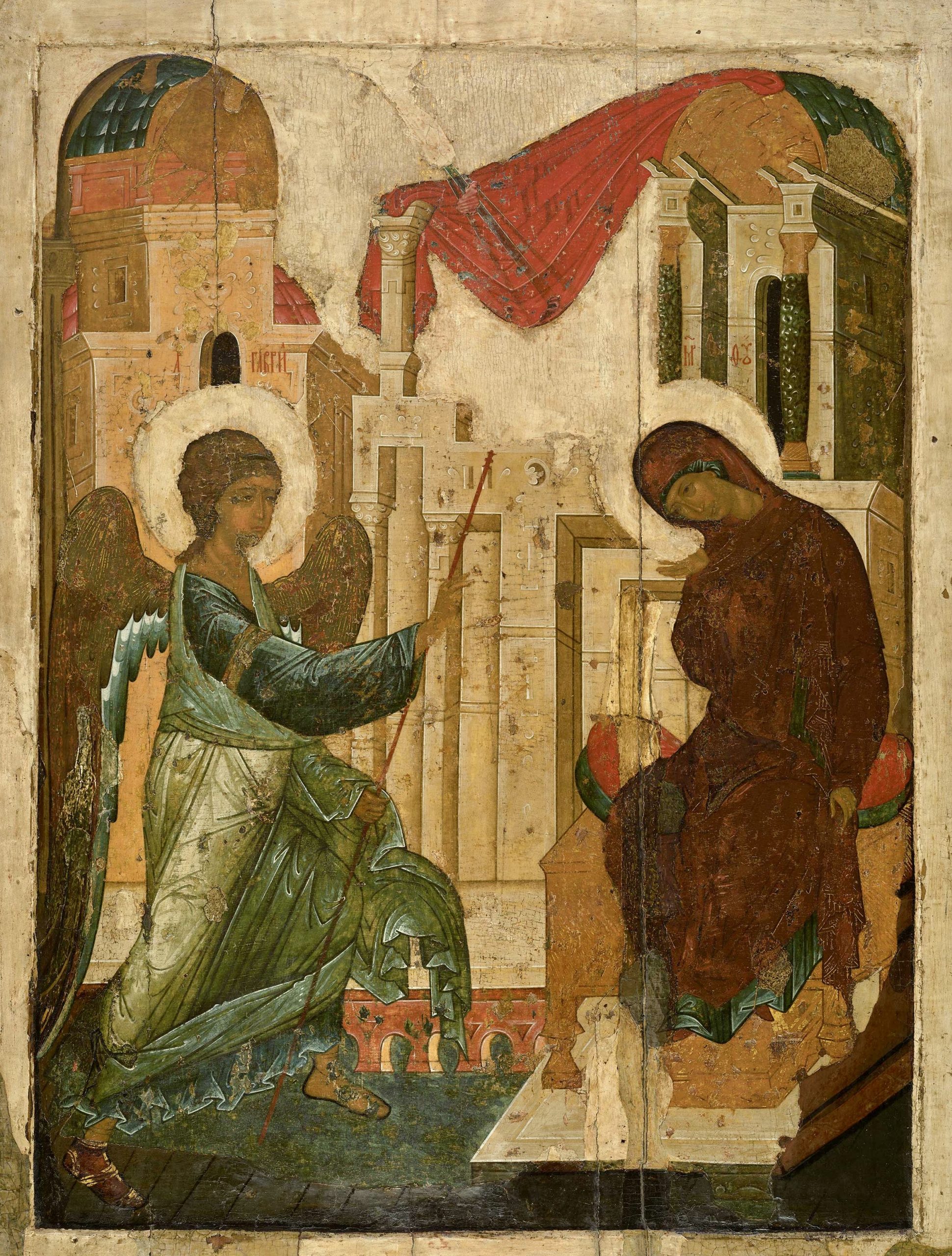
And after those days Elisabeth the wide of Zacharia conceived, and hid herself five months, saying,Thus hath the Lord dealt with me in the days wherein he looked on me, to take away my reproach among men. And in the sixth month the angel Gabriel was sent from God unto a city of Galilee, named Nazareth, to a virgin espoused to a man whose name was Joseph, of the house of David; and the virgin’s name was Mary. And the angel came in unto her, and said, Hail, thou that art highly favoured, the Lord is with thee: blessed art thou among women. And when she saw him, she was troubled at his saying, and cast in her mind what manner of salutation this should be. And the angel said unto her, Fear not, Mary: for thou hast found favour with God. And, behold, thou shalt conceive in thy womb, and bring forth a son, and shalt call his name JESUS. He shall be great, and shall be called the Son of the Highest: and the Lord God shall give unto him the throne of his father David: and he shall reign over the house of Jacob for ever; and of his kingdom there shall be no end. Then said Mary unto the angel, How shall this be, seeing I know not a man? And the angel answered and said unto her, The Holy Ghost shall come upon thee, and the power of the Highest shall overshadow thee: therefore also that holy thing which shall be born of thee shall be called the Son of God. And, behold, thy cousin Elisabeth, she hath also conceived a son in her old age: and this is the sixth month with her, who was called barren. For with God nothing shall be impossible. And Mary said, Behold the handmaid of the Lord; be it unto me according to thy word. And the angel departed from her.
Luke 1:24-38
In the Name of the Father, and of the Son, and of the Holy Spirit.
Greetings as we celebrate the feast of the Annunciation and the Synaxis of the Holy Archangel Gabriel.
How wonderful it was to be blessed with a warm, sunny spring day to celebrate the great and salvific event that marks the spring-time of God’s plan of salvation, reflecting the words of the Church Fathers, for whom this feast was one of great importance and radiant joy.
In his first festal homily, St Gregory the Wonderworker says, “Today is the glad spring-time to us, and Christ the Sun of righteousness has beamed with clear light around us, and has illumined the minds of the faithful.”
With similar words, St John of Damascus writes that, “Today, from the cold winter, the warm and flowery spring has shown forth, and the golden sun of rejoicing and happiness has dawned for us.”
In his festal encomium, St John joyfully recognises that this feast, and the Saviour’s conception by the Mother of God is the great and cosmic turning-point in the history of creation and humanity, and that the fall and estrangement of the sons and daughters of Adam and Eve is already undone in the Mother of God’s humble acceptance of the Archangel’s message.
“Today, God-planted Eden is re-opened, and due to His goodness and love for man, God-fashioned Adam, enters again to dwell within.
Today, the forefather’s condemnation of sorrow is dissolved, and the corrupting exile and arduous penance of Eve ceases.”
This again mirrors the words of St Gregory.
“Today is Adam made anew, and moves in the choir of angels, having winged his way to heaven.”
The Annunciation is hymned by St John Damascene as a cosmic moment of restoration to which the past looked forward and to which the future and present look back.
Though the fruit of the Mother of God’s fiat had to await fulfilment in the saving death and resurrection of the Saviour, by her acceptance of the divine message, she already forcefully placed her foot upon the head of the serpent.
Whilst St Gregory writes that,“ Most of the holy fathers, and patriarchs, and prophets desired to see Him, and to be eye-witnesses of Him, but did not attaint hereto…”, St John Damascene sees the Annunciation as the joyful and wonderful moment in which the patriarchs and prophets see the fulfilment of their far off vision of the Virgin, who will conceive and bear a Child, and participate by their anticipation of the mystery of the feast: “Today, the holy book of the Prophets from all time, is brought amidst us, and each of them proclaims before-hand the grace of this Feast.
In heaven and on earth, angels and saints, people high and low, old and young, across centuries, across continents and lands, are united in jubilation, and as creation is exulted, heaven and earth join in celebration, rejoicing in the hidden and silent reality of the physical beginning of our salvation in the flesh, known at first only to the Mother of God herself.
“Rejoice, O Full-of-grace, for the King of all was adorned with a body [through thee] as if adorned with a royal purple robe.”
What joyful voices are heard in hymns and homilies, and in the akathist hymn to the Most Holy Theotokos, whose words by St Romanos the Melodist were heard in our churches only a few days ago.
An Archangel was sent from Heaven to say to the Mother of God: Rejoice! And seeing Thee, O Lord, taking bodily form, he was amazed and with his bodiless voice he stood crying to her such things as these:
Rejoice, thou through whom joy will shine forth: rejoice, thou through whom the curse will cease!
Rejoice, raising of fallen Adam: rejoice, redemption of the tears of Eve!
Rejoice, height hard to climb for the thoughts of men: rejoice, depth hard to scan even for the eyes of Angels!
Rejoice, for thou art the throne of the King: rejoice, for thou upholdest Him Who upholdeth all!
Rejoice, star that bringeth the Sun: rejoice, womb of the divine incarnation!
Rejoice, thou through whom creation is made new: rejoice, thou through whom we worship the Creator!
Rejoice, thou Bride unwedded!
Reflecting on the joyful triumph of the Annunciation, we should each examine how we have celebrated in our homes and families, what it means to each of us, and whether we have fittingly greeted the Mother of God and her feast with worthy celebratory words and prayers.
Indeed, have we even made any time in our day or evening to celebrate the feast, or have we put our routines, comforts and interests above reverencing the Mother of God, and even finding half and hour in which to honour her?
Did we spend any time explaining this feast to our children, and have our parish families prayed together, if only to read the Gospel and say the troparion and kontakion – something quite simple at a shared meal, which should ideally be part of the celebration of every Great Feast?
Have we greeted the Mother of God with a joy that raises our souls, hearts and minds in celebration?
If the answers our negative or admit negligence, if we have failed to even make our children aware of the feast, if our families have not managed a single prayer together – then we must ask why, and how we can consider this acceptable?
How do we call ourselves Christians and neglect the Mother of God, who offered her life for each and every one of us, so that our Saviour and Redeemer could be clothed in our flesh, so that it might be translated into the glory of heaven as the sign of our invitation and calling to the heavenly life.
How is it that the Christians of past centuries celebrated this feast with such great rejoicing, and that it filled them with joy, hope and encouragement in the Christian life, yet we fail to fitly celebrate the great feast as an offering to the Theotokos, the Mother of our Salvation.
St John of Damascus presumed that his hearers, whatever their status – in their own personal way – would play their part in the laudations of the feast, confessing her as Theotokos, but approaching her not only as Mother of God, but also as the mother and protectress of each and every one of us.
Let us live up to his expectations and, rejoicing and celebrating the beginning of our salvation, let us hasten in the footsteps of the Holy Fathers to celebrate the glorious Annunciation, and echo the tidings of the Archangel Gabriel.
“Today, we and all men take up the Angel’s voice, and offer encomia like his, to her who is the forerunner of the taking away of the curse…
Rejoice, O Full-of-grace, O gate of those troubled and hope of those without hope, and the awesome protection for those who with good heart confess you to be the Theotokos.
Rejoice, O Full-of-grace, who bore the Master Who loves man for the salvation of our common race of men, and who entreats Him on behalf of everyone, as a Mother.”
Let us take up the Angel’s voice to fittingly and worthily celebrate the Annunciation in which “our restoration hath now been revealed to us! God uniteth Himself to men in manner past recounting! Falsehood is dispelled by the voice of the archangel! For the Virgin receiveth joy, an earthly woman hath become heaven!”
 Dear brothers and sisters – Christ is Risen! Христос Bоскресе!As we enter the third week of Pascha, having celebrated the Sunday of the Myrrh-Bearing Women, yesterday, the need to rejoice in every day of this joyful Resurrection season presses upon us. Repeating myself, hopefully not too monotonously, I encourage all of the members of our community to have the words of the Paschal hymns upon their lips continually, as a means of preserving the Paschal joy in hearts and minds. Again, if possible, pray the Paschal Canon each day.


 Dear brothers and sisters – Christ is Risen! Христос воскресе!

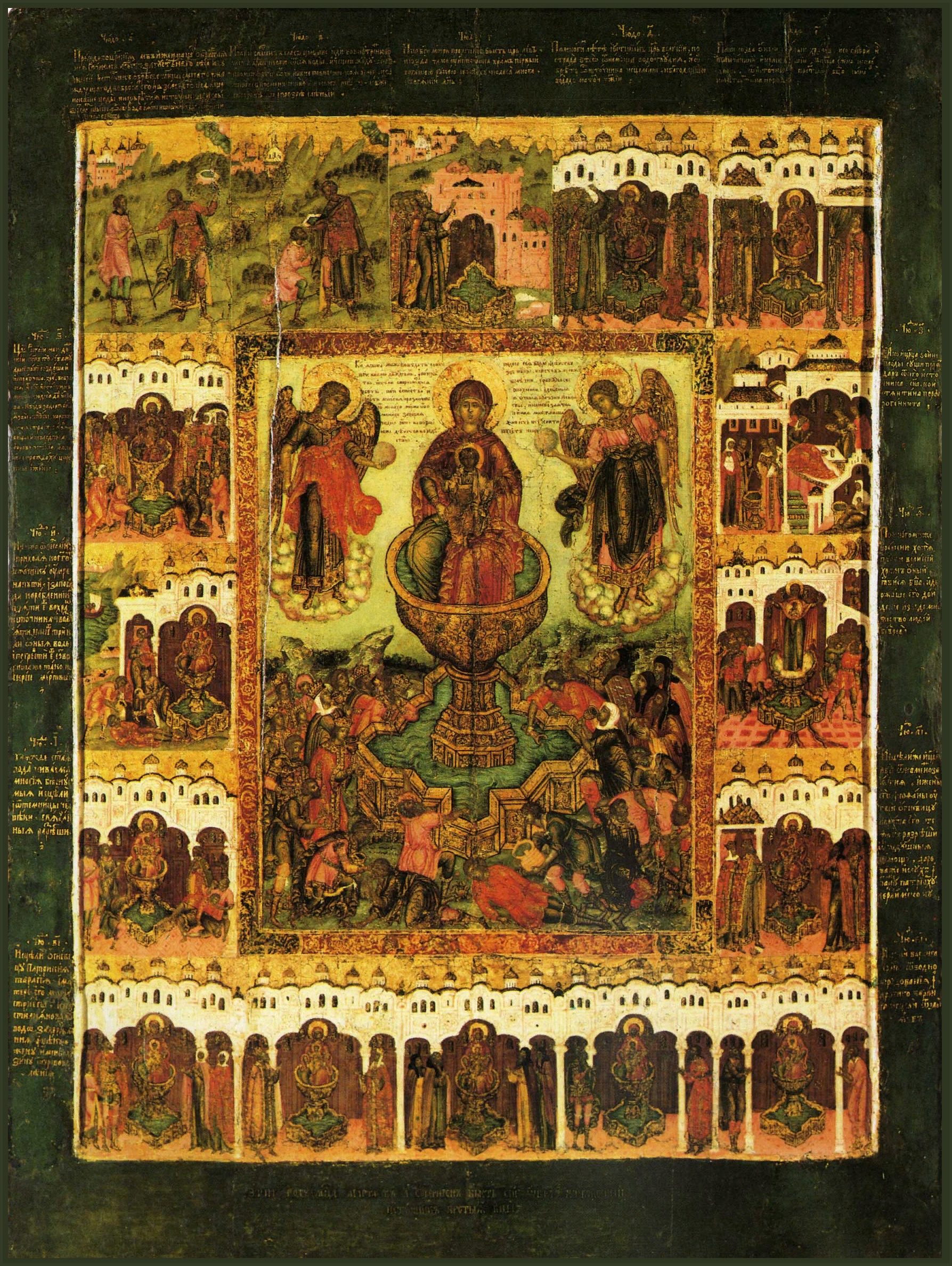 The Paschal Canon, the Work of St John of Damascus
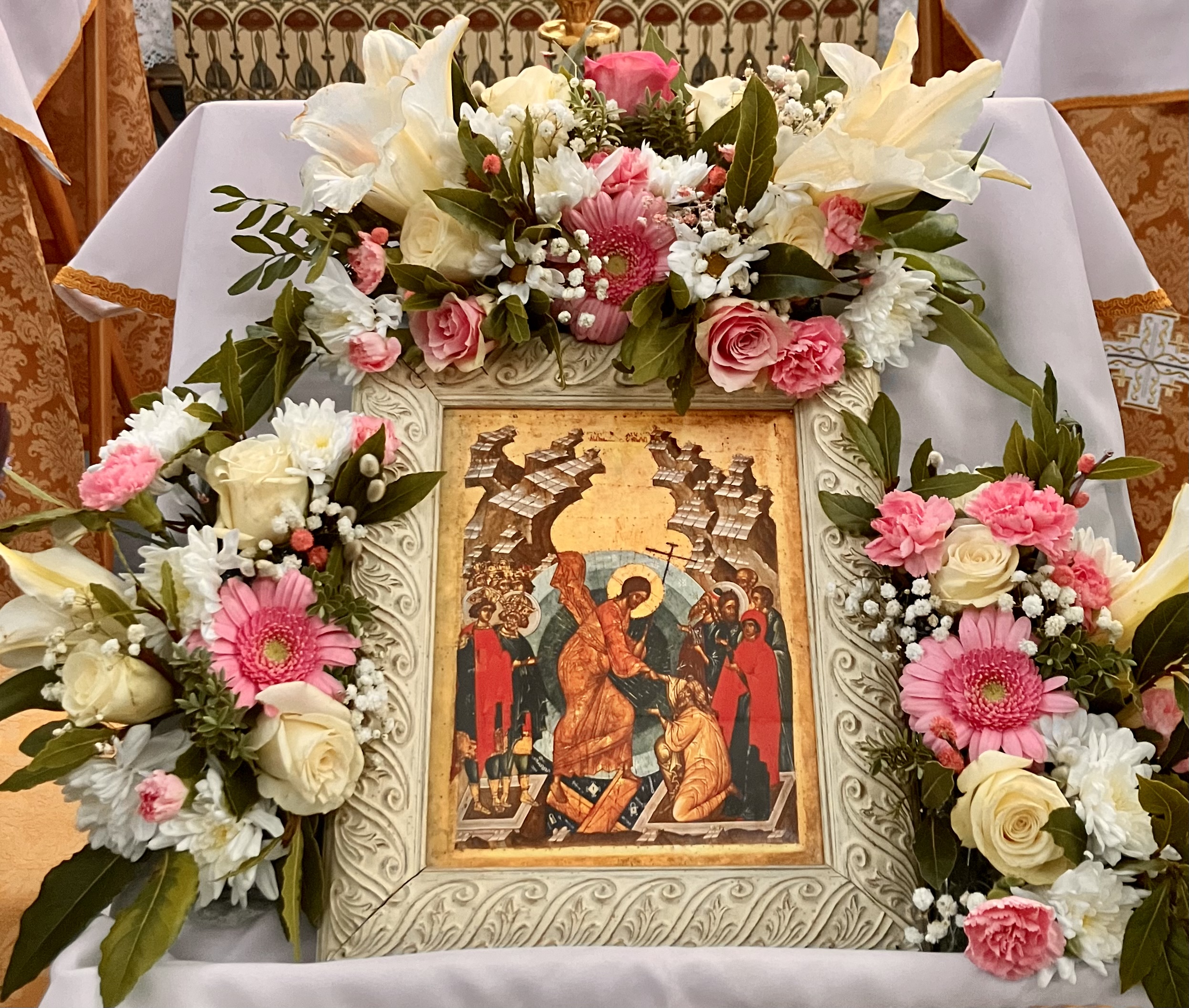 The last week or so has been a rollercoaster for us, having only received the keys for St Philip’s a little over a week ago, and not having our first service until Palm Sunday, with the unnerving bareness and utility of the building as a literally stark challenge for us.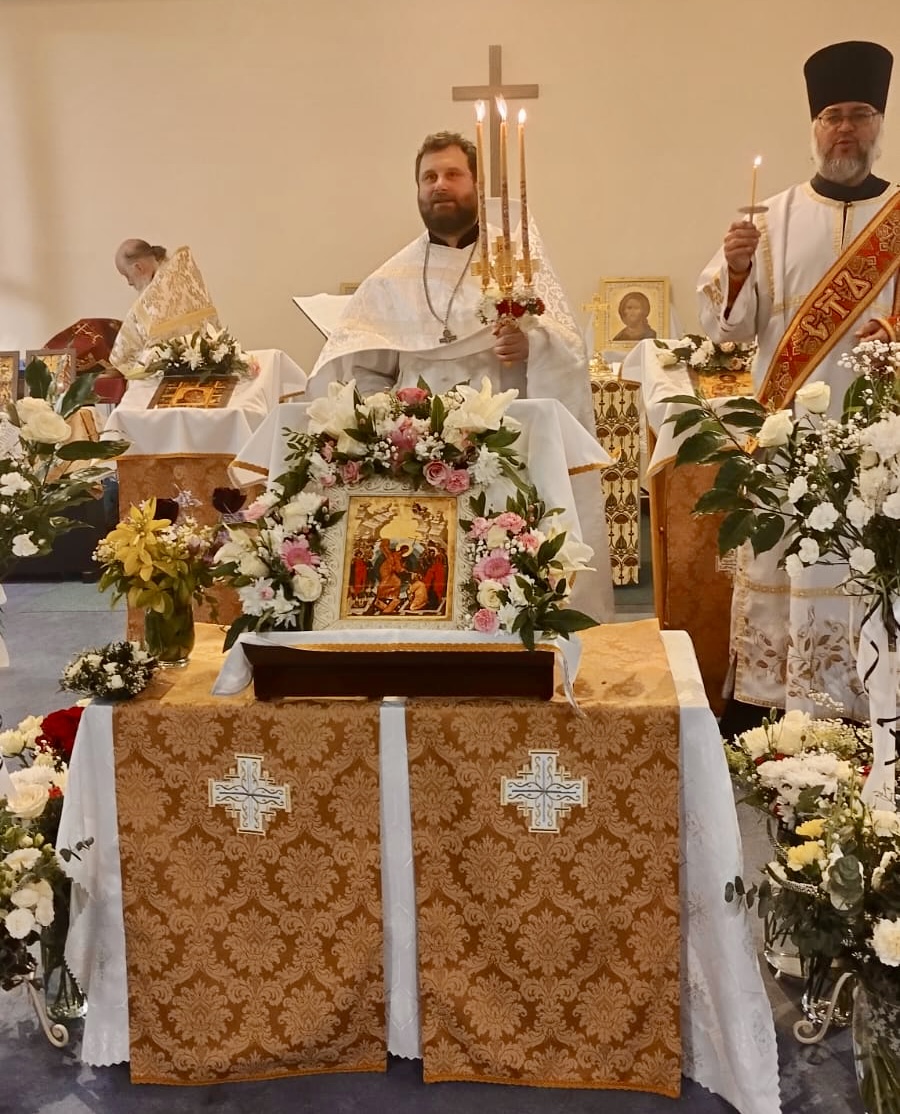
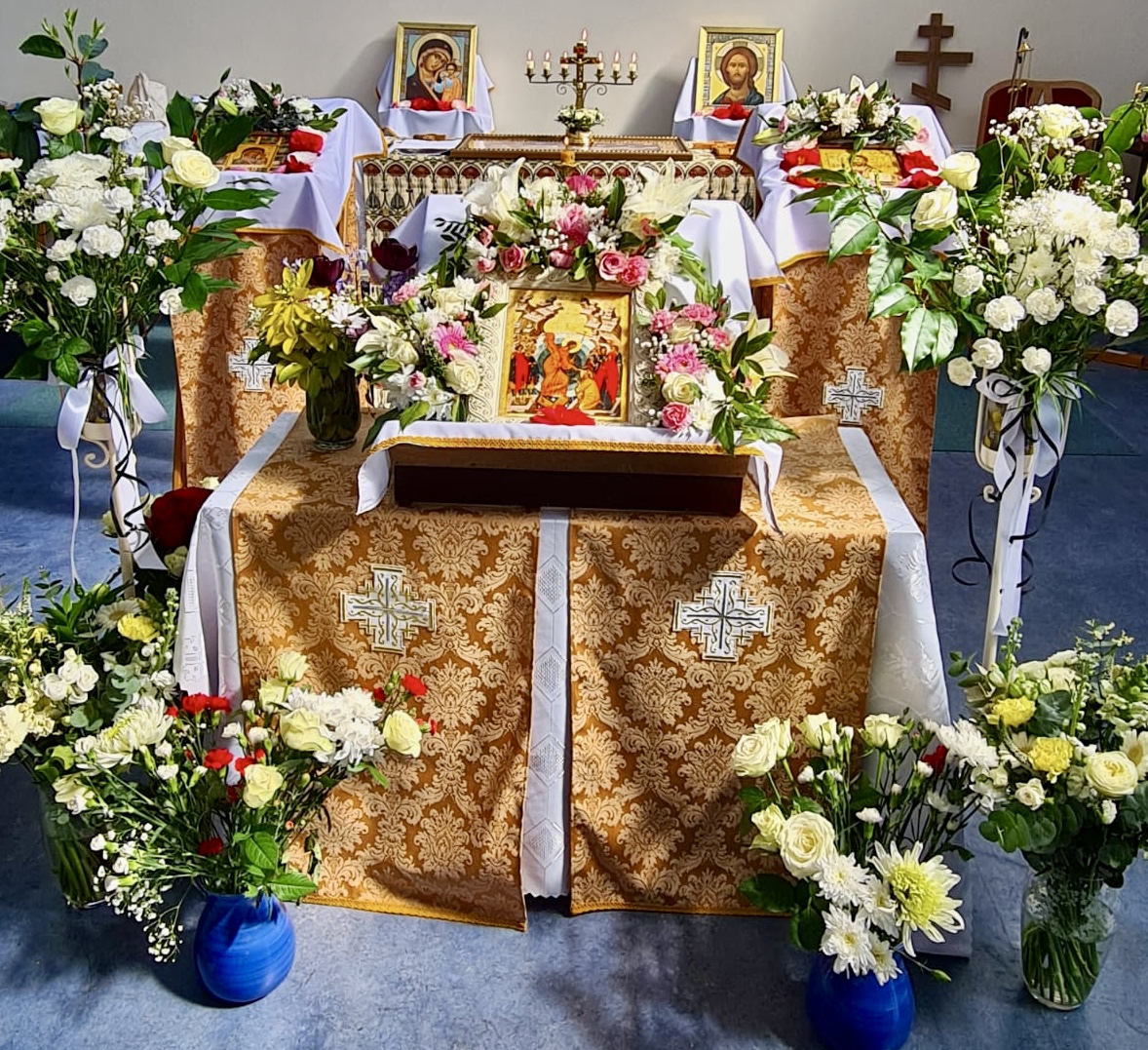
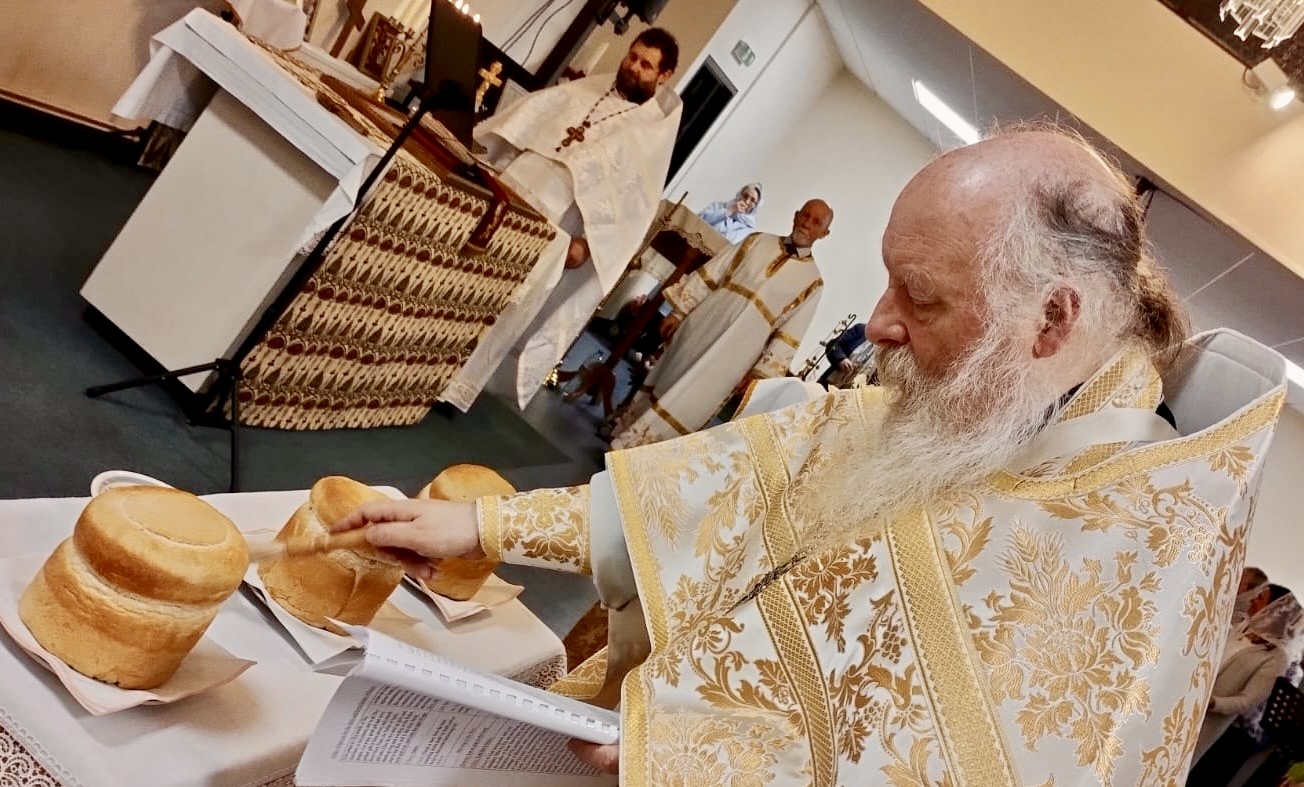
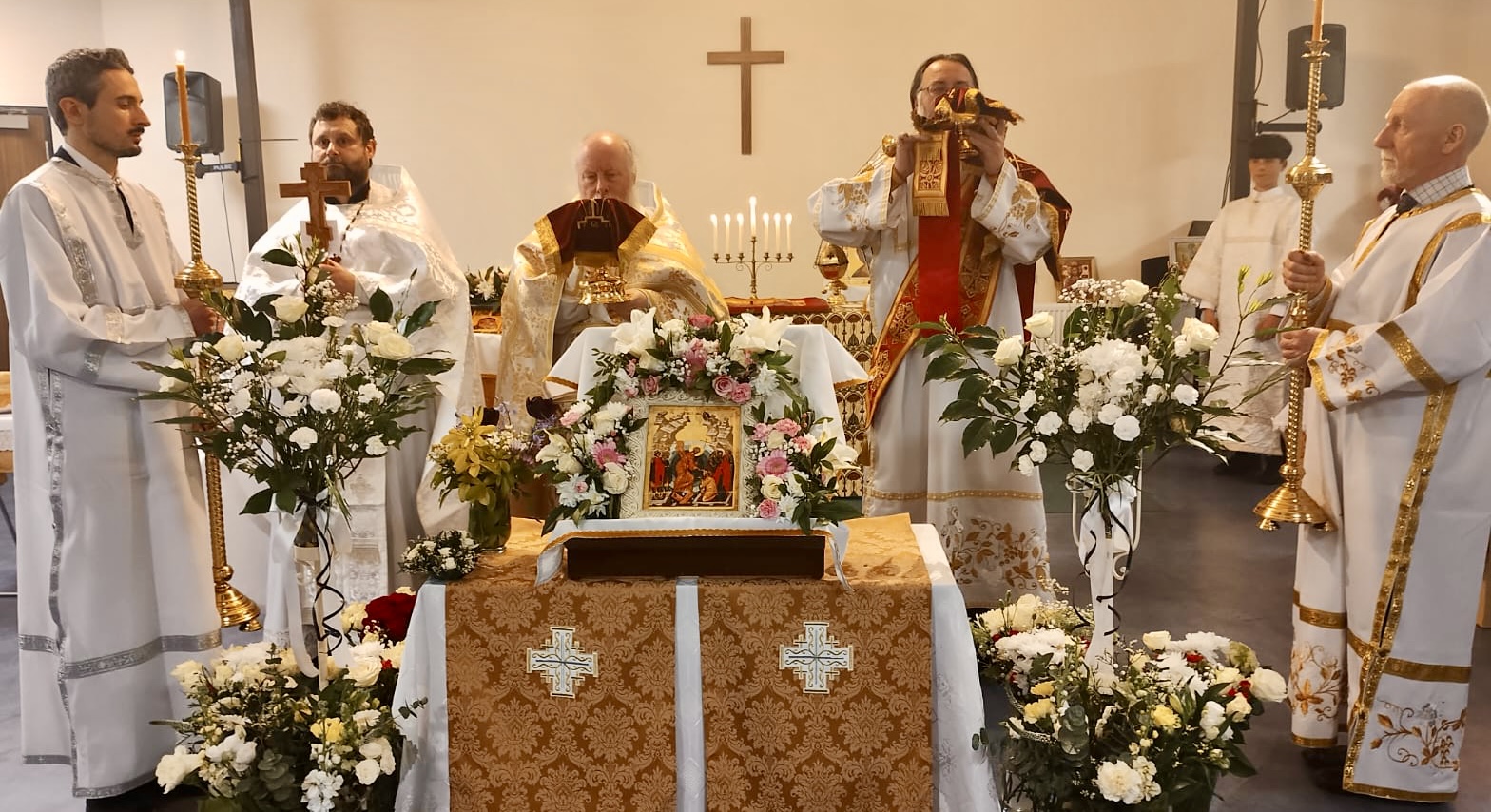
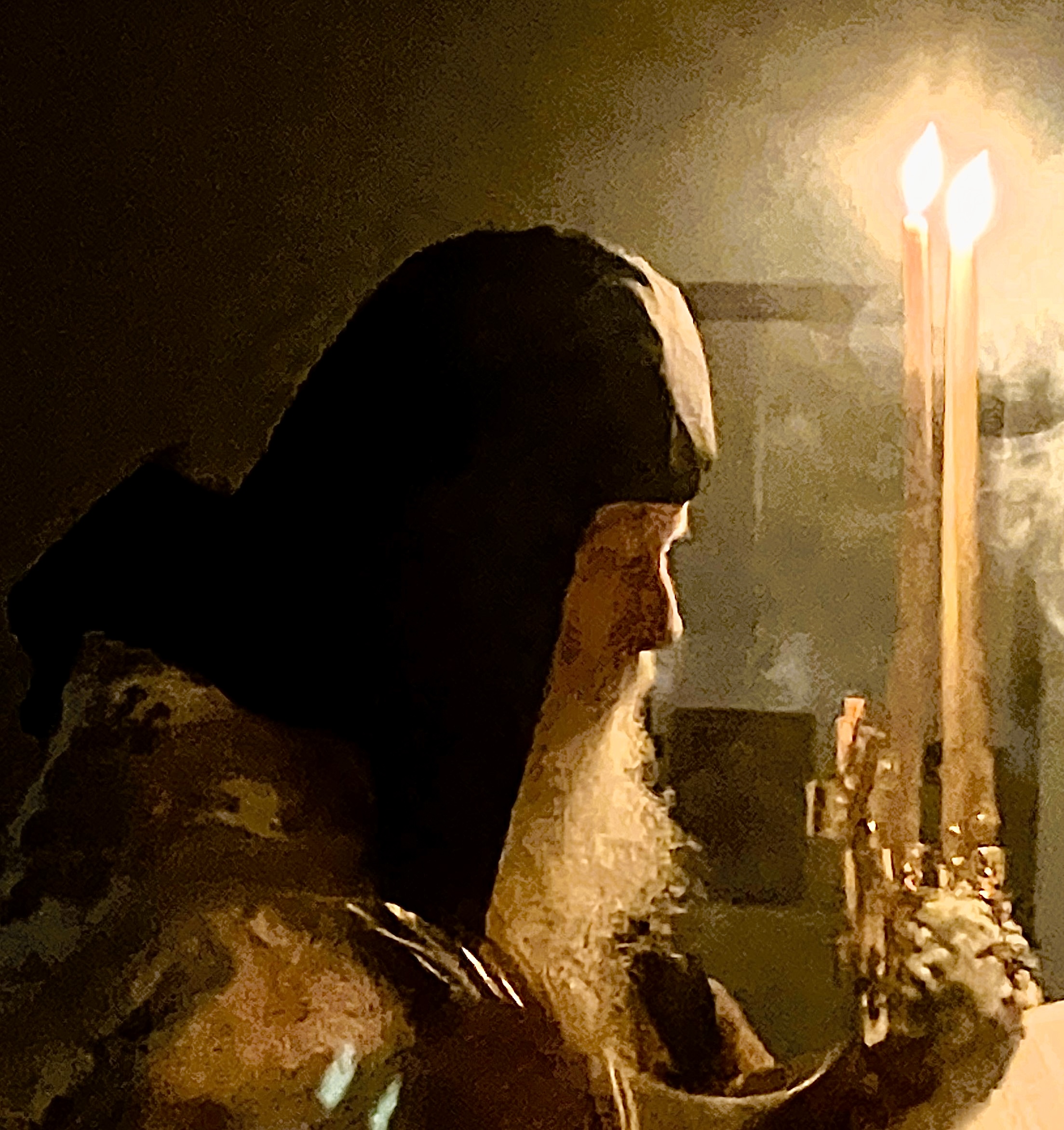
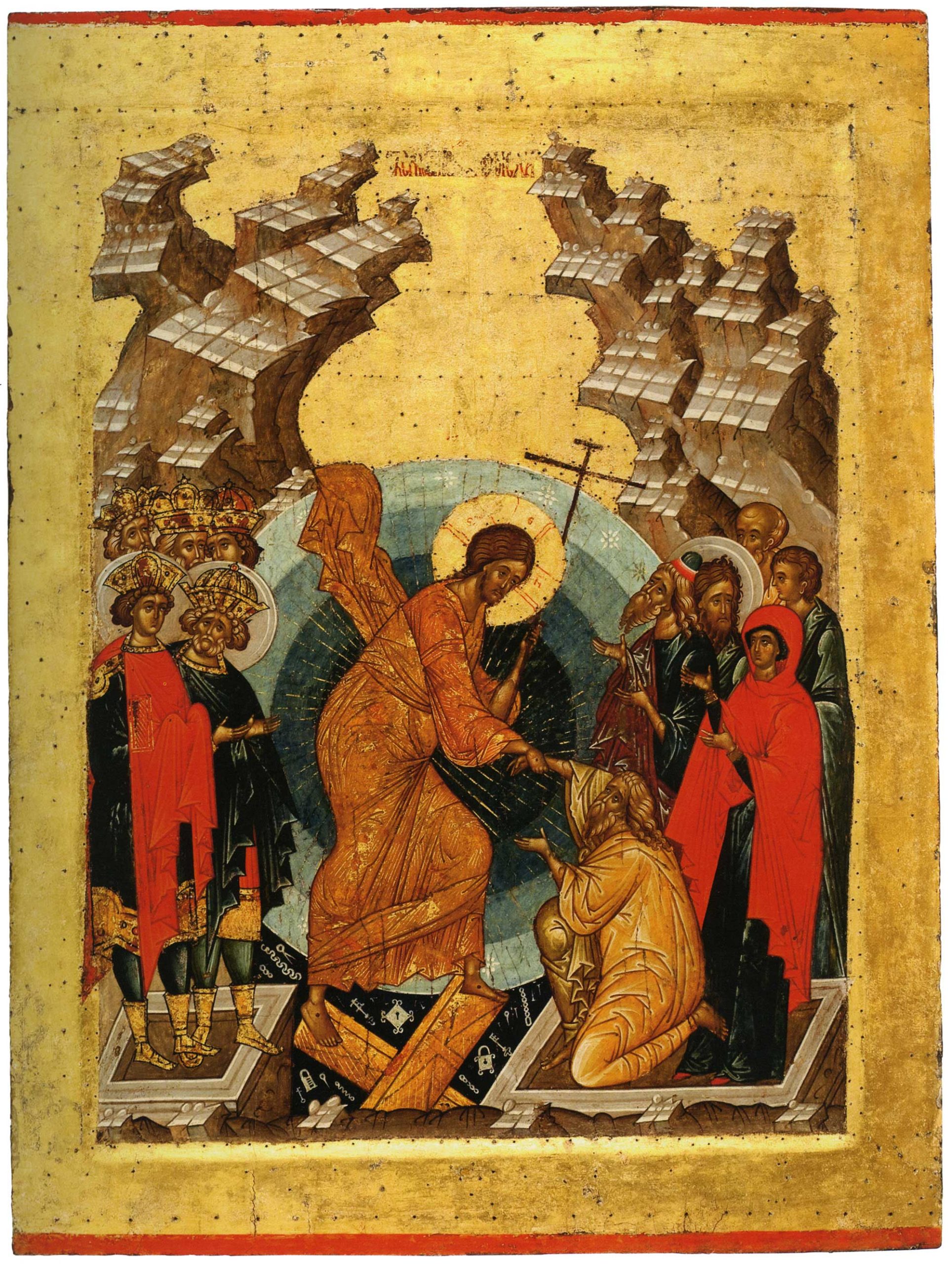
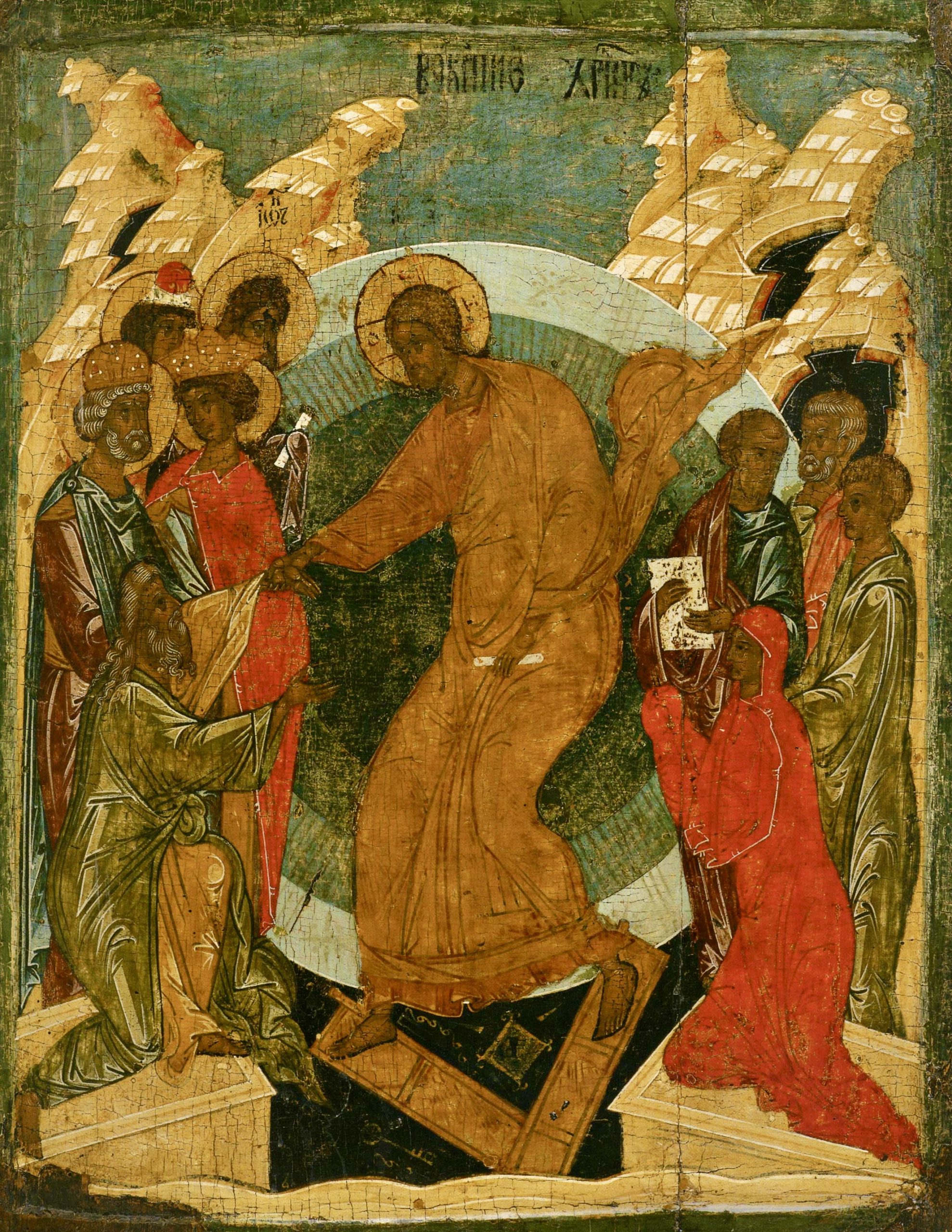 On the evening of that day, the first day of the week, the doors being locked where the disciples were for fear of the Jews, Jesus came and stood among them and said to them, “Peace be with you.” When he had said this, he showed them his hands and his side. Then the disciples were glad when they saw the Lord. Jesus said to them again, “Peace be with you. As the Father has sent me, even so I am sending you.” And when he had said this, he breathed on them and said to them, “Receive the Holy Spirit. If you forgive the sins of any, they are forgiven them; if you withhold forgiveness from any, it is withheld.”
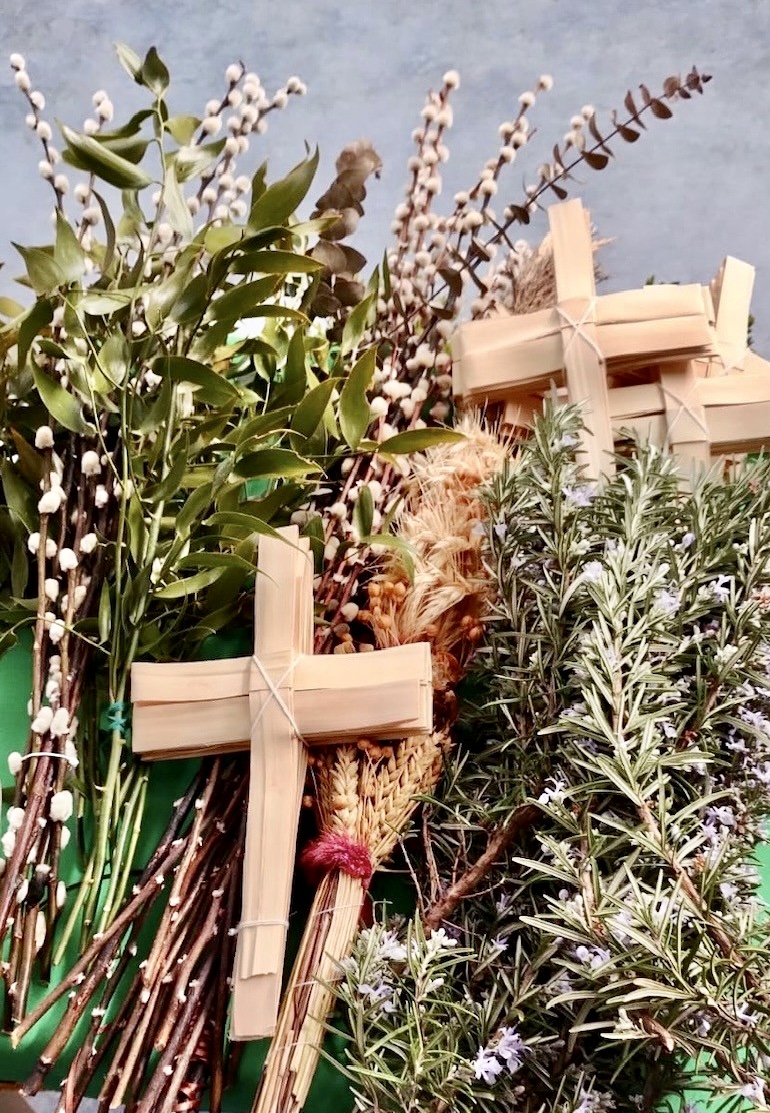 Dear brothers and sisters,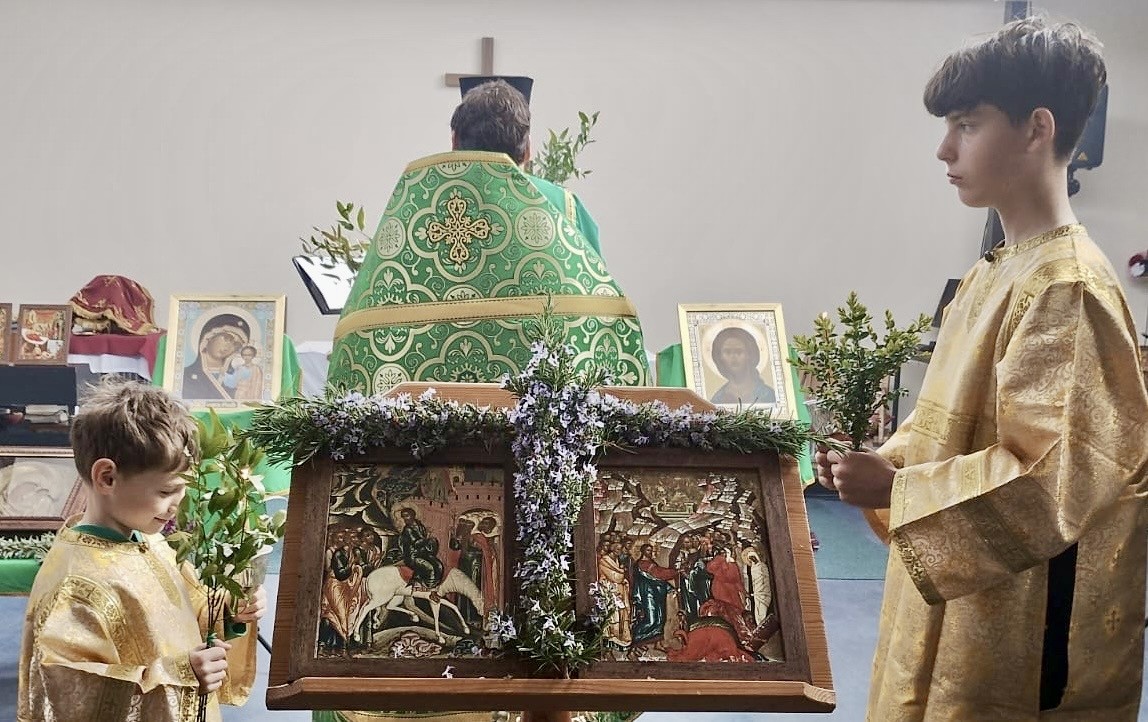
 In the Name of the Father, and of the Son, and of the Holy Spirit.
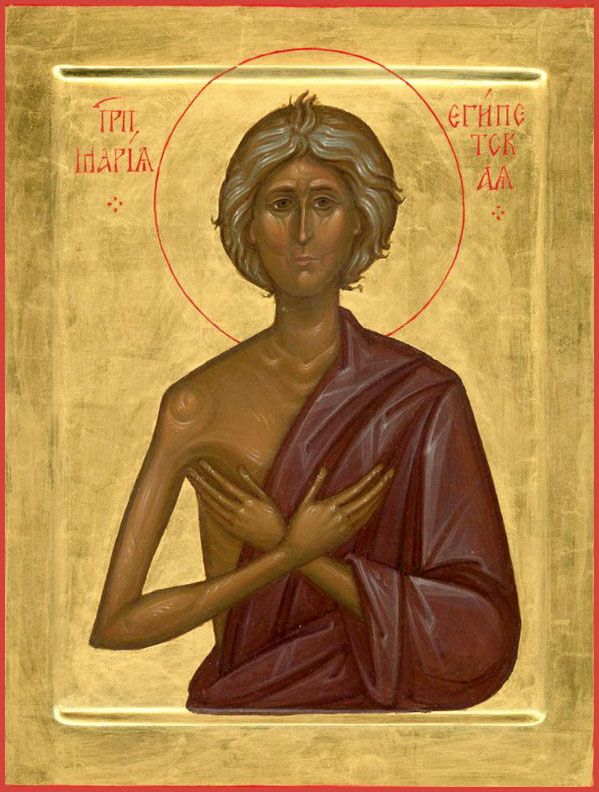 Dear brothers and sisters.