It was a joy to celebrate the feast of the Holy, Prophet, Forerunner and Baptist, John in Nazareth House today, and even though there were only a dozen of us for Liturgy, in no way did it detract from the beauty of solemnity of this feast of the birth of the first among the saints.
Many thanks to George for reading at vespers of the eve of the feast and to Margarita and Alexander for chanting on the kliros for this morning’s Liturgy, and “Many Years” to our starosta, Norman John, whom we congratulated on his name day.
Recalling the Saviour’s own words, “among those born of women there has been none greater than John the Baptist”, in the spiritual hierarchy of God-pleasers, St John the Forerunner is always called upon first after the Mother of God and before all other saints, even though he was a figure from the Old Covenant of the House of Israel, though antithetical to its spiritually, morally and politically corrupt establishment; the last of the prophets and the messenger proclaiming the coming dawn of Christ, the Light of the world; a wild, difficult and disturbing character, prophesying, accusing and challenging the world and society around him; a link between the Old Covenant and the New Covenant, the Old Israel and the New Israel.
His arena was neither Temple nor synagogue, not even the physical environs of Jewish society, but the wilds and wastes of the Judaean desert, to which people flocked to hear his spiritual message as he “made straight the way of the Lord.”
Among the rocks and wadis, he had neither attachment or constraint, hardly belonging to the world, and labouring only for the coming of the Messiah: his authority coming only from God, and not from the establishment, for which he was a thorn in the side, and a challenge whom it could not control.
Such was the will of God, that the Forerunner was an essential part in the unfolding economy of salvation, proclaiming the Lamb of God who takes away the sins of the world, baptising Him in the waters of the Jordan, and calling pious Jews to the repentance that would make them ready-soil for the seed of the Gospel.
In the third chapter of the Gospel of St John, we read the Forerunner’s words:
“He that hath the bride is the bridegroom, but the friend of the bridegroom, which standeth and heareth him, rejoiceth greatly because of the bridegroom’s voice; this my joy therefore is fulfilled.”
Such was his centrality in the unfolding of salvation, his intimate link to the Saviour, and his planning and arranging for the coming union of Christ and His yet to revealed bride, the Church, that she calls him the ‘Friend of the Bridegroom’ – who, in Judaism, would have been called the shoshbin: the trusted intermediary, wedding arranger and attester to the consummation of a marriage.
Making straight the way of the Lord, preaching repentance to Israel and performing the symbolic baptism of repentance, John prepared the future bride for her marriage to the Saviour, the Bridegroom of the Church.
His work done, he was glad to diminish in the world once his kinsman in the flesh, the God-Man, Jesus Christ had appeared, suffering martyrdom once his preparatory work was done.
Even though his very life was a miracle and he was set apart, in St John, there was no ego, no self-interest, no personal agenda – only selfless labour for Christ the Bridegroom, according to God’s will and purpose, not his own.
Let us emulate his selflessness and humility, seeking neither power, position, reputation, recognition or credit, but rather labour for Christ, fearlessly and with boldness, uncompromisingly witnessing to Christ the Light of the World, and seeking not to sycophantically please the modern Herods among politicians, political-paymasters, ideologues and pedagogues advocating spiritual relativism, woke-ism and moral degradation.
Inspired by St John, our challenge is not to allow politeness, niceness and political expediency, to stifle the voice of truth and righteousness, or to tempt us to embrace the growing spiritual and moral relativism of ‘tolerant’ society, but rather to maintain and defend the absolute Truths which have been revealed to us as Christians shaped by the Gospel and the Faith of the Church.
As some Church leaders and archpastors make peace and concord with the spirit of Herod, the Church and the world needs us all to be emulators of the Holy Prophet, Forerunner and Baptist, John, and it is the uncomfortable and challenging voices of those crying in the wilderness that will show the way to Christ’s Kingdom and the great wedding feast of the Bridegroom.
Greetings as we celebrate the feast of the Meeting of the Vladimirskaya icon of the Most Holy Mother of God, commemorating the deliverance of Moscow from the advancing armies of Khan Ahmet in 1480, through the intercessions of the Mother of God.
On arriving at the Ugra River in the region, with Ivan III, Grand Duke of Moscow waiting on the other bank, the Tartars were suddenly filled with fear and the Khan would not cross the river, but suddenly retreated to the steppe.
This feast, with an annual Cross procession bearing the Vladimirskaya icon from the Kremlin’s Cathedral to the Sretensky monastery was established.
We began the feast with the celebration of Great Vespers in Llanelli, this evening, and the canon for this most beloved icon is posted below.
Most Holy Mother of God, save us!
The Canon of the Meeting of the Icon, in Tone IV
Ode I, Irmos: I will open my mouth, and with the Spirit will it be filled; and I shall utter discourse unto the Queen and Mother, and shall appear, keeping splendid festival; and, rejoicing, I will hymn her wonders.
Most Holy Mother of God, save us.
O Mistress, illumine our souls with divine radiance, with thy grace which passeth understanding, and grant me the bountiful gift to hymn thee as the helper of human nature, O all-hymned one, faithful ally against all heresies for our pious Orthodox hierarchs.
Most Holy Mother of God, save us.
Come ye, let us gather together, O ye assemblies of Russia, in the all-honourable temple of the most immaculate Mistress, and let us chant with compunction, praying before the precious image, and crying aloud: O Theotokos who knewest not wedlock, save those who praise thee!
Glory be to the Father, and to the Son, and to the Holy Spirit.
The most godly Luke, the divinely eloquent recorder of the glad tidings of Christ, in painting thy most precious image, O Mother of God, depicted the Creator of all in thine honoured arms. And those who have recourse thereto thou deliverest from perils and grief, and coverest all with thy mercy.
Now and ever, and unto the ages of ages. Amen.
The Creator of all, finding thee alone to be an all-comely temple, made His abode within thee and hath deified men. Pray thou to Him for us, O Theotokos, that He save us from capture by the heathen and from every other tribulation which assaileth us, that with all honor we may celebrate the meeting of thine image today.
Ode III, Irmos: O Theotokos, thou living and abundant fountain: in thy divine glory establish those who hymn thee and spiritually form themselves into a choir; and vouchsafe unto them crowns of glory.
Most Holy Mother of God, save us.
Putting aside all earthly thought, O ye divinely wise, come ye to greet the all-comely beam who holdeth the all-luminous Ray Who enlighteneth and enricheth the whole world with mercy.
Most Holy Mother of God, save us.
Having acquired thy most precious and wonder-working icon as a mighty ally and an impregnable rampart, O Mother of God, the princes of Russia pray to thee, that thou grant victory over all heresies to our pious Orthodox hierarchs.
Glory be to the Father, and to the Son, and to the Holy Spirit.
Thou hast been shown to be a radiant cloud washing clean the defilements of our bodies with the dew of grace and enlightening our souls, O thou who alone art most hymned.
Now and ever, and unto the ages of ages. Amen.
Thou hast been revealed as a most fruitful tree delighting all with food which perisheth not, and gladdening men’s souls, O pure Bride of God. Pour forth goodly gifts upon all, and save us from violent tribulations.
Lord, have mercy. Lord, have mercy. Lord, have mercy.
Sessional hymn,Tone IV, Spec. Mel “Joseph marvelled…”: O ye God-loving people, come to greet the Virgin! For, lo! she who surpasseth all the prophets doth arrive, bearing in the arms of her precious image Him Who bestoweth life upon the world, that she might preserve her suffering city, cast down the boldness of the barbarians and show herself to be the steadfast guardian of all who entreat her might and protection with faith.
Glory be to the Father, and to the Son, and to the Holy Spirit; now and ever, and unto the ages of ages. Amen.
Ode IV, Irmos: Perceiving the inscrutable counsel of God – the Incarnation of Thee, the Most High, from the Virgin – the Prophet Habbakuk cried aloud: Glory to Thy power, O Lord!
Most Holy Mother of God, save us.
The true and radiant Sun hath shown forth the all-great mountain, from whence came the Stone that was cut not by the hand of man, which hath crushed all temptations to dust and illumined the faithful, shedding light in rays, O Ever-virgin Theotokos.
Most Holy Mother of God, save us.
The children of Hagar arm themselves against thy people, O pure Theotokos, taking evil counsel, razing cities and destroying the faithful; yet do thou annihilate them all by thy mercy, O most hymned one, granting ascendancy to the Orthodox Faith over their false religion.
Glory be to the Father, and to the Son, and to the Holy Spirit.
O only Mother of God, thou animate heaven who received the great Light, illumining all, dispel the darkness of the misfortunes which have beset us, and vouchsafe unto us communion with the Most High.
Now and ever, and unto the ages of ages. Amen.
David danced before the ark, and the Levites chanted hymns; and all the more doth Russia sing praises before thee as Queen, O pure Theotokos, earnestly giving utterance to thee with voices of entreaty: Rejoice, O ally of our city!
Ode V, Irmos: All things are filled with awe at thy divine glory; for thou, O Virgin who hast not known wedlock, didst contain within thy womb Him Who is God over all, and gavest birth to the timeless Son, granting peace unto all who hymn thee.
Most Holy Mother of God, save us.
Thee, O Mother of God, did Isaiah, great among the prophets, behold in the Spirit as containing within thy womb the burning Ember Who illumineth the faithful and utterly consumeth all temptations, saving the human race.
Most Holy Mother of God, save us.
Thou didst put forth the Rod of Aaron and hast uprooted the root of evil, O Virgin Bride of God, having given birth for the world unto the Bestower of life. Him do thou beseech, that this city be saved from manifold perils.
Glory be to the Father, and to the Son, and to the Holy Spirit.
With gladness approach ye now the most honoured Mother of God, O divinely chosen flock, ye assemblies of Russia, and lovingly receive her precious image. For, lo! her grace is inexhaustible, pouring forth divine waters in abundance. Her do we honour, and we bow down before her precious image.
Now and ever, and unto the ages of ages. Amen.
From the root of Jesse the Tree of life hath grown forth for all, and thou didst produce its Fruit in thy womb, O pure Virgin, nurturing all men with thy mercy.
Ode VI, Irmos: Celebrating this divine and most honoured festival of the Mother of God, come, ye divinely wise, let us clap our hands and glorify God Who was born of her.
Most Holy Mother of God, save us.
From thee, O Mother of God, hath a Torrent of sweetness issued forth, giving drink to all men and washing their souls clean of defilement. O Mistress Theotokos, save all who with faith bow down before thy precious image.
Most Holy Mother of God, save us.
Having assembled together, let us all hymn the pure Virgin, the divinely chosen Maiden of Jacob, the fleece of Gideon, the mediatress of joy, the might and boast of those who are saved, the pure Theotokos.
Glory be to the Father, and to the Son, and to the Holy Spirit.
Behold, gladness now draweth nigh, and sorrow is destroyed! The faithful are saved, drawing forth joy as from a wellspring, and they chant continually in praise: Rejoice, O pure Mistress, thou inception of our salvation, bulwark and boast of all the faithful!
Now and ever, and unto the ages of ages. Amen.
By thine entreaties grant us thine aid, O all-pure Theotokos, for sorrows descend upon us, griefs have multiplied, and the enemy array themselves against us. Yet, interceding, O all-pure one, deliver us: cast down the arrogance of our foes and grant us victory over our enemies, that all who do evil to thy servants may be put to shame.
Lord, have mercy. Lord, have mercy. Lord, have mercy.
Glory be to the Father, and to the Son, and to the Holy Spirit; now and ever, and unto the ages of ages. Amen.
Kontakion, Tone VIII, Spec. Mel. “To thee, the chosen leader…”: As ones delivered from evils by the arrival of thy precious image, O Mistress Theotokos, do we splendidly chant hymns of victory to thee, the chosen leader, on the feast of thy meeting, and we cry to thee as is our wont: Rejoice, O Bride unwedded!
Ikos: An angelic messenger was sent from heaven to say to the Theotokos: “Rejoice!”, with his incorporeal voice, O Lord; And perceiving Thee incarnate, he was filled with awe and stood, crying out to her such things as these: Rejoice, thou through whom Joy hath shone forth; rejoice, thou who didst annul the curse! Rejoice, restoration of fallen Adam; rejoice, deliverance of Eve from tears! Rejoice, height not easily scaled by the thoughts of men; rejoice, depth not easily plumbed even by the eyes of angels! Rejoice, for thou art the throne of the King; rejoice, for thou bearest Him Who bearest all things! Rejoice, thou star who revealest the Sun; rejoice, womb of the incarnation of God! Rejoice, thou through whom creation hath been restored; rejoice, thou by whom the Creator is worshipped! Rejoice, O Bride unwedded!
Ode VII, Irmos: The divinely wise youths worshipped not a creation rather than the Creator, but, manfully trampling the threat of the fire underfoot, they rejoice, chanting: Blessed art Thou, the all-hymned God of our fathers!
Most Holy Mother of God, save us.
Arrayed by thee as in purple and fine linen dyed scarlet, O Mistress Virgin Theotokos, thy city magnifieth Christ and glorifieth the arrival of thy precious image, which hath appeared outshining the rays of the sun and illumining with light undimmed those who sing aloud thy praises.
Most Holy Mother of God, save us.
The tablets divinely inscribed by the finger of the Spirit did Moses break in anger; yet the all-glorious Creator Who made His abode within thee, O pure one, preserved thee unharmed. To Him do we chant: O God of our fathers, blessed art Thou!
Glory be to the Father, and to the Son, and to the Holy Spirit.
Accept the entreaties of thy servants, O all-pure Virgin Theotokos. By thy supplications still thou the restless tempest, and drive away the councils of the adverse foe who fall upon thy flock, O most immaculate Mistress.
Now and ever, and unto the ages of ages. Amen.
By His nativity the Creator of all signified that thou alone art the helper of the human race, O Theotokos Mary, and the prophet prefigured thee: one as the gate, another as the bower of God. And we hymn thee as the Mother of God, our mediatress before God, our ally against all the evils which assail us.
Ode VIII, Irmos: The birthgiving of the Theotokos saved the pious children in the furnace – then in figure, but now in deed – and it moveth all the world to chant to Thee: Hymn ye the Lord and exalt Him supremely for all ages!
Most Holy Mother of God, save us.
How can we hymn thee as is meet, O Virgin: our steadfast help, the preserver of our life, our sure mediatress before thy Son and our God? Him do we hymn and exalt supremely forever!
Most Holy Mother of God, save us.
O Mary Theotokos, thou all-comely flower, rich fragrance: thou fillest all with sweet savour, savest and deliverest from infirmities, and dispellest the demons; wherefore, we cry out to thee: Rejoice, O helper of all the faithful who pray to thee!
Glory be to the Father, and to the Son, and to the Holy Spirit.
Thou hast shown thyself to be a tower repelling the assaults of the adversary, O Mother of God; for thou hast been revealed as a bulwark and rampart, a refuge of salvation for all who honour thee with ardent hearts.
Now and ever, and unto the ages of ages. Amen.
Like David we chant a hymn to thee, calling thee the mountain of God, O all-pure Virgin; for thou hast poured forth upon us the ever-flowing Wellspring. Him do we hymn and exalt supremely forever.
Ode IX, Irmos: Let every mortal leap for joy, enlightened by the Spirit; and let the nature of the incorporeal intelligences keep festival, honoring the sacred feast of the Mother of God, and let them cry aloud: Rejoice, O most blessed Theotokos, pure Ever-virgin!
Most Holy Mother of God, save us.
O pure Theotokos, mediatress of Joy, gladden thou our minds, that we may cry to thee: Rejoice, O our guardian, might and protection, our refuge of salvation!
Most Holy Mother of God, save us.
Let heaven and earth praise thee together, in that thou gavest birth to the Bestower of life for the world: Rejoice, O tranquil haven, thou inexhaustible wellspring of the water of life, O Mistress!
Glory be to the Father, and to the Son, and to the Holy Spirit.
O ye people, having assembled today to greet the all-pure Mother of God who bore the Fruit of the noetic vine Who ever exudeth the Wine which filleth all with gladness, let us glorify the Theotokos as is meet.
Now and ever, and unto the ages of ages. Amen.
O Mother of God, thou divine river of the waters of life who watereth all valleys: drown thou our temptations, and destroy them utterly.
Troparion, Tone IV: Today the most glorious city of Moscow is adorned, having received thy wonder-working icon like the radiance of the sun; and we, hastening to it and entreating thee, O Mistress, do thus cry out: O all-wondrous Mistress Theotokos, entreat Christ our God, Who became incarnate through thee, that He deliver this city, and all cities and lands where Christians dwell, unharmed by all the assaults of the enemy, and save thou our souls, in that thou art compassionate.
The Canon to the Venerable Maximos the Greek, in Tone I
Ode I, Irmos:O ye people, let us all chant a hymn of victory unto Him Who delivered Israel from the bitter bondage of Pharaoh, and led them dry-shod in the depths of the sea, for He hath been glorified.
Venerable Father, Maximos, pray to God for us.
What tongue, O all-wondrous father, is able fittingly to hymn thy great corrections, sublime teaching, thy martyric suffering and long-suffering in prison and bonds?
Venerable Father, Maximos, pray to God for us.
What tongue, O all-wondrous father, is able fittingly to hymn thy great corrections, sublime teaching, thy martyric suffering and long-suffering in prison and bonds?
Glory be to the Father, and to the Son, and to the Holy Spirit.
How shall we hymn and what shall we call thee, O all-valiant father? Prophet, in that thou didst easily foretell what we have come to know and recognise? Apostle, for by the teachings of divine Scriptures thou didst make steadfast the Christian Faith, which was shaken by contrary winds? Or teacher, for truly thou art an instructor no less than or inferior to the great œcumenical teachers.
Now and ever, and unto the ages of ages. Amen.
O ye people, let us all hymn the holiness and glory of the all-pure and most hymned Mother of God, who is higher than the heavens and all the noetic hosts, and who bore Emmanuel in her all-pure womb, for she is holy and all-glorious!
Ode III, Irmos: Establish me, O Christ, upon the immovable rock of Thy commandments, and illumine me with the light of Thy countenance, for there is none as holy as Thee, Who lovest mankind.
Venerable Father, Maximos, pray to God for us.
In thy heart, O venerable Maximos, thou didst establish divine fear, having hated all carnal lusts; wherefore, as a simple child thou wast made wise, and thou didst hasten after the Lord.
Venerable Father, Maximos, pray to God for us.
Having the Lord Jesus Christ as thy confirmation, O venerable Maximos, to thy kinsmen, friends and acquaintance thou didst become like an unknown stranger, homeless, bereft of homeland and possessions, and misunderstood.
Glory be to the Father, and to the Son, and to the Holy Spirit.
Anchoring thyself to the commandments of the Lord, through the bitterness of imprisonment thou didst become as one dead for a long time; yet thou didst make supplication in behalf of those of evil ways, saying: “O Lord Jesus Christ, Son of the living God, hold not to account for this sin those who slander me with lies!”
Now and ever, and unto the ages of ages. Amen.
Render us steadfast for thy laudation, O Virgin, and preserve us from harm and every wile of the evil one; and vouchsafe that we may stand at the right hand of thine only-begotten Son, to Whom is due all glory, honor and worship, unto the ages of ages.
Lord, have mercy. Lord, have mercy. Lord, have mercy.
Sessional hymn, Tone IV: Having adorned thy mind with the divinely inspired Scriptures, with watchful prayer and God-pleasing vigils thou didst confirm thy heart in the Lord by keeping His salvific commandments; wherefore, Athos and the people of Russia continually glorify thee, and the Monastery of Vatopedi crieth out with us: O all-wise Maximos, forsake us not who pray to thee!
Glory be to the Father, and to the Son, and to the Holy Spirit; now and ever, and unto the ages of ages. Amen.
Theotokion: I beseech thee, O all-pure Mother of God Most High, only consolation of my soul, my hope, delight, divine protection, light, help and salvation: By thy supplications vouchsafe that I may hear the voice which calleth the blessed to enter the bridal-chamber of the Master.
Ode IV, Irmos:Great is the mystery of Thy dispensation, O Christ! For, foreseeing it with divine vision from above, Habbakuk cried out to Thee: Thou hast come for the salvation of Thy people, O Thou Who lovest mankind!
Venerable Father, Maximos, pray to God for us.
No secret false heretical teaching could stay concealed from thee, O venerable Maximos; but through the grace of the worshipful Holy Spirit they were all unmasked by thee.
Venerable Father, Maximos, pray to God for us.
Thou not only showed thyself to be a true and faithful champion of the mystical dogmas of the Orthodox Faith, but thou wast shown to be a finely honed scythe for the mowing down of all heresies under the sun.
Glory be to the Father, and to the Son, and to the Holy Spirit.
Thou wast truly shown to be an initiate of the mysteries of the Holy Spirit, a lover of the life of heaven and a teacher of the law of the Lord, O all-wise Maximos.
Now and ever, and unto the ages of ages. Amen.
Moses, who beheld God, was taught a great mystery when he saw the unburnt bush: the bush is the weakness of human nature, and the fire is the divinity of the only-begotten Son of God; for our God is a Fire which devoureth our sins, as the divine apostle saith.
Ode V, Irmos: Waking at dawn out of the night, we chant to Thee, O Christ, Who art consubstantial with the Father and art the Saviour of our souls: Grant peace to the world, O Thou Who lovest mankind!
Venerable Father, Maximos, pray to God for us.
The moon at night and the sun during the day enlighten and gladden all visible creation; and the manner of life and the wisdom of the saints enlighten and gladden the souls of all men who desire to be saved and come to a knowledge of the Truth. Thus also do the writings of the venerable Maximos the Greek sound forth like divinely blown trumpets.
Venerable Father, Maximos, pray to God for us.
When thou didst pray at night in thy prison-cell, by the providence of the divine and all-good Trinity the angel of the Lord heard thee, and said: “O elder, thanks to these torments thou shalt avoid eternal torments.”
Glory be to the Father, and to the Son, and to the Holy Spirit.
At night, O all-wise Maximos, thou didst sing like a sweet-voiced and melodious nightingale: “Be not grieved, neither sorrowful nor downcast, O my beloved soul! Thou sufferest unjustly, yet thy reward will be great in the heavens!”
Now and ever, and unto the ages of ages. Amen.
Rising at dawn, we hymn thee, O Virgin, the daughter of the King, arrayed in golden vesture inwrought with many colors, the ladder which Jacob beheld, the mountain whereon God was well-pleased to dwell, for the Lord made His abode there to the end.
Ode VI, Irmos: Thou didst save the prophet from the sea monster, O Thou Who lovest mankind. Lead me up from the abyss of transgressions, I pray.
Venerable Father, Maximos, pray to God for us.
Like a prophet thou didst rebuke the people, O venerable Maximos, leading them to repentance, saying: “We have strayed, we strayed from the straight and unerring way of life which holy monks lead, and we mindlessly run after the honours of high positions.”
Venerable Father, Maximos, pray to God for us.
Thou wast shown to be a prophet of repentance, O venerable Maximos, acquiring watchfulness of soul through divine discourse, and leading up from the pit of the passions those benighted by sins.
Glory be to the Father, and to the Son, and to the Holy Spirit.
The writings of the prophets, which were uttered in secret, didst thou make plain, O all-wise Maximos; wherefore, all men ever pay great heed to thee.
Now and ever, and unto the ages of ages. Amen.
The prophets proclaimed thee beforehand, O pure Virgin, the apostles preached thee, all the saints called thee blessed, and we cry out with the archangel: Rejoice, O thou who art full of grace! The Lord is with thee!”
Lord, have mercy. Lord, have mercy. Lord, have mercy.
Glory be to the Father, and to the Son, and to the Holy Spirit; now and ever, and unto the ages of ages. Amen.
Kontakion, Tone VIII: With divinely inspired writings and the preaching of theology didst thou denounce the vanity of the heretics, O thou who art most rich; and establishing them firmly in Orthodoxy, thou didst guide them to the path of true understanding. And like a divinely melodious harp thou didst delight and unceasingly gladden the minds of those who hearkened unto thee, O right wondrous Maximos. Wherefore, we beseech thee: Entreat Christ God, that He send down remission of sins upon those who with faith hymn thy most holy dormition, O Maximos our father.
Ikos: How can we hymn the all-valiant Maximos, the namesake of greatness, the beauteous crown of the venerable, the firm rule of athletes, the true humiliation of heretics, the unshakable pillar of the Church, the renowned instructor of the virginal and champion of honourable marriage, the all-wise sage of philosophers, the ever-flowing fountain of Truth, the boast of monks and true adornment of all men? Wherefore, we beseech thee, O right wondrous Maximos: Entreat Christ God, that He send down remission of sins upon those who with faith hymn thy most holy dormition, O Maximos our father.
Ode VII, Irmos: When the people were summoned with the sound of music to worship the image, the children of David, chanting the songs of Sion like their fathers, rejected the wicked edict of the tyrant and transformed the flame into dew, singing the hymn: O supremely exalted God of our fathers, blessed art Thou!
Venerable Father, Maximos, pray to God for us.
Giving utterance to a hymn of thanksgiving to the image of the providence of the all-holy Trinity, O venerable Maximos, thou didst summon us all to bless in purity the Father, the Son and the Holy Spirit, the one God in three Hypostases.
Venerable Father, Maximos, pray to God for us.
O holy Maximos, thou wast shown to be a model of the endurance of evils, and of patience and prayer, and even more of hope, for God the Judge is just, mighty and long-suffering, and He will render unto each according to his deeds.
Glory be to the Father, and to the Son, and to the Holy Spirit.
Thou didst acquire the image of sublime theology, O all-wise Maximos, that is the dogmas of the divine apostles and fathers, poured forth by the Holy Paraclete, whereby thou teachest us with thy divine wise writings.
Now and ever, and unto the ages of ages. Amen.
The image of thine all-pure birthgiving is ineffable and incomprehensible, O Virgin Mother; for thou didst become the dwelling-place of the preëternal and only-begotten Son of the Father, without being consumed by Him.
Ode VIII, Irmos: Hymn the Lord, Who preserved the children in the burning fiery furnace and descended unto them in the guise of an angel, and exalt Him supremely forever!
Venerable Father, Maximos, pray to God for us.
Thou didst desire the radiance of the flame of the divine Paraclete, O venerable Maximos; wherefore, with the most sweet light of doctrine and the fire of miracles thou didst drive away all the darkness of the demons.
Venerable Father, Maximos, pray to God for us.
Thou didst teach men to flee the flame of Gehenna, O venerable Maximos, calling upon them to embody the commandments of Christ in deed, and to shun malice, fornication, lying, pride, falsehood and the unjust theft of things which belong to others.
Glory be to the Father, and to the Son, and to the Holy Spirit.
As with flame thou didst burn up the ungodliness of heretics, O all-wise Maximos, making brilliant the divine confession of the unblemished Christian Faith.
Now and ever, and unto the ages of ages. Amen.
Moses the God-seer beheld thee in the fiery flame of the burning bush, O all-pure Virgin, and proclaimed thy seedless birthgiving; wherefore, free us from the carnal passions.
Ode IX, Irmos: Thee, the Mother of God, the radiant lamp, the all-wondrous glory more exalted than all creatures, do we magnify with hymns.
Venerable Father, Maximos, pray to God for us.
We know thee to be a radiant lamp, an excellent mind and an unshakable pillar; and we proclaim thee an instructor of monks and a denouncer of heresies.
Venerable Father, Maximos, pray to God for us.
Thou didst shine forth brilliantly from the noonday lands, O venerable Maximos, exhibiting a splendid manner of life, dispelling the darkness of evil, and shining forth in right pleasing supplication.
Glory be to the Father, and to the Son, and to the Holy Spirit.
As a torch of divine understanding, thou didst attain unto the knowledge of the Son of God, becoming a perfect man according to the measure of the stature of Christ; wherefore, we cry out to thee: Truly blessed art thou in all things, through the struggles, glory and grace which thou didst receive from on high!
Now and ever, and unto the ages of ages. Amen.
In hymns we magnify aloud thee who art a radiant beacon amid the night of the passions, a shelter of goodness, and an unassailable defence against the assaults of the enemy.
Troparion, Tone VIII: Made brilliant by the radiance of the Spirit, through divine wisdom thou wast vouchsafed the intelligence of the rhetors, enlightening with the light of piety the hearts of men, which were darkened by ignorance; and thou wast shown to be a most splendid lamp of Orthodoxy, O venerable Maximus. Wherefore, having become a stranger and wanderer in thy zeal for Him Who seeth all things, thou wast a sojourner in the land of Russia, suffering imprisonment and incarceration at the command of the sovereign; yet thou art crowned by the right hand of the Most High, and workest all-glorious miracles. Be thou also a true mediator for us who honour thy holy memory with love.
The beginning of the holiday-season is evident from the rolling absence of parishioners as they enjoy a break from the usual excitement of South Wales. We miss familiar faces, but parish life goes on and we continue to have visitors and new inquirers to welcome.
Yesterday saw visitors from London, who had made their journey to honour St Calogero. It was an honour to welcome them, and I am very happy that Elijah will be able to share his Orthodox Sicilian heritage with his family.
Our wonderful icon of St Calogero remains in church, and even though we are (as guests) struggling to find space for icons, I hope it will be constantly available for veneration. I will print some hymns and prayers and leave them with the icon, so that the faithful may use them in their devotions.
Tangentially, this leads me to remind you that Wednesday is the feast of St Alban, a portion of whose relics are enshrined in the Oratory Church in Splott. Though I will not be in Cardiff on Wednesday, I encourage you to visit and venerate the protomartyr’s relics, and to pray for our parish and its parishioners. The canon for the martyr may be found on our parish blog:
Thursday will be the feast of the Meeting of the Vladimir Icon of the Mother of God, so we will celebrate Great Vespers of the feast at 19:00 on Wednesday evening in the Chapel of st David and St Nicholas, in Llanelli. I have not been available on Wednesdays, recently, but Father Luke celebrates a midweek service in the chapel every week of the year, apart from when he is on holiday.
We celebrate the feast of the Nativity of St John the Forerunner on Friday this week, and I will celebrate Great Vespers in Nazareth House at 17:00 on Thursday with the Divine Liturgy at 11:00 on Friday morning, when any confession time before the service will be extremely limited. However, I am happy to hear confessions after post-Liturgy refreshments for those preapring for Sunday communion. Confession requests by email please, and by noon on Wednesday, as usual.
Saturday – the feast of St Peter and Fevronia – sees our monthly mission Liturgy in Cheltenham, with the Divine Liturgy in the United Reformed chapel in Deep Sreet. Confessions will be heard from 09:15, with the Hours at 10:00 and Liturgy around 10:30, after the end of confessions. I appreciate your patience and understanding, as a single visit a month means that our Cheltenham parishioners have to make the most of the chance to confess and this sometimes means that Liturgy starts late.
Next Sunday is the feast of the Tikhvin Icon of the Mother of God, and we look forward to celebrating the feast of this great Wonderworking Icon in Cardiff. The variables for the service may be found at:
Looking forward to the following week, Wednesday 12thJuly, New style, is the feast of the Holy Chiefs of the Apostles, Peter and Paul, and we will celebrate the Divine Liturgy at 11:00 in Nazareth House.
There are some calendric variations regarding fasting, but according to the Jordanville Calendar, the remaining days of the fast follow the following rule.
Monday 3rdJuly:By monastic charter, strict fast – bread, vegetables, fruits (Hieromartyr Methodios, bishop of Patara)
Tuesday 4thJuly:Food with oil, and wine (Martyr Julian of Tarsus)
Wednsday 5thJuly:By monastic charter, strict fast (bread, vegetables, fruits)
Thursday 6thJuly:Fish, wine and oil (Meeting of the Vladimir Icon)
Friday 7thJuly:Fish, wine and oil (Nativity of St John he Forerunner)
Saturday 8thJuly:Fish, wine and oil (Saints Peter and Fevronia)
Sunday 9thJuly:Fish, wine and oil (Appearance of the Tikhvin Icon)
Monday 10thJuly:By monastic charter, strict fast (bread, vegetables, fruits)
Tuesday 11thJuly:Fish, wine and oil (Feast of the Mother of God of the Thee Hands)
Wednesday 12thJuly:Fish, wine and oil (Saints Peter and Paul)
Of course, our spiritual fasting comes first, as there is much to abstain from before we even consider food and drink.
Many thanks to all who labour so much in our parish, especially to sisters Menna and Tracy who were so busy at the weekend, and to our oltarniky and kliros.
Finally – among the sick, your prayers are asked for our parishioners Brigid (Mo) and Ludmilla, and for Reader David and Andrey. We continue to pray for all of our persecuted fathers and mothers, brothers and sisters in Ukraine – especially for Metropolitan Pavel and the brotherhood of the Kiev-Caves Dormition Lavra, and for Metropolitan Feodosy of Cherkasy and Kanev. Also, please remember the newly departed servants of God, the Archpriest Alexander and the nun Mina (Catalin’s aunt): memory eternal!
What an immense joy it was to return to Llanelli buoyed by our celebration of the memory of St John of Shanghai and San Francisco and St Calogero the Wonderworker of Sicily. We were very happy to welcome Elijah, Eleanor and Domenico from the cathedral, who will no doubt be sharing the news of the celebration with Sicilian family members in London.
After the homily, we chanted a moleben to St Calogero, including the whole ancient canon, by Sergios the Monk, telling the story of st Calogero’s life and miracles, blessing the bread ex votos baked by the children.
As I explained in the homily, our parish’s relationship with St Calogero is rooted in the family-holidays of our churchwarden, Norman, his wife Georgina and his then young children – memories which prompted our first celebration of the feast three or four years ago, complete with baked ex votos offered on behalf of the sick.
This simple first celebration, in the refectory of the much-missed Newman Hall, prompted iconographer Efraim Augello (now happily Father Efraim) and his wife Olympia to offer the parish the gift of a painted icon to replace the little printed santino, which was all we had.
The wonderful icon of St Calogero from father and matushka was at the centre of our Sunday festivities in Nazareth House, complete with the usual bread offerings baked by the children – which was poignant, given our prayers to St Calogero for the sick and infirm. Metropolitn Pavel and the brotherhood of the Kiev Caves Dormition Lavra also held a special place in our prayers to St Calogero, as we asked his protection for the Lavra and brotherhood.
As I observed in conversations, after the Liturgy, we sometimes find that the saints push their way into our lives, with the power and authority that the All-Merciful Lord gives them, and this seems the case with st Calogero.
How was it that matushka Olympia picked up on news of the first Cardiff celebration just hours after we had gathered in Newman Hall?
It seems that St Calogero remembered the devotions of a Cardiff family decades before, responding to the fondness with which his feast and its local traditions were remembered and shared at home.
Like our beloved St John the Wonderworker, St Calogero was forced from his homeland by persecution, and wasted no time in preaching the Gospel in the place of his refuge – not mourning or moping, but springing to action and taking hold of his situation – with its challenges and uncertainties – to serve the Lord and bring the Light of Christ and Orthodox teaching to his newly-found neighbour, given him by God. Living a life of prayer, asceticism and holiness, those around him were touched by God’s Grace and cherished the wonderful teacher God had given them.
We should emulate the examples of both St Calogero and St John, whatever our circumstances and the challenges of our lives – accepting whatever God has allowed, and refusing to let it be an obstacle or distraction for serving Him to the best of our abilities.
We are far from being wonderworkers, but we can all be the hands of the Saviour, helping our neighbours in His world; giving them an ear when they need somebody to listen; being a voice when they need an advocate; feeding, tending, defending all, in the Name of Christ. We can all be the voice of true Faith – defending Orthodox dogmatic Truths from heresy and schism. We can all love, care, show compassion and generosity.
The great wonderworkers, St John and St Efraim, did not waste time or opportunity. The same should be true of our lives.
Stichera, Tone 4: As a true ascetic of Christ, O Blessed One, wast thou crowned; verily, with mortifications thou didst purify the eye of the soul, and wast therefore made worthy to see the God whom thou didst love and whom Moses had once seen; thou also receivest from him, O Calogero, the grace of thy miracles, through which thou hast made thyself known to us, and thee we celebrate with hymns.
Holy, Venerable Father, Calogero, pray to God for us.
Thou wast made truly worthy to receive the gifts of the Spirit, O Father, and dost reward the faithful who celebrate thy holy memory by bestowing upon them peace and mercy; also, freeing them from all dangers, O glorious Calogero, thou leadest them by thy thy prayers to the never-waning light, O Blessed One.
Holy, Venerable Father, Calogero, pray to God for us.
O Holy Father Calogero, taking the yoke of Christ upon thy shoulders, thou didst come into the cave, having no fear of the assaults the enemy launched with beatings and vain noises, O holy one; but thou didst refute them with thy prayers, O mighty soul, pride of ascetics; therefore, constantly beseech Christ to have mercy upon us.
Glory be to the Father, and to the Son, and to the Holy Spirit; both now and ever, and unto the ages of ages. Amen.
O unwedded Virgin, bulwark and boast of those who praise thee, save the faithful who beseech thee, and free them from all misery, O thou who didst didst give birth to God who of his good pleasure wast made incarnate.
Troparion, Tone 8. By the streams of thy tears, thou didst make the soil of the desert fertile / and with thy deep groans didst make thy labours to bear fruit an hundredfold; / and thou didst became a beacon for the whole world, /radiating light by miracles, O Calogero, our Father; / intercede with Christ-God to save our souls.
Glory be to the father, and to the Son, and to the Holy Spirit; both now and ever, unto the ages of ages. Amen.
Kontakion. Tone IV: Celebrating today the sacred memory of Calogero with songs,/ we give glory to Christ /, Who grants him the grace of miracles to heal infirmities.
Having already celebrated the Sundays of All Saints and of All Saints of the lands of Rus’, yesterday was the Sunday of All Saints have who have shone forth in the Isles of Britain – though some Orthodox parishes across different jurisdictions celebrated this the previous Sunday.
Through prayer and pilgrimage over the last year, as groups and individuals, we have been blessed to deepen our relationships with our local saints who are part of the vast cloud of witnesses we celebrated – St David, St Non, St Teilo, St Illtyd, St Brigid, St Melangell, St Aldhelm and other saints of the British Isles: visiting their shrines and the places where they lived, venerating their relics, chanting their hymns and services. We look forward to continuing building on this wonderful foundation of holiness.
Next Sunday, as well as celebrating the saints of the day, we will also celebrate the memory of St Calogero, the refugee-saint of Sicily, whose icon was gifted to us by Father Efraim Augello and matushka Olympia, who serve in Sicily. At this time, when so many refugees have found temporary refuge in South Wales, our Venerable Father, Calogero (wherever he hailed from… North Africa, Byzantine Asia Minor?) reminds us that many saints fleeing heresy, persecution, war and revolution have sowed the seeds of Faith in foreign fields far from home, and have brought an abundant harvest to Christ.
Given the ongoing hot weather and its effects on health and mobility, to say nothing of the transport system, I am limiting my movements this week – especially as my weekend continued with a pastoral visit in Cheltenham last night and several more today, with the temperature and humidity on the trains and in hotel accommodation being a challenge.
Norman and Georgina have confirmed that we are able to resume our discussion group, on prayer, this Friday at 19:00 in the parish room at the church of St Mary the Virgin, North St, Butetown. I shall hear confessions before the service, making time for any longer confessions – as needed – in Nazareth House in the afternoon, as well as for those who are unable to come later on. Please email me regarding confessions by Wednesday midday.
As there will be visitors from London next Sunday, I would also appreciate knowing who wishes to confess that morning. If impediments make weekday confession impossible when I am not in Cardiff on Saturdays, please check regarding Sunday morning. There is usually a gap of twenty minutes before anyone arrives for confessions, which potentially provides time for several people. As announced at Liturgy, please persist in trying the door-handle if you are struggling to enter the church, turning it to the left. Yet again, this work, we had people unable to access the church for confessions because of recurring problems.
As our numbers are already dented by parishioners’ travels and knowing of the holidays booked by our “pilgrimage-core”, looking forward to July, there is no organised parish pilgrimage apart from the visit a few of us will make to Walsingham.
However, I am always happy to go on pilgrimages should those round next month wish to visit a local holy place, and would like to encourage parishioners to, perhaps, visit the Serbian Orthodox Church in Birmingham for the weekly Friday akathist before the Three-Handed Icon of the Mother of God, painted in the Athonite Monastery of Hilandar. It is a copy of the wonderworking icon of the Mother of God, and has itself been a source of grace for the faithful.
Happily, after Liturgy and trapeza, yesterday saw Steve being admitted to the catechumenate, and we congratulate him on this step towards Holy Baptism.
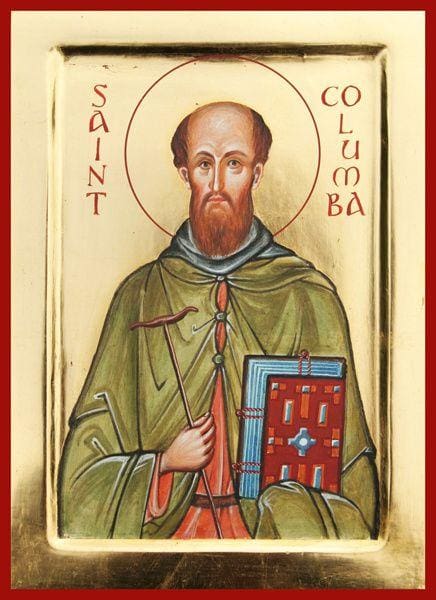
I was very happy that one of our parish-brothers asked for a blessing to chant the canons to the saints of the day during Thursday’s confessions in Nazareth House, with another young brother formatting the canons to St Cyril of Alexandria and St Columba for them to chant together.
As I turned to welcome each penitent before their confession, it was wonderful to see four of our parish brothers praying before the shrine containing an icon of the Saviour and the analoy bearing the icons of the icons of the saints of the day, and to hear the refrains of the canons from the other end of the temple.
On our Facebook page, we are always keen on publishing such liturgical canons: cycles of hymns based around the themes of the Biblical Odes, or Canticles, as they are often called in the west.
A good explanation is to be found on orthowiki, so we will simply quote:
“There are nine Biblical Canticles that are chanted at Matins These form the basis of the Canon, a major component of Matins.
The nine Canticles are as follows:
Canticle One – The (First) Song of Moses (Exodus 15:1-19)
Canticle Two – The (Second) Song of Moses (Deuteronomy 32:1-43)
Canticle Three – The Prayer of Hannah (I Kings 2:1-10) KJV: 1+Samuel 2:1-10
Canticle Four – The Prayer of Habakkuk (Habakkuk 3:1-19)
Canticle Five – The Prayer of Isaiah (Isaiah 26:9-20)
Canticle Six – The Prayer of Jonah (Jonah 2:2-9)
Canticle Seven – The Prayer of the Three Holy Children (Daniel 3:26-56)
Canticle Eight – The Song of the Three Holy Children (Daniel 3:57-88)
Canticle Nine – The Song of the Theotokos (the Magnificat: Luke 1:46-55); the Song of Zacharias (the Benedictus Luke 1:68-79)
Originally, these Canticles were chanted in their entirety every day, with a short refrain inserted between each verse. Eventually, short verses (troparia) were composed to replace these refrains, a process traditionally inaugurated by Saint Andrew of Crete.
Gradually over the centuries, the verses of the Biblical Canticles were omitted (except for the Magnificat) and only the composed troparia were read, linked to the original canticles by an Irmos. During Great Lent however, the original Biblical Canticles are still read.
Another Biblical Canticle, the The Song of Simeon (Luke 2:29-32), is either read or sung at Vespers.”
The canons – usually, but not always appointed to be chanted during matins – are a great liturgical treasure of our Church, and a great accomplishment of Byzantine hymnography, associated with some great hymnographers: St Andrew of Crete, St John of Damascus, St Joseph the Hymnographer.
The first two names are, of course, particularly associated with two of the great liturgical canons: the Great Canon of Repentance, and the Paschal Canon – both of which have a very important place in Orthodox liturgico-spiritual life.
Other canons, which we know particularly well are the Canon of Preparation for Holy Communion, the Penitential Canon included in most Slavic type prayerbooks, and the “three canons”, chanted as part of preparation for Holy Communion in the East Slavic tradition: the Supplicatory Canon to the Saviour (O Sweet/Sweetest Jesus, in the Old and New Rites respectively), the Small Supplicatory Canon to the Mother of God), and the Small Supplicatory Canon to the Guardian Angel).
Current East Slavic praxis tends not to know the Greater Supplicatory Canon to the Mother of God (not a standard part of liturgical tradition in the centuries of the spiritual formation of Rus) known and loved in the Greek world, and the Greater Supplicatory Canon to the Guardian Angel, to be found in Slavic Old Rite prayerbooks.
Pre-Nikonian Psalters contained the canons for the departed, for those who give us alms, and to St Nicholas – so these were, at one time a common component in the prayer-life of the literate.
The brothers of our parish who use the Old Orthodox Prayerbook (from the ROCOR Old Rite parish in Erie, Pennsylvania), have expressed their appreciation for the canon for the sick, largely unknown by the faithful, today.
Supplication to St Varus, for those who have died without Holy Baptism made the canon to the Great-Martyr popular in Russia, Belorus and Ukraine, and similarly the canon to St Paisius for those who have died without repentance. Recourse to both of these saints was reflected by the popularity of cast icons, particularly among Old Believers.
Over the centuries after the reforms of Patriarch Nikon, the growing popularity of akathist hymns (of varying, and sometimes dubious quality) largely supplanted the chanting of canons by many believers, but it is firstly to the canons that we should turn for intercessory prayer and supplication, rather than akathist hymns, as the canons are the liturgical prayers and hymns of the Church – not para-liturgical or optional extras. We should remember that only one akathist hymn is appointed to be chanted liturgically: that to the Mother of God, by St Romanos the Melodist. Conversely, the canons, are part of the sanctified liturgical prayer of the Church… so I would always encourage parishioners to pray the canons first, with the akathist as an extra though still valuable offering.
The faithful would greatly benefit by including the canons in their day-to-day prayer-life, particularly for Great Feasts of the Lord and the Mother of God, and for the feasts of our major saints, as well as regularly praying the various canons for the sick and the departed.
This is easy for those praying in Slavonic, as the Kanonik (according both Old and New Rite texts) is freely available as a unified collection of texts, in print and electronically, but with the wealth of liturgical material available on-line, a little searching will lead those praying in English to a wealth of resources – especially in the monthly menaia to be found online at the ponomar project (https://www.ponomar.net) and at st-sergius.org (http://www.st-sergius.org/services/pent/100.pdf), both also having texts in Slavonic.
Following simple custom, a canon may be chanted just before the end of our morning or evening prayer-rule, followed by “It is Truly Meet” or its festal replacement and just before the usual dismissal of the prayers. Alternatively canons may chanted ‘alone’ with slightly varying orders available on-line.
Parishioners use a variety of different prayerbooks, and I would recommend that British parishioners in particular ensure that any prayerbook they consider buying contains the canons we use week by week, not just for preparing for communion but as a more regular part of Orthodox prayer.
Additionally, I hope that parishioners make the most of freely available resources, and assemble their own ‘kanonik’, so that they always have a source of liturgical prayer freely available in our homes, so that we do not spend times of prayer scrolling down the screen of a mobile phone.
As an extremely geographically dispersed community, the canons in our daily prayers can be a source of liturgical and prayerful unity across the miles, as we mark the feasts and seasons in our homes in the cities, towns and villages in which we live.
I have previously reposted Vladimir Basenkov’s excellent article “Edinovertsi’s Treasure: The Rule of Home Prayer”, regarding the culture and praxis of home prayer and worship according to Old Rite tradition, and encourage anyone who has not read it to do so.
Reflecting on the desire of our young parish brothers to pray together and their realisation that most of the services of the Church may be accomplished without clergy, I would like to re-share a little of the above article regarding the praying of the various hours of prayer using the lestovka (or other prayer rope), or by reading the Psalter – which many of our parishioners make a key part of their spiritual-life (with our Slavonic style Psalters having penitential troparia and prayers at the end of each kathisma).
I very much hope that over the next month, I am able to have some teaching time with some of our parishioners, so that they feel confident to come together to celebrate services other than the hours and compline (which are so simple in their format), giving them the skills to combine the variables of the day with the static texts of the daily services.
For now, I would just like to remind parishioners that apart from using the horologion/chasoslov, there are other ways that the faithful have traditionally marked the hours.
“…the practice of replacing the daily cycle of services with the Jesus Prayer with bows and without has very ancient roots. Laboring in isolation from civilization, monks prayed with the help of a verveets (an ancient prayer rope). By the way, this custom has survived to this day—for example, in Athonite monasteries, sometimes the monks pray certain parts of the daily cycle with the help of the Jesus Prayer, whether in their cells or together.”
The rule of prayer on the lestovka/prayer-rope without bows:
For Vespers: 600
For Great Compline: 700
For Small Compline: 400
For Midnight Office: 600
For Matins: 1,500
For the Hours: 1,000; with the Inter-Hours: 1,500
And with bows:
For Vespers: 300 bows
For Great Compline: 300 bows
For Small Compline: 200 bows
For Midnight Office: 300 bows
For Matins: 700 bows
For the First Hour: 150 bows
For the Third, Sixth, and Ninth Hours: 500 bows; for the Hours with the Inter-Hours: 750 bows
If you decide to pray the Psalms, then the guidelines are as follows:
For Vespers: 2 Kathismas
For Great Compline: 2 Kathismas
For Small Compline: 1 Kathisma
For Midnight Office: 2 Kathismas
For Matins: 5 Kathismas
For the First Hour: 1 Kathisma
For the Third, Sixth, and Ninth Hours: 3 Kathismas
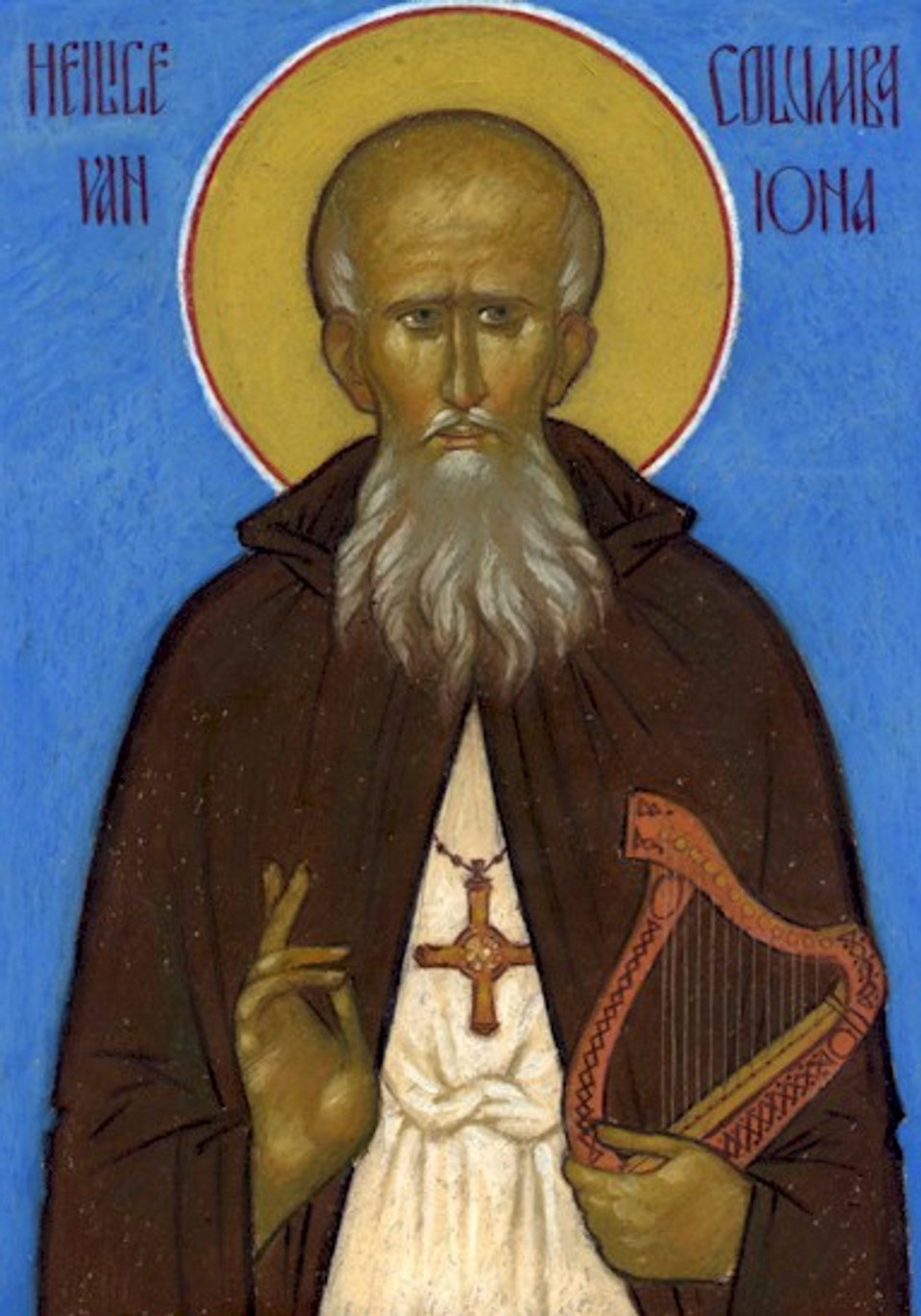
The canon to the venerable one, the acrostic whereof is “Iona, the Holy Isle, is blessed in Columba”, in Tone VIII
Ode I, Irmos: Having traversed the water as thogh it were dry land, and escaped the evil of Egypt, the Israelite cried aloud: Let us chant unto our Deliverer and God!
Venerable Father, Columba, pray to God for us.
Iona, the Isle of Saints, crieth aloud: O ye people of the New Israel, exalt Columba greatly, for he taught you to sing: Let us chant unto our Deliverer and God!
Venerable Father, Columba, pray to God for us.
O venerable father Columba, Ireland where thou wast born and Scotland where thou didst labor sing together with joy: Let us chant unto our Deliverer and God!
Glory be to the Father, and to the Son, and to the Holy Spirit,
Neither sleep to thine eyes, nor slumber to thine eyelids didst thou give, O saint, until thou hadst taught all to sing: Let us chant unto our Deliverer and God!
Now and ever, and unto the ages of ages. Amen.
Across the waters of temptations and passions doth the Mother of our Redeemer mercifully lead those who cry aloud: Let us chant unto our Deliverer and God!
Ode III, Irmos: Number me among the mighty of Thy people, O Lord, girding me about with power; break Thou the bows of the adversary, and uplift the horn of my poverty.
Venerable Father, Columba, pray to God for us.
The holy Columba hath been reckoned among the mighty saints of Christ, and hath been girded about with the power of grace by the Spirit, to uplift us sinners.
Venerable Father, Columba, pray to God for us.
How mighty are thy supplications, O wondrous Columba! For thereby, as by the horns of the priests of Israel, are the ramparts of the adversary brought down in ruin.
Glory be to the Father, and to the Son, and to the Holy Spirit,
Even when thou didst live on earth thine intercessions were mighty, O venerable one; and now, as thou dwellest in heaven, they abundantly enrich our spiritual poverty.
Now and ever, and unto the ages of ages. Amen.
Her in whom Thy mighty works are wrought hast Thou exalted supremely above Thy powers and dominions, O Lord, and through her is the horn of our poverty uplifted.
Lord, have mercy. Lord, have mercy. Lord, have mercy.
Sessional hymn of the venerable one, Tone I, Spec. Mel. “Thy tomb, O Savior…”: As a faithful disciple of the Lord and Master of all, thou didst teach the nations, enlightening them with sacred teachings and instructing them in the understanding thereof, O God-bearer. Wherefore, we all call thee a herald of the Truth, a spiritual athlete and favorite of Christ.
Glory be to the Father, and to the Son, and to the Holy Spirit; now and ever, and unto the ages of ages. Amen.
Theotokion: O all-holy Virgin, thou hope of Christians: with the hosts on high do thou unceasingly entreat God, to Whom thou gavest birth in manner past understanding and recounting, that He grant remission of all sins and amendment of life unto those who ever glorify thee with faith and love.
Stavrotheotokion (replaces the Theotokion on Wednesdays and Fridays): The unblemished ewe-lamb, beholding the Lamb and Shepherd hanging dead upon the Tree, said, weeping and bitterly exclaiming: “How can I bear Thine ineffable condescension, O my Son, and Thy voluntary suffering, O all-good God?”
Ode IV, Irmos: Thou didst mount Thy steeds, Thine apostles, O Lord, and didst take their bridles in Thy hands; and Thy chariot hath become salvation for those who chant with faith: Glory to Thy power, O Lord!
Venerable Father, Columba, pray to God for us.
Over the waves of the sea didst thou and thy disciples sail thy frail craft, O Columba, and thy coming became salvation for many in a new land, who learned to chant: Glory to Thy power, O Lord!
Venerable Father, Columba, pray to God for us.
Like steeds didst thou bridle the passions of thy followers with the reins of obedience, labor and prayer, O holy one, guiding them to the fold of salvation, singing: Glory to Thy power, O Lord!
Glory be to the Father, and to the Son, and to the Holy Spirit,
“Ye who seek salvation, take up the cross which Christ giveth you;” said Columba, “for His yoke is easy, and His burden is light for all who with faith chant unto Him: Glory to Thy power, O Lord!”
Now and ever, and unto the ages of ages. Amen.
Intent upon bidding farewell to thy body, O Lady, the apostles of the Lord mounted clouds, as they were steeds, and were borne unto Sion, to chant at thy bier: Glory to Thy power, O Lord!
Ode V, Irmos: My spirit riseth early unto Thee, O God, Who wast ineffably begotten of the Father and hast lifted up for us the horn of salvation.
Venerable Father, Columba, pray to God for us.
Salvation cometh to those who rise early unto God, Who hath raised up Columba as a horn of strength for the people of the New Israel.
Venerable Father, Columba, pray to God for us.
Let our hymns sound forth like clarions as we exalt the venerable Columba, who brought light into the midst of heathen darkness.
Glory be to the Father, and to the Son, and to the Holy Spirit,
Every mouth praiseth the wondrous saint who taught the Picts and Scots to worship the only-begotten Son of the Father.
Now and ever, and unto the ages of ages. Amen.
Ineffably and past all human comprehension didst thou beget the only-begotten Son of the Father, in Whom is our salvation, O Maiden.
Ode VI, Irmos: I pour forth my prayer unto the Lord, and to Him do I declare my grief; for my soul is full of evil and my life hath drawn nigh unto hell, and like Jonah I pray: Lead me up from corruption, O God!
Venerable Father, Columba, pray to God for us.
Souls full of evil and wickedness didst thou, by thy teachings and struggles, redeem for thy Master, O holy one, delivering them from everlasting torment and leading their lives up from corruption.
Venerable Father, Columba, pray to God for us.
Be thou a refuge for us amid sorrows and tribulation, a firm bulwark against the waves of grief that assail us, O saint; and pour forth thy prayer, beseeching the Lord to deliver us from corruption.
Glory be to the Father, and to the Son, and to the Holy Spirit,
Let Iona, the Holy Isle, like a beacon shine forth the divine grace which dwelt in thee, O great Columba, that guided and illumined thereby, we may not founder on the rocks of evil and corruption.
Now and ever, and unto the ages of ages. Amen.
Evils befall me every day of my life, and I am beset on every side by demonic temptations, O pure Mistress; but deliver me by thy supplications, for I cry to thee: Lead me up from corruption!
Lord, have mercy. Lord, have mercy. Lord, have mercy.
Glory be to the Father, and to the Son, and to the Holy Spirit; now and ever, and unto the ages of ages. Amen.
Kontakion of the venerable one, Tone VIII: As one in whom grace burned with flames of zeal, like Elijah thou didst ascend to the heavens, upborne upon thy virtues as upon a fiery chariot, O Columba; for thou wast filled with the love of Him Who loveth mankind, and by thy miracles didst convert many to faith and amendment of life. Wherefore, joining chorus with the angelic hosts, thou prayest with fervor to Christ, the King of all, Whom do thou ever entreat, O venerable father, that He save our souls.
Ikos: Chosen by Christ to tend the sheep and lambs of His monastic flock, O Columba, thou didst shine forth with miracles upon thy newly enlightened people; and by thy godly teaching thine Irish homeland became a country of great renown, a blessed land; for, illumining benighted souls, thou didst draw them forth from the abyss of ungodliness. And with thy gracious discourse thou didst likewise illumine the heathen Picts, who before languished in ignorance, showing the sorceries of their priests to be utterly powerless, and instructing all to glorify the one true God, Who is worshiped in Trinity: Whom do thou ever entreat, O venerable father, that He save our souls.
Ode VII,Irmos: O Lord, make us imitators of Thy three children, opposing sin and trampling the fire of the passions underfoot, and chanting: Blessed art Thou, O God of our fathers!
Venerable Father, Columba, pray to God for us.
Soaring above the deep of the passions like the dove for which thou wast named, O Columba, thou didst chant unceasingly: Blessed art Thou, O God of our fathers!
Venerable Father, Columba, pray to God for us.
Scion of a royal clan and kinsman of kings, Columba chose humility over vanity, tramping down all the passions, chanting: Blessed art Thou, O God of our fathers!
Glory be to the Father, and to the Son, and to the Holy Spirit,
Everlasting Gehenna didst thou escape, having quenched the furnace of sins with thy fervent tears, O venerable one, chanting: Blessed art Thou, O God of our fathers!
Now and ever, and unto the ages of ages. Amen.
Deem me a worthy imitator of the children in the furnace, O Lady, subduing the fire of the passions for me, a sinner, as I chant: Blessed art Thou, O God of our fathers!
Ode VIII, Irmos: Cast into the furnace, Thy venerable children chanted: Bless the Lord, O ye works of the Lord!
Venerable Father, Columba, pray to God for us.
Inspired, the saint of God uttered prophecies, crying: Bless the Lord, O ye works of the Lord!
Venerable Father, Columba, pray to God for us.
No king nor pauper left Columba without aid, crying: Bless the Lord, O ye works of the Lord!
Venerable Father, Columba, pray to God for us.
Covered by grace, as by a cloud, the holy one cried: Bless the Lord, O ye works of the Lord!
Glory be to the Father, and to the Son, and to the Holy Spirit,
O Holy Trinity, transcendent Godhead, we cry: Bless the Lord, O ye works of the Lord!
Now and ever, and unto the ages of ages. Amen.
Look with pity on me, O immaculate one, for I chant: Bless the Lord, O ye works of the Lord!
Ode IX, Irmos: We magnify thee, the most immaculate Mother of Christ our God, whom the Holy Spirit overshadowed.
Venerable Father, Columba, pray to God for us.
Unto the ends of the earth hath word of thy holiness spread, O venerable one, and all Christians magnify thee.
Venerable Father, Columba, pray to God for us.
Mediate for us with Christ our God, O Columba, joining His all-holy Mother in her prayers for us sinners.
Glory be to the Father, and to the Son, and to the Holy Spirit,
Be thou ever unceasing in thine intercessions in our behalf, O saint of God, that we may escape perdition.
Now and ever, and unto the ages of ages. Amen.
All true Christians magnify thee, O all-blessed and ever-virgin Mary, whom the Holy Spirit overshadowed.
Troparion of the venerable one, Tone VIII: Innocent in soul, thou didst mortify the passions of the body, soaring on high to the mansions of heaven as on the wings of the dove, whose namesake thou wast, O God- bearing father Columba. And having by grace restored within thee the true image of God, thou didst teach multitudes of the faithful the ways of repentance; wherefore, we glorify thee as our father in the Holy Faith, O venerable one.
Saint Columba (or Colum Cille, “the dove of the Church”) was of noble birth, a member of the powerful Ui Néill clan, which traced its descent to Niall of the Nine Hostages, who died around the year 450. His parents were Fedelmid mac Ferguso and Eithne. Although it is difficult to determine the date of Saint Columba’s birth with any degree of certainty, it is believed that he was born in County Donegal on December 7, 521.
His parents may have been pagans, and named their son Crimthann. He was brought up by a foster-father, according to the custom of that time, a priest named Cruithnechan. We do not know what happened in Saint Columba’s life from the time he completed his studies until his departure from Ireland in 563. He may have been baptized with the name Colum, which later became Columba (dove). Some sources state that after being ordained as a priest, Saint Columba preached in Ireland, and established monasteries at Derry and Durrow. It is said that he also founded one hundred churches.
Adomnan says (I: 7) that the Saint left Ireland two years after the Battle of Cúl Dreimhne (561), supposedly for causing the deaths of so many men. Adomnan does not explain why the Saint blamed himself. However, in a different Life of Saint Columba it is stated that there was a dispute between Saints Columba and Finnian of Moville (September 10), concerning the ownership of a copy of Saint Jerome’s Latin Vulgate version of the Bible (some sources say it was a Psalter). The dispute involved the ownership of the copy. Saint Finnian claimed that the copy was his, since he owned the original manuscript. Saint Columba maintained that the copy was his, since he had copied the original. The High King Diarmait mac Cerbaill, who was a pagan, decided in favor of Finnian. He said, “To every cow belongs her calf, therefore to every book belongs its copy.”
The Saint is said to have been so angry that he stirred up his relatives of the Uí Néill clan to make war against the High King. The Battle of Cúl Dreimhne led to the loss of many Christian lives. In his remorse, Saint Columba decided that he must gain as many souls for Christ as had been slain on the battlefield.
Adomnan also mentions the Synod of Teltown in County Meath (III:3) which met in 562, one year after the battle, and one year before Saint Columba left Ireland. He declares that “Saint Columba was excommunicated for some trivial and quite excusable offenses by a Synod which, as eventually became known, had acted wrongly. The Saint himself came to the assembly that had been convoked against him.”
When Saint Brendan of Birr (November 29) saw Saint Columba approaching at a distance, after the Synod had excommunicated him in absentia, he ran out to meet him, kissing him with reverence. When the members of the Synod saw this they criticized him, saying, “Why did you get up to kiss a man who has been excommunicated?” Saint Brendan replied, “If you had seen what the Lord has deigned to reveal to me today, concerning this chosen one whom you refuse to honor, you would never have excommunicated him. For God does not excommunicate in accordance with your erroneous judgement, but instead, He glorifies him more and more.”
Then they became incensed and said that they should like to know just how God had glorified Saint Columba, whom they had excommunicated, as they asserted, with good reason. Saint Brendan replied, “I saw a very bright column of light going before the man of God, whom you despise, and holy angels as his companions traveling over the plain.” After hearing this, the Synod dropped the charges and honored Saint Columba with much reverence.
In 563, Saint Columba left Ireland, saying that he wished to be a pilgrim for Christ. Taking twelve companions with him, the Saint settled on the island of Iona, off the southwestern coast of Mull. He prayed that God would permit him to live there for thirty years more, and then call him to the heavenly Kingdom. It is not known whether the island was inhabited when they arrived, but there is archaeological evidence of prehistoric occupation.
After building cells and a chapel, the monks began a period of missionary activity, proclaiming the Gospel, making converts, and founding churches. They sailed to other islands, and even went inland in their labors to bring people to Christ. As a result, Iona became an important center of Christianity for northern England and Scotland. By 574, Abbot Columba had at least one dependency on the island of Hinba. There were others on the various islands, all under the authority of Iona. Saint Columba also maintained ties with his churches in Ireland and people in other places.
There is an account of Saint Columba anointing Aedan mac Gabrain in 574 to succeed King Conall as the King of Dalriada, just as King Saul and King David had been anointed by Samuel. Some regard this as the first time in European history that Christian ritual was used to consecrate a King. There is much debate on the significance of this event, although Saint Columba did have a special relationship with the ruling dynasty of Dalriada.
Adomnan has not written a Saint’s Life according to the traditional pattern. Rather than presenting a continuous narrative from birth to death, he describes Saint Columba’s prophetic revelations in Book I; his miracles of power in Book II; and his visions of angels in Book III.
In Book III:22, Adomnan relates how Saint Columba beheld the angels who had come to receive his soul in the thirtieth year after his arrival on Iona. Suddenly he raised his eyes to Heaven, and he was filled with great joy and gladness. Then, a moment later, his joy had turned to sorrow. Two monks stood outside his hut when this occurred, and they asked him about it. He told them to go in peace, and not to ask him to tell them the cause of his gladness, nor of his sorrow. They fell to the ground with profuse tears and begged him to reveal what he had been told.
Seeing their distress, the holy Elder said, “Because I love you, I do not wish to grieve you. First, you must promise not to betray to anyone, as long as I am alive, the mystery that you seek to know.”
After they had given their word, Saint Columba said that day was exactly thirty years since he had begun to live “in pilgrimage in Britain.” He had asked God to call him to Heaven at the end of thirty years. That is why he seemed so glad. He had seen the angels who had been sent to separate his soul from his body, but now they seemed to be delayed. They were waiting on a rock across the Sound from Iona. It was as if they wished to accomplish their task, but they were not permitted to come any closer. Soon they would return to Heaven. Even though he desired to go with them, the prayers of many churches had caused this change in plans. “Even though I do not wish it, I must remain in this flesh four years longer. This sorrowful delay is the cause of my great distress today.”
Then the holy Abbot predicted that at the end of four years, he would die suddenly, and without pain, when the angels would come for him again, and he would depart to the Lord. That is precisely what happened.
In April of 597, on the radiant Feast of Christ’s Resurrection, Saint Columba was longing to depart from this life in order to be with Him. God would have granted his wish right then, but he did not want to turn the paschal joy of his disciples into sorrow, and so his death was delayed for the sake of the monks.
In May, as the brethren were working on the western side of Iona, Saint Columba was taken there in a cart, for he was then an old man of seventy-five. He began to speak to them of his approaching death, so that they would be prepared. When he told them how his death had been merely postponed in April, they became very sorrowful. The Saint tried to console them as much as he could. Then he looked toward the east and blessed the island, and those who dwelt there. A few days later, during the Sunday liturgy, Saint Columba looked up and his face became suffused with joy and exultation. Only he could see the angel hovering over them inside the church. Then the angel passed right through the roof of the church, leaving no trace of his passing.
When the monks noticed the Elder looking upward they asked him why he seemed so happy. He told them that an angel had been sent to recover a loan, and had been watching and blessing them during the service.
None of the monks understood what sort of loan the angel had been sent to recover, but Saint Columba was referring to his soul, which the angel would take sometime between the following Saturday evening and Sunday morning.
At the end of the week, on Saturday, Saint Columba and his servant Diarmait went to bless the nearest barn. The venerable Elder said that he was glad to know that the monks would have enough bread to last for a year, in case he had to “go away somewhere.” Diarmait was saddened by his words and said, “Father, this year you have made us sad too often by speaking frequently about your passing.”
Saint Columba said that he would speak more plainly about his departure if Diarmait promised not to tell anyone until after he had reposed. When Diarmait had given his word, the Saint explained that the Sabbath is a day of rest, and on this Saturday he would go the way of his fathers. “I shall go to the Lord when He calls me, in the middle of this night. The Lord Himself has revealed this to me.”
At these words, Diarmait began to weep. Then they started back to the monastery, but Saint Columba had to stop and rest when they reached the halfway point. Later, a cross was set up on that spot and set in a millstone. Then a white horse, which used to carry pails of milk to the monastery, came and placed its head on the Saint’s bosom. Tears fell from its eyes, and the horse mourned like a person. Diarmait would have driven the horse away, but the Elder stopped him saying, “Leave him alone! Let him who loves us pour out the tears of bitterest mourning here at my breast. Behold, though you have a man’s rational soul, you would not know of my departure if I hadn’t told you just now. According to His will, the Creator has revealed to this brute and unreasoning animal that his master is going away.” Then he blessed the horse as it turned away.
When he returned to the monastery, Saint Columba went to his hut to copy some Psalms. He copied as far as Psalm 33/34:10: “The rich have become poor and hungry; but those who seek the Lord diligently shall not want any good thing.” Then he said, “Here at the end of the page I must stop. Let Baithene write what follows.”
When he finished writing, Saint Columba went to church for Vespers, and then he returned to his lodging and rested on his bed. Instead of a bed of straw, he always slept upon bare rock, with a stone for his pillow. Then he gave his last instructions to Diarmait, commanding the brethren to love one another, and to follow the example of the Holy Fathers. He continued, “God, Who strengthens the good, will help you, and I, dwelling with Him, shall intercede for you.”
When the bell rang for the Midnight Office, Saint Columba hastened to the church before the others, and then he knelt before the altar in prayer. Diarmait, following at a distance, saw the church filled with angelic light around the Saint. As he reached the door, the light vanished, although some of the brethren had seen it as well. Diarmait entered the church and called out in a tearful voice, “Father, where are you?”
The lamps carried by the brethren had not yet been brought into the church. Feeling his way in the dark, Diarmait found the Elder lying before the altar. Raising him a little, he sat by his side and cradled his head on his bosom. The other monks related that before Saint Cuthbert’s soul had left his body, he opened his eyes and looked about with joy and gladness upon his face, for he saw angels coming to meet him. Diarmait held up the Saint’s right hand to bless the monks. The venerable Father, as much as he could, also moved his hand to bless the brethren, though he was unable to speak. Then at once his soul departed.
Two men had separate visions of the Saint’s soul being carried to Heaven by angels. Lugaid mac Tailchain, “a just man and a sage,” told a man named Fergnae of his vision. Although Lugaid had never been to Iona, he saw it, in the Spirit, bathed in a bright light. He beheld the radiance of countless angels who had been sent to carry the Saint’s soul to Heaven, accompanied by the sweetest songs of the angelic hosts.
Another soldier of Christ, Ernene moccu Fir Roide had a vision at the same hour. When he was an old man, he related it to Adomnan, who was then a young man. Ernene and some other men were fishing in the River Finn, when suddenly, the entire sky lit up. Looking toward the east, they saw a fiery pillar rising upwards and lighting the area like the summer sun at Noon. When the pillar passed out of sight, the darkness returned once more.
After Saint Columba’s blessed repose, the Matins hymns were chanted, and his body was carried from the church to his lodging. For three days and nights, the funeral rites were performed in a manner befitting one of his honor and rank. His holy relics were wrapped in linen and placed in the grave with due reverence, from which he shall rise in bright, and everlasting light.
The following miracle is mentioned in Book I:1. In the year 634, at Heavenfield in Northumbria, on the eve of a battle, Saint Columba appeared to Saint Oswald (August 5), revealing his name to the King. He promised to help Saint Oswald, ordering him to march on his enemy Cadwallon that night. He said that the enemy would be pu to flight, and that Cadwallon would be delivered into King Oswald’s hands. Abbot Failbe, Adomnan’s predecessor, told him of this vision, swearing that he had the story from the lips of Saint Oswald himself.
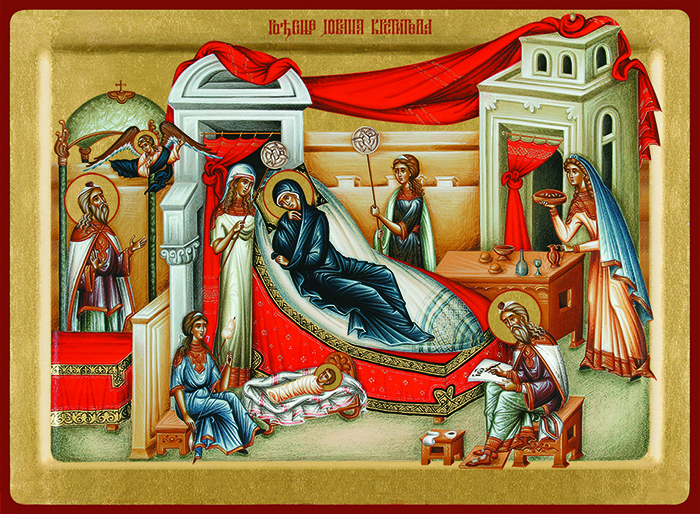 It was a joy to celebrate the feast of the Holy, Prophet, Forerunner and Baptist, John in Nazareth House today, and even though there were only a dozen of us for Liturgy, in no way did it detract from the beauty of solemnity of this feast of the birth of the first among the saints.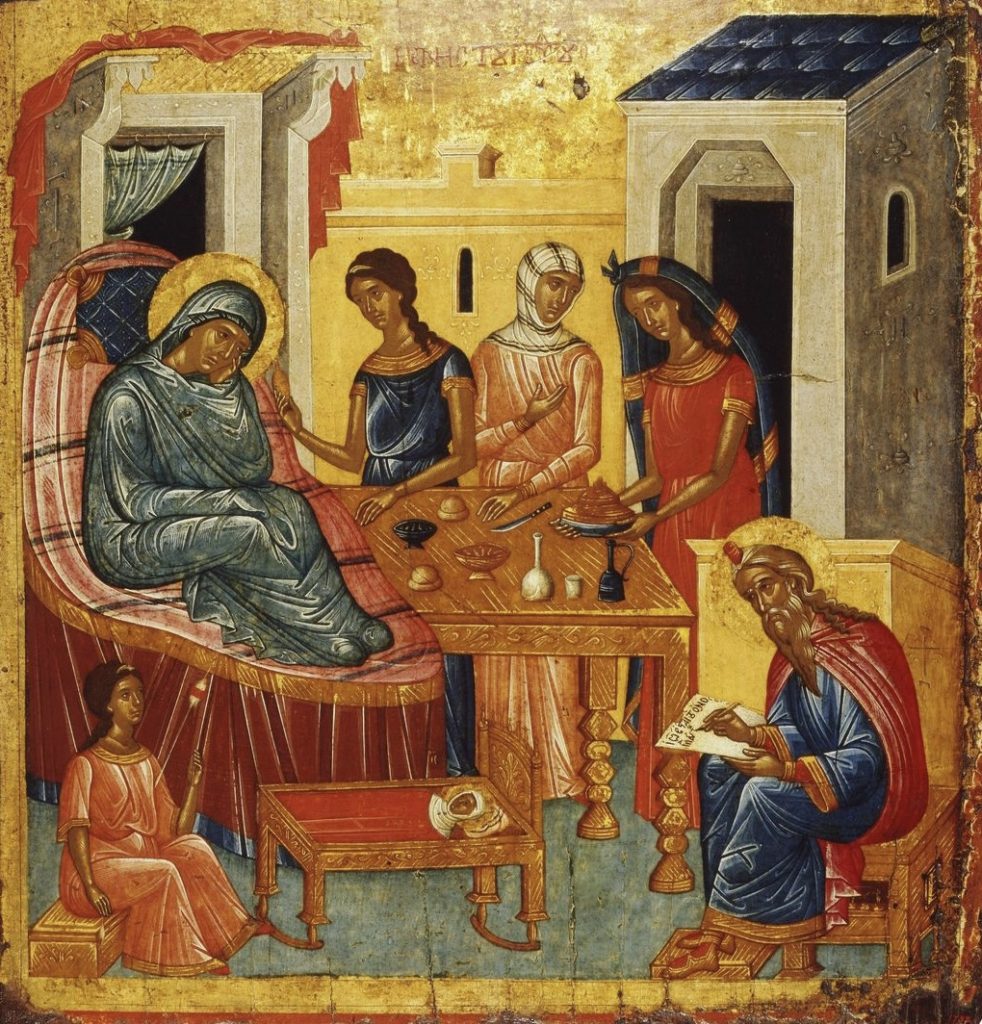
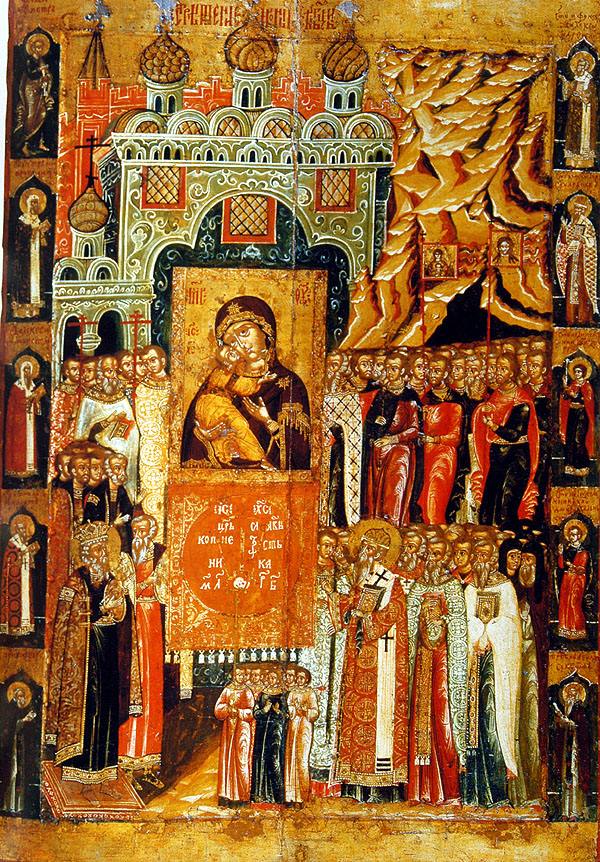


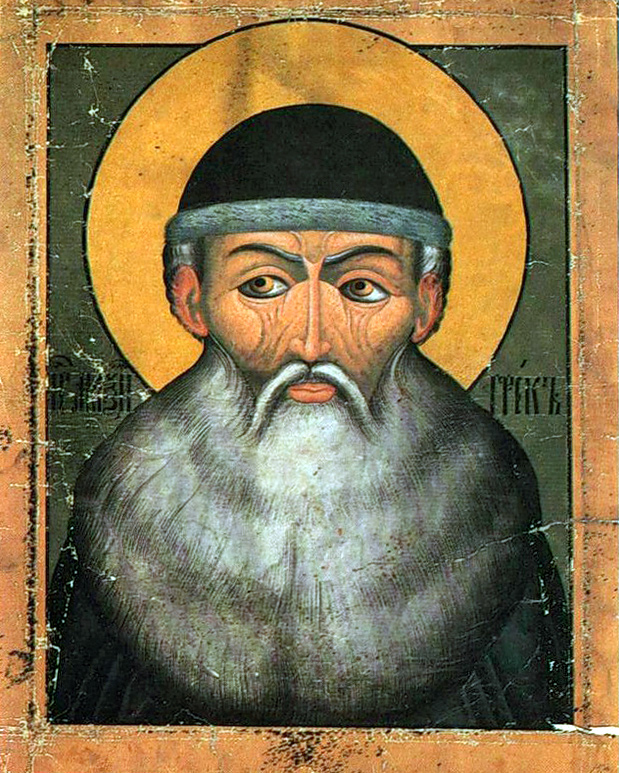
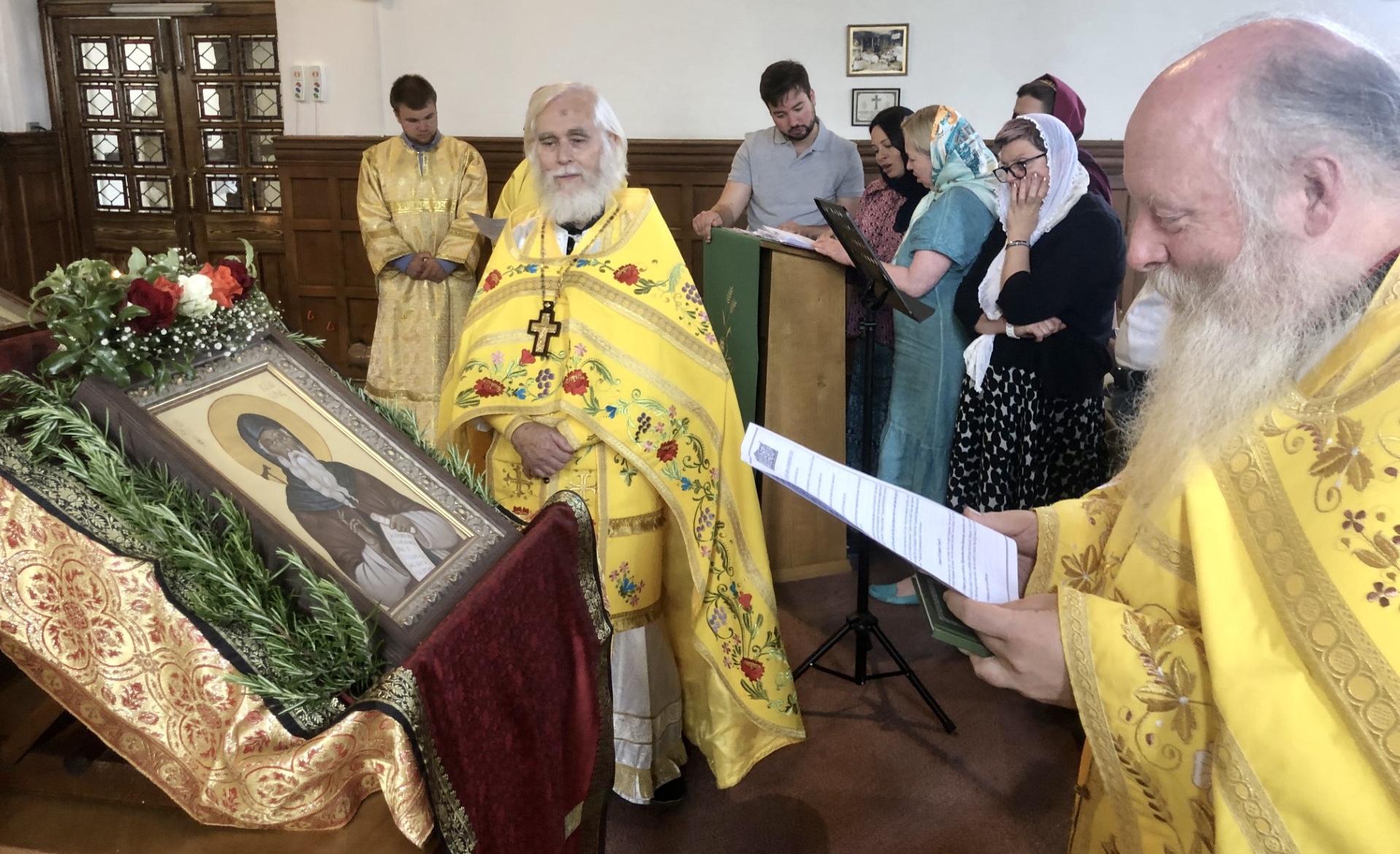
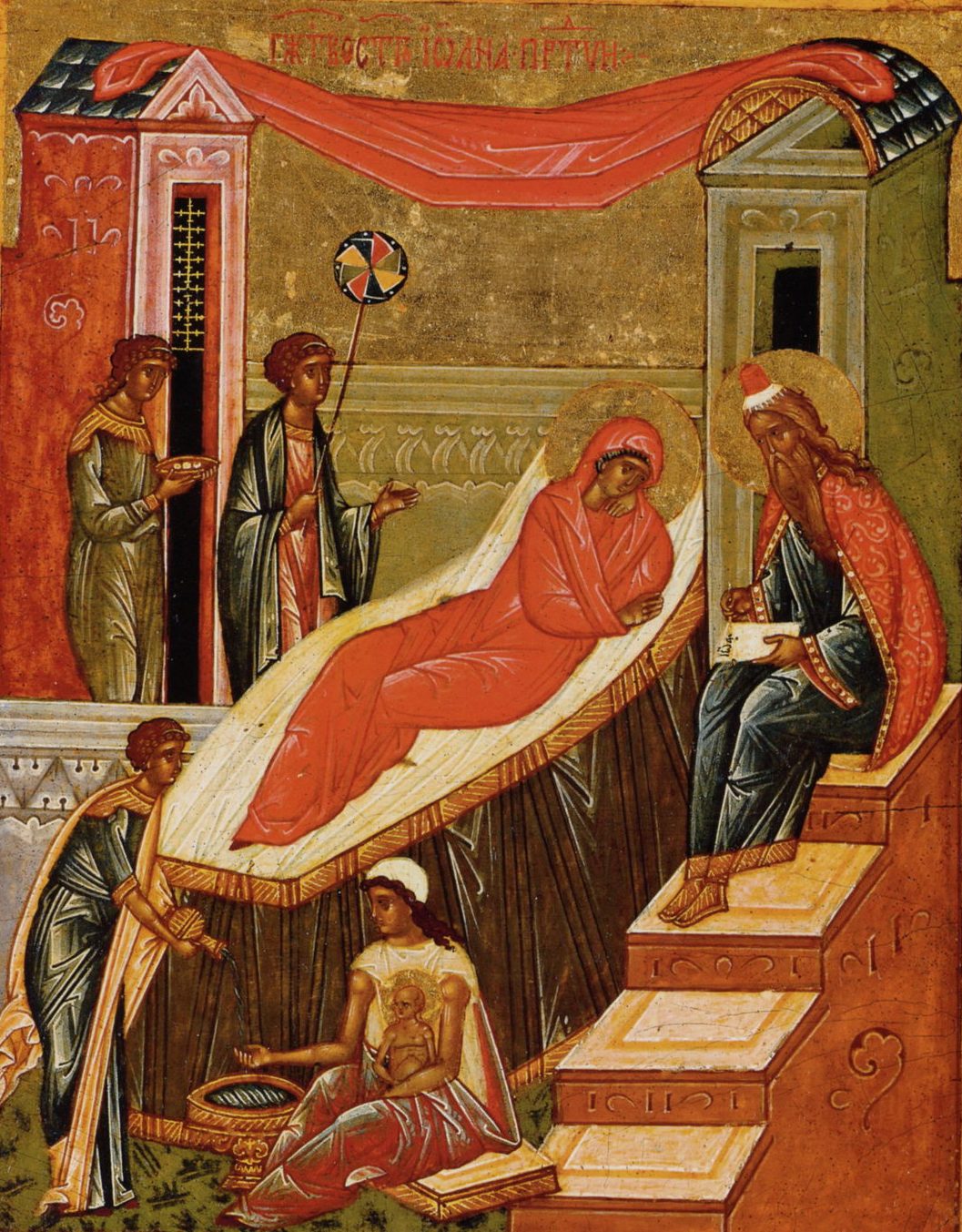
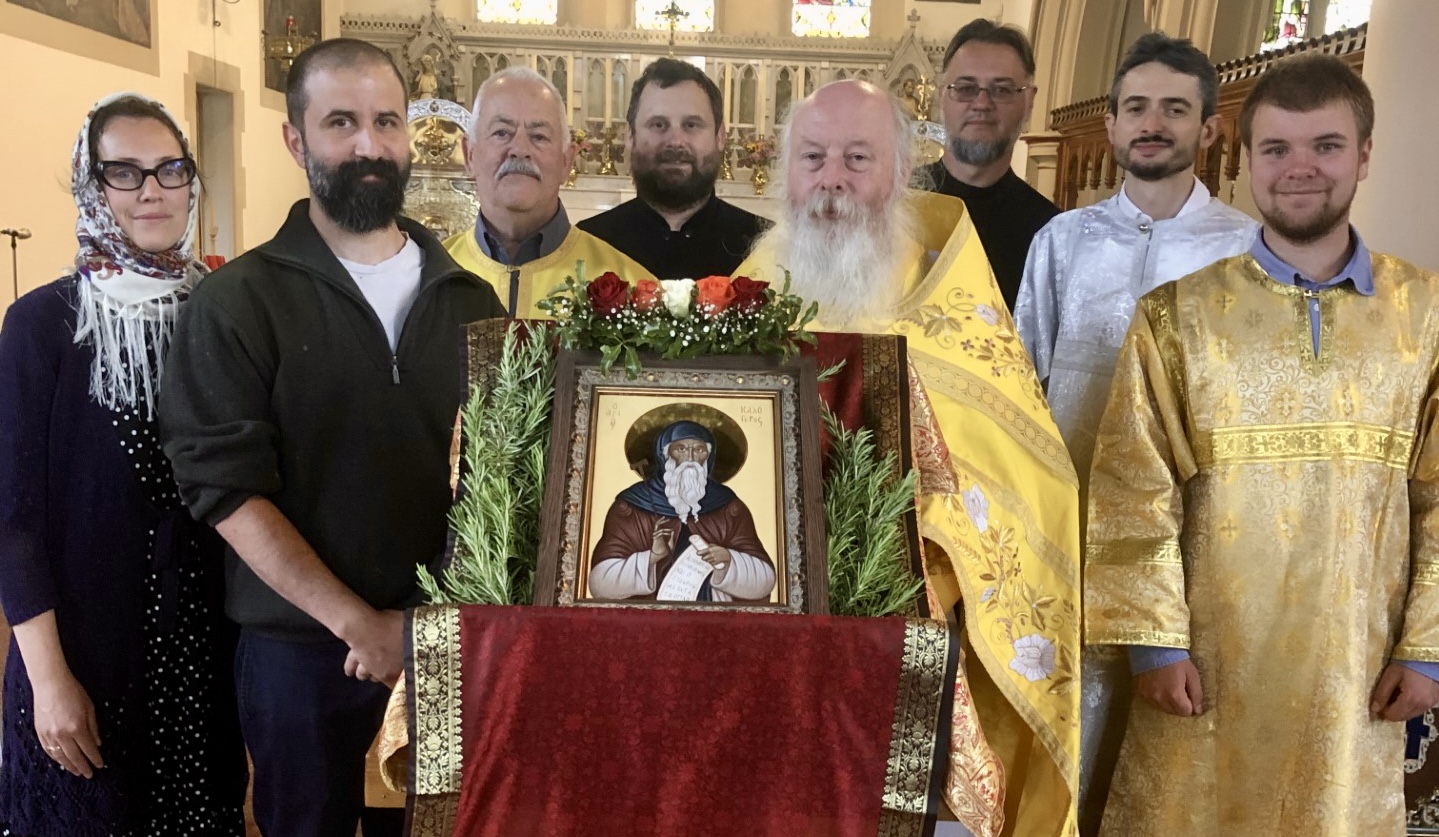
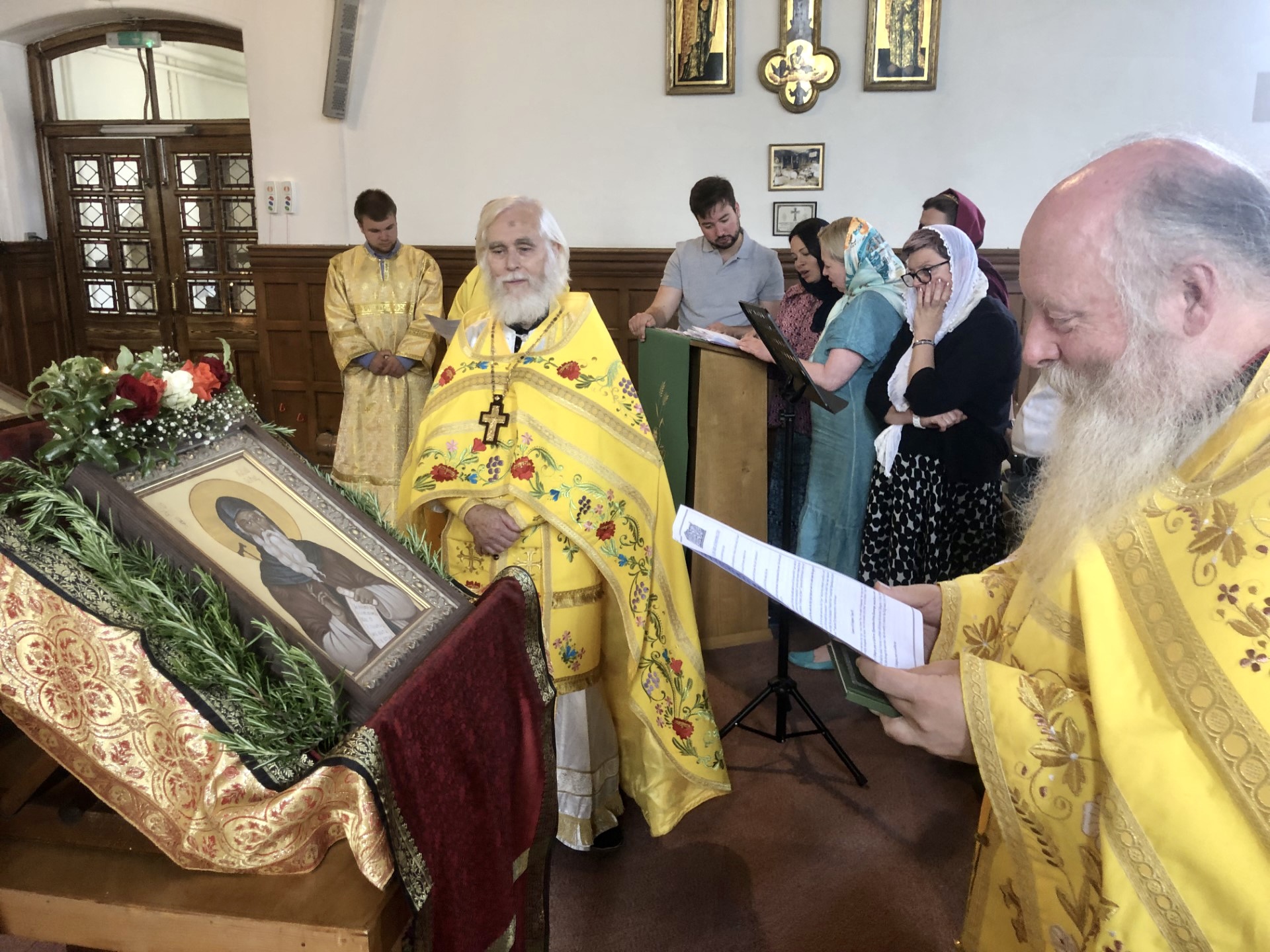
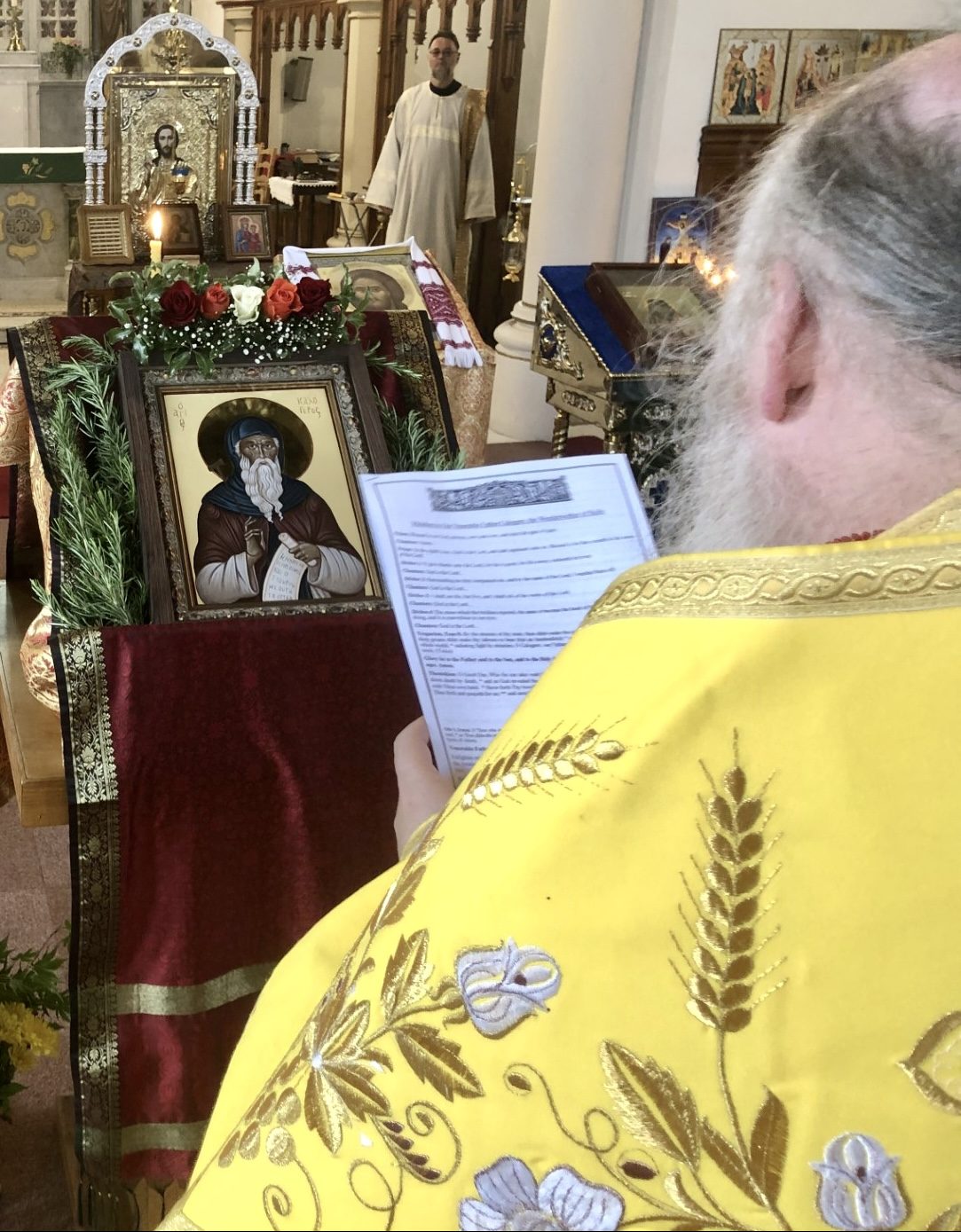
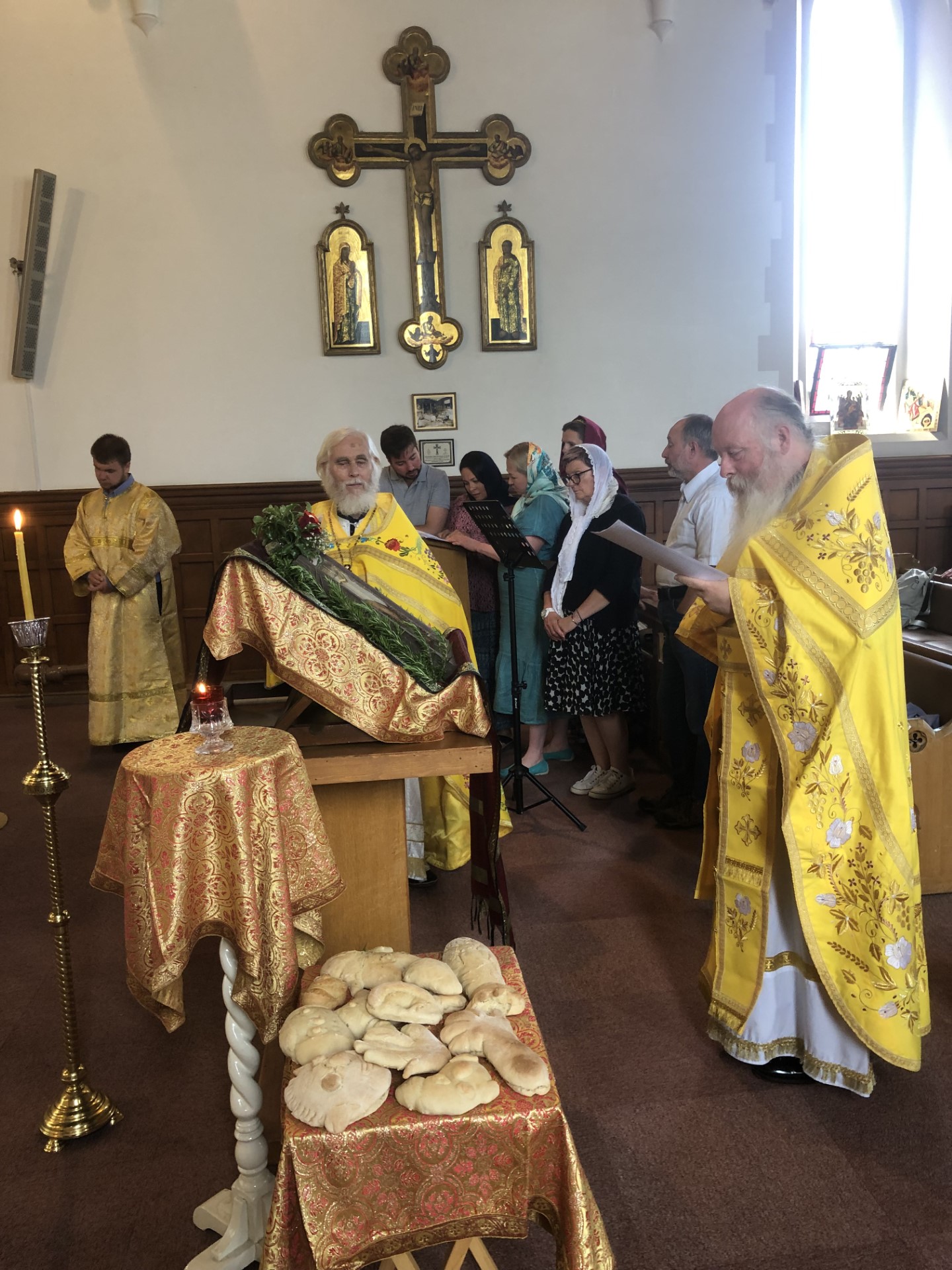
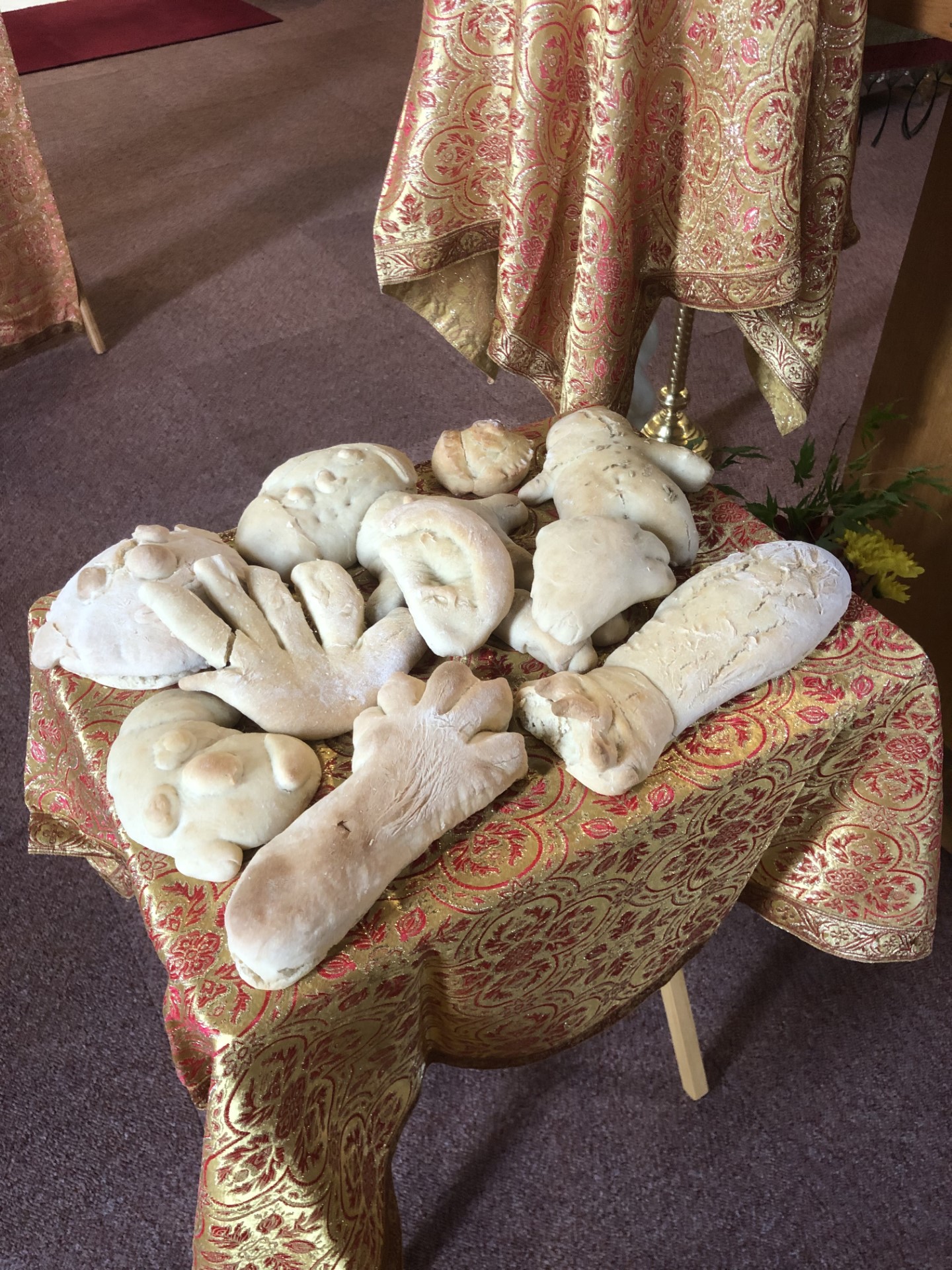
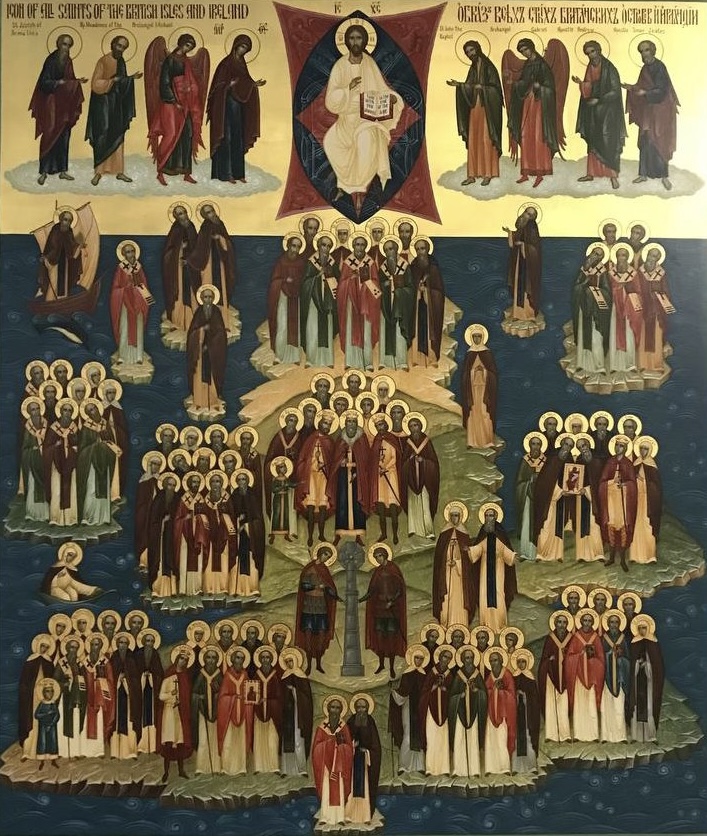
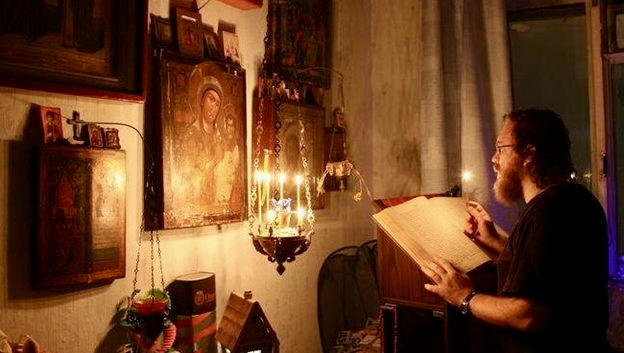 I was very happy that one of our parish-brothers asked for a blessing to chant the canons to the saints of the day during Thursday’s confessions in Nazareth House, with another young brother formatting the canons to St Cyril of Alexandria and St Columba for them to chant together.
 The canons – usually, but not always appointed to be chanted during matins – are a great liturgical treasure of our Church, and a great accomplishment of Byzantine hymnography, associated with some great hymnographers: St Andrew of Crete, St John of Damascus, St Joseph the Hymnographer.